Search "migraine food triggers" and you will find lists. Long ones. Aged cheese, chocolate, red wine, cured meats, MSG, aspartame, citrus, bananas, nuts, onions, vinegar, yeast. Some lists run to forty items. Follow all of them and you would be eating plain rice.
Here is the frustrating part: those lists are mostly recycled from each other, and the science underneath them is far shakier than the confident bullet points suggest. Some of the most notorious trigger foods have failed every controlled test anyone has run on them. Meanwhile, two of the best-supported dietary factors barely show up on the popular lists at all, because they are not foods — they are patterns. When you eat, and whether you eat.
Migraine is common enough that this matters to a lot of people. In the 2018 National Health Interview Survey, 20.1% of US women and 10.6% of US men reported a severe headache or migraine in the previous three months, rising to about a quarter of women aged 18 to 44. If you are one of them and you have been trying to eat your way out of it, this post is an attempt to separate what the research supports from what it does not.
A note before we start: this is general information, not medical advice. Migraine is a neurological disorder, and diet is one lever among many. Nothing here replaces a conversation with a doctor or a headache specialist.
Most People Report Triggers. Far Fewer Report Food.
In one of the largest surveys of the question, headache specialist Lawrence Kelman asked 1,207 patients with diagnosed migraine what set off their attacks. 75.9% reported triggers of some kind, and the ranking is worth reading closely:
- Stress — 79.7%
- Hormones (in women) — 65.1%
- Not eating — 57.3%
- Weather — 53.2%
- Sleep disturbance — 49.8%
- Perfume or odor — 43.7%
- Alcohol — 37.8%
- Food — 26.9%
Notice where "food" lands: below stress, hormones, weather, sleep, and smells. And notice what sits third from the top. Not eating outranked eating any particular thing by more than two to one. That single line is the most useful thing on the list, and it is the one the internet's trigger-food articles almost never lead with.
These are self-reports, which means they tell us what people believe. That turns out to be a very important distinction.
Why Triggers Are So Hard to Identify: The Attack Starts Before the Pain
A migraine attack does not begin when your head starts hurting. It begins hours earlier, in what neurologists call the premonitory or prodrome phase, and the symptoms of that phase look nothing like a headache.
A landmark electronic diary study of 97 migraine patients mapped it out. The most common warning symptoms were feeling tired and weary (72% of attacks with warning features), difficulty concentrating (51%), and a stiff neck (50%). When patients logged premonitory symptoms, a headache genuinely followed 72% of the time. The brain had already committed to an attack.
Now think about what that does to your ability to spot triggers. Researchers at King's College London made the argument directly in a study of 53 people with migraine: "if a patient experiences a symptom before migraine headache, such as a chocolate craving, they may then go and consume some chocolate, and then when they develop a headache some hours to a day later, assume that the chocolate triggered the headache, when in fact the migraine attack had likely already started within the brain."
They tested this by using nitroglycerin infusions to induce migraine attacks under controlled conditions. Of the 53 subjects, 44 (83%) went on to develop a migraine-like headache, and 98% of those experienced premonitory symptoms first — a median of 23 minutes before the pain. Then they compared each person's self-reported "triggers" against their actual premonitory symptoms. The overlap was striking:
- People who named light as a trigger had photophobia as a premonitory symptom — 75% agreement
- People who named food as a trigger had food cravings as a premonitory symptom — 59% agreement
- People who named stress as a trigger had premonitory mood changes — 64% agreement
- People who named skipping meals as a trigger had food cravings as a premonitory symptom — 29% agreement
Brain imaging supports the same picture: the hypothalamus, thalamus, limbic areas, and brainstem light up during the premonitory phase, and those activations track the symptoms — thalamus and sensory cortex with light sensitivity, hypothalamus with appetite and arousal changes, limbic regions with mood.
So a bright light does not always cause the attack; sometimes the attack causes light to feel unbearable. A chocolate craving is not always a prelude to a chocolate-triggered headache; sometimes it is the hypothalamus already misfiring. The American Migraine Foundation makes the practical point plainly in its explainer on trigger science: recognizing these as early attack signs, rather than as things you failed to avoid, is both more accurate and a lot less punishing.
The authors of the King's College study are careful to say the relationship runs both ways and is unlikely to be simple. Some triggers are surely real. But this is the fog every trigger list is written inside, and it is why controlled challenge studies matter so much more than surveys.
The Famous Triggers With Surprisingly Thin Evidence
Chocolate
Chocolate may be the most-blamed and least-convicted food in headache medicine. A 2020 review in Nutrients gathered 25 observational studies and found chocolate reported as a trigger by anywhere from 1.3% to 33% of participants — a spread that mostly reflects how the question was asked. Notably, the single study using electronic diaries, the most rigorous method in the set, put it under 1.5%.
Then there are the three double-blind challenge studies, where people were given chocolate or a matched placebo without knowing which. Marcus and colleagues (1997) found no significant difference. Moffet and colleagues (1974) found no significant difference. Gibb and colleagues (1991) found 41.7% got a headache after chocolate versus none after placebo — but the result did not reach statistical significance. The review's conclusion: "there is insufficient evidence that chocolate is a migraine trigger; thus, doctors should not make implicit recommendations to migraine patients to avoid it."
Aged Cheese and Tyramine
The tyramine story is chemically tidy — an amine that accumulates in aged and fermented foods, cleared by an enzyme that not everyone has in abundance. The human data is less tidy. A 2023 systematic review pooled seven non-randomized studies covering 322 subjects and found headache in 17.2% to 50% of people after tyramine ingestion. In the control groups, headache occurred in 0% to 42.1%. When your placebo arm reaches 42%, you are not looking at a clean signal. The authors concluded that "the relationship between tyramine-containing food and migraine remains unclear."
Tyramine is worth understanding for a different reason, and it may be where its migraine reputation came from. If you take an MAO-inhibitor medication, high-tyramine foods are a genuine and serious interaction — the original case was a hypertensive crisis triggered by cheese, and the numbers are stark: someone on an irreversible MAOI can have a reaction at 6 to 10 mg of tyramine, while people not on one tolerate 200 to 800 mg. That same review notes something else worth knowing — when researchers actually measured the foods on the classic restriction lists, avocados, banana pulp, raspberries, and chocolate turned out to contain little or no tyramine at all. A real pharmacological rule for a specific group of patients is not the same thing as evidence that parmesan causes migraine in everyone else.
MSG
Monosodium glutamate has the strangest evidence base of the group. It was listed as a headache-causing substance in the international headache classification, yet when researchers systematically reviewed the human studies, the picture fell apart. Across five papers containing six studies where MSG was given with food, none found a significant difference in headache incidence — with the single exception of a female subgroup in one study. Four of seven studies that gave MSG without food did find a difference, but those used doses up to 12 grams, often dissolved in water at concentrations above 2%, where MSG is easily identified by taste and can cause nausea on its own. In other words, the blinding failed. The reviewers concluded that "further studies are required to evaluate whether or not a causal relationship exists between MSG ingestion and headache."
Nitrites and Cured Meats
This one has the most plausible mechanism of the bunch, which makes it worth explaining carefully. Dietary nitrate can be reduced to nitrite by bacteria in your mouth, and nitrite can go on to become nitric oxide — a potent blood-vessel dilator. The pathway is real enough that nitroglycerin, a nitric oxide donor, is the drug researchers use to reliably induce migraine attacks in the lab, as in the King's College study above. A 2016 study in mSystems analyzed 172 oral and 1,996 fecal samples and found genes for nitrate, nitrite, and nitric oxide reductases significantly more abundant in the mouths of people with migraine.
Interesting — but the researchers were explicit about the limits: "it remains to be seen whether these bacteria are a cause or result of migraines, or are indirectly linked in some other way." And here is the practical wrinkle nobody mentions. The biggest dietary sources of nitrate are not hot dogs. They are leafy greens, beets, and celery, which is exactly why nitrate is studied as a cardiovascular benefit. "Avoid nitrates" is not a coherent instruction. If cured meats reliably set you off, that is worth knowing about cured meats specifically — but it does not generalize to spinach.
What the Evidence Actually Supports Better
Not Eating
This is the underrated one. Skipping meals ranked third in Kelman's survey at 57.3%, and unlike a specific food, there is a natural experiment for it. A 2020 systematic review in Headache covering 43 studies on diet and migraine cites a diary study conducted around Ramadan in which migraine days rose from 3.7 ± 2.1 per month to 9.4 ± 4.3 during the fasting month. That review named alcohol and caffeine as the most common diet-related factors associated with more frequent attacks — and flagged fasting among the most commonly reported triggers.
The mechanism is not fully settled. Low blood sugar is the usual explanation, but as the Cleveland Clinic's "SEEDS" lifestyle framework for migraine notes, measured hypoglycemia does not consistently trigger attacks — inflammation and disrupted glucose metabolism may matter too. Regardless, the recommendation is concrete and low-risk: eat regular meals, and get breakfast in within 30 to 60 minutes of waking.
The reason this trigger is underrated is almost certainly that it is boring. "Don't skip lunch" is not an interesting headline. It is also the trigger you have the most control over.
Caffeine — and Especially Caffeine Withdrawal
Caffeine is genuinely two-faced. It is an ingredient in migraine medications because it helps abort attacks, and it is a well-documented cause of headache when you stop.
The best prospective data on the intake side comes from a 2019 study in the American Journal of Medicine in which 98 adults with episodic migraine kept twice-daily electronic diaries for at least six weeks. One or two caffeinated drinks a day showed no association with headache. Three or more raised the odds of an attack that day or the next. There was a telling exception: among people who rarely consumed caffeine, even one or two servings raised the risk. Dose matters, but so does what your body is used to.
Withdrawal is where the effect gets dramatic. A randomized, double-blind crossover trial swapped habitual caffeine (participants averaged 539 mg a day) for either identical caffeine capsules or placebo. The trial was terminated early with only 10 participants enrolled, so treat the numbers with real caution — but they are hard to ignore: withdrawal triggered severe migraine attacks in seven of nine participants, while continuing caffeine triggered none in anyone.
The practical takeaway is not "quit coffee." It is to keep your intake steady rather than swinging between four cups on weekdays and none on Saturday — the classic weekend migraine setup. SEEDS suggests staying under 200 mg a day, or roughly two cups of brewed coffee. If you want to cut down, taper over weeks. We go deeper on finding your personal ceiling in our guide to caffeine and anxiety.
Alcohol: Real for Some, Overstated for Most
Alcohol is the trigger people are most confident about, and the evidence is more mixed than that confidence implies. A review in The Journal of Headache and Pain found that in retrospective studies about one-third of migraine patients named alcohol as an occasional trigger, but only 10% said it triggered attacks frequently — and prospective studies, where people log intake as it happens, substantially shrink even that. Red wine is traditionally singled out, but the review notes other studies implicating white wine or other drinks more, and points out that people with migraine actually consume less alcohol than controls.
A 2025 systematic review and meta-analysis pooling four cross-sectional studies across 65,902 participants found a pooled odds ratio of 0.63 (95% CI 0.36 to 1.09) for wine consumption and migraine — not statistically significant, with very high heterogeneity. The authors concluded there is "no conclusive evidence to support an increased probability of suffering migraine associated with wine consumption," and raised the obvious explanation for why drinkers look protected in this kind of data: people whose attacks are triggered by wine stop drinking wine.
So: if two glasses of red reliably give you an attack the next morning, believe yourself. That is a common and plausible individual response. What the evidence does not support is treating alcohol as a universal migraine trigger everyone must avoid.
The Method That Actually Works: One Variable, Several Weeks
If population-level trigger lists are unreliable, what replaces them? Your own data — collected properly.
The strongest argument for this comes from a study of 326 migraine patients who kept daily diaries for around 90 days, tracking 33 possible factors. Statistical analysis found an individual trigger profile for 87.4% of them, averaging four factors per person. Then the remarkable finding: among those with identified triggers, 85% had a profile that no other patient in the study shared. Among people with three or more triggers, 96% were unique.
Read that again, because it demolishes the premise of trigger lists. Your triggers are yours. A stranger's list is, at best, a source of hypotheses.
Here is how to run the investigation honestly:
- Log before you eliminate. Spend at least four to eight weeks recording without changing anything. If you cut foods on day one, you have destroyed your own baseline and you will never know what mattered.
- Record the whole day, not just the suspects. Meals and timing, gaps between meals, fluids, caffeine, alcohol, sleep, stress, exercise, and menstrual cycle if relevant. Stress, hormones, and sleep outranked food in Kelman's data — if you only log food, you will pin the blame on food.
- Note times. What you ate matters much less than the interval between eating it and the pain starting, and whether anything unusual preceded it.
- Log premonitory symptoms too. Unusual fatigue, trouble concentrating, neck stiffness, yawning, mood shifts, sudden cravings. If a craving shows up before the food does, you have caught the confound in the act.
- Demand repetition before you convict. One coincidence is one coincidence. Look for a food that precedes attacks at least three times, and — crucially — check how often you ate it with no attack at all. That second number is the one people never check, and it is usually what clears the suspect.
- Test one variable at a time. Remove a single candidate for three to four weeks while everything else stays constant. Then, if you saw improvement, reintroduce it deliberately and see whether the pattern returns.
- Do not mass-eliminate. The King's College researchers specifically warn that patients making "extensive dietary and lifestyle modifications" to avoid presumed triggers may be pursuing strategies that do not work. Cutting fifteen foods at once gives you a narrower diet, more mealtime stress, and no usable information.
The reason most people never get a clear answer is not that they lack discipline. It is that daily logging by hand, for two months, alongside a life, is genuinely hard — and a diary with gaps in it cannot distinguish a real pattern from a coincidence.
This is exactly the kind of tedious, high-value record-keeping worth handing to software. Eat Well Planner's food diary lets you log meals by voice, so recording lunch takes ten seconds instead of a notebook page — and the AI works out the nutritional content, so you get intake data alongside your timeline without typing anything into a table. Because your recipes and meal logs live in the same place, you can look back at an actual week and see what you ate and when you ate it, rather than trying to reconstruct Tuesday from memory. Pair it with whatever you use to log attack days, and after a couple of months you have the one thing no trigger list can give you: your own pattern.
Take the Guesswork Out of Eating Well
Eat Well Planner helps you organize your favorite recipes, plan balanced meals, and automatically generate shopping lists — all in one place. Whether you're tracking macros, managing dietary restrictions, or just trying to stop asking "what's for dinner?", we've got you covered.
Our AI-powered tools can adapt any recipe to your dietary needs, help you discover new meals you'll love, and even log your nutrition effortlessly. It's meal planning made simple.
Start Organizing Your Meals — FreeThe Eating Patterns Worth Adopting Either Way
Here is the good news about all this uncertainty: the dietary habits with the best support for migraine are ones that are worth doing anyway, and they involve adding structure rather than subtracting foods.
Regular Meals
If not eating is one of the most-reported triggers and one of the most controllable, then the highest-value dietary change for many people has nothing to do with avoidance. It is making sure there is food, at roughly the same times, every day — including breakfast.
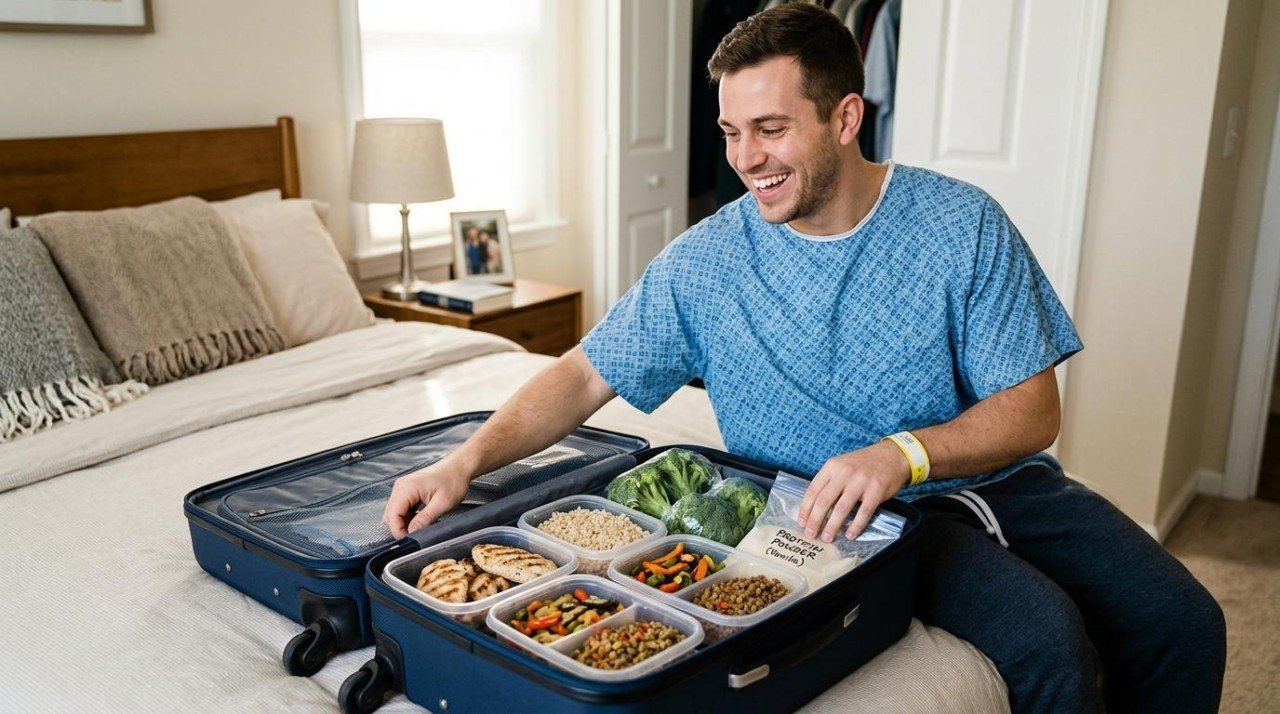
This is where planning does the real work. Skipped meals are almost never a decision; they are what happens when 2 p.m. arrives and there is nothing to eat. Eat Well Planner's AI meal plans and auto-generated shopping lists exist to close exactly that gap: a week decided in advance, with the ingredients already bought, so the default outcome is a meal instead of a five-hour gap and a vending machine. The meal prep system takes it further for people whose weekdays reliably fall apart.
Steady Hydration — With Honest Expectations
Dehydration gets listed as a migraine trigger constantly, and the evidence is real but modest. In a randomized trial in Family Practice, 52 patients were asked to drink an extra 1.5 liters of water a day and compared with 50 controls. The water group gained a statistically significant 4.5 points (95% CI 1.3 to 7.8) on migraine-specific quality of life, and 47% reported much improvement versus 25% of controls. But there was no meaningful change in the number of days with at least moderate headache.
Read that as it is: drinking more water may make you feel better without reducing your attack count. The authors still thought it reasonable to try, since the downside is essentially zero. Just do not expect it to be the answer on its own. We covered how much of your hydration actually arrives through food in this piece on hydration myths.
Magnesium and Riboflavin
These two are the rare supplements with mainstream neurological backing. In the American Academy of Neurology and American Headache Society guideline update on complementary treatments for episodic migraine prevention, both magnesium and riboflavin are rated Level B — "probably effective" and worth considering for prevention.
For riboflavin (vitamin B2), a dose-response meta-analysis of 12 trials and 749 participants found it reduced attack frequency by about 1.39 attacks per month versus control (95% CI −2.52 to −0.25) and shortened attack duration, with benefit increasing up to 400 mg a day and no threshold effect. It did not reduce severity. Several included trials were small, so the certainty is moderate at best.
An important caveat: 400 mg of riboflavin is a pharmacological dose, hundreds of times the daily requirement, and preventive magnesium doses in trials run to several hundred milligrams. You are not getting there from dinner. Food-level intake of these nutrients is a good idea for other reasons, but the migraine trials are testing supplements — which makes this a conversation for your doctor, not the supplement aisle. If you want the food-first picture on magnesium, we wrote about why so many people fall short of it.
Where an app helps here is simply making intake visible. Eat Well Planner's nutrition tracking and "good source of" nutrient highlights show you whether your week is actually delivering magnesium and riboflavin, or whether you have assumed it is. If it is not, Make It Healthier proposes ingredient swaps and additions to raise a specific nutrient and verifies the real gain with a calculator before suggesting them — so you are working from numbers rather than a vague intention to eat more leafy greens.
The Bottom Line
If you take four things from all of this:
- Suspect your own timeline. The attack often starts hours before the pain, and the food you blamed may have been something the attack made you want.
- The famous villains are weakly supported. Chocolate, aged cheese, and MSG have all failed or muddled their controlled tests. That does not mean they are innocent for you — it means the lists were never evidence about you in the first place.
- The boring triggers are the better-supported ones. Skipped meals, abrupt caffeine changes, and for some people alcohol. All three are about patterns, not ingredients.
- Your profile is probably unique. 85% of patients in the largest diary study had a trigger combination no one else shared. A careful diary over weeks will teach you more than every trigger list on the internet combined.
And if the diary feels like too much to sustain, that is a solvable problem rather than a personal failing. Making the record-keeping effortless — and making regular meals the default instead of a daily act of willpower — is most of the battle.
Try tracking your meals and planning your week with Eat Well Planner — free to use, with voice logging that takes seconds and meal plans that stop the skipped-meal trigger before it starts.