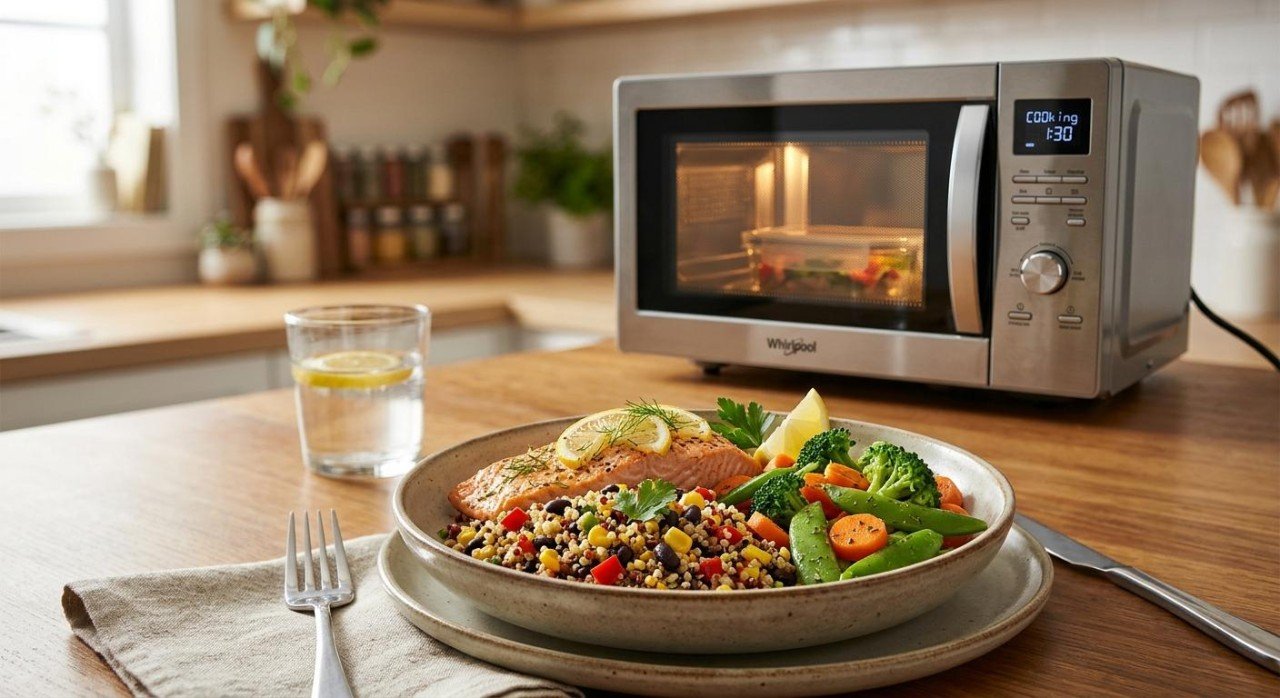
Say "Mediterranean diet" to most Americans and a picture forms almost instantly: a salmon fillet on a white plate, a scatter of pine nuts, a bottle of olive oil that cost more than the fish. It looks like a diet for people with a sunny terrace and a generous grocery budget. So it gets filed under "someday," along with the gym membership and the standing desk.
That instinct is understandable. In a Pew Research Center survey of 5,123 U.S. adults conducted in early 2025, 69% said the increased cost of healthy food makes it harder for them to eat well, and 90% said healthy food has gotten more expensive in recent years. Cost is not an excuse people are inventing. It is the single loudest barrier there is.
But the Mediterranean diet is a strange place to run into that wall, because it did not start as an aspirational diet. It started as a description of what poor people in southern Europe were eating in the 1950s because it was what they could afford. The expensive version is a marketing layer that got added later. Peel it off, and what is underneath maps almost perfectly onto the cheapest shelves in an American grocery store.
It Was Never a Rich Person's Food
The whole idea traces back to Ancel Keys, an American physiologist who noticed after World War II that heart disease was far less common in parts of southern Italy and Greece than in the United States. In 1957 he ran a pilot study in Nicotera, a rural village in Calabria, to test his methods before launching the landmark Seven Countries Study, which went on to follow 12,763 middle-aged men across 16 cohorts in seven nations, as a 2025 review of the study describes.
What Keys found in those low-heart-disease populations was not luxury. It was, in his words, "simpler eating habits": large amounts of cereals, vegetables, olive oil, and fruit, with small amounts of meat, milk, dairy, and pastries. This was cucina povera — literally "poor cooking." Bread, beans, greens, whatever grew nearby, a little olive oil to make it taste like something, and meat as an occasional event rather than the center of the plate.
Nobody in Nicotera in 1957 was buying imported anything. The pattern that turned out to be one of the healthiest eating styles ever measured was the pattern people fell into when money was tight and food came from within a few miles.
Why It Is Worth Bothering With
Plenty of eating patterns have a good story attached. This one has unusually good data, which is why it is worth spending your limited grocery budget on.
The centerpiece is PREDIMED, a Spanish randomized trial of 7,447 adults at high cardiovascular risk who were assigned to a Mediterranean diet supplemented with extra-virgin olive oil, the same diet supplemented with nuts, or a reduced-fat control diet. Over a median 4.8 years, the olive oil group had a 31% lower rate of heart attack, stroke, and cardiovascular death (hazard ratio 0.69), and the nut group 28% lower (0.72), according to a review of the trial's outcomes. Worth knowing: the results were republished in the New England Journal of Medicine in 2018 after the authors discovered irregularities in how some participants had been randomized. The reanalysis, which handled those participants differently, produced similar findings — but it is a wrinkle worth being upfront about rather than pretending the evidence is spotless.
Beyond that single trial, a 2024 umbrella review in Nutrition & Dietetics pulled together 18 meta-analyses covering 238 randomized trials and roughly 198,000 people. It found consistent reductions in stroke incidence of 35% to 42% across four separate reviews, rated moderate certainty, along with reductions in fatal heart attack and cardiovascular death. The authors are also candid that 84% of the reviews they assessed were of low or critically low quality, so the effect sizes should be read as a direction of travel rather than precise numbers. Even discounted for that, it is about as strong a case as nutrition science produces for any eating pattern.
So Why Does It Feel Expensive?
Here is the honest complication, and it explains a lot.
Studies that measure what people actually spend do generally find that higher Mediterranean-diet adherence costs a bit more. The clearest look at this comes from the UK Fenland Study, published in the British Journal of Nutrition in 2018, which matched the diets of 12,417 adults to supermarket prices. People in the top third for Mediterranean adherence spent 5.4% more than those in the bottom third — about £0.20 a day.
But the interesting part is the breakdown of where that money moved. Eating more vegetables added about £0.28 a day and more fruit about £0.26. Meanwhile, eating less red meat saved £0.43 a day, with further savings from cutting processed meat, sweets, and alcohol. In other words, the Mediterranean pattern contains its own funding mechanism. The authors concluded plainly that savings could be made by reducing the food components that are not part of the pattern.
This is the trap almost everyone falls into. They treat the Mediterranean diet as a set of foods to add — buy the olive oil, buy the salmon, buy the nuts — while the steak, the deli meat, the snacks, and the wine stay exactly where they were. Of course the bill goes up. The pattern only pays for itself when the beans replace the beef rather than joining it.
The 2026 U.S. price picture makes that swap unusually well timed. USDA's Economic Research Service forecast in July 2026 that beef and veal prices would rise 10.7% this year, against 2.7% for groceries overall — while fats and oils, the category olive oil sits in, are predicted to fall. The single most expensive habit in the average American cart is the one the Mediterranean pattern asks you to shrink.
The Cheap Core of the Pattern
Strip away the branding and the actual foods at the heart of this diet are some of the least expensive items in the store.
Dried beans and lentils
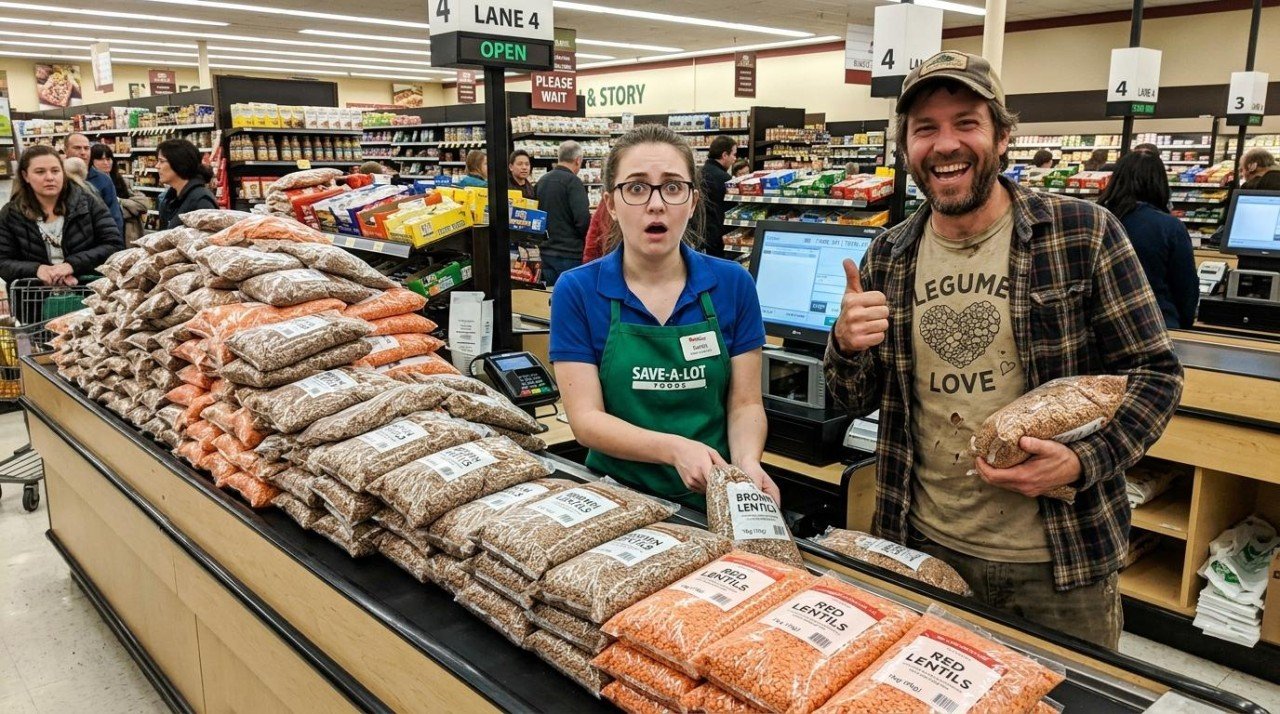
This is the anchor, and the numbers are almost comical. In USDA's national price data for 2023, dried pinto beans came in at 23 cents per cup equivalent — the least expensive vegetable USDA tracks, cheaper than any fruit including watermelon, and roughly a tenth the price of the priciest items on the list.
They also happen to be the food group with the strongest longevity signal in the whole pattern. A 2023 dose-response meta-analysis in Advances in Nutrition pooled 32 cohorts covering more than 1.1 million people and 93,373 deaths, and found that each additional 50 grams of legumes per day — about a third of a cup cooked — was associated with 6% lower all-cause mortality. Not a miracle, but a real, consistent, dirt-cheap effect.
If you have never cooked them from scratch, our guides to cooking dried beans and why lentils punch so far above their price cover the mechanics. Canned beans are fine too — rinse them and you are most of the way there.
Canned fish, not fresh fillets
The Mediterranean pattern calls for fish more often than red meat, and the version most people picture is a fresh salmon fillet at the seafood counter. The traditional version was small oily fish: sardines, anchovies, mackerel. These are also the ones lowest in mercury. The joint EPA and FDA advice puts sardines, anchovies, Atlantic mackerel, and salmon on the "Best Choices" list and recommends two to three servings a week.
A can of sardines costs about a dollar, needs no cooking, and keeps for years. We made the full nutritional case for them separately, but for budget purposes the point is simple: canned fish is how you hit the fish recommendation without a fish budget.
Frozen and canned vegetables
Fresh is not automatically better, and it is often not cheaper. In USDA's 2022 price data, frozen spinach cost $1.10 per cup equivalent and canned spinach 90 cents, against $1.77 for fresh. The same analysis found that meeting the full federal fruit and vegetable recommendation for a 2,000-calorie diet costs about $2.50 to $3.00 a day at 2022 prices — roughly $20 a week per person for all your produce.
On nutrition, be realistic rather than evangelical. Harvard's Nutrition Source notes that processing does cost something — canning loses about 60% of vitamin C on average and freezing about 50% — but also that frozen or canned produce can end up with more nutrients than fresh produce that has been sitting around too long. Fresh peas lose roughly half their vitamin C in a week; frozen broccoli keeps nearly all of its. Their practical advice is to pick options without added sodium or sugar, which mostly means reading the can.
Whole grains from the bulk shelf
Oats, brown rice, barley, bulgur, whole wheat pasta. Cereals and bakery products are one of the categories USDA expects to rise slower than their 20-year average in 2026. Buying the plain bag rather than the branded box is where the money is, and it is the same grain.
Olive oil, in the amount that actually matters
Olive oil is the item people fixate on, and it went through a genuinely brutal stretch: prices spiked hard in 2023 and 2024 after drought hit the Spanish harvest. They have come down substantially since — one market analysis put Spanish export prices in May 2026 at $7.66 per kilo, down 32% from the 2024 peak — though poor flowering suggests the relief may not last, so it is a reasonable thing to stock up on when it is discounted.
The more useful reframe is how little you need for the benefit. In a 2022 study in the Journal of the American College of Cardiology following 92,383 U.S. adults for 28 years, the highest intake category — the one linked to 19% lower total mortality and 19% lower cardiovascular mortality — was defined as more than half a tablespoon a day. Half a tablespoon. The same analysis found that swapping about 10 grams a day of butter, margarine, mayonnaise, or dairy fat for olive oil was associated with 13% to 19% lower mortality risk, while swapping other vegetable oils for olive oil showed no significant benefit.
So the play is a decent store-brand extra-virgin oil, used daily, not a $30 bottle used sparingly because it feels precious. Dan Flynn of the UC Davis Olive Center advises looking for an actual harvest date rather than just a "best by" date, choosing the most recent vintage on the shelf, checking where the oil was produced rather than merely bottled, and storing it somewhere cool and dark. Our guide to buying real extra-virgin olive oil goes deeper, and if you are still assuming the name brand is better by default, the store-brand question is worth revisiting.
What to Skip Entirely
"Mediterranean" is a marketing word with no legal definition, which means it can be printed on anything. The markup lives in the packaged versions of foods that are cheap in their plain form:
- Branded "Mediterranean" packaged goods — crackers, dressings, snack packs, seasoning blends. A jar of dried oregano and a lemon do the same job.
- Pine nuts. They are among the most expensive nuts sold. Toasted sunflower seeds, walnuts, or almonds give you the same crunch and fat for a fraction of the price.
- Imported specialty produce. Cabbage, carrots, onions, and potatoes are Mediterranean-legal and cost a fraction of the photogenic stuff. USDA's 2022 data put baked white potatoes at 27 cents, iceberg lettuce at 32 cents, and onions at 43 cents per cup equivalent.
- Fresh fish you will not cook. The most expensive food is the one that spoils in the drawer.
What a Week Actually Looks Like
Here is a week built entirely on the cheap core. It is deliberately repetitive, because that is how real cooking works and how you stop wasting half an onion.
- Sunday: Cook a pot of dried beans and a pot of a whole grain. Roast a tray of whatever vegetable was cheapest. That is most of the week's labor done.
- Monday: Lentil soup with carrots, onion, canned tomatoes, olive oil, and a slice of whole grain bread.
- Tuesday: Beans and grains with roasted vegetables, lemon, and olive oil. Yogurt and fruit after.
- Wednesday: Sardines on toast with sliced tomato and red onion — a five-minute dinner and one of your two fish servings.
- Thursday: Pasta with canned tomatoes, garlic, olive oil, and a can of chickpeas stirred through. Frozen spinach wilted in at the end.
- Friday: Whatever roast vegetables are left, folded into eggs or a grain bowl.
- Saturday: The one meal with meat in it, if you want meat. A small amount, treated as a flavoring rather than the main event.
- Breakfasts: Oats, all week, with frozen fruit.
The costing works out something like this. Produce, per USDA's figures, runs roughly $2.50 to $3.00 a day per person if you are hitting the full recommendation — and less if you lean on the cheapest forms. The protein anchor is beans at around a quarter per cup and canned fish at around a dollar per meal, rather than ground beef in a year when USDA expects beef prices to climb double digits. Grains and oats are pennies. The olive oil, at half a tablespoon or so a day, works out to a bottle lasting a month or more.
Your store's prices will differ from national averages, and the honest headline is not "this week is free." It is that the money moves from the most expensive part of the cart to the cheapest — and the Fenland numbers say the meat and snacks you drop more than cover the produce you add.
Where Most of the Savings Actually Comes From
Not from any single cheap ingredient. From having a plan.
The reason the beans-and-grains week works is that it is decided in advance, so nothing gets bought speculatively and nothing rots. The reason it usually fails is Wednesday at 6pm, when there is no plan, the fridge holds three unrelated items, and takeout is the path of least resistance. That is not a willpower problem. It is a logistics problem.
This is exactly what Eat Well Planner is built for. You can set up a profile with Mediterranean-style preferences and a budget-conscious leaning, and the AI will build a week of meals from your saved recipes — then generate the shopping list automatically, so you buy what the plan needs and nothing else. That single constraint, buying only against a plan, is where most of the savings in this article actually live. Every recipe also carries a nutrition score and plain-language "good source of" highlights, so you can see whether a cheap week is genuinely delivering the fiber and nutrients you are after rather than just being cheap. And because the pattern leans so heavily on plant variety, the Plant Points tracker turns "eat more different plants" into a number you can watch climb through the week.
Take the Guesswork Out of Eating Well
Eat Well Planner helps you organize your favorite recipes, plan balanced meals, and automatically generate shopping lists — all in one place. Whether you're tracking macros, managing dietary restrictions, or just trying to stop asking "what's for dinner?", we've got you covered.
Our AI-powered tools can adapt any recipe to your dietary needs, help you discover new meals you'll love, and even log your nutrition effortlessly. It's meal planning made simple.
Start Organizing Your Meals — FreeThe 80/20 Reality
You do not need imported anything. You do not need to like anchovies. You do not need to hit some adherence score.
What the research consistently rewards is the shape of the pattern: plants at the center, legumes several times a week, whole grains instead of refined ones, olive oil as the default fat, fish more often than red meat, fruit instead of dessert most nights. Every one of those levers has a cheap version. The dried beans are not a budget compromise on the "real" Mediterranean diet — dried beans are the real Mediterranean diet. So are canned sardines, frozen spinach, and a plain bottle of store-brand olive oil.
The version with the pine nuts and the imported tuna belly is the tourist edition. The original was invented by people who could not afford it either.