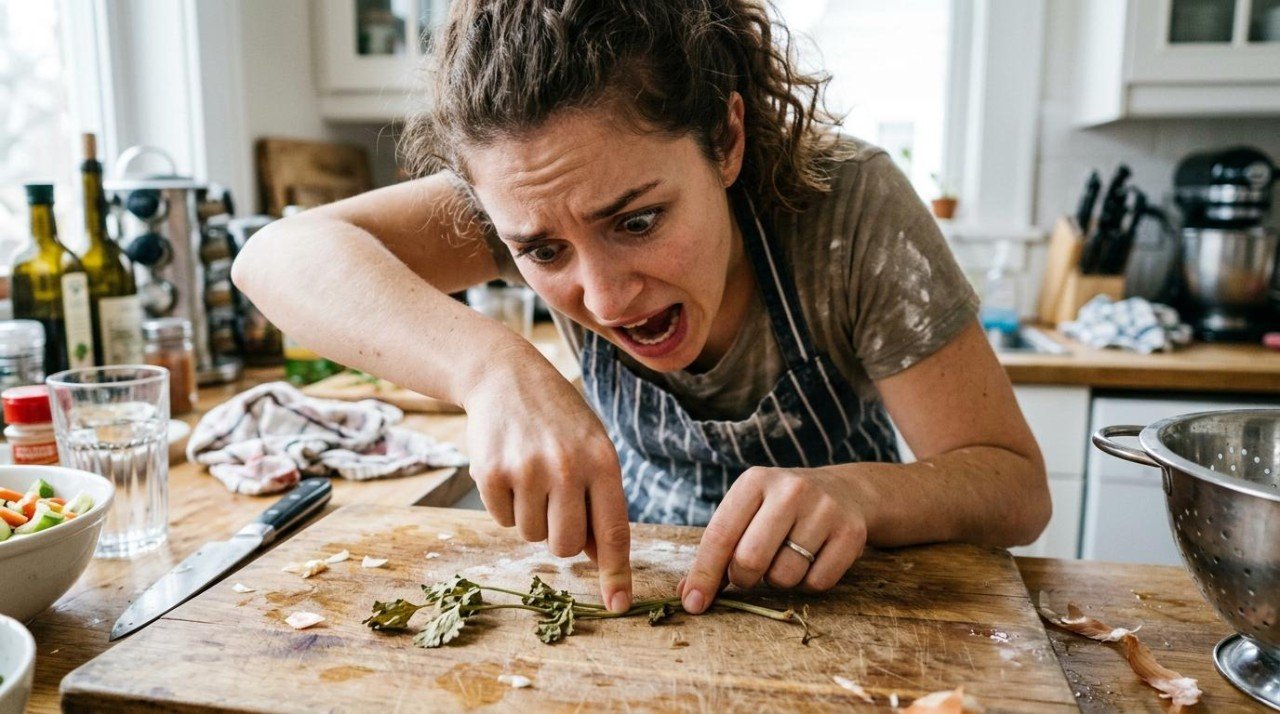
Somewhere between watching a contestant reduce a balsamic glaze while simultaneously plating a deconstructed pavlova and narrating their emotional backstory, you decided you can't cook. Not really. Not like that. The meal you were planning to make tonight — some chicken, some vegetables, maybe rice — suddenly felt a bit embarrassing. So you ordered a takeaway instead.
This is the MasterChef effect. And it's quietly doing more damage to home cooking than any lack of skills ever could.
The paradox is striking: we've never watched more cooking content, yet many of us feel less confident in the kitchen than ever. Food media is everywhere — TV competitions, Instagram reels, TikTok recipe videos, YouTube chefs — and it's entertaining, inspiring, beautiful. But it's also setting a standard for everyday cooking that has nothing to do with everyday cooking.
The Gap Between What We Watch and What We Cook
The food writer Michael Pollan identified this disconnect over a decade ago, calling cooking a popular spectator sport — pointing out that the time it takes the average American to prepare dinner has dropped to less than it takes to watch an episode of Top Chef. Shows like MasterChef, Iron Chef, and the endless procession of cooking competitions aren't really cooking programs — they're closer to sport. There are judges, eliminations, dramatic music, clock countdowns. As Pollan put it, they're "more like sports than cooking."
The problem isn't that these shows exist. They're entertaining. The problem is what they do to your internal reference point for what cooking is supposed to look like. When every meal you see on screen is plated with tweezers, garnished with microherbs, and served under studio lighting to a panel of professional critics, your Tuesday night stir-fry starts to feel inadequate. Not because there's anything wrong with it — but because the bar has been quietly moved somewhere absurd.
Social media makes it worse. A thirty-second recipe reel can make any dish look effortless. The creator smiles, tosses ingredients into a pan, cuts to a sizzling close-up, and serves a photogenic meal before you've even found a chopping board. What you don't see: the measuring, the prep, the failed attempts, the dirty dishes stacked off-camera, the fact that someone probably spent twenty minutes arranging that garnish for the photo. That format is designed to look easy, but it hides everything that real cooking actually involves.
The Numbers Tell an Interesting Story
Cooking intimidation isn't a niche feeling — it's remarkably common. A 2024 nationwide survey of 2,010 Americans found that 27% admit to feeling intimidated by cooking a meal from scratch. Nearly one in five (19%) said they're paralyzed by fear of failure in the kitchen. And 28% reported being embarrassed about their cooking abilities — embarrassed enough that 24% avoid hosting dinner parties because of it.
The barriers people cited are revealing: 50% worry about time, 43% dread the cleanup, and 39% find recipes too complex. But here's the one that matters most for this conversation: 26% say they're simply too inexperienced. Not that they don't want to cook. They don't think they can.
Among younger adults, the gap is even wider. A 2023 survey of 2,000 Gen Z and Millennial respondents found that only 33% of Gen Z consider themselves skilled cooks, compared to 47% of Millennials. Nearly half of Gen Z (49%) are hesitant to cook for others because they lack confidence. Part of this is structural — home economics courses have been vanishing from schools. While 47% of Millennials took home ec in high school, only 37% of Gen Z did.
Meanwhile, a 2025 Instacart survey found that more than half of Gen Z describe themselves as only moderately, slightly, or not confident in the kitchen. The same survey showed that time and exhaustion — not skill — are the top barriers to cooking more. Only 7% actually cited lack of skill as the main obstacle.
That last statistic is important. Most people who feel they can't cook aren't actually lacking in ability. They're lacking in confidence. And those are very different problems with very different solutions.
What Cooking Actually Is (Versus What TV Tells You)
Here's a secret that every professional chef knows but competitive cooking shows will never tell you: the vast majority of home meals are fundamentally simple. They follow a basic formula that hasn't changed in centuries.
- Pick a protein (chicken, fish, eggs, beans, tofu, lentils)
- Pick a vegetable (whatever you like, whatever's in season, whatever's in the fridge)
- Pick a carb (rice, pasta, bread, potatoes, noodles)
- Add seasoning (salt, pepper, garlic, a spice blend, soy sauce, herbs)
- Apply heat
That's it. That's dinner. Chicken thighs roasted with broccoli and rice. Pasta with tinned tomatoes and whatever vegetables are knocking around. Eggs scrambled with peppers and toast. A stir-fry with frozen veg and noodles. None of these require culinary training. None of them take longer than 30 minutes. None of them would make it onto MasterChef. And every single one of them is a perfectly good meal that nourishes you and the people you're feeding.
You don't need 50 techniques. You need about five or six: boiling, frying, roasting, steaming, blending, and basic baking. Master those — even roughly — and you can feed yourself for life. You don't need a kitchen full of gadgets either. A sharp knife, a decent pan, a chopping board, and a baking tray will get you through 90% of meals.
The reason this feels controversial is that food media has convinced us that cooking and performance are the same thing. They're not. Cooking is feeding people. Performance is entertainment. You don't need to perform to eat well.
The Julia Child Principle
Before competitive cooking shows colonized our screens, there was Julia Child. She didn't cook under time pressure. She didn't compete against anyone. She made mistakes — on camera, in front of millions of people — and her response was to laugh and keep going. Because her show was broadcast live in the 1960s, there were no retakes. If something went wrong, viewers saw it happen.
Her philosophy was the opposite of MasterChef: "Learn how to cook — try new recipes, learn from your mistakes, be fearless, and above all have fun." She didn't start cooking until her late thirties. She burned things. She dropped things. She showed people that the kitchen was a place for curiosity and enjoyment, not anxiety and perfection.
That message has been almost entirely drowned out. Today's dominant cooking narrative is: here are the stakes, here is the clock, here are three Michelin-starred judges who will tell you everything that's wrong with your food. It's riveting television. But it's a terrible model for how to think about feeding yourself on a Tuesday night.
Why Confidence Comes from Repetition, Not Recipes
One of the most persistent myths about cooking is that you need to find the right recipe and follow it perfectly. This puts the emphasis entirely in the wrong place. Cooking confidence doesn't come from recipes — it comes from repetition.
Research published in Frontiers in Psychology found that cooking builds self-efficacy and well-being through the experience of tangible accomplishment. The act of producing something concrete — a meal, even an imperfect one — creates what researchers describe as a sense of purpose and personal growth. People demonstrate a stronger preference for self-prepared meals, not because they're objectively better, but because making them means something.
This is the cycle that MasterChef disrupts. When your reference point is professional-level cooking, every meal you make feels like a failure. When your reference point is "I made food and we ate it," every meal you make is a success. And success, repeated often enough, becomes confidence.
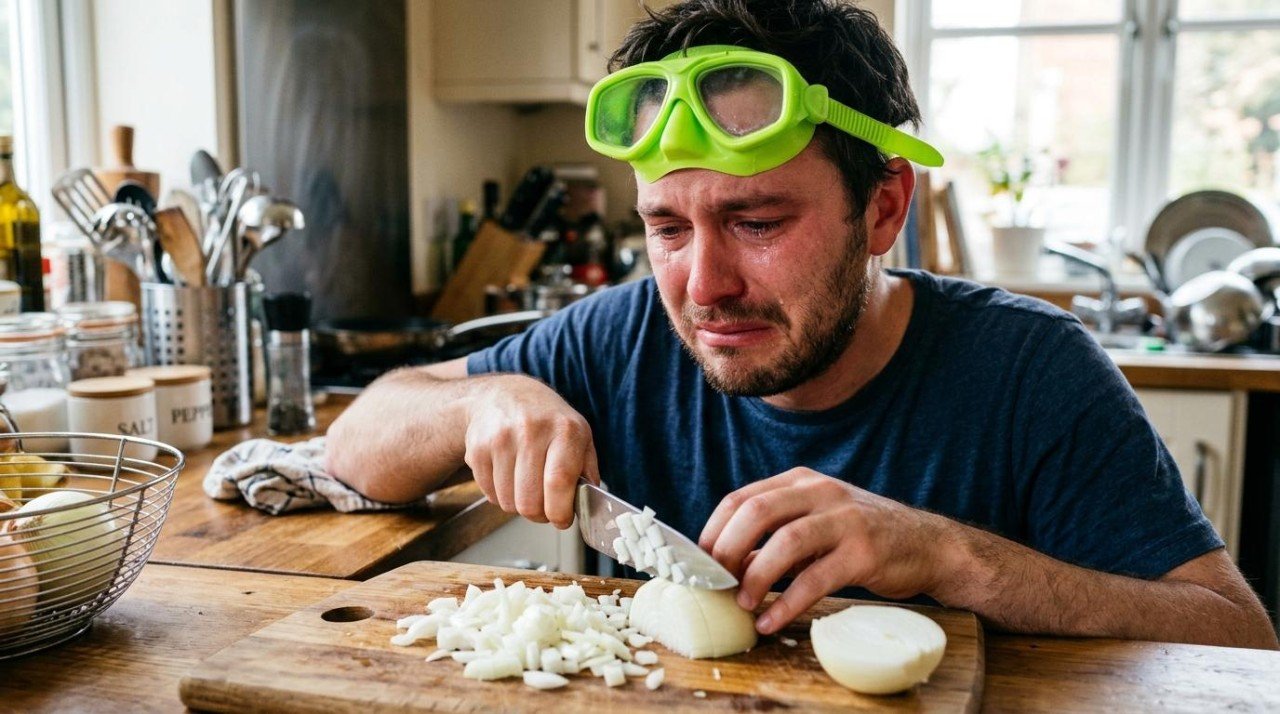
The first time you chop an onion, it takes five minutes and you worry about your fingers. The twentieth time, it takes thirty seconds. The first time you make a stir-fry, you burn the garlic. The fifth time, you know to add it later. The tenth time, you stop measuring and start eyeballing. None of this comes from watching someone else do it on a screen. It comes from doing it yourself, badly, and then doing it again slightly less badly, until one day you realize you're cooking without a recipe and it tastes good.
The Learning Ladder: A Realistic Starting Point
If cooking feels overwhelming, the problem might be that you're starting too high. You don't learn to swim by jumping into the deep end. You don't learn to cook by attempting a three-course dinner for six people.
Here's a more realistic progression — a learning ladder that starts where you actually are and builds from there:
Level 1: Assembly
No cooking required. Make toast with peanut butter and banana. Build a sandwich. Assemble a bowl of yogurt with fruit and granola. Toss a salad with pre-washed leaves and a bottled dressing. The goal here isn't culinary achievement — it's getting comfortable being in the kitchen and preparing food with your own hands.
Level 2: One-Pan Basics
Learn to scramble eggs. Fry a piece of chicken in a pan. Boil pasta and stir through a jar of sauce with some frozen vegetables thrown in. Make beans on toast. These are single-step meals that introduce you to heat, timing, and seasoning without any complexity.
Level 3: Simple Combinations
A stir-fry with pre-cut vegetables and a sauce from a bottle. Pasta with a homemade tomato sauce (tinned tomatoes, garlic, olive oil — that's the whole recipe). A sheet-pan dinner where you put chicken and vegetables on a tray, season them, and roast everything together. You're now combining a protein, a vegetable, and a carb with seasoning. This is fundamentally what cooking is.
Level 4: Building Confidence
A curry from scratch. A roast dinner. A soup made from whatever's in the fridge. At this level, you start improvising — adding a bit more of this, leaving out that, adjusting to taste. You stop following recipes to the letter and start cooking by feel. This is where it starts being enjoyable rather than stressful.
The key insight is that each level builds on the one before it. You can't run before you can walk. If you've been ordering takeaway five nights a week and you try to jump straight to Level 4, you'll fail, feel terrible, and conclude that cooking isn't for you. Start at Level 1. Stay there for a week or two. Move up when you're ready. There's no exam.
Take the Guesswork Out of Eating Well
Eat Well Planner helps you organize your favorite recipes, plan balanced meals, and automatically generate shopping lists — all in one place. Whether you're tracking macros, managing dietary restrictions, or just trying to stop asking "what's for dinner?", we've got you covered.
Our AI-powered tools can adapt any recipe to your dietary needs, help you discover new meals you'll love, and even log your nutrition effortlessly. It's meal planning made simple.
Start Organizing Your Meals — FreeYour Kitchen Isn't a TV Set (And That's a Good Thing)
A few things that are completely normal in home cooking but would get you eliminated on MasterChef:
- Burning something and scraping off the burnt bits
- Substituting an ingredient because you forgot to buy one
- Using frozen vegetables instead of fresh
- Making the same meal three times in one week because it was easy
- Eating dinner at 9pm because it took longer than you expected
- Seasoning with "some of that stuff in the cupboard"
- Plating food by dumping it on a plate
- Googling "how long to boil an egg" for the hundredth time
All of these are fine. All of these are real cooking. The Instacart survey found that 62% of Americans feel confident in the kitchen — and the ones who do aren't performing elaborate techniques. They're making meals that work. The HelloFresh State of Home Cooking report, which surveyed 5,000 Americans, found that 71% find cooking more stress-relieving than stressful. Not because they're making restaurant-quality food — because they're making something with their own hands.
The 77% of Gen Z and 83% of Millennials who report having burnt dishes? That's not a failure rate. That's a learning rate. Every confident cook you know has a history of burnt pans, collapsed cakes, and oversalted soups. The difference is they kept going.
What's Actually Stopping You
If you've read this far and you're thinking "but I genuinely can't cook," let's examine that. Can you boil water? Then you can cook pasta, rice, eggs, and vegetables. Can you turn on an oven? Then you can roast a chicken, bake a potato, and make a sheet-pan dinner. Can you stir things in a pan? Then you can make a stir-fry, scrambled eggs, and a dozen different sauces.
You probably have more cooking ability than you think. What you might be missing is:
- A starting point — knowing what to cook tonight, with the ingredients you already have
- A plan — so you're not making decisions when you're already tired and hungry
- A forgiving environment — somewhere to ask "can I substitute this?" without judgment
- Permission to be bad at it — the understanding that imperfect meals still count
These aren't skill problems. They're infrastructure problems. And they're solvable.
Eat Well Planner was built for exactly this situation. It generates a weekly meal plan based on your preferences and skill level, so you never have to stand in front of the fridge wondering what to make. It creates your shopping list automatically, so you always have the right ingredients. And if you're mid-recipe and wondering whether you can swap the courgette for something else, the AI recipe chat will answer that in seconds — no judgment, no elimination round. It's the cooking infrastructure that takes the decision fatigue out of the equation and lets you focus on the only part that actually matters: making the food.
What Would Change If You Stopped Comparing
Imagine, for a moment, that you'd never seen a cooking competition. That your only reference for what dinner looks like was the meals your family ate growing up, or the simple dishes your friends throw together on a weeknight. Pasta with pesto. Rice and beans. A baked potato with cheese and salad. Soup from a recipe you found online.
Would you feel embarrassed about making those meals? Probably not. They're normal. They're what most people eat most of the time. The embarrassment only arrives when you compare your Tuesday night dinner to something designed for television — which was never a fair comparison in the first place.
A study published in Public Health Nutrition found something telling: Americans who viewed cooking as requiring scratch ingredients from fresh vegetables and homemade components reported substantially higher confidence than those who associated cooking with convenience foods. But — and here's the key part — actual cooking frequency was roughly the same across both groups, at about 4.5 dinners per week. The people who felt less confident were cooking just as often. They just didn't believe they were "really" cooking.
That perception gap is exactly what competitive cooking shows exploit. They define cooking up — toward restaurant standards, rare ingredients, complex techniques — until anything less feels like it doesn't count. But it does count. Putting a meal on the table counts. Feeding yourself and the people you care about counts. Choosing to cook something simple instead of ordering something processed counts.
A Different Way to Think About It
Here's a reframe that might help: cooking isn't a talent. It's a habit. Some people have been doing it longer and have more practice, just like some people are better at driving or typing or folding laundry. That doesn't make them gifted. It makes them experienced. And experience is available to everyone.
You don't need to be good at cooking. You need to be willing to do it regularly, accept that the early results will be average, and trust that they'll improve. That's it. That's the whole secret.
The research backs this up: a quasi-experimental study found that a seven-week food literacy program significantly improved participants' cooking confidence, and the gains were linked to repeated practice, not natural ability. People who cooked more felt more confident, which made them cook more, which made them feel more confident. It's a virtuous cycle — and the only way to start it is to start cooking.
MasterChef didn't ruin cooking. But it did ruin a lot of people's relationship with cooking by replacing a simple, necessary, deeply human activity with a competitive spectacle. The antidote isn't to stop watching — it's to remember that what you see on screen has about as much to do with feeding your family as Formula 1 has to do with driving to work.
You're better at this than you think. And the only way to prove it is to go make dinner. It doesn't need to be perfect. It just needs to be yours.