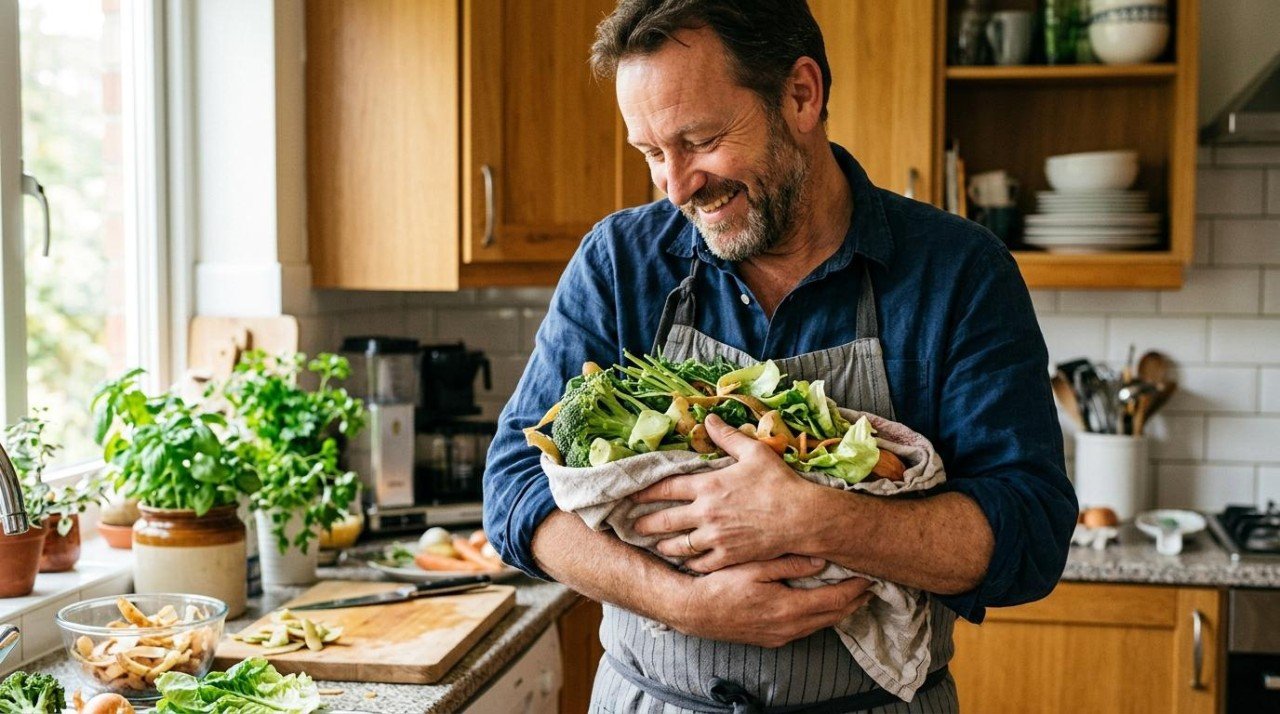
Picture two people standing in the same kitchen at 6 p.m. with the same handful of ingredients: half a bag of rice, a few eggs, a wilting bunch of scallions, a block of tofu, and whatever's rattling around the spice drawer. One person sees dinner. The other sees a problem with no solution, because there's no recipe taped to the fridge telling them what to do.
The difference between those two cooks isn't talent, and it usually isn't even experience. It's that one of them is working from a framework instead of a script. They've internalized a few flexible patterns that turn "random stuff on hand" into a meal, no instructions required. The good news is that this is a learnable skill, not a personality trait — and once it clicks, cooking stops feeling like following directions and starts feeling like play.
This post lays out the mental model experienced cooks use to improvise, the universal templates you can fill in with almost anything, the four dials that make food taste good, and how to swap ingredients without fear. Think of it as taking the training wheels off.
Why a Framework Beats Memorizing Recipes
Recipes are wonderful teachers. The chef Samin Nosrat — whose 2017 book Salt, Fat, Acid, Heat won a James Beard Award and became a Netflix series — describes them as "training wheels" for home cooks who haven't yet built up their own internal database of how food behaves. The problem starts when you never take the training wheels off. If you can only cook the exact dishes you have written instructions for, you're permanently dependent on having the right recipe, the right ingredients, and the time to shop for both.
Learning to cook without a recipe pays off in ways that go well beyond convenience. In a 10-year longitudinal study from the University of Minnesota's Project EAT, young adults who rated their cooking skills as "very adequate" at ages 18 to 23 were eating measurably better a decade later. According to the study's published findings (n = 1,158), they had 3.5 times the odds of preparing a meal with vegetables most days, and reported less frequent fast food. Notably, only about one in four described their skills as "very adequate" in the first place — so confidence in the kitchen is both uncommon and quietly powerful.
It's not just about health, either. Cooking at home more often is linked to a better diet at no extra cost. In the University of Washington's Seattle Obesity Study of 437 adults, people who cooked dinner at home about six times a week scored roughly 74 on the Healthy Eating Index, compared with about 67 for those cooking three times a week — and they didn't spend more money to get there. The researchers found home-cooked meals were lower in calories, sugar, and fat without raising food bills, because the savings on takeout offset the grocery spending. Improvisation is what makes frequent home cooking sustainable: when you don't need a recipe and a special shopping trip for every meal, cooking on a Tuesday night stops being a project.
This is exactly the gap a tool like Eat Well Planner is designed to close. You can build a personal recipe book by importing dishes from any website, Instagram reel, or YouTube video, then lean on the AI recipe chat to adapt them to what you actually have in the kitchen — "I'm out of chicken, can I use chickpeas?" or "make this without dairy." Each adaptation is a low-stakes rep that builds the same internal database the pros rely on, until one day you realize you're improvising on your own.
Take the Guesswork Out of Eating Well
Eat Well Planner helps you organize your favorite recipes, plan balanced meals, and automatically generate shopping lists — all in one place. Whether you're tracking macros, managing dietary restrictions, or just trying to stop asking "what's for dinner?", we've got you covered.
Our AI-powered tools can adapt any recipe to your dietary needs, help you discover new meals you'll love, and even log your nutrition effortlessly. It's meal planning made simple.
Start Organizing Your Meals — FreeThe One Structure Behind Almost Every Meal
Here's the single most useful idea in this whole post. The overwhelming majority of savory meals follow one simple structure:
Base + Protein + Vegetable + Flavor + Finisher
Once you see it, you can't unsee it. Let's break down each slot:
- Base — the foundation that makes it filling: rice, noodles, pasta, potatoes, bread, tortillas, quinoa, or a pile of greens.
- Protein — eggs, beans, lentils, tofu, tempeh, chicken, fish, ground meat, or cheese.
- Vegetable — anything fresh or frozen: onions, peppers, broccoli, spinach, mushrooms, tomatoes, zucchini, carrots.
- Flavor — the aromatics and seasonings that give it a personality: garlic, ginger, herbs, spices, soy sauce, curry paste, chili.
- Finisher — the little something at the end that makes it sing: a squeeze of lemon, a drizzle of olive oil, fresh herbs, a sprinkle of cheese, toasted nuts, or seeds.
Almost any combination of these five slots makes a coherent plate of food. Rice + tofu + broccoli + ginger-garlic-soy + sesame seeds is dinner. Pasta + white beans + spinach + garlic-and-chili + Parmesan is dinner. You're not memorizing meals anymore — you're filling in a formula.
Six Fill-in-the-Blank Templates
The structure above gets even easier when you funnel it through a cooking method. These six templates account for a huge share of weeknight dinners worldwide, and each one is really just a set of instructions for how to combine your base, protein, vegetable, flavor, and finisher.
1. The Stir-Fry
Hot pan, a little oil, aromatics (garlic, ginger, scallion) for 30 seconds, then protein, then quick-cooking vegetables, then a sauce (something salty + something sweet + something acidic), served over a base. Total time: about 15 minutes. Almost any vegetable and protein works.
2. The Grain Bowl
A scoop of a cooked grain, a protein, a pile of raw or roasted vegetables, and a punchy sauce or dressing to tie it together. This is the ultimate leftovers vehicle — no cooking required if your components are already made.
3. The Soup
Sweat aromatics in a pot, add a base (broth or water plus something starchy), simmer in your protein and vegetables until tender, then finish with acid and herbs. Forgiving, scalable, and freezer-friendly.
4. The Frittata (or Any Egg Scramble)
Whisk eggs, pour over sauteed vegetables and any cooked protein or cheese in an oven-safe pan, cook gently, then finish under the broiler. The single best way to use up odds and ends in the fridge.
5. The Pasta
Boil pasta. While it cooks, build a quick sauce from fat (olive oil or butter), aromatics, a vegetable, and maybe a protein. Toss with a splash of starchy pasta water to bind it, and finish with cheese and herbs.
6. The Sheet-Pan Dinner
Toss a protein and chopped vegetables with oil, salt, and seasoning; spread on a pan; roast at around 425°F until browned. Almost zero active effort, and the high heat does the flavor work for you (more on why in a moment).
Pick any template, fill the slots with what you have, and you've got dinner without ever opening a cookbook.
Salt, Fat, Acid, Heat: The Four Dials That Make It Taste Good
Knowing the structure gets food on the plate. Knowing why food tastes good is what lets you fix it when it's bland or flat. Samin Nosrat's framework distills this down to four elements you're always adjusting, consciously or not. As she puts it, "if you can learn how to use these four elements ... you can learn how, why, and when to use them, and make anything taste good with or without a recipe."
- Salt deepens and amplifies flavor. The most common reason home cooking tastes "missing something" is under-salting. Season in layers as you go, and taste constantly.
- Fat carries flavor and creates texture — the richness of olive oil, the crispness of a well-oiled roasting pan, the creaminess of cheese or coconut milk.
- Acid balances and brightens. Nosrat explains that "acidity helps to balance our food and create contrasts," giving the palate "a second taste to bounce that first thing off of." When a dish tastes heavy or dull, a squeeze of lemon or splash of vinegar almost always fixes it.
- Heat determines texture and builds flavor. This is where the Maillard reaction comes in: above about 285°F, amino acids and sugars react to create hundreds of new flavor compounds and that crave-able browned crust on roasted vegetables, seared meat, and toasted bread. It's why a roasted carrot tastes so different from a boiled one.
When something you cooked tastes off, run through the dials: Is it bland? Add salt. Heavy or flat? Add acid. Lifeless? It may need fat or more browning. This single diagnostic habit will improve your cooking faster than any new recipe.
How to Substitute With Confidence
Improvising means swapping ingredients constantly, and the secret is to substitute by role, not by exact match. Ask what job the missing ingredient was doing, then find something that does the same job:
- Aromatic base: Out of the classic French mirepoix (a 2:1:1 mix of onion, carrot, and celery)? The Italian soffritto uses the same trio in olive oil, while the Cajun "holy trinity" swaps the carrot for bell pepper. They're interchangeable starting points for soups, stews, and sauces — use whatever you have.
- Protein: Beans, lentils, tofu, eggs, chicken, and ground meat are largely swappable in stir-fries, bowls, soups, and pasta. Just adjust the cooking time.
- Green vegetable: Spinach, kale, chard, broccoli, and green beans can stand in for one another in most dishes.
- Acid: Lemon, lime, vinegar, and even a spoonful of yogurt can all provide the brightening hit a dish needs.
- Fresh herb: If you're out of one soft herb (parsley, cilantro, basil, dill), another will usually work; just expect a slightly different accent.
The more you swap by role, the more you realize that recipes are suggestions, not laws. This is also where an app earns its keep: Eat Well Planner's AI recipe chat can suggest substitutions on the fly, adapt a dish for dietary restrictions like gluten-free or dairy-free, or generate a full variation of a recipe to match what's in your pantry — so you can experiment with a safety net while you build your instincts.
Start Here: Three Foolproof Formulas
If a blank kitchen still feels intimidating, start with these three formulas. Memorize the pattern, not the ingredients, and vary one element at a time until it feels automatic.
- Any-Veg Soup: Saute onion + garlic in oil → add chopped vegetables and a can of beans → cover with broth → simmer until tender → finish with lemon and herbs. Salt at every stage.
- 15-Minute Stir-Fry: Cook protein in a hot oiled pan → add vegetables → add garlic and ginger → add a sauce of soy sauce + a little honey + a splash of vinegar → serve over rice with a sprinkle of sesame.
- Clean-Out-the-Fridge Frittata: Saute leftover vegetables and any protein in an oven-safe pan → pour over 6 to 8 whisked, salted eggs → cook gently on the stove → finish under the broiler until set → top with cheese or herbs.
Cook each of these a few times and you'll stop reading the formula altogether. That's the moment the framework becomes second nature — when you open the fridge, see "random stuff," and confidently see dinner.
The Real Goal: Freedom, Not Perfection
Cooking without a recipe isn't about never making mistakes. It's about understanding food well enough that mistakes become small, fixable adjustments rather than reasons to order takeout. You'll over-salt something, forget the acid, or crowd the pan and steam your vegetables instead of browning them — and each time, you'll learn the dial you reached for too far or not far enough. That's not failure; that's exactly how the internal database gets built.
Give yourself permission to experiment. Keep a few foolproof formulas in your back pocket, lean on the structure of base-protein-vegetable-flavor-finisher, taste as you go, and trust the four dials to guide you. Before long, the recipe becomes optional — a source of inspiration rather than a set of orders you're afraid to disobey.
Want a head start on building that confidence? Try organizing your meals with Eat Well Planner — import the recipes that inspire you, adapt them to what you have on hand with AI recipe chat, and let it handle the planning and shopping while you focus on the fun part: cooking.