Open your fridge on a Wednesday and there it is: a container of Sunday's chili, a half-eaten box of takeout, some rice from a night you can't quite place. Is it still good? Depending on who raised you, you either sniff it and shrug ("smells fine"), or you toss it on principle because it's been more than a day. Neither instinct is actually right.
It hasn't helped that "fried rice syndrome" went viral, turning a real but uncommon bug into a reason to fear your own leftovers. Somewhere between grandma's cast-iron confidence and doomscrolling panic is a set of boring, well-established rules from the USDA and FDA. They're easy to follow, they don't require throwing out perfectly good food, and they'll keep you off the wrong end of the statistics. Because the statistics are real: the CDC estimates that 48 million Americans get a foodborne illness each year — about 1 in 6 of us — with 128,000 hospitalized and 3,000 deaths. Most of it is preventable, and a lot of it starts at home with food handled a little carelessly.
Here's the real guidance, without the paranoia.
The rule that breaks your intuition: you cannot smell the dangerous stuff
This is the single most important thing to understand, because it quietly undermines the way most people actually decide whether to eat something. There are two very different kinds of microbes at work in your food, and they behave nothing alike.
Spoilage bacteria are the ones you already know. They turn milk sour, make leftovers smell off, grow the fuzzy blue stuff on bread, and make things feel slimy. They're mostly harmless — unpleasant, but not dangerous. Your nose is genuinely good at catching them.
Pathogenic bacteria are the ones that make you sick — Salmonella, Listeria, pathogenic E. coli, and others. And here's the catch: as Michigan State University Extension explains, "these organisms cannot be seen, smelled, or tasted, and it often takes very few of them to infect a person." They don't announce themselves. Food loaded with enough Salmonella to send you to the hospital can look, smell, and taste completely normal.
So the "just smell it" test isn't useless — it catches spoilage — but it's blind to exactly the bacteria you care about most. That's why food safety runs on time and temperature rules instead of your senses. You're not deciding whether food seems fine; you're tracking whether it's had the opportunity to become dangerous.
The 3-to-4-day fridge window
For most cooked leftovers, the guideline is simple: eat them within 3 to 4 days, or freeze them. This is the USDA's standard recommendation, echoed by university extension programs like the University of Nebraska–Lincoln: "Leftovers can be kept in the refrigerator for 3 to 4 days."
Why 3 to 4 days and not, say, a week? Even at a properly cold fridge temperature — 40°F or below — bacteria don't stop growing. They just slow down. Give them enough days and even refrigerated food accumulates enough bacteria to make you sick. The 3-to-4-day window is the point where the risk starts climbing meaningfully for most cooked dishes.
A few practical notes on that window:
- The clock starts when the food was cooked, not when you remembered it exists. That container pushed to the back on Sunday is on day four by Wednesday night, even if you only just noticed it.
- Freezing extends the window dramatically (more on that below). If you know you won't get to something in time, freeze it on day one or two, not day four.
- Some foods are more forgiving and some less, but 3 to 4 days is a safe default that covers the vast majority of home-cooked meals.
The honest truth is that most food doesn't magically become poison at hour 97. The 3-to-4-day rule has sensible margin built in. But margin is exactly the point — you don't want to be gambling with the one category of bacteria your nose can't detect.
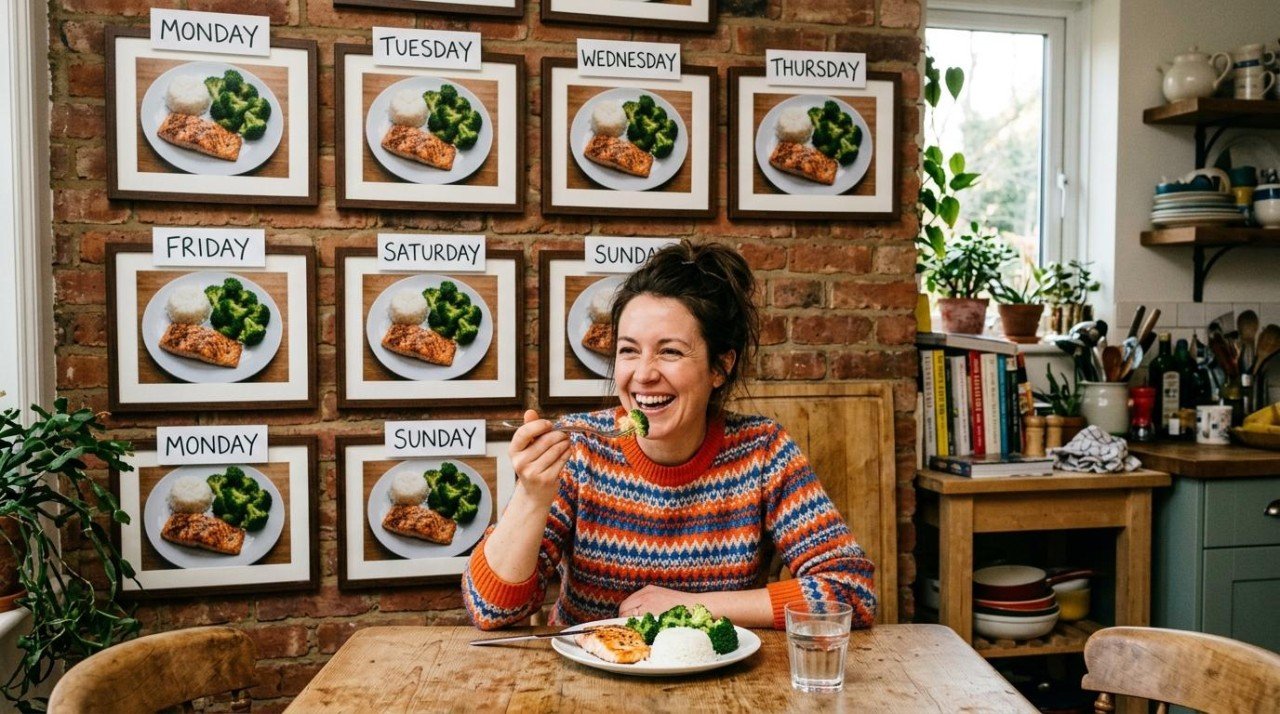
The catch is that this window is only useful if you actually eat the food inside it. This is where the fridge graveyard forms: you cook a big batch with good intentions, life happens, and four days later you're scraping it into the trash — waste and lost money, not a safety win. The fix isn't cooking less; it's cooking with a plan for the leftovers. When your week is mapped out and Tuesday's dinner is already slated to be Sunday's extra portion, food gets eaten on schedule instead of dying in the back of the fridge. That's the quiet superpower of meal planning: it right-sizes how much you make and gives every leftover a job.
Take the Guesswork Out of Eating Well
Eat Well Planner helps you organize your favorite recipes, plan balanced meals, and automatically generate shopping lists — all in one place. Whether you're tracking macros, managing dietary restrictions, or just trying to stop asking "what's for dinner?", we've got you covered.
Our AI-powered tools can adapt any recipe to your dietary needs, help you discover new meals you'll love, and even log your nutrition effortlessly. It's meal planning made simple.
Start Organizing Your Meals — FreeThe 2-hour rule (and 1 hour when it's hot)
The fridge window assumes the food actually made it into the fridge promptly. The bigger risk for most people isn't the fourth day in the refrigerator — it's the food that sat out on the counter or the stovetop for hours after dinner.
Bacteria multiply fastest in what's called the Danger Zone: the range between 40°F and 140°F. According to the USDA, as summarized by Healthline, within that range "bacteria can double in number in just 20 minutes." Twenty minutes. Start with a modest number of bacteria on a warm dish, and in a few hours you can have hundreds of times more.
That's the reasoning behind the 2-hour rule: perishable food should not sit in the Danger Zone for more than two hours total. Get it into the fridge (40°F or below) or keep it hot (above 140°F) before then. And when it's genuinely hot out — above 90°F, think a summer picnic, a backyard barbecue, or a car ride home from the grocery store — the window shrinks to 1 hour.
The two hours is cumulative, not a fresh timer each place the food lands. The half hour it cooled on the counter, plus the time it sat out during the meal, plus the drive home from the potluck all count toward the same budget. When in doubt, the safest move with food that's been out too long is to toss it — and, again, you cannot rely on how it looks or smells to bail you out.
Why rice and pasta deserve special respect
"Fried rice syndrome" earned its viral moment for a reason, even if the panic got overblown. The culprit is a spore-forming bacterium called Bacillus cereus, and it plays by different rules than most kitchen bugs.
Here's what makes it sneaky, per the Cleveland Clinic: B. cereus forms spores that survive cooking. Boiling your rice doesn't wipe the slate clean. Those spores sit harmlessly in the cooked rice — until the rice is left at room temperature. Then they wake up, multiply, and produce a toxin. And critically, that toxin is heat-stable: reheating, microwaving, or throwing the rice into a screaming-hot wok will not destroy it. The classic scenario is exactly what the name suggests — rice cooked, left out overnight or all afternoon, then fried up the next day. The frying kills the bacteria but not the toxin they already made.
Starchy foods like rice, pasta, and other grains are the usual suspects, though B. cereus can grow on other foods too. The practical rules are the same ones above, applied with a little extra discipline:
- Don't leave cooked rice or pasta sitting out. Cool it and refrigerate it within the 2-hour window (1 hour if it's hot out).
- Refrigerate it promptly and eat it within a few days.
- Reheat it once, until steaming hot — and if rice has been left out for hours, don't try to rescue it by reheating. The toxin won't care.
Keep this in proportion, though. Bacillus cereus illness exists, but it's a small slice of foodborne illness overall, and it's almost entirely a story about food left in the Danger Zone too long. Handle your rice like you'd handle any other cooked food and you've addressed it.
Cool big batches the right way
Batch cooking is one of the best habits going — but a giant pot of chili or a whole braise cools slowly, and that slow cooling is precisely when bacteria party. A big stockpot left on the counter to "cool down before I put it away" can sit in the Danger Zone for hours, right in the middle of it.
The fix is to help it cool fast:
- Divide it into shallow containers. The University of Nebraska–Lincoln recommends that food in each container be "3 inches deep or less" so it chills quickly instead of holding heat in the center.
- Don't wait for it to reach room temperature before refrigerating. Modern refrigerators handle warm food fine. Get it in there within the 2-hour window; a slightly warm container in the fridge is far safer than a cooling pot on the counter.
- Leave a little space around containers so cold air can circulate, rather than stacking everything in one warm tower.
For very large or dense batches, splitting into smaller portions does double duty: it cools faster and it gives you grab-and-go meals sized for a single dinner.
Reheat to 165°F — once
When you do reheat leftovers, bring them all the way up to an internal temperature of 165°F, or until they're hot and steaming throughout — not just warm on the outside with a cold pocket in the middle. The guidance is to reheat "to a temperature of 165°F or until hot and steamy," and to bring soups, sauces, and gravies to a rolling boil.
Two caveats worth remembering:
- Reheat only what you're going to eat. Repeatedly heating and re-cooling the same batch drags it through the Danger Zone again and again. Portion out what you want, and leave the rest chilled.
- Heat doesn't fix everything. As with B. cereus, some toxins survive reheating. Hitting 165°F kills active bacteria, but it can't undo damage from food that was mishandled beforehand. Reheating is the last step of safe handling, not a rescue button.
What freezing does — and doesn't — fix
Freezing is the closest thing to a pause button your kitchen has. Food kept frozen at 0°F stays safe essentially indefinitely — the quality (texture, flavor) degrades over months, but the safety doesn't. That's why the practical guidance you'll see, like the University of Nebraska–Lincoln's, gives freezer ranges of a few months (often 2 to 6) for best quality, not safety.
But here's the misconception worth clearing up: freezing does not kill bacteria. As the USDA explains (and as outlets like The Daily Meal summarize), freezing only puts microbes into a dormant state. Once food thaws, any bacteria that were present wake back up and start multiplying again. Freezing buys you time; it doesn't sterilize.
Two things follow from that:
- Freeze food while it's still good, not on its last legs. Freezing something on day four of the fridge doesn't reset it — you're just pausing food that's already near the end of its window.
- Thaw safely. The best method is in the refrigerator, not on the counter (which drops the outer layer into the Danger Zone while the middle is still frozen). Once thawed, treat it like any fresh leftover and eat it within a few days.
The leftover cheat sheet
Here's the whole thing boiled down to something you could tape to the fridge:
- Most cooked leftovers (meat, poultry, fish, casseroles, cooked vegetables, soups, stews, cooked rice and pasta, pizza): refrigerate within 2 hours, eat within 3 to 4 days.
- The 2-hour rule: don't let perishable food sit out longer than 2 hours total — 1 hour if it's above 90°F.
- Fridge temperature: keep it at 40°F or below. Hot-holding, if you're keeping food warm, means above 140°F.
- Cooling big batches: divide into shallow containers 3 inches deep or less; refrigerate promptly, don't cool for hours on the counter first.
- Reheating: heat to 165°F or steaming hot throughout; boil soups and sauces; reheat only what you'll eat.
- Rice and pasta: refrigerate fast, don't leave out, reheat once — the B. cereus toxin survives reheating.
- Freezer: safe indefinitely at 0°F; best quality within a few months. Freeze while food is still fresh; thaw in the fridge.
- The golden rule: you can't smell or see the bacteria that make you sick. Go by time and temperature, not your nose. When food has clearly been mishandled, when in doubt, throw it out.
Confident leftovers, not fearful ones
The goal here isn't to make you a nervous wreck who pitches everything at the 48-hour mark. Food waste is a real problem — the average household throws out a shocking amount of perfectly good food, often out of exactly this kind of uncertainty. The point of knowing the actual rules is that they let you be confident: that three-day-old curry, cooled properly and reheated to steaming, is a great lunch, not a gamble.
Most of safe leftover handling comes down to one upstream decision — how much you cook and whether you have a plan to eat it. That's where a little organization pays off. Eat Well Planner builds your week around recipes you actually want to eat, so batch-cooked meals are matched to real dinners on real nights instead of hopeful overproduction. Its meal prep system helps you cook in smart batches, and the auto-generated shopping list means you buy for the plan rather than overbuying ingredients that wilt before you touch them. When leftovers have a designated slot in the week, they get eaten well inside the safe window — the food-safety rules take care of themselves, and a lot less ends up in the trash.
Learn the handful of numbers above, and the fridge stops being a source of low-grade anxiety. Time and temperature, not superstition — that's all it takes to eat your leftovers with confidence.