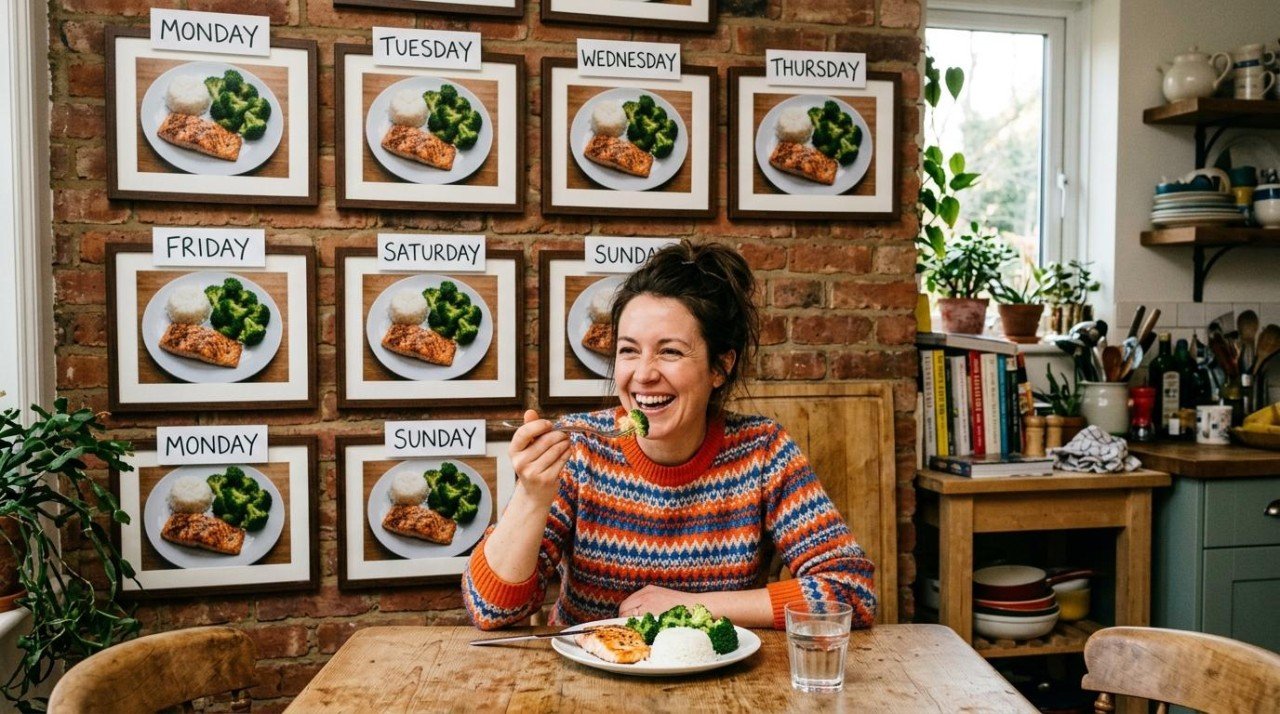
There is a particular kind of hunger that hits in the newborn months. You realize, somewhere around three in the afternoon, that you have not eaten since a few bites of cold toast at dawn — and by then you are shaky, foggy, and somehow also pinned to the couch under a sleeping baby who took forty-five minutes to settle. Cooking a real meal feels about as realistic as running a marathon.
If that is you right now, first: this is normal, and it is temporary. The survival phase is real, and nobody is eating balanced plates with a fork in each hand while a newborn naps peacefully in a bassinet. But here is the thing worth knowing — your body is doing an enormous amount of repair work right now, and what you eat genuinely helps. Not in a pressure-filled, optimize-everything way. In a "you will feel less awful if you get some protein and water into yourself" way.
This is a guide to feeding yourself in the fog: foods you can eat with one hand, drinks you can keep within reach, and a little bit of planning that makes the hard days easier. No elaborate recipes, no guilt, no perfection required.
Why Food Still Matters When You Can Barely Function
It is tempting to treat your own eating as the thing that can slide while everything revolves around the baby. And for a day or two, it can. But over weeks, running on empty catches up with you — and the postpartum body has real, measurable extra needs.
Childbirth involves significant blood loss, and iron stores often take a hit. Postpartum anemia is common: the World Health Organization notes that studies in high-income countries report 10 to 30 percent of postpartum women are anemic, with rates higher elsewhere. Low iron is exactly what makes you feel weak, breathless, and exhausted — on top of the exhaustion you already have from being up all night. Iron-rich foods (eggs, red meat, lentils, beans, dark leafy greens), especially paired with a little vitamin C to boost absorption, help your body rebuild.
If you are breastfeeding, your energy needs jump. The Eunice Kennedy Shriver National Institute of Child Health and Human Development puts the increased need at about 450 to 500 extra calories per day for nursing mothers. Protein needs climb too. In fact, one study using a precise tracer technique found that the protein requirement for exclusively breastfeeding women is roughly 1.7 to 1.9 grams per kilogram of body weight per day — well above the standard recommendation of 1.05. You do not need to count grams. You just need to know that protein at every meal and snack is working harder for you right now than it usually does.
And it is not only physical. Nutrition is tied to mood in this window, when postpartum depression affects roughly 15 percent of mothers. A University of New Hampshire Extension review notes that low levels of iron, vitamin D, B vitamins, omega-3 fats, and protein have all been linked to postpartum depression risk, and that building carbohydrates, protein, and healthy fats into meals and snacks helps cover those bases. Eating is not vanity or self-indulgence in this season. It is part of your recovery.
The One-Handed, No-Cook Toolkit
The single most useful shift is to stop thinking in terms of "meals" and start thinking in terms of "things I can grab and eat with one hand while nursing or rocking the baby." If it requires a knife, a stovetop, and two free hands, it is not going to happen at 2 a.m. If it lives at arm's reach and needs zero prep, it will.
Here is the core lineup — foods that are genuinely nourishing, require little or no cooking, and survive being eaten one-handed:
- Overnight oats. Stir oats, milk or yogurt, and a spoon of nut butter or some berries into a jar the night before (or whenever you have a spare two minutes). Fiber, protein, and slow-burning energy in a container you can eat cold with one hand.
- Nut butter on whole-grain toast. Toast is one of the few "cooking" tasks you can do half-asleep. Peanut or almond butter adds protein and healthy fat; a sliced banana on top adds potassium and fiber.
- Greek yogurt. High in protein, easy to eat with a spoon, and endlessly adjustable with fruit, granola, or a drizzle of honey. Keep single-serve cups in reach.
- Hard-boiled eggs. Boil a batch when you have five minutes and they will keep in the fridge for days. Portable protein, no reheating, one-handed peeling optional.
- Cheese and whole-grain crackers. Protein, fat, and carbs with zero prep. String cheese exists for exactly this stage of life.
- Fruit you do not have to cut. Bananas, apples, grapes, clementines, berries. Vitamins, fiber, and hydration in a package you can eat without a plate.
- Trail mix. Nuts, seeds, and dried fruit give you calorie-dense, iron- and protein-containing fuel that lives in a bowl by the nursing chair and never spoils.
- Smoothies. Blend once (ideally when someone else is holding the baby), drink through the next few hours. Yogurt or milk, frozen fruit, a handful of spinach you will not taste, and a scoop of nut butter or protein powder makes a near-complete meal you can sip one-handed.
Notice the pattern: nearly all of these pair a protein with a fiber-rich carbohydrate. That combination keeps your energy steadier than a handful of crackers alone, which matters a lot when your sleep is shredded. Stock these deliberately — a snack basket next to wherever you feed the baby, and a designated shelf in the fridge — so that reaching for something nourishing is easier than reaching for nothing.
Keep a Drink Within Arm's Reach, Always
Thirst hits hard when you are nursing — many people feel almost desperately thirsty the moment their milk lets down. That is your body's cue, and it is a good one to follow. The practical rule most lactation experts suggest is simple: drink to thirst, and keep water where you can reach it, as La Leche League Canada advises. A good habit is to down a glass of water at the start of every feeding — the feeding itself becomes your reminder.
One myth worth setting down, though: chugging extra water beyond thirst does not boost your milk supply. A Cochrane systematic review found there is not enough evidence to advise breastfeeding mothers to increase fluids beyond what they need for comfort. So you do not have to force gallons. You just have to not forget — which, in the fog, is the real challenge. A big insulated water bottle you refill once or twice a day, parked at your nursing station, does more than any target number. Milk, broth, and the water in fruit all count too.
Build a Freezer Stash Before the Baby Arrives
If you are reading this while still pregnant: this is the highest-leverage thing you can do. Every meal you tuck into the freezer now is a meal your exhausted future self does not have to think about, shop for, or cook. Late pregnancy — that nesting-energy window — is the perfect time to batch-cook and freeze.
You do not need a hundred containers. Even eight to ten frozen dinners take the edge off the hardest first weeks. Focus on things that freeze and reheat well: soups and stews, chili, pasta sauces, cooked grains, casseroles, breakfast burritos, muffins, and portions of cooked protein. Freeze in single or double servings so you can heat exactly what you need with one hand and a microwave.
Do not overlook a meal train, either. When friends and family ask how they can help — and they will — "bring us food" is one of the most genuinely useful answers you can give. Organizing a rotation of dropped-off meals in the first few weeks means less cooking, less shopping, and fewer decisions during the exact stretch when decisions feel impossible. Accepting a home-cooked meal is not failing to cope. It is letting your community do what communities are for.
The tricky part is the planning: figuring out what to batch-cook, keeping track of what is in the freezer, and turning a stash into an actual shopping list before you are too tired to think. That is exactly the kind of tedious logistics a tool can take off your plate.
Take the Guesswork Out of Eating Well
Eat Well Planner helps you organize your favorite recipes, plan balanced meals, and automatically generate shopping lists — all in one place. Whether you're tracking macros, managing dietary restrictions, or just trying to stop asking "what's for dinner?", we've got you covered.
Our AI-powered tools can adapt any recipe to your dietary needs, help you discover new meals you'll love, and even log your nutrition effortlessly. It's meal planning made simple.
Start Organizing Your Meals — FreeEat Well Planner is built to remove that decision fatigue. Before the baby comes, you can plan a week or two of freezer-friendly meals from your saved recipes, and the app will generate a single organized shopping list so one big pre-baby grocery run covers your whole stash. You can save a collection of no-hands snack ideas and quick one-pot meals so that when your brain is offline, the plan already exists — you are just following it. Its AI meal planning does the "what should we eat this week" thinking for you, which is precisely the mental work that feels hardest right now. And because you can import recipes straight from a website, an Instagram reel, or a YouTube video, capturing that easy freezer chili your sister swears by takes seconds.
One-Pot Meals: Minimum Effort, Minimum Cleanup
Once you are ready to cook a little again — or on the day a partner or visitor has an hour — lean hard into one-pot cooking. The magic of a big pot of soup, stew, chili, curry, or a sheet-pan dinner is that it makes many servings from one round of effort and one set of dishes. Cook once, eat for three days, freeze the rest.
Good newborn-phase candidates share a few traits: they are forgiving of imprecise measuring, they reheat well, and they hide a lot of nutrition in a single bowl you can eat with a spoon. A lentil and vegetable soup gives you iron, fiber, and protein. A pot of chili loaded with beans and tomatoes is protein-rich and freezes beautifully. A big tray of roasted vegetables and chicken thighs is dinner tonight and lunch tomorrow. Cooked grains like rice, quinoa, or farro in bulk become the base for a dozen quick bowls.
The goal is not variety or Instagram-worthy plating. It is a fridge and freezer full of warm, nourishing food that requires nothing more than a bowl and a microwave to become a meal.
Accept Help and Convenience Without the Guilt
Somewhere along the way, a lot of us absorbed the idea that feeding ourselves "properly" means cooking from scratch, and that anything else is cutting corners. Please set that down for a while. In the newborn phase, the pre-washed salad, the rotisserie chicken, the bag of frozen vegetables, the pre-cut fruit, the delivered meal, and the food someone else cooked for you are not lazy. They are smart. They are how you get nourished without spending energy you do not have.
There is a real cost to skipping meals, and it is worth avoiding. A study of eating patterns across pregnancy and postpartum found that skipping more than one meal was associated with meaningfully lower overall diet quality in the postpartum period. The same research found that a morning-weighted eating pattern — getting real food in earlier in the day — was linked to better diet quality. The practical takeaway is gentle, not demanding: try not to let a whole meal vanish, and try to eat something substantial in the morning, even if the rest of the day is a patchwork of snacks. That is not about willpower. It is about keeping easy food so close that eating something beats eating nothing.
This is also where a little tech genuinely helps rather than adding to the load. Because Eat Well Planner lets you log meals by voice, you can note what you ate by just talking to your phone one-handed — no fiddly typing while the baby feeds — and still get a sense of whether you are actually getting enough protein and calories on any given day. On the days it turns out you have barely eaten, that is useful, non-judgmental information: time for a smoothie.
Simple Wins Over Perfection
If you take one thing from all of this, let it be this: the bar is not a balanced, beautiful, home-cooked plate. The bar is something, often, with protein and water in the mix. A boiled egg and an apple counts. A smoothie counts. Toast with peanut butter at midnight counts. A bowl of freezer chili your past self or your neighbor made counts, and counts a lot.
The newborn fog lifts. The days of eating standing up over the sink, or one-handed in a nursing chair, do not last forever — even though they feel endless while you are in them. Until then, be as kind to yourself about food as you are trying to be about everything else. Stock the easy stuff, keep water close, let people feed you, and lean on a plan when your own brain is too tired to make one.
You are doing enough. Eating well right now just means keeping nourishing food close enough that your worn-out, one-handed self can actually reach it.
Want to make the survival phase easier before it starts? Try building your freezer stash and no-hands snack plan with Eat Well Planner — so future-you, up at 3 a.m. with a baby and an empty stomach, already has a plan to follow.