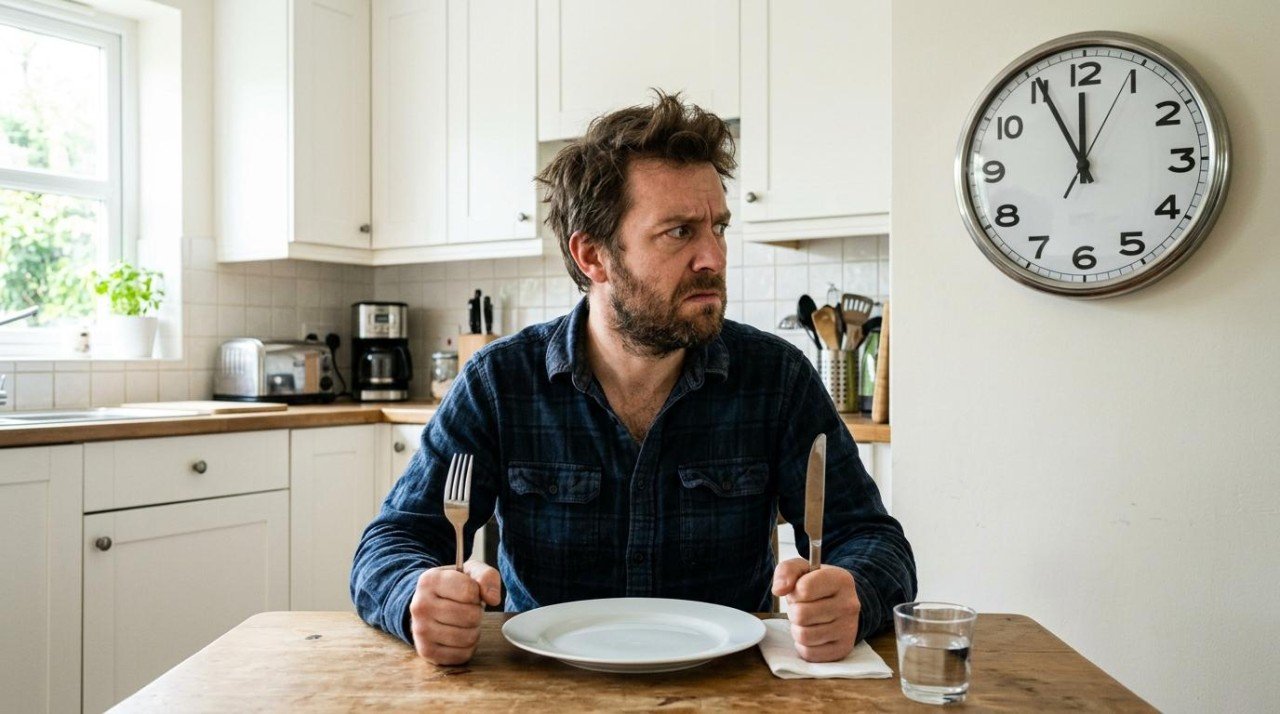
Picture two identical lunches. Same grilled chicken, same rice, same side of broccoli, same number of calories down to the last bite. The only difference is the order you put them in your mouth. It sounds like it shouldn't matter at all. Yet a growing stack of research says it changes what happens in your bloodstream for the next two hours, often dramatically.
This idea has a name: food sequencing, or meal sequencing. The rule is almost insultingly simple. Eat your vegetables and fiber first, your protein and fat next, and save the starches and sugars for last. No foods are off-limits. Nothing gets weighed or banned. You just rearrange the order of what is already on your plate, and the same meal produces a gentler, flatter rise in blood sugar instead of a sharp spike and crash.
For anyone who hits an afternoon energy slump, fights mid-morning cravings, or is keeping an eye on their blood sugar, it is one of the lowest-effort, highest-return tweaks in all of nutrition. Here is what the science actually shows, why it works, and exactly how to put it on your plate.
The Study That Made Researchers Look Twice
The clearest evidence comes from a series of controlled crossover studies, where the same people eat the same meal on different days in a different order, so they act as their own comparison group. That design strips out almost every other variable. The food is identical. Only the sequence changes.
The study that put this idea on the map came out of Weill Cornell Medicine in 2015. Researchers gave 11 adults with type 2 diabetes the same 628-calorie meal — ciabatta bread and orange juice, grilled chicken, and a side salad with broccoli — on two separate days. On one day the bread and juice came first; on the other, the vegetables and protein came first and the carbohydrate last. When the carbs went last, post-meal glucose was 29% lower at 30 minutes and 37% lower at 60 minutes, and the total glucose response over two hours (the incremental area under the curve) was 73% lower. The authors noted the effect was "comparable to that observed with pharmacological agents that preferentially target postprandial glucose" — in other words, rearranging the plate moved the needle about as much as some medications designed for exactly that job. The full results were published in Diabetes Care.
Read that again: the same food, the same calories, the same people. The only thing that changed was what they reached for first, and their two-hour blood sugar response was cut by nearly three quarters.
It is not a one-off finding. A larger 2019 study in Diabetes, Obesity and Metabolism ran the same kind of experiment with 15 adults with prediabetes. Eating vegetables and protein first cut the incremental glucose peak by 45.8% versus carbohydrate-first, and eating vegetables alone first still cut it by 43.1%. And a 2024 study in Frontiers in Nutrition tested it in 25 women with gestational diabetes, finding their post-meal glucose fell by about 6% and insulin by 8 to 11% — meaningful for a group where blood sugar control genuinely matters.
You might assume this only helps people whose blood sugar is already struggling. Not so. When researchers ran the same test on 18 young, healthy women with no diabetes and normal weight, eating vegetables first still significantly lowered their glucose and insulin response — and it worked whether they ate fast or slow. As the authors put it, "as long as vegetables are consumed first, eating speed does not affect postprandial blood glucose and insulin concentrations." The order mattered more than the pace.
Why a Blood Sugar Spike Is Worth Avoiding
If you don't have diabetes, you might wonder why a temporary blood sugar bump matters. The answer is in what comes after the spike.
When you eat a large dose of fast-digesting carbohydrate on its own, glucose floods into your bloodstream quickly. Your pancreas responds with a big surge of insulin to clear it. That surge often overshoots, pulling your blood sugar down below where it started. That post-spike dip is the physiological version of the 3 p.m. wall: the yawning, the foggy focus, and the very specific urge to find something sweet. The crash, not the food itself, is what sends you back to the snack drawer.
Flatten the spike and you flatten the crash. Steadier glucose tends to mean steadier energy and fewer of those cravings that feel like they come out of nowhere. It is the same meal doing less damage to your afternoon.
There may be a hormonal piece too, though here the evidence is more tentative. In a 2018 study, also from the Weill Cornell team, eating carbohydrate last kept ghrelin — the hormone that drives hunger — suppressed three hours after the meal, while eating carbohydrate first let ghrelin rebound back to pre-meal levels. In theory, staying fuller longer should mean less snacking. Honestly, though, that study did not find a matching difference in how hungry people said they felt, so this is a plausible mechanism rather than a proven one. The dependable benefit is the smoother glucose curve; any appetite bonus is a maybe on top.
The long game matters too. A 5-year retrospective cohort study followed type 2 diabetes patients at a primary care clinic. Those who received dietitian-led coaching on food order, eating vegetables first, then the main dish, then carbohydrates, saw their HbA1c (a measure of average blood sugar over three months) fall from 8.5% to 7.6% over five years. The comparison group, who got no such coaching, saw no improvement at all. A reordering habit, repeated meal after meal, added up to a clinically meaningful difference over time.
How Eating in Order Actually Works
Three mechanisms are doing the heavy lifting, and they stack on top of each other.
Fiber forms a barrier. When vegetables hit your stomach and small intestine first, their fiber creates a kind of mesh that the later carbohydrates have to filter through. That slows the breakdown of starch into glucose and the rate at which that glucose crosses into your blood. Instead of a flood, you get a trickle.
Protein and fat slow the exit from your stomach. The pace at which your stomach empties into your intestine is one of the biggest levers on how fast blood sugar rises. Protein and fat slow that emptying down. By the time the carbohydrates arrive, the whole digestive conveyor belt is already moving more slowly.
Your gut hormones get a head start. Eating protein and vegetables first stimulates the release of a hormone called GLP-1 (glucagon-like peptide-1), the same pathway that several modern blood-sugar medications target. As the Frontiers researchers explain, GLP-1 "enhances glucose-induced insulin secretion," slows gastric emptying, and acts as a satiety signal that curbs appetite. Sequencing your food essentially coaxes your body into prepping its own glucose-handling system before the carbs show up.
None of this requires you to eat less or differently. It just gives your body the running start it does not get when a pile of fast carbs arrives first with nothing in front of it.
Take the Guesswork Out of Eating Well
Eat Well Planner helps you organize your favorite recipes, plan balanced meals, and automatically generate shopping lists — all in one place. Whether you're tracking macros, managing dietary restrictions, or just trying to stop asking "what's for dinner?", we've got you covered.
Our AI-powered tools can adapt any recipe to your dietary needs, help you discover new meals you'll love, and even log your nutrition effortlessly. It's meal planning made simple.
Start Organizing Your Meals — FreeThe Simple Rule: Veggies First, Protein Next, Carbs Last
You don't need an app reminder or a stopwatch. The whole strategy fits in seven words: vegetables and fiber first, starches and sugars last. Protein and healthy fats slot in the middle. If you only remember one piece, make it "veggies first" — even that alone delivered most of the benefit in the prediabetes study.
Here is what it looks like across a normal day.
Breakfast
- Start with the vegetables in your omelet or a few bites of a spinach-and-mushroom scramble before the toast.
- If you're having oatmeal, stir in nuts, seeds, or a scoop of Greek yogurt and eat some of that protein and fat before diving into the oats and fruit.
- Having fruit and yogurt? Eat the yogurt (protein) before the fruit and granola (sugar and starch).
Lunch
- Order or pack a side salad and eat it first, before the sandwich or wrap.
- With a grain bowl, work through the greens and the protein before the rice or quinoa underneath.
- Soup-and-sandwich combo? A broth-based vegetable soup first is a near-perfect opener.
Dinner
- Serve a simple non-starchy vegetable or salad as a literal first course while dinner finishes cooking.
- Then move to your protein — the chicken, fish, beans, or tofu.
- Finish with the pasta, potatoes, rice, or bread.
- Saving dessert for after a full meal of fiber, protein, and fat is naturally gentler on your blood sugar than eating it on an empty stomach.
The plate-building version, recommended by dietitians at Ohio State University's Wexner Medical Center, is to fill half your plate with non-starchy vegetables and give a quarter each to protein and carbohydrate — then simply eat across the plate in that order. They note that people often end up fuller sooner and naturally eat a bit less, because the fiber and protein land before the most calorie-dense part of the meal.
Who Benefits the Most
Food sequencing is harmless for everyone and genuinely useful for many, but a few groups tend to notice the difference fastest:
- Anyone with prediabetes or type 2 diabetes. This is where the research is strongest and the glucose reductions are largest. It pairs well with, and never replaces, the guidance of your own doctor.
- People who crash hard in the afternoon. If 3 p.m. reliably flattens you, smoothing out your lunch spike is worth a week-long experiment.
- People fighting persistent sugar cravings. Cravings driven by glucose dips often quiet down when the dips get smaller.
- Anyone who wants results without restriction. If diets that ban entire food groups have never stuck, this asks you to change nothing about what you eat — only the order.
A Few Honest Caveats
Food sequencing is a helpful tweak, not a magic trick. A couple of things keep it in perspective.
The most striking percentage reductions come from studies of people with prediabetes or diabetes, whose glucose responses are exaggerated to begin with. If your metabolism is already healthy, your everyday spikes are smaller, so the absolute change will usually be smaller too — even though, as the young-healthy-women study showed, the effect is still real. The habit nudges you in the right direction; just don't expect a single reordered sandwich to transform your metabolism overnight.
It also works best with meals that have a clear order. A blended smoothie, a hearty minestrone, or a beef-and-vegetable stir-fry mixes everything together, so there is nothing to sequence. That is fine. Mixed meals built around vegetables, protein, and fat with carbohydrate as a supporting player already behave a lot like a sequenced meal. And honestly, that points to the real win underneath all of this: a plate that is mostly plants and protein, with starch as the sidekick rather than the star, is going to treat your blood sugar gently no matter what order you eat it in. Sequencing is the easy on-ramp to that bigger habit.
Making the Habit Automatic
The catch with any "just do this at every meal" advice is that it only works if the right foods are actually in front of you. You can't eat your vegetables first if there are no vegetables in the house, and a drive-through dinner gives you very little to sequence. The real lever is having balanced, vegetable-forward meals planned and shopped for before the hungry, decision-fatigued version of you takes over at 6 p.m.
That is exactly the friction Eat Well Planner is built to remove. You can save and import recipes that are naturally built around plants and protein — pulling them straight from a website, an Instagram reel, or a YouTube video — and let the AI generate a balanced weekly meal plan that always includes a vegetable and a protein, not just a pile of carbs. The auto-generated shopping list then makes sure the salad greens and the chicken are in your fridge, so "veggies first" is a real option instead of a nice idea.
The food diary and nutrition tracking close the loop. By logging your meals — you can even do it by voice — you can start to notice which meals leave you energized and which ones send you searching for a cookie an hour later, then lean toward the plates that keep you steady. And when a favorite recipe is carb-heavy, the AI recipe chat can suggest a fiber-rich vegetable starter or a protein boost to round it out, so the sequencing rule has something to work with.
You will not have to think about any of this in the moment. The structure does the remembering for you, and the right first bite is simply there on the plate.
The Takeaway
Of all the things you can change about how you eat, the order is one of the easiest. You don't have to give up bread, count a single gram, or buy a different brand of anything. You just lead with the vegetables, follow with the protein, and let the starch come last. The research suggests that one small reordering can meaningfully blunt your blood sugar response, smooth out your energy, and quiet the cravings that follow a crash — meal after meal, year after year.
Try it at your very next meal. Eat the salad first. See how the rest of your afternoon goes.
Plan balanced, vegetable-forward meals with Eat Well Planner and make eating in the right order the path of least resistance.