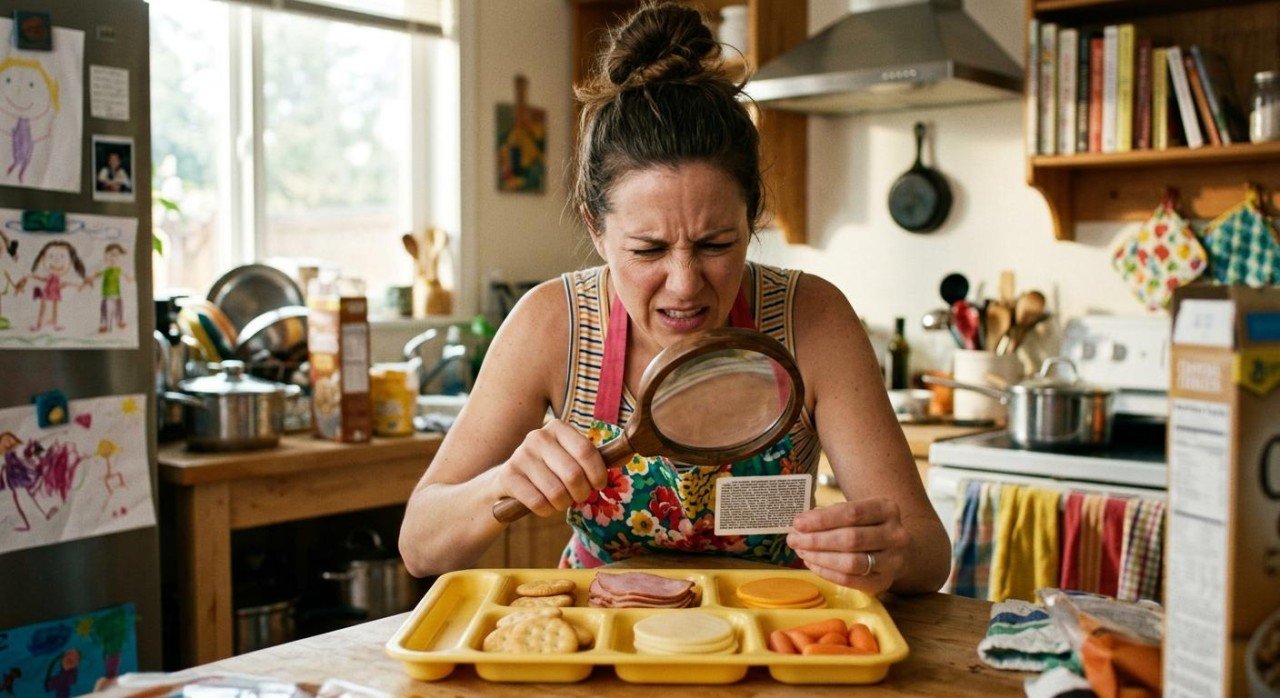
If you have a kid, you have probably seen the headlines: Red Dye 3 banned, California pulling colors out of school lunches, TikToks warning that the cereal in your pantry is basically a science experiment. And then, right next to those, someone rolling their eyes that this is all fearmongering and food dyes are perfectly safe.
So which is it? Should you be worried, or should you relax and let your kid enjoy the blue frosting?
The honest answer sits between the two extremes, and it is actually pretty reasonable once you see the whole picture. Synthetic food dyes are not a universal poison. But the evidence that they nudge behavior in some sensitive children is real, the regulatory landscape is genuinely shifting under our feet, and there is a sane, low-stress way to respond that does not involve interrogating every birthday party. Let us walk through it.
What Actually Changed (Because a Lot Did)
For decades, synthetic dyes sat quietly on ingredient labels while very little happened at the federal level. In the last couple of years, that stalemate broke.
In January 2025, the FDA revoked its authorization for FD&C Red No. 3, the bright cherry-red dye found in candies, snacks, colorful drinks, and some oral medications and supplements. Manufacturers have until January 15, 2027 to remove it from food, and until January 18, 2028 for ingested drugs. (More on why Red 3 specifically, and the asterisk on that decision, in a moment.)
States moved first, and faster. California's Food Safety Act, signed in October 2023, was the first state law of its kind in the country. It bans Red 3 (along with three other additives) from food sold in the state starting in 2027. Then in September 2024, California signed the School Food Safety Act, which prohibits six synthetic dyes — Red 40, Yellow 5, Yellow 6, Blue 1, Blue 2, and Green 3 — from food served or sold in public schools, effective the end of 2027.
And in April 2025, the FDA and the Department of Health and Human Services announced a broader plan to phase out petroleum-based synthetic dyes from the food supply. It is worth being precise here, because the headlines blurred it: this was not a legally binding ban. Outside of Red 3, the agency is relying on a voluntary "understanding" with food manufacturers to remove the remaining six dyes, with a target of the end of 2026. It also moved to formally revoke two rarely used dyes (Citrus Red No. 2 and Orange B) and approved several new natural color additives — including galdieria extract blue, butterfly pea flower extract, and calcium phosphate — to give companies alternatives to reformulate with.
The takeaway: change is happening, but a lot of it is voluntary and phased over years. Your grocery store shelves are not going to look different overnight, which is exactly why it helps to understand the actual evidence rather than waiting for the labels to do the thinking for you.
What the Science Actually Says About Dyes and Behavior
This is the part that gets flattened in both directions. Let us keep it accurate.
The single most influential study is the 2007 Southampton study, funded by the UK's Food Standards Agency and published in The Lancet. Researchers gave drinks containing mixtures of artificial colors plus the preservative sodium benzoate to 153 three-year-olds and 144 eight- and nine-year-olds, then measured their behavior. When the children drank the additive mixtures, their behavior was, on average, significantly more hyperactive.
But notice how the lead researchers framed it. Professor Jim Stevenson cautioned that "parents should not think that simply taking these additives out of food will prevent all hyperactive disorders. We know that many other influences are at work but this at least is one a child can avoid." That is the whole spirit of the honest version: a real, avoidable factor — not the cause of a child's behavior.
In 2021, California's Office of Environmental Health Hazard Assessment (OEHHA) published the most thorough government review to date. Its conclusion, drawn from both human and animal studies, was carefully worded: consumption of synthetic food dyes "can cause or exacerbate neurobehavioral problems in some children," and "children vary in their sensitivity" to them. The report also flagged that current federal safe-intake levels were set decades ago and "may not sufficiently protect children's behavioral health."
The scientific review underpinning that assessment is worth quoting for the nuance. Across the challenge studies it examined, a majority found some evidence of an effect — but the authors were explicit that "not all children react to the dyes with adverse behavioral outcomes," that genetics may explain why some kids are more susceptible, and that the average effect sizes were roughly one-sixth to one-third of what you see from ADHD medication. In other words: a measurable, meaningful signal in a subset of sensitive children, not a switch that flips every kid into chaos.
Even the American Academy of Pediatrics, not an organization prone to hype, stated in its 2018 review that artificial food colors "may be associated with worsened attention-deficit/hyperactivity disorder (ADHD) symptoms."
So the level-headed summary is this: dyes are not toxic to everyone, and most children will not visibly react. But there is a genuine, if modest, effect on activity and attention in some sensitive kids, individual variation is large, and if your child happens to be one of the sensitive ones, cutting back is one of the few dietary levers actually supported by evidence.
Why Europe Slapped Warning Labels on These and the US Didn't
Here is a fact that surprises a lot of American parents. The same dyes sold freely in the US have carried a warning in Europe for years.
Following the Southampton study, the European Union began requiring that any food containing one of six specific colors carry the label: "may have an adverse effect on activity and attention in children." The rule has been in force since July 2010. The six — often called the "Southampton colors" — include several you will recognize under their American names: tartrazine (Yellow 5), sunset yellow (Yellow 6), and allura red (Red 40), plus quinoline yellow, carmoisine, and ponceau 4R.
This is a useful contrast to sit with, but not a reason to panic. Europe did not ban these dyes; it required disclosure and let companies decide. And many chose to reformulate rather than print a warning, which is why the European versions of some familiar brands use beet juice, paprika extract, or turmeric where the US versions use petroleum-derived colors. The practical takeaway for a US reader is not "European food is pure and American food is poison." It is that reformulating away from synthetic dyes is clearly doable — food companies have already done it, at scale, for the same products. The dyes are almost always there for looks, not nutrition or safety.
The Red 3 Cancer Question, Explained Honestly
Red 3 gets its own section because it is the one dye where the concern is cancer, not behavior — and the story is more nuanced than the headline "banned because it causes cancer" suggests.
The FDA revoked Red 3 under the Delaney Clause, a 1960 law with a hard rule: if a color additive is shown to cause cancer in humans or animals, the FDA cannot authorize it, full stop. Red 3 crossed that line decades ago, when high doses caused thyroid tumors in male lab rats.
But here is the part that rarely makes the headline: the FDA itself has stated that the mechanism causing those tumors in rats is a rat-specific hormonal process that does not occur in humans. The agency was not saying Red 3 gives people cancer. It was saying the law leaves no room for discretion once the animal finding exists — so the authorization had to go. That is a genuinely reasonable outcome (why keep a purely cosmetic dye that trips a cancer statute?) without being cause for alarm about products you have already eaten. Both things are true at once.
Where Dyes Actually Concentrate
If you want to reduce your family's dye intake, it helps enormously to know where it actually piles up, because it is not evenly spread across the grocery store. Just three dyes — Red 40, Yellow 5, and Yellow 6 — make up the large majority of what is used, and the amount of certified dye in the US food supply has roughly increased five-fold per person since 1950.
The biggest sources are predictable once you look:
- Brightly colored drinks — fruit punches, sports drinks, powdered drink mixes, and some sodas. A single serving of some cherry-flavored drink mixes can carry over 50 mg of dye on its own.
- Candy and colorful snacks — the obvious ones, from gummies to rainbow-colored chews.
- Kids' breakfast cereals — especially the vividly multicolored varieties.
- Frostings, sprinkles, and colored baked goods — a single bright cupcake can rival a serving of candy.
Then there are the sneaky ones, where dye shows up purely to make food look "fresher" or more appealing than it is. Some dill and bread-and-butter pickles get their vivid green from Yellow 5. Certain salad dressings, boxed mac and cheese, flavored yogurts, and even some medications and vitamins carry synthetic color. And a fun one that is technically its own category: farmed salmon gets its pink color from a pigment (astaxanthin) added to its feed, with farmers literally picking the shade off a color fan. That is a carotenoid, not one of the petroleum dyes in this article — but it is a good reminder of how often the color of our food is a deliberate choice rather than nature.
How to Spot Them on a Label
The good news is that dyes are easy to find once you know the vocabulary. On US labels they are listed by name, usually as:
- Red 40 (also written FD&C Red No. 40, or allura red)
- Yellow 5 (tartrazine) and Yellow 6 (sunset yellow)
- Blue 1 and Blue 2
- Green 3
- Red 3 (on its way out)
A quick rule of thumb: if a food is an unnaturally vivid color and the label lists a color followed by a number, that is a synthetic dye. Foods colored with fruit, vegetable, or spice extracts will say so — "colored with beet juice," "turmeric," "annatto," "paprika extract." Neither is dangerous in a single serving, but the number-dyes are the ones worth steering away from as a default, especially for younger kids and especially for the big-source products above.
The Real Fix Isn't Label-Reading. It's Cooking More Real Food.
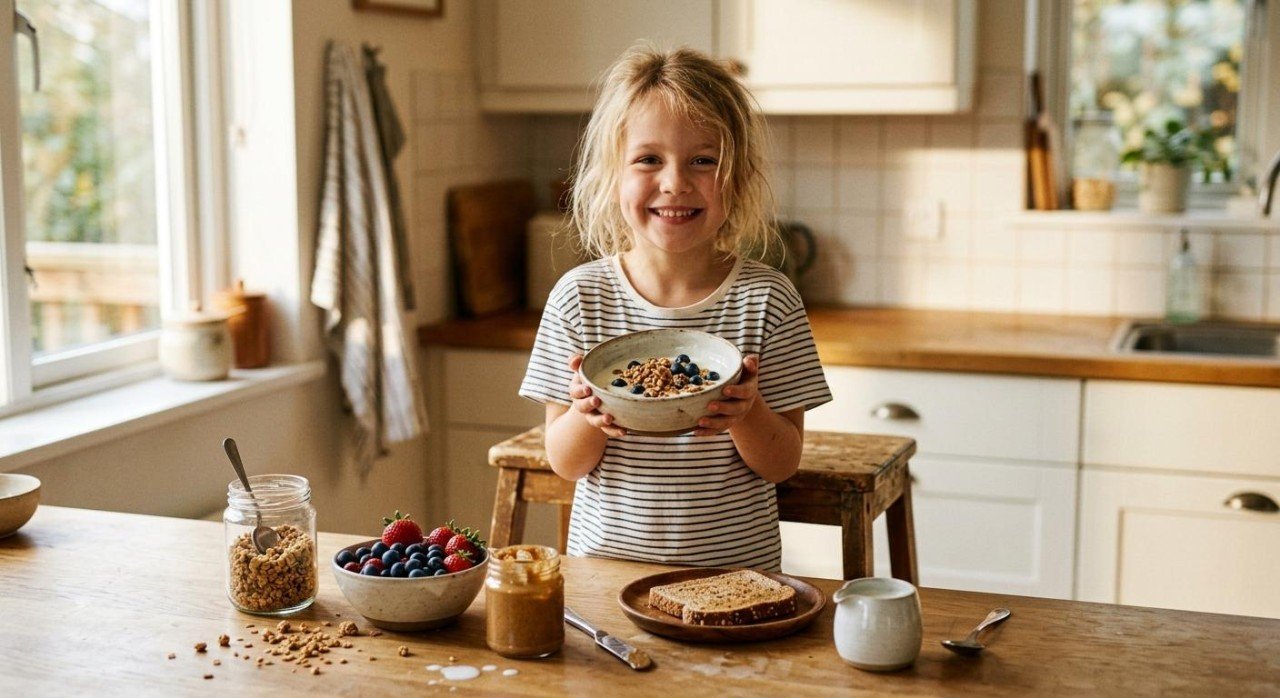
Here is the thing that makes all of this dramatically less stressful: you do not have to become a full-time label detective to cut way back on food dyes. Synthetic colors are overwhelmingly a feature of ultra-processed, packaged, made-to-look-fun products. Whole and minimally processed foods — the roast chicken, the bowl of oatmeal with real berries, the actual carrots — almost never contain them. So the single most effective "dye strategy" is not scrutinizing every package. It is simply having more real food already planned and in the house, so the neon stuff stops being the default answer to "I'm hungry."
That is exactly the gap where a little planning does the heavy lifting. When there is a real dinner on the calendar and a bowl of cut fruit in the fridge, the snack that gets eaten is the one that is easy to reach — and you have quietly displaced a bunch of dyed products without banning anything or turning food into a battle.
This is where Eat Well Planner is built to help. It takes your recipes and turns them into a personalized weekly meal plan, then generates the shopping list automatically — so the fresh, real-food version of the week is the one that is already decided and bought. Its Nutrition Score gives you an at-a-glance read on how wholesome a recipe actually is, and the food diary lets you track what your family is really eating (including quick voice logging on a busy weeknight). None of it requires you to memorize dye names. It just makes the low-dye, real-food option the path of least resistance, which is the whole game.
Take the Guesswork Out of Eating Well
Eat Well Planner helps you organize your favorite recipes, plan balanced meals, and automatically generate shopping lists — all in one place. Whether you're tracking macros, managing dietary restrictions, or just trying to stop asking "what's for dinner?", we've got you covered.
Our AI-powered tools can adapt any recipe to your dietary needs, help you discover new meals you'll love, and even log your nutrition effortlessly. It's meal planning made simple.
Start Organizing Your Meals — FreeA Proportionate Response (Not a Toxicology Screening)
So what do you actually do with all this? Here is the reasonable middle:
- Target the big sources first. Swapping dyed drinks, powdered mixes, and neon cereals for less-colored versions removes most of the dye for the least effort. This is where the 80/20 lives.
- Watch, then adjust, if your kid seems sensitive. If you suspect dyes affect your child's attention or mood, a couple of dye-light weeks is a low-risk experiment. Some families notice a difference; many do not — both are normal, and that individual variation is exactly what the research predicts.
- Do not turn every birthday party into a screening. A dyed cupcake at a party is not a health emergency, and treating it like one teaches kids more anxiety than nutrition. The goal is your everyday baseline, not policing every exception.
- Lean on real food as the default. Every home-cooked meal and whole-food snack is a serving that came with zero dye and zero label-reading required.
Frame it as choosing more of the good stuff, not banning the fun stuff. That is easier to sustain, better for your kid's relationship with food, and — conveniently — exactly what the evidence supports.
The Bottom Line
Synthetic food dyes are not the poison the scariest TikToks claim, and they are not the non-issue the eye-rollers insist. The truth is quieter and more useful: they add nothing but color, they appear to affect activity and attention in a real subset of sensitive children, and the whole system — from the FDA to California to the companies reformulating on their own — is steadily moving away from them. You do not need to wait for that to finish, and you do not need to panic. You just need a fridge with a plan in it.
Ready to make the real-food version of the week the easy one? Try organizing your meals with Eat Well Planner — free to start, and no dye chart required.