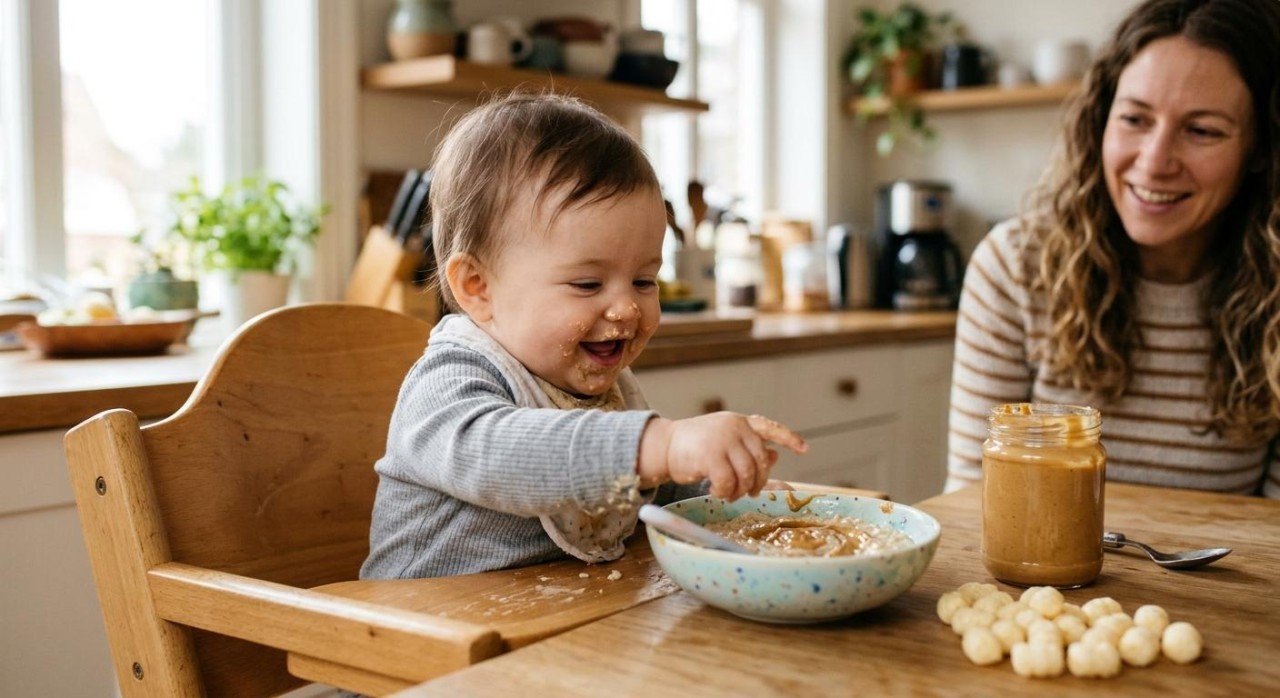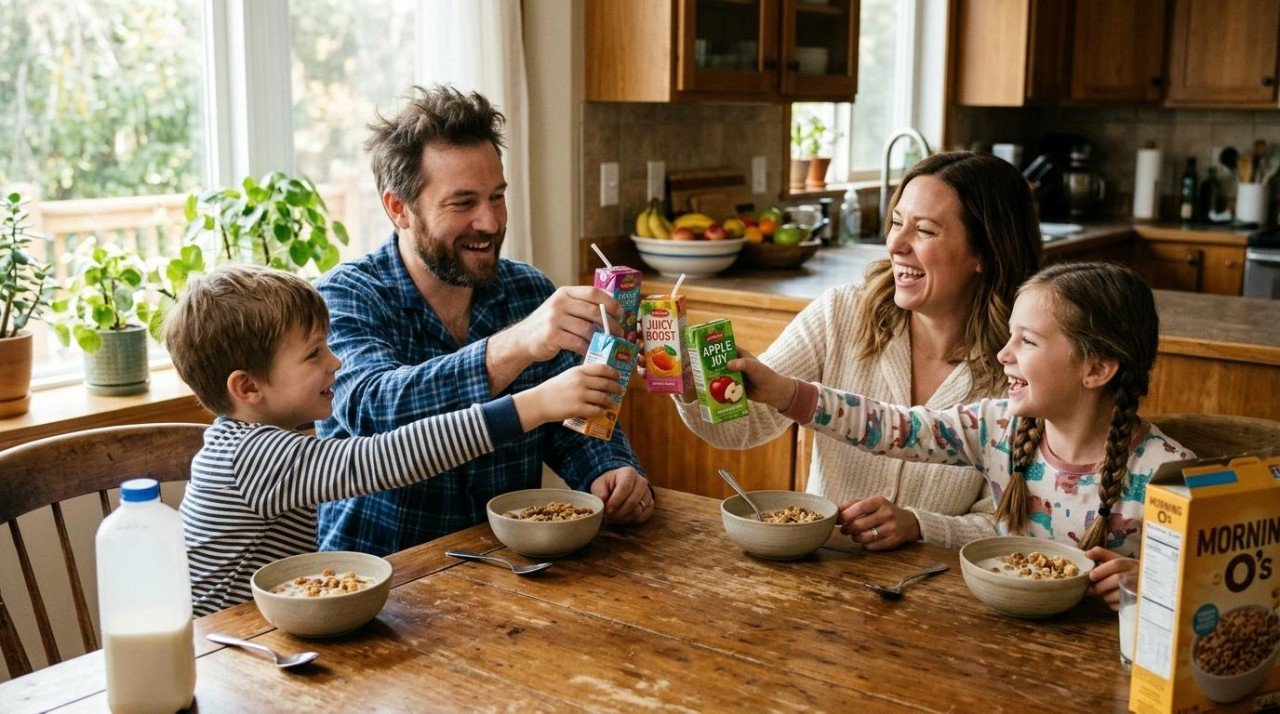
You have probably heard some version of the claim: kids who eat dinner with their families get better grades, eat more vegetables, are less likely to use drugs, and grow up happier. It gets repeated so often that it can start to feel like a verdict on your parenting. If your family is scattered across practices, late shifts, and homework on most weeknights, the message lands as one more thing you are failing at.
The real research is more interesting than the slogan, and in many ways more forgiving. Shared meals really are linked to better outcomes for kids. But a good chunk of that link comes from other things about the families who manage to eat together, the benefits appear to depend on what happens at the table, and the evidence does not say the meal has to be dinner. Here is what the studies actually show, and how to use that if your evenings are a mess.
The Headline Findings Are Real
Start with the evidence in favor, because there is a lot of it. A 2011 meta-analysis in Pediatrics pooled 17 studies covering 182,836 children and adolescents. Kids who shared three or more family meals a week were more likely to be in a normal weight range, had healthier eating patterns, and were less likely to engage in disordered eating than kids who shared fewer than three. The authors put numbers on it: lower odds of overweight (12%), of eating unhealthy foods (20%), and of disordered eating (35%), and higher odds of eating healthy foods (24%).
A larger 2018 meta-analysis in Obesity Reviews looked at 57 studies with more than 200,000 participants and found the same pattern: more frequent family meals went along with better overall diet quality, more fruits and vegetables, fewer sugary drinks and fast food, and a lower BMI. The relationship held across countries and children's ages.
The benefits seem to reach beyond the plate, too. A 2015 systematic review in Canadian Family Physician found that frequent family meals were inversely associated with disordered eating, alcohol and substance use, violent behavior, and feelings of depression or thoughts of suicide in adolescents, and positively associated with self-esteem and school success. Girls showed stronger positive results than boys.
And the habit tends to stick. The University of Minnesota's long-running Project EAT study followed teenagers for ten years and found that young adults who had frequent family meals as teens went on to share more meals as adults, and those shared meals in young adulthood were linked to eating more fruit (and, for women, more vegetables, dairy, and key nutrients).
The Part the Headlines Leave Out
Almost all of this research is observational. It shows that family meals and good outcomes travel together, but it can't show on its own that the meal is the cause. Families who eat together most nights also tend to differ in other ways: they may have more predictable schedules, more money, a parent home in the evening, and closer relationships to begin with. Any of those could explain part of the effect.
Sociologists Kelly Musick and Ann Meier tested this directly. Using data on nearly 18,000 American teenagers from the National Longitudinal Study of Adolescent Health, they first measured the plain association between family dinners and teens' depressive symptoms, substance use, and delinquency, then added controls for family resources and the quality of family relationships. In their 2012 paper in the Journal of Marriage and Family, family resources and relationships together accounted for half or more of the association. For depressive symptoms, the link shrank by about 61% once those factors were accounted for.
They then ran a stricter test, following the same teens over time to see whether changes in how often a family ate dinner together went along with changes in the teen's well-being. Some of the link held up, mainly for depressive symptoms, though the effect was small. The link with delinquency disappeared entirely. And dinners during adolescence did not predict outcomes in young adulthood once the researchers accounted for how teens were already doing. In the authors' words, family dinners "appeared to partially proxy for more general aspects of the family environment." Musick summed it up in the Cornell press release: "family dinners also appear to be part and parcel of a broader package of practices, routines, and rituals."
A follow-up study by the same researchers sharpened the point. They found that "family dinners have little benefit when parent-child relationships are weak," while dinners were linked to fewer depressive symptoms and less delinquency when relationships were strong.
The intervention research tells a similar story. HOME Plus, a randomized trial run by University of Minnesota researchers with 160 families of 8- to 12-year-olds, gave families ten monthly sessions on nutrition, hands-on meal and snack preparation, and cutting screen time at meals. At the end, there was no statistically significant difference in children's BMI between groups, though the authors saw "modest but promising" trends. Notably, the program also didn't significantly change how often families ate dinner together, a reminder that "just eat together more" is harder to pull off than it sounds.
None of this means family meals don't matter. It means the meal is probably not a magic ritual that works no matter what. It works best as a regular, reliable setting for the things that actually help kids: connection, good food, and grown-ups showing what normal eating looks like.
What Actually Drives the Benefits
If frequency is only part of the story, what is the rest? A 2019 meta-analysis in Health Psychology by Mattea Dallacker and colleagues asked exactly that. Pooling 50 studies with 49,137 participants, the team looked past how often families ate together to how they ate together, and identified six components of family meals linked to better nutritional health in children:
- Turning the TV off during meals
- Parents modeling healthy eating, meaning eating the vegetables themselves rather than just assigning them
- Higher food quality, as in what is actually on the table
- A positive atmosphere, one of the stronger associations in the analysis
- Kids helping prepare the meal
- Longer meals, which had the strongest association of all
The effect sizes for each are modest, which is typical for nutrition research, and the authors note that randomized trials are needed to confirm them. But one has since been tested in exactly that way.
Ten Extra Minutes, One Extra Portion
In a 2023 randomized trial published in JAMA Network Open, the same research group invited 50 parent-child pairs to a family meal lab in Berlin. Each pair ate two evening meals: one lasting as long as their usual family dinner, and one with 50% more time, about 10 minutes longer on average. The food was identical both times (bread, cheese, cold cuts, and bite-size fruits and vegetables chosen from each child's preferences). With the extra time, children ate significantly more pieces of fruit and vegetables, roughly an extra portion, while their intake of bread and cold cuts didn't change. They also ate more slowly and reported feeling fuller afterward.
It was a single lab study with a small sample, so it is not proof that longer dinners will transform your kids' diets at home. But it is a rare piece of causal evidence in this field, and the takeaway is encouraging: you may not need more meals together as much as slightly less rushed ones.
The Screen Problem
Screens are the one factor with fairly consistent evidence against them. A 2017 systematic review of 13 studies and 61,674 children found that eating while watching TV was linked to more sugary drinks, more high-fat and high-sugar foods, and fewer fruits and vegetables. Most striking for this topic: "Family meals did not overcome the adverse impact on diet quality of having the TV on at mealtimes." Sitting together in front of the screen seems to cancel out much of what makes a shared meal useful. The research on phones and tablets at the table is thinner, but there's little reason to expect them to be better for conversation.
Take the Guesswork Out of Eating Well
Eat Well Planner helps you organize your favorite recipes, plan balanced meals, and automatically generate shopping lists — all in one place. Whether you're tracking macros, managing dietary restrictions, or just trying to stop asking "what's for dinner?", we've got you covered.
Our AI-powered tools can adapt any recipe to your dietary needs, help you discover new meals you'll love, and even log your nutrition effortlessly. It's meal planning made simple.
Start Organizing Your Meals — FreeWhy It Doesn't Have to Be Dinner
Here is the part that should take some pressure off. Most of the research measures dinner because dinner is the meal most families share, not because there is something special about the evening. When the 2018 Obesity Reviews meta-analysis checked whether the type of meal mattered, it found that it made no difference whether families ate breakfast, lunch, or dinner together, or whether the meal included one parent or the whole family.
That second point is worth repeating for single parents and families with a parent who works evenings: a meal with one adult and the kids counts. So does a meal where the other parent joins by default only on weekends.
Breakfast has been studied directly, with mixed but encouraging results. In a Minneapolis-St. Paul study of 2,793 middle and high school students, teens averaged only 1.5 family breakfasts a week compared with 4.1 family dinners. Even after accounting for how often they ate dinner with family, more frequent family breakfasts were linked to eating more fruit, whole grains, and fiber, and to a lower rate of overweight. A study of rural Minnesota teens who often skipped breakfast found family breakfasts weren't tied to most diet quality measures, though they did go along with teens helping make breakfast and feeling more positive about mealtimes. Honest summary: breakfast together is a reasonable stand-in, not a guaranteed upgrade, and the same quality factors probably apply.
The research has not specifically tested weekend-only family meals, so we can't promise they deliver the same benefits. But given that the meal type didn't matter in the big meta-analysis, and that the active ingredients appear to be time, attention, and decent food, a relaxed Saturday lunch or Sunday pancake breakfast is a perfectly sensible place to put your effort if weeknights are out of reach.
How to Make It Work on a Real Schedule
Put together, the research points to a simple strategy: aim for three or more shared meals a week, at whatever time of day works, and focus on making those meals unhurried, screen-free, and pleasant. Here's how that can look in practice.
Pick Your Anchor Meals
Look at the week and choose the three or four meals you can realistically share. That might be two weeknight dinners, Saturday lunch, and Sunday breakfast. Writing them into the meal plan, not just hoping they happen, is what keeps them from being crowded out. If one night is pure chaos, plan around it with the strategies in our guide to feeding the family on a sports-night schedule.
Protect the Extra Ten Minutes
Families in the Berlin trial didn't need an elaborate meal to get the benefit, just more time at the table. On your anchor meals, try to stay seated a bit longer than usual. Put a bowl of cut fruit or raw vegetables in the middle of the table for the slow end of the meal; it's what kids reached for when they had the time.
Turn Off the TV and Park the Phones
This is the single most consistent factor in the research, and it is free. A basket for phones during meals, including the adults' phones, also covers the "parental modeling" box.
Keep the Mood Light
A positive atmosphere was linked to better nutrition about as strongly as the food itself. That means the table is a poor place for arguments about report cards or battles over the broccoli. Serve the food, eat your own vegetables without commentary, and talk about something else. If you have a selective eater, our post on why picky eating is normal explains why low-pressure exposure works better than bribes and negotiation.
Give Kids a Job
Involvement in meal prep was one of the six components, and it doesn't need to be a full cooking lesson. Younger kids can rinse produce or set the table (see cooking with toddlers without losing your mind), and school-age kids can own a whole breakfast with our list of breakfasts kids can make themselves.
Make the Food the Easy Part
Food quality matters, but the meal doesn't have to be impressive. A sheet-pan dinner, a big pot of soup, or a 15-minute pantry meal gives you a real-food meal without a long cooking marathon. The less energy the cooking takes, the more you have left for sitting down and talking.
Where Eat Well Planner Fits In
The hardest part of shared meals usually isn't the eating. It's the planning that has to happen before anyone sits down. Eat Well Planner handles that groundwork, so the time you save can go to the table:
- Plan your anchor meals first. Build a weekly meal plan around the three or four meals your family will share, with quicker solo options on the busy nights in between.
- Get the shopping list automatically. Once the plan is set, the app builds an organized shopping list so the ingredients for those meals are actually in the house.
- Feed different needs from one table. Multiple profiles let you plan for family members with different dietary needs, and the AI recipe chat can adapt a family favorite for a gluten-free, dairy-free, or vegetarian eater instead of cooking two meals.
- Check the food quality at a glance. Every recipe gets a Nutrition Score, and Make It Healthier suggests verified ingredient swaps so the dishes your kids already like can quietly get better.
- Batch the prep. The Meal Prep system turns a weekend prep session into a checklist, so weeknight family dinners take minutes instead of an hour.
The Bottom Line
The research on family meals is real, but it's not the all-or-nothing verdict it's often made out to be. Kids who share regular meals with their families do tend to eat better and do better emotionally. Part of that reflects the closeness and stability that make shared meals possible in the first place, and the benefit seems to depend heavily on what happens at the table: screens off, a relaxed mood, decent food, grown-ups who eat it too, and enough time to linger.
That is good news for busy families. You don't need seven candlelit dinners a week. Three or four unhurried, screen-free meals together, whether that's Tuesday dinner, Saturday lunch, or Sunday pancakes, put you right where the research suggests the benefits start.