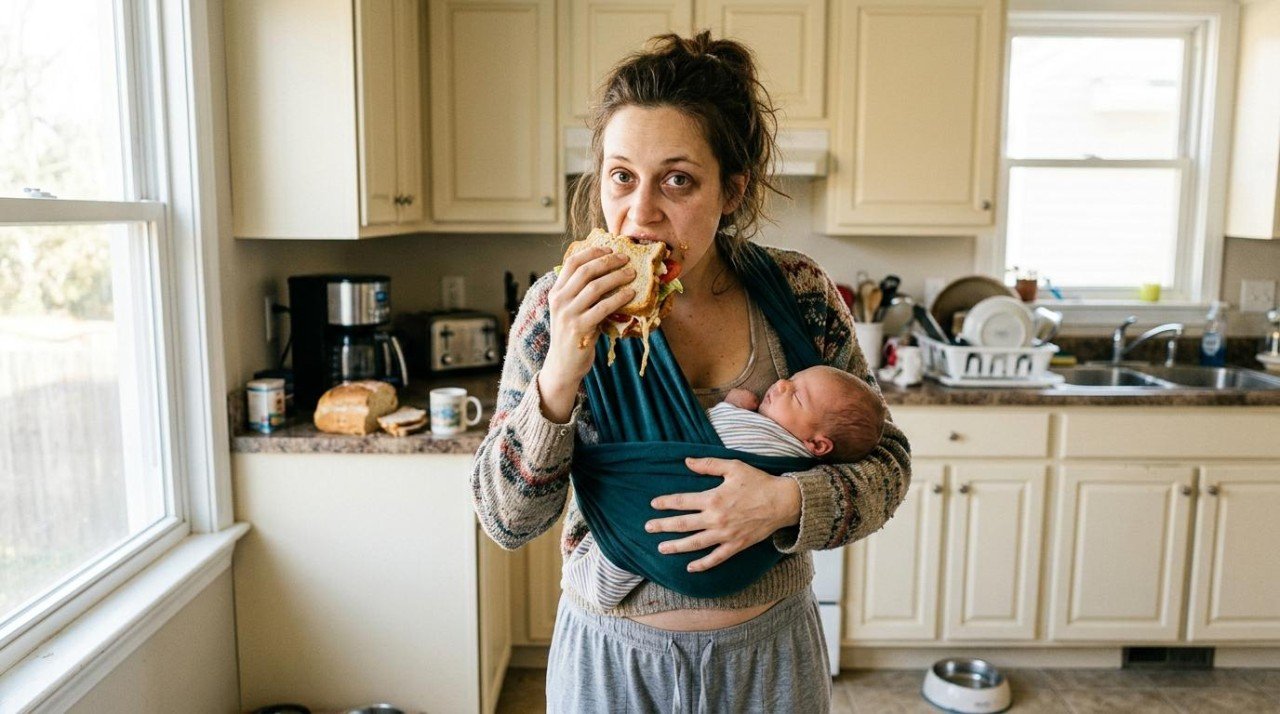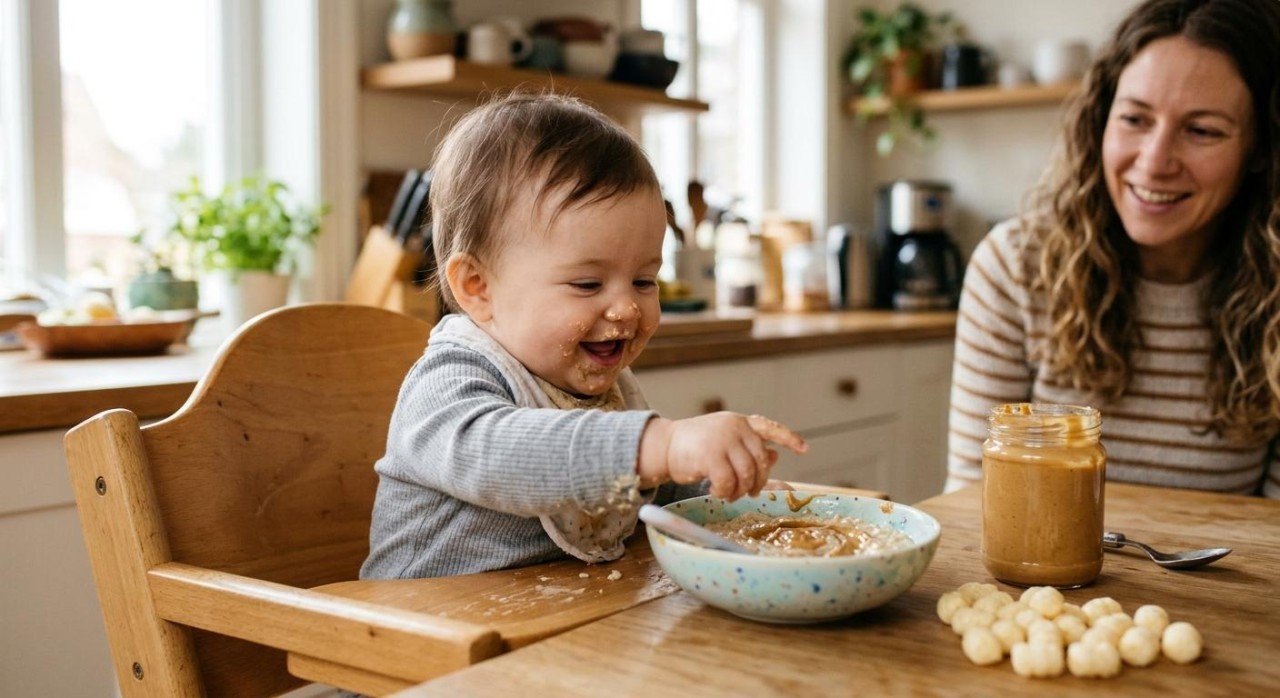
If you were a parent around the year 2000, you may remember being told to keep peanuts far away from your baby. If you're a parent now, your pediatrician may be nudging you to put peanut butter on the menu before your baby's first birthday. Same food, same worry, completely opposite advice.
That whiplash is real, and it's not because doctors were guessing then and are guessing now. The old advice was a well-meant precaution that was never backed by strong evidence. The new advice comes from one of the most convincing randomized trials in pediatric nutrition, a follow-up that tracked those same kids into their teens, and now real-world data suggesting peanut allergy rates in young children are actually falling.
Here's what changed, what the current US guidance says, how to actually introduce peanut and other common allergens at home, and what to do differently if your baby has eczema.
The old advice: wait, and wait some more
In 2000, the American Academy of Pediatrics (AAP) recommended that babies at high risk of allergy hold off on solid foods until 6 months, with "dairy products delayed until 1 year, eggs until 2 years, and peanuts, nuts, and fish until 3 years of age." The logic seemed sound: if a baby's immune system might overreact to a food, why not keep that food away until the immune system is more mature?
The problem is that peanut allergy kept climbing anyway. By 2008, the AAP had walked the recommendation back, acknowledging there wasn't good evidence that avoiding foods prevents allergies. But "we're no longer sure waiting helps" is a long way from "start early," and many families (and plenty of doctors) kept delaying out of habit.
The clue that started it all: Israel vs. the UK
The turn began with a puzzle. In a 2008 study in The Journal of Allergy and Clinical Immunology, researchers led by George Du Toit compared about 8,600 Jewish schoolchildren in the UK and Israel, two groups with similar genetic backgrounds. Peanut allergy affected 1.85% of the UK children but only 0.17% of the Israeli children, roughly a tenfold difference.
The biggest dietary difference? Timing. In Israel, peanut is a normal baby food, often in the form of a puffed peanut snack called Bamba. By 9 months, 69% of Israeli infants were eating peanut, compared with just 10% of UK infants.
That was an observational study, so it couldn't prove that early peanut caused the lower allergy rate. The authors themselves said guidelines shouldn't change until a proper trial was done. So they ran one.
The LEAP study: the trial that flipped the advice
The Learning Early About Peanut Allergy (LEAP) trial, published in The New England Journal of Medicine in 2015, enrolled 640 babies between 4 and 11 months old who were at high risk of peanut allergy because they had severe eczema, egg allergy, or both. Half were randomly assigned to avoid peanut until age 5. The other half ate it regularly: at least 6 grams of peanut protein a week, spread over three or more meals, mostly as Bamba or smooth peanut butter.
At age 5, every child who could be tested had an oral food challenge (the gold standard for diagnosing food allergy). The results were striking:
- Babies with no sign of peanut sensitization at the start: 13.7% of the avoidance group developed peanut allergy, compared with 1.9% of the eating group, an 86% relative reduction.
- Babies already showing some sensitization on a skin-prick test: 35.3% of the avoidance group developed peanut allergy, compared with 10.6% of the eating group, a 70% relative reduction.
There was no significant difference in serious adverse events between the groups. Feeding peanut to high-risk babies, under the study's careful conditions, was both safe and remarkably protective.
Two details are worth knowing. First, the trial screened out the roughly 9% of babies who already had large skin-test reactions, likely a sign of existing allergy, so the results don't apply to babies who are already allergic. Second, a small number of children in the eating group couldn't keep eating peanut because they reacted to it. Early introduction lowers the risk dramatically. It doesn't eliminate it.
Does the protection last? The teenage follow-up
A fair question was whether early peanut just delayed allergy rather than preventing it. The LEAP-Trio follow-up, published in NEJM Evidence in 2024, checked in on the original participants at age 12 or older. After age 6, kids could eat as much or as little peanut as they liked, and many went through stretches of eating none at all.
Even so, 15.4% of the original avoidance group had peanut allergy as teens, compared with 4.4% of the early-eating group, a 71% reduction. The protection built in the first five years held up through adolescence, even without steady peanut eating later. Lead investigator Gideon Lack put it bluntly: "Decades of advice to avoid peanuts has made parents fearful of introducing peanuts at an early age."
Is it working in the real world?
Trials happen under ideal conditions. The more important question for families is whether the guideline change has made a difference outside the research clinic, and the early answer looks like yes.
A study from Children's Hospital of Philadelphia, published in Pediatrics in October 2025, analyzed health records from children up to age 3 across 48 pediatric practices. Comparing the period before the 2017 US guidelines with the period after, the rate of new peanut allergy diagnoses fell from 0.79% to 0.45%, a 43% drop. Rates of any IgE-mediated food allergy also fell, from 1.46% to 0.93%, and the researchers estimated that about 1 in 200 babies exposed to allergens early was spared a food allergy. Egg has now overtaken peanut as the most commonly diagnosed food allergy in that age group.
This is observational data, so it shows a strong association with the guideline change rather than proof of cause. But it lines up with what the trials predicted. And the gains came despite patchy adoption: surveys cited in the same coverage found that only 29% of pediatricians and 65% of allergists had fully implemented the 2017 guidelines, and just 17% of caregivers were following the newer 2021 guidance. There's a lot of prevention still left on the table.
What the current US guidance actually says
Here's where it can get confusing, because the guidance has been updated more than once since LEAP.
The 2017 NIAID guidelines sorted babies into three risk groups:
- Severe eczema, egg allergy, or both: introduce peanut as early as 4 to 6 months, after strongly considering allergy testing (and a supervised feeding if needed).
- Mild to moderate eczema: introduce peanut around 6 months, at home.
- No eczema or food allergy: introduce peanut freely along with other solid foods.
The 2021 consensus from the major US and Canadian allergy societies (AAAAI, ACAAI, and CSACI) simplified things further. It recommends that all infants, regardless of risk, be introduced to peanut and cooked egg around 6 months, but not before 4 months, once they're developmentally ready and eating a few other starter foods. Screening tests before introduction are "not required," though some families may prefer them. The panel's reasoning: skin and blood tests often produce false positives in babies who have never eaten the food, and a positive test can lead to long delays, which is exactly what you're trying to avoid.
The AAP's 2019 clinical report lands in the same place: there's no reason to delay foods like peanut, egg, and fish, and restricting a mother's diet during pregnancy or breastfeeding doesn't prevent allergies. As one of the report's authors, Dr. Scott Sicherer, put it: "There is no reason to delay giving your baby foods that are thought of as allergens like peanut products."
The practical bottom line: for most babies, peanut and egg belong in the first wave of solid foods, around 6 months. If your baby has severe eczema or a known food allergy, talk to your pediatrician before 6 months, so a plan (with or without testing) is in place early rather than causing a delay.
Why eczema matters so much
Babies with eczema, especially severe, early-onset eczema, are the group at highest risk of food allergy. One leading explanation is the dual-allergen exposure hypothesis: food proteins that reach the immune system through inflamed, broken skin tend to trigger allergy, while the same proteins eaten by mouth tend to teach the immune system tolerance. Peanut protein is everywhere in a home where people eat it: in dust, on hands, on bedding. In LEAP, researchers measured peanut in the dust from children's beds and found it in both groups.
Recent data supports this picture. An analysis of the younger siblings of LEAP participants, presented at the AAAAI annual meeting in 2026, found that babies who lived with peanut eaters but didn't eat peanut themselves in their first year had higher rates of peanut sensitization, and that longer-lasting eczema independently raised risk. But introducing peanut in the first year significantly lowered both sensitization and allergy risk, regardless of eczema duration or household exposure.
For parents of babies with eczema, that points to two practical moves:
- Don't delay. If anything, eczema is a reason to get a plan in place sooner. Avoiding peanut in the kitchen doesn't keep it out of your baby's environment, but eating it may help build tolerance before skin exposure tips things the other way.
- Get the eczema under control. Work with your pediatrician on a skin-care plan. Calmer skin is better for your baby's comfort regardless, and it may reduce the chances of food proteins sneaking in through inflamed patches.
If you're unsure whether your baby's eczema counts as "severe," the NIAID definition is persistent or frequently recurring eczema that needs prescription-strength creams or ointments despite regular moisturizing. That's a conversation to have with your doctor rather than a call to make on your own.
How to introduce peanut at home
Never give whole peanuts or spoonfuls of thick peanut butter to a baby; both are choking hazards. The NIAID guidelines advise no whole nuts before age 5, and no peanut butter straight from the spoon or in lumps before age 4. Instead, use a baby-safe form. The NIAID guidelines offer several options, each providing about 2 grams of peanut protein:
- Thinned peanut butter: 2 teaspoons of smooth peanut butter stirred into 2 to 3 teaspoons of hot water, then cooled.
- Peanut butter puree: 2 teaspoons of smooth peanut butter mixed into 2 to 3 tablespoons of a fruit or vegetable puree your baby already eats.
- Peanut flour or powdered peanut butter: 2 teaspoons mixed into about 2 tablespoons of a puree your baby already eats.
- Peanut puffs: about 21 pieces of Bamba, softened with a few teaspoons of water for babies under 7 months.
For the first try, the guidelines recommend:
- Pick a day when your baby is healthy (no cold, fever, or stomach bug).
- Do it at home, not at daycare or a restaurant, with an adult who can focus entirely on the baby.
- Offer a small taste on the tip of a spoon, then wait 10 minutes.
- If there's no reaction, offer the rest at your baby's usual pace.
- Keep watching for at least 2 hours afterward.
Mild signs of a reaction include a new rash or a few hives around the mouth or face. Serious signs include swelling of the lips, face, or tongue; vomiting; widespread hives; trouble breathing, wheezing, or repeated coughing; pale or bluish skin; or sudden floppiness or sleepiness. Call 911 for any serious symptoms. For milder reactions, stop feeding the food and call your pediatrician.
Then keep it coming
One taste isn't the goal. In LEAP, the protective effect came from regular eating, around 6 to 7 grams of peanut protein a week (about three of those 2-gram servings), maintained for years. The 2021 consensus makes the same point for every allergen: once a food is introduced and tolerated, it should become part of your baby's usual diet.
This is where real life tends to get in the way. In the EAT study, a UK trial that asked parents to give six allergenic foods to breastfed babies from 3 months, only 42% of the evaluable early-introduction families hit the full feeding targets. The foods were safe and didn't disrupt breastfeeding. Keeping them in rotation week after week was simply hard. Introducing allergens is a one-day event; keeping them in the diet is a planning problem.
Take the Guesswork Out of Eating Well
Eat Well Planner helps you organize your favorite recipes, plan balanced meals, and automatically generate shopping lists — all in one place. Whether you're tracking macros, managing dietary restrictions, or just trying to stop asking "what's for dinner?", we've got you covered.
Our AI-powered tools can adapt any recipe to your dietary needs, help you discover new meals you'll love, and even log your nutrition effortlessly. It's meal planning made simple.
Start Organizing Your Meals — FreeDon't stop at peanut
Peanut has the strongest evidence, but it isn't the only food that belongs early. The 2021 consensus recommends introducing well-cooked egg around 6 months too (not raw or lightly cooked egg, which is more likely to cause reactions). And it says not to deliberately delay the other common allergens, including cow's milk products, soy, wheat, tree nuts, sesame, fish, and shellfish, once your baby has started solids. The evidence for those is thinner than for peanut and egg, but there's no data showing harm from introducing them in the first year, and past observational studies suggest delay might do harm.
Some easy, baby-safe ways to work them in:
- Egg: well-cooked scrambled egg, or hard-boiled egg mashed with a little breast milk, formula, or water.
- Dairy: plain whole-milk yogurt (cow's milk as a drink waits until 12 months).
- Wheat: soft-cooked pasta or toast strips.
- Sesame: hummus or a little tahini stirred into a puree.
- Tree nuts: thinned almond or cashew butter, prepared like peanut butter.
- Fish: soft, flaked, well-cooked fish that your family already eats, checked carefully for bones.
There's no required order. The consensus also encourages a diverse diet in general once solids begin. The evidence there is observational rather than from trials, but there's no known downside to offering lots of different foods. For more on readiness signs, first foods, and the baby-led weaning vs. purees debate, see our guide to starting solids without the stress.
Making "early and often" actually happen
The science asks parents to do something simple that's surprisingly easy to drop: keep peanut, egg, and the other allergens showing up on a baby's plate a few times a week, for months and years. The families who manage it usually aren't more disciplined. They just stop treating allergens as special and start treating them as normal family food.
That's where a little planning helps. With Eat Well Planner, you can set up a separate profile for your baby alongside the rest of the family, then build a weekly meal plan where allergen-friendly dishes simply show up: peanut sauce on noodles for the adults with a thinned spoonful for the baby, scrambled eggs at breakfast, hummus with soft veggies at lunch, salmon at dinner. The shopping list builds itself from the plan, so the peanut butter and eggs are already in the kitchen when it's time.
The AI recipe chat can help you adapt a family recipe into a baby-safe version (smoother texture, no added salt, no choking hazards). And the food diary gives you an easy record of when your baby last had each allergen, which is handy if you're wondering whether egg has gone missing for a couple of weeks, or if your pediatrician asks what your baby has been eating.
The bottom line
- The advice really did flip. Delaying peanut until age 3 was a precaution without strong evidence. The LEAP trial showed that eating peanut early cut peanut allergy by 70% to 86% in high-risk babies, and the protection lasted into the teen years.
- Most babies should get peanut and cooked egg around 6 months (not before 4 months), once they're eating a few other foods. No testing is required for most.
- Eczema is a reason to act early, not to wait. If your baby has severe eczema or a known food allergy, talk to your pediatrician before 6 months so a plan is ready in time.
- Use baby-safe forms only: thinned peanut butter, peanut powder, or softened peanut puffs, never whole nuts or thick spoonfuls.
- Keep it going. Regular eating, a few times a week, is what LEAP tested. A single taste is a start, not the finish line.
If you grew up being told to fear the peanut, it can feel strange to spoon it into your baby's breakfast. But this is one of those rare cases where the science is clear, the intervention is cheap and simple, and the payoff could last your child a lifetime.
This article is for general information and isn't a substitute for advice from your child's pediatrician or allergist, especially if your baby has eczema, a known food allergy, or has reacted to a food before.