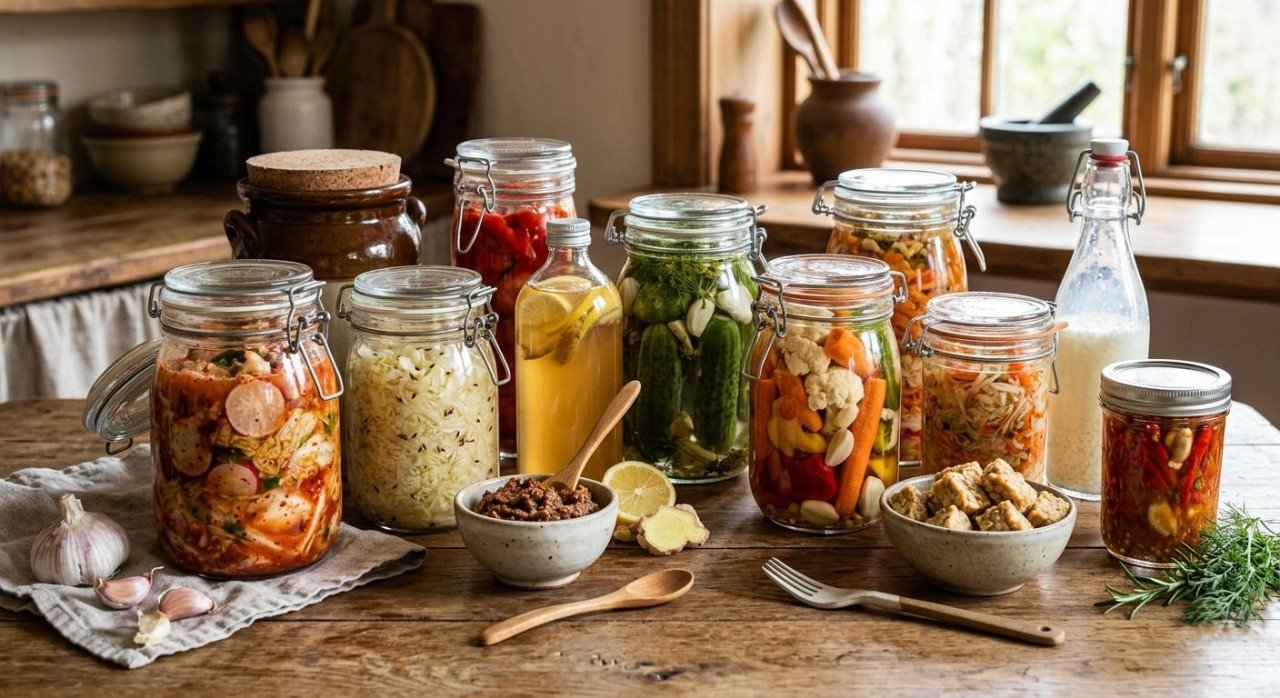
Fermented foods have a way of feeling like a club you weren't invited to. The jars of cloudy sauerkraut at the farmers market, the kombucha with the strange floating blob, the friend who keeps telling you their kefir changed their life — it can all feel a little intimidating if you've never tried any of it. The good news: getting started is far simpler than the hype makes it look. You don't need a fermentation crock, a sourdough starter named after a pet, or a degree in microbiology. You need a spoon and a willingness to start small.
This is your beginner's on-ramp. We'll cover what live cultures actually do inside you, the five gateway foods worth trying first, how to ease in without the bloating that scares people off, and — maybe most importantly — how to tell the real, live-culture stuff from products that are fermented in name only.
What Live Cultures Actually Do
Fermentation is one of the oldest food preservation methods on earth. At its core, it's a process where microorganisms like bacteria and yeast break down the sugars and starches in food, producing acids, gases, and other compounds along the way. That's what gives sauerkraut its tang and yogurt its thickness. The useful byproduct, from a health standpoint, is that many fermented foods deliver a dose of live probiotics — beneficial microbes that can join the trillions already living in your gut.
Why does that matter? Your gut microbiome — the vast community of bacteria in your digestive tract — plays a role in digestion, immune function, and even mood. A more diverse microbiome is generally a healthier, more resilient one. And here's where the evidence gets genuinely exciting. In a 2021 clinical trial published in the journal Cell, researchers at Stanford put 36 healthy adults on a 10-week diet rich in fermented foods — things like yogurt, kefir, fermented cottage cheese, kimchi, vegetable brine drinks, and kombucha. The results were striking: the fermented-food group showed a measurable increase in overall gut microbial diversity, with bigger servings producing stronger effects.
Even more notable was what happened to inflammation. The levels of 19 inflammatory proteins measured in participants' blood went down, and four types of immune cells showed less activation. As Stanford microbiologist Justin Sonnenburg put it, the study "provides one of the first examples of how a simple change in diet can reproducibly remodel the microbiota across a cohort of healthy adults." Interestingly, a comparison group that ramped up dietary fiber instead did not see the same jump in microbial diversity — suggesting fermented foods bring something distinct to the table.
One caveat worth keeping in mind: that study had participants build up to a substantial intake — about six servings a day by the end. You don't have to hit that number to benefit, and you definitely shouldn't start there. But it's a useful reminder that consistency, not a single heroic spoonful, is where the payoff lives.
The Gateway Five: Where Beginners Should Start
You don't need to track down obscure ferments to get going. Five widely available foods cover the spectrum from mild to bold, and most are sitting in your regular grocery store right now.
Yogurt
The friendliest starting point by a mile. It's familiar, versatile, and easy to fold into a morning routine. The key is to look for the words "live and active cultures" on the label and to skip the heavily sweetened versions — a plain yogurt you sweeten yourself with fruit gives you the cultures without a pile of added sugar. Greek yogurt and skyr work just as well.
Kefir
Think of kefir as yogurt's drinkable, more potent cousin. It's a tangy fermented milk drink, and according to the Cleveland Clinic, it typically contains around 12 active probiotic strains — more than most yogurt. You can drink it straight, pour it over granola, or blend it into a smoothie in place of milk. If the tartness is a lot at first, a smoothie is the gentlest way in.
Sauerkraut
Just cabbage and salt, transformed by time into something tangy and crunchy. This is your easiest entry into vegetable ferments. A forkful alongside eggs, piled onto a sandwich, or stirred into a grain bowl adds brightness and live cultures at once. (More on buying the right sauerkraut below — this is the category where "fermented in name only" trips people up most.)
Kimchi
Korea's iconic fermented vegetable dish — usually napa cabbage and radish seasoned with garlic, ginger, and chili. It's bolder and spicier than sauerkraut, so it's a great next step once plain kraut feels easy. Stir it into fried rice, fold it into a grain bowl, or eat it as a side. The heat is part of the appeal, but start with a small amount if you're spice-sensitive.
Miso
A savory, salty fermented soybean paste that brings deep umami flavor. A spoonful whisked into warm broth makes a quick soup; it also works in salad dressings, marinades, and glazes. One practical tip: live cultures are sensitive to high heat, so don't boil miso. Stir it in after you've taken the soup off the stove, when it's hot but no longer bubbling, to keep the good microbes intact.
Start Small: How to Skip the Bloating
Here's the single most common reason people try fermented foods once and quit: they eat a big serving, feel gassy and bloated a few hours later, and conclude the stuff doesn't agree with them. In reality, that initial discomfort is usually just your gut adjusting to an influx of new microbes — and it's almost entirely avoidable if you ramp up slowly.
Brown University Health notes that the common side effects of introducing probiotics include minor cramping, gas, and flatulence — typically mild and temporary. Stanford's own guidance for getting started is refreshingly simple: begin with small amounts of something like yogurt, kefir, or a pickled vegetable, start with roughly one serving a day, and increase gradually over time. Pushing too much too quickly is exactly what triggers the bloat.
A few practical rules that make the transition smooth:
- Think tablespoons, not bowls. A tablespoon or two of sauerkraut, or a quarter cup of kefir, is plenty to begin with.
- Eat ferments with a meal, not on an empty stomach. The rest of the plate buffers the acids and fizz and tends to sit easier.
- Give it a week or two. Mild gas at the start usually settles as your microbiome adapts. If a particular food never agrees with you, simply try a different one.
- Pick what suits your body. Stanford points out that some people tolerate dairy-based ferments (yogurt, kefir) better, while others do better with fermented vegetables (kimchi, sauerkraut, pickles). There's no wrong door.
How to Buy the Real Thing
This is the part nobody warns beginners about, and it's where good intentions quietly go to waste. Not every food labeled "fermented" or "pickled" actually contains live cultures. Many shelf-stable pickles and supermarket sauerkrauts are made quickly with vinegar and then pasteurized — a heating step that, along with processes like smoking and filtering, can kill or remove the live cultures, leaving you with the tang but none of the gut benefit.
Here's how to spot the genuine article:
- Check the refrigerated section. Live ferments need to stay cold to keep their cultures dormant and stable. If sauerkraut or pickles are sitting on a warm, shelf-stable aisle, they've almost certainly been pasteurized.
- Read the ingredient list. For sauerkraut, you want to see basically cabbage and salt. If vinegar is in the ingredients, it was likely quick-pickled rather than naturally fermented.
- Look for the right words. Phrases like "naturally fermented," "raw," "unpasteurized," and "live and active cultures" are your green lights. Harvard Health suggests checking for telltale bubbles in the liquid when you open the jar — a sign that living organisms are still at work inside.
- Naturally fermented pickles, not vinegar pickles. The classic deli-style sour pickle made in a saltwater brine is a ferment; the shelf-stable vinegar pickle is not.
Once you know these cues, the whole category gets a lot less confusing — you can scan a label in a few seconds and know whether you're getting living food or just a flavor.
The trickier part is remembering to actually buy these foods, fit them into meals you'll genuinely eat, and keep the habit going past week one. That's exactly the kind of low-stakes planning that's easy to let slide — and where a little structure helps.
Take the Guesswork Out of Eating Well
Eat Well Planner helps you organize your favorite recipes, plan balanced meals, and automatically generate shopping lists — all in one place. Whether you're tracking macros, managing dietary restrictions, or just trying to stop asking "what's for dinner?", we've got you covered.
Our AI-powered tools can adapt any recipe to your dietary needs, help you discover new meals you'll love, and even log your nutrition effortlessly. It's meal planning made simple.
Start Organizing Your Meals — FreeYour First Week, Mapped Out
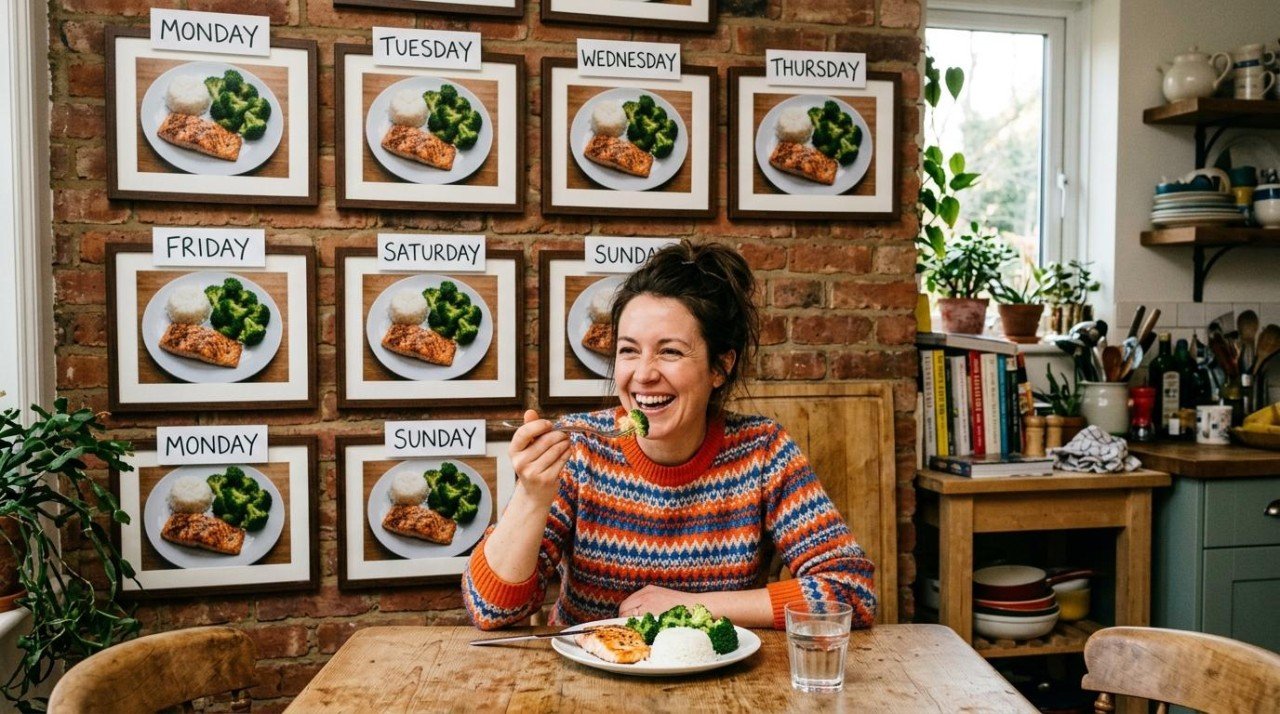
You don't need a plan this rigid forever, but having one for the first week removes the guesswork. The goal is gentle, daily exposure — one serving a day, slowly building familiarity.
- Day 1 & 2 — Yogurt. Start with a small bowl of plain yogurt with live and active cultures, topped with fruit, at breakfast. Easy, familiar, low-risk.
- Day 3 — Kefir. Blend a quarter cup into a fruit smoothie so the tang is mellow. Notice how you feel; chances are, just fine.
- Day 4 — Sauerkraut. Add a tablespoon of refrigerated, naturally fermented sauerkraut as a side to lunch or dinner.
- Day 5 — Repeat your favorite. Go back to whichever of the first three sat best with you. Consistency matters more than novelty.
- Day 6 — Kimchi. Stir a small spoonful into rice or a grain bowl. Welcome a little spice and a new microbial cast.
- Day 7 — Miso. Make a quick cup of miso soup, stirring the paste in off the heat. A warm, savory way to close the week.
By the end of seven days you'll have sampled all five gateway foods, learned which ones you actually enjoy, and given your gut a gentle introduction without overwhelming it. From there, the move is simple: keep one or two favorites in steady rotation and slowly nudge your servings up over the following weeks.
Letting an App Carry the Planning
The honest obstacle with fermented foods isn't taste or science — it's memory and logistics. It's remembering to buy the unpasteurized kraut, having kefir on hand when you want a smoothie, and not letting the kimchi languish at the back of the fridge. This is where planning your week ahead of time does the heavy lifting.
Eat Well Planner is a free app built to make exactly this kind of eating the path of least resistance. You can save the recipes you want to try — a kefir smoothie, a kimchi grain bowl, a miso-glazed salmon — and let the app build a balanced weekly meal plan that works your chosen ferments in naturally. It then generates an organized shopping list automatically, so "buy refrigerated, naturally fermented sauerkraut" actually makes it onto your grocery run instead of staying a vague good intention.
Because the app tracks nutrition and supports diversity-focused goals, your daily fermented servings count toward a bigger picture of eating more whole, varied, plant-rich food — and if you're working toward something like 30 different plants a week for your gut, fermented vegetables tick that box twice over. The AI recipe chat can also suggest substitutions if a ferment doesn't agree with you, or adapt a recipe to be dairy-free, lower-sodium, or vegetarian. The planning fades into the background, and the eating gets easier.
A Few Common Questions
Do I have to eat six servings a day like the study? No. That was a research protocol designed to push for a measurable effect. Start with one serving daily and build from there at your own pace — even modest, consistent intake contributes to a more diverse microbiome.
Will cooking my ferments ruin them? High heat does kill live cultures, so if probiotics are your goal, eat ferments raw or add them at the very end of cooking (the miso-off-the-heat trick). That said, even cooked fermented foods still offer flavor and nutrients — and many of the compounds microbes produce during fermentation survive heat — so a cooked kimchi fried rice isn't wasted.
Are store-bought probiotic pills the same thing? Fermented foods deliver live microbes alongside fiber, nutrients, and the other compounds created during fermentation — a fuller package than an isolated supplement. For most healthy people, food is the simpler and more enjoyable place to start.
The Bottom Line
Fermented foods aren't a wellness fad you need an instruction manual to join. They're some of the oldest foods humans eat, and the research increasingly shows they can meaningfully boost gut diversity and lower inflammation. The whole on-ramp comes down to three moves: start small to keep your gut comfortable, choose refrigerated products with live cultures instead of vinegar-pickled imposters, and stay consistent. Pick one food from the gateway five this week, put it on tomorrow's plate, and let the habit build from there.
If the planning and shopping are what usually trip you up, try organizing your meals with Eat Well Planner — it'll help you fold fermented foods into a week of real, nourishing meals without the mental overhead.