If you work nights, you already know the drill: the world is asleep, the cafeteria is closed, and the only food within reach is whatever the vending machine coughs up at 3 a.m. Nurses, truck drivers, paramedics, factory workers, warehouse staff, security guards — millions of people keep the lights on while everyone else is in bed. And almost all of them are fighting the same quiet battle with their own bodies, because human physiology was simply not built to eat and work in the dark.
This is not a willpower problem. Your body runs on an internal clock that expects food during the day and rest at night, and when you eat against that clock, your metabolism handles food differently — and not in your favor. The good news is that you have more control than it feels like at 4 a.m. You cannot rewire your circadian rhythm, but you can work with it instead of against it. Here is a practical, non-judgmental survival guide for eating well when your schedule runs opposite to the sun.
Why Eating at Night Is Genuinely Harder on Your Body
Your body has a master clock in the brain that keeps roughly 24-hour time, plus a network of smaller "peripheral" clocks in organs like your gut, liver, and pancreas. During the day these clocks are synchronized: your digestive system is primed for food, and your pancreas is ready to release insulin to manage the resulting blood sugar. At night, the whole system winds down to prepare for fasting and sleep. When you eat a full meal at 2 a.m., you are asking organs that have effectively clocked out for the night to do daytime work.
The clearest evidence for this comes from a tightly controlled 2021 study published in Science Advances. Researchers put 19 healthy volunteers through a 14-day simulated night-work protocol. One group ate during the night, as most shift workers do; the other ate only during the daytime. The nighttime eaters saw their average blood glucose levels rise by 6.4% — a meaningful shift toward the territory of impaired glucose tolerance — while the daytime eaters showed no significant increase at all. Same people, same food, same lack of sleep. The only difference was when they ate.
A separate study of hospital nurses, published in Frontiers in Endocrinology in 2022, pointed to the same culprit. Night-shift nurses had higher 24-hour insulin and leptin levels than day-shift nurses. But when the researchers looked closer, the nurses who ate predominantly during the night had dramatically higher insulin than those who ate mostly during the day — leading the authors to conclude that the nighttime eating, not the night work by itself, was driving the hormonal changes.
Over years, this matters. An umbrella review of the research in Frontiers in Public Health found that shift workers carry a roughly 25% higher risk of being overweight (rising to about 38% for night-shift workers specifically), around a 10% higher risk of developing diabetes, and roughly a 30% higher risk of hypertension. None of this means a night-shift job dooms you — but it does mean the food choices you make during those hours carry more weight than they would for a day worker.
Your Digestion Also Slows Down Overnight
It is not just blood sugar. Your gut runs on a circadian schedule too. A review in the Journal of Clinical Gastroenterology notes that colonic motility — the muscular activity that moves food through you — follows a daily rhythm with reduced activity at night. Healthy people have brisk gut activity during the day, often after waking or after a meal, but minimal activity overnight. The stomach empties more slowly in the small hours, too.
Practically, that is why a heavy, greasy meal at 3 a.m. sits like a brick. Food lingers longer in a stomach that is barely moving, which is a recipe for bloating, heartburn, sluggishness, and that distinctly miserable feeling of being both exhausted and uncomfortably full. Working with your slowed-down nighttime gut — lighter, simpler foods in the deep overnight hours — is one of the easiest wins available to a shift worker.
How to Time Your Meals Around a Shift
You cannot move your shift, but you can shape your eating window so most of your calories land when your body can actually handle them. The free NIOSH training for night-shift nurses lays out a sensible framework, and it lines up neatly with the metabolic research above. A workable pattern looks like this:
- Eat a proper meal before your shift. Think of this as your "dinner," even if it is at 6 p.m. before a night shift. A balanced plate with protein, complex carbohydrates, and vegetables fuels you through the first several hours so you are not starting the night already running on empty.
- Keep food during the shift lighter and simpler. NIOSH suggests trying to reduce food intake between roughly midnight and 6 a.m., when your body is least equipped to digest and process it. This does not mean white-knuckling it through hunger — it means choosing smaller, balanced snacks or a light meal rather than a full heavy dinner in the dead zone.
- Avoid a big meal right before day-sleep. NIOSH specifically advises against large meals in the 1 to 2 hours before your main sleep, and steering clear of heavy, fatty, or spicy foods that can trigger reflux when you lie down. A small breakfast before bed is fine — even helpful — to keep hunger from waking you a few hours in.
The underlying principle is simple: front-load your eating toward the daytime and the start of your shift, and taper off as the night goes on. You will not always hit it perfectly, and that is fine. Even shifting some of your intake earlier is better than eating your largest meal at 4 a.m.
What to Pack So the Vending Machine Stops Deciding for You
Here is the truth about 3 a.m. food choices: they are made hours earlier, when you decide whether to pack something or not. If you bring nothing, the vending machine, the gas station, and the 24-hour drive-thru make the decision for you — and they overwhelmingly serve ultra-processed, sugar-heavy options that spike your blood sugar exactly when your body is worst at handling it. NIOSH explicitly flags sugar-rich, low-fiber foods as ones that can deepen the drowsiness you are trying to fight.
The fix is not heroic meal-prep marathons. It is having a small, portable arsenal of foods that travel well and do not need a real kitchen:
- Protein anchors: hard-boiled eggs, a container of Greek yogurt, cheese, hummus, a tin of tuna, leftover roast chicken, or edamame. Protein keeps you full and steadies blood sugar.
- Real, slow carbohydrates: a wholegrain sandwich or wrap, oatmeal you can make with hot water, whole-grain crackers, or last night's rice and roasted vegetables. These give steadier energy than candy or pastries.
- Vegetables and fruit you can eat one-handed: baby carrots, cucumber, cherry tomatoes, snap peas, apple slices, berries, or a banana. NIOSH's own list for night workers leans heavily on vegetables, salads, soups, fruit, yogurt, eggs, and nuts.
- Nuts and seeds: a small portion of almonds or walnuts is dense, shelf-stable energy with healthy fats and fiber.
- Soup in a thermos: a vegetable or lentil soup is warming, easy on a slowed-down gut, and far gentler at 3 a.m. than fried food.
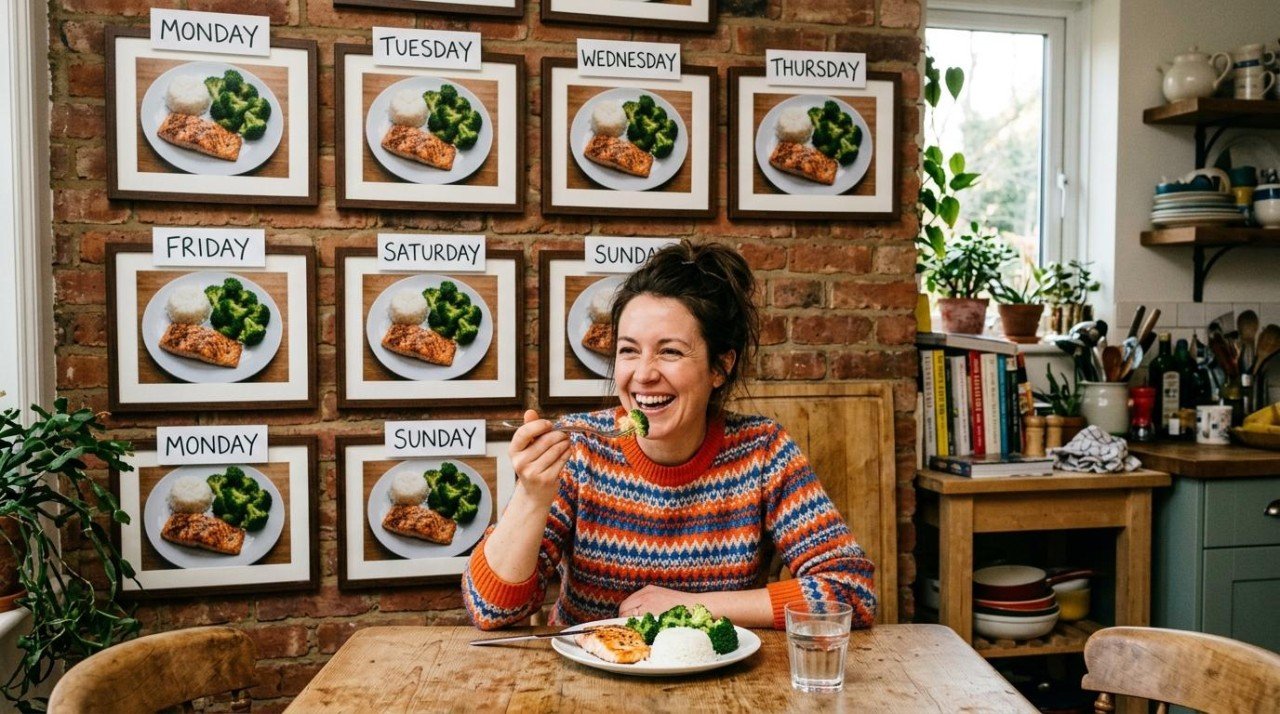
The real obstacle is rarely knowing what to pack — it is having it ready on a day when you are sleep-deprived and out of time. That is where a little planning ahead does the heavy lifting: deciding your shift meals and snacks once, at the start of the week, so the right food is simply there when you grab your bag.
Take the Guesswork Out of Eating Well
Eat Well Planner helps you organize your favorite recipes, plan balanced meals, and automatically generate shopping lists — all in one place. Whether you're tracking macros, managing dietary restrictions, or just trying to stop asking "what's for dinner?", we've got you covered.
Our AI-powered tools can adapt any recipe to your dietary needs, help you discover new meals you'll love, and even log your nutrition effortlessly. It's meal planning made simple.
Start Organizing Your Meals — FreeManaging Caffeine So It Does Not Wreck Your Recovery Sleep
Caffeine is a lifeline on nights, and you do not have to give it up. But the timing of your last cup matters enormously, because sleep is already the hardest thing to protect when you work overnight — and bad sleep is what makes everything else, including your eating, harder to manage.
Caffeine has a half-life of roughly 3 to 6 hours, meaning a sizable chunk of that 6 p.m. coffee is still circulating when you try to sleep the next morning. A classic randomized study published in the Journal of Clinical Sleep Medicine found that a 400 mg dose of caffeine (roughly four cups of coffee) significantly disrupted sleep even when taken a full 6 hours before bedtime. The researchers concluded the findings support the standard advice to stop substantial caffeine at least 6 hours before sleep.
For a night worker, that translates to a clear strategy:
- Use caffeine early in your shift, not late. Lean on it in the first half of the night when you need alertness most, and cut it off well before your shift ends.
- Switch to caffeine-free drinks for the final stretch. NIOSH suggests moving to water, juice, or herbal tea at least 4 hours before you plan to sleep — and given the 6-hour research, earlier is even better.
- Watch the hidden sources. Energy drinks, large iced coffees, and even some teas pack more caffeine (and often a lot of sugar) than you think. That sugar gives you a spike-and-crash on top of the caffeine problem.
Do Not Forget to Drink Water
Hydration quietly falls apart on nights. The fatigue of a long shift can masquerade as dehydration, and a slightly dehydrated brain feels foggier and more tired — which you may then try to fix with yet more coffee, which is mildly dehydrating itself. Keep a water bottle within arm's reach and sip steadily through the shift rather than relying on caffeinated drinks for your fluids. If you find yourself reaching for snacks out of restlessness rather than real hunger, a glass of water first is a cheap, no-downside test.
Be Realistic and Kind to Yourself
Shift work is hard on the body, and no blog post is going to change the fact that you are awake when your biology wants you asleep. Some nights you will eat the doughnut someone brought in, or you will be too slammed to take a proper break at all. That is the job. The goal is not perfection — it is to tilt the odds in your favor on the ordinary nights, so the occasional rough one does not matter much.
Start with one change, not ten. Maybe it is packing a real meal for your next three shifts. Maybe it is moving your last coffee earlier. Maybe it is keeping a thermos of soup at your station instead of hitting the vending machine. Small, repeatable habits beat an ambitious overhaul you abandon after a week — especially when you are tired.
Making the Plan Actually Happen
The hardest part of all of this is not knowing what to do — it is having the right food ready when you are sleep-deprived and short on time. That is exactly the friction a tool like Eat Well Planner is built to remove. You can build a simple weekly meal plan around your shift schedule, deciding once what your pre-shift meals and portable snacks will be so the decisions are already made by the time the week gets chaotic. The app turns that plan into an organized shopping list automatically, so a single grocery run sets you up with real food instead of leaving you at the mercy of the vending machine.
You can save and import quick, gut-friendly recipes — including from Instagram or YouTube — that travel well in a lunch bag, and use the food diary to log what you actually eat across odd hours. Over a few weeks that log helps you spot your own patterns and find an eating rhythm that fits your schedule, not a 9-to-5 one. None of it requires being a nutritionist or a meal-prep influencer. It just makes the healthy choice the easy one, which is the whole game when you are working against the clock.
Your body clock may never love the night shift. But with a little planning, you can stop it from working against you — and feel a lot more human at 4 a.m. Try organizing your shift meals with Eat Well Planner and build a plan that fits the hours you actually work.