If the clocks change and you suddenly feel like you could sleep for a week, eat nothing but pasta and toast, and skip every social plan on your calendar, you are not imagining it. For a lot of people, the shorter, darker days of late fall and winter come with a noticeable dip in mood and energy. Sometimes it is a mild case of the winter blues. Sometimes it is something more serious. And while no plate of food is going to fix the fact that the sun sets at 4:30 p.m., what you eat genuinely is one of the levers you can pull to feel a little steadier through the cold months.
Let's walk through what is actually happening in the body when the light disappears, where food fits alongside light and movement, and how to build warming meals that support your mood instead of sending it on a roller coaster. First, an important caveat: seasonal depression is real, it can be debilitating, and food is one supportive piece of the puzzle, not a cure. More on that at the end.
Why Winter Messes With Your Mood
The clinical version of the winter slump is called seasonal affective disorder, or SAD, a form of depression that follows a seasonal pattern. According to the National Institute of Mental Health, millions of Americans experience it, it occurs much more often in women than in men, and it is more common in people living farther north, where winter daylight hours are shortest. Beyond the standard symptoms of depression, the winter pattern has a very recognizable signature: oversleeping, social withdrawal (NIMH describes it as feeling like you want to "hibernate"), and overeating, particularly a craving for carbohydrates that often leads to weight gain.
Two brain chemicals are central to the story. The first is serotonin, which helps regulate mood. NIMH notes that people with winter-pattern SAD tend to have reduced serotonin activity, and that sunlight affects the molecules that help keep serotonin levels normal. The second is melatonin, the hormone that makes you sleepy. People with winter-pattern SAD tend to produce too much of it, which helps explain the heavy, oversleeping, never-quite-awake feeling. A review of the chronobiology and neurobiology of winter SAD found that people with SAD secrete melatonin for a longer stretch each night in winter than in summer, while healthy people do not, almost like a leftover hibernation signal.
This is why light is the front-line tool for SAD, not food. But the same systems that light influences, serotonin and the body's clock, are also touched by what is on your plate. That is the opening for diet to help.
The Carb Craving Is Real, But Steady Beats Spiky
That winter pull toward bread, pasta, cookies, and mashed potatoes is not just weak willpower. There is a biological logic to it. Carbohydrates trigger the release of insulin, which helps clear competing amino acids from the bloodstream and lets more tryptophan, the building block of serotonin, reach the brain. In other words, your body may be reaching for carbs as a clumsy form of self-medication, chasing a serotonin bump. The chronobiology review above notes that people with SAD report distinct improvements after carbohydrate-rich meals, likely tied to this serotonin pathway.
Here is the catch. The fast-acting carbs we tend to crave (candy, white bread, pastries, sugary lattes) deliver a quick rise and an equally quick crash, and that crash often lands as fatigue, irritability, and another craving an hour later. The mood lift is real but short, and the energy dips that follow are exactly what you do not need in a season you already feel flat.
The research on this is sobering. In an analysis of more than 70,000 postmenopausal women from the National Institutes of Health's Women's Health Initiative, Columbia University researchers found that a higher dietary glycemic index, along with more added sugars and refined grains, was associated with greater risk of new-onset depression. Published in The American Journal of Clinical Nutrition in 2015, the study also found a protective pattern: more fiber, whole grains, vegetables, and non-juice fruit was associated with lower depression risk.
The takeaway is not to fear carbohydrates. It is to choose the kind that release their energy slowly. Oats, brown rice, quinoa, beans, lentils, sweet potatoes, and whole-grain bread give you the same comforting, serotonin-supporting carbs without the blood sugar whiplash. Pair them with protein and a little healthy fat, a bowl of lentil soup, oatmeal with nuts and berries, a sweet potato with beans, and you blunt the spike-and-crash cycle entirely. You still get the cozy, warming food the season calls for. You just get steadier energy with it.
Vitamin D: The Nutrient Winter Steals From You
Vitamin D is unusual because your skin makes most of it from sunlight, and in winter, the sun simply will not cooperate. A classic Harvard study found that in Boston (latitude 42.2 degrees north), skin exposed to sunlight produced no vitamin D3 from November through February. Farther north, in Edmonton, the "vitamin D winter" stretched from October all the way through March. Even on a bright, cloudless winter day, the sun in much of the northern United States sits too low for the UVB rays that make vitamin D to do their job. For a huge swath of the country, the winter months are a vitamin D drought no matter how much you bundle up and go outside.
That matters for mood because vitamin D appears to play a role in the brain. NIMH notes that vitamin D is believed to promote serotonin activity, and that deficiency may worsen the picture for people with winter-pattern SAD, though it is careful to add that studies testing vitamin D specifically as a SAD treatment have produced mixed results. The broader depression research is more encouraging but still imperfect: a 2025 meta-analysis of 20 randomized controlled trials found that vitamin D supplementation significantly reduced depressive symptoms (standardized mean difference of -0.36), while openly acknowledging that the studies varied widely in quality.
So vitamin D is not a magic mood pill, but going through winter deficient is a real and common problem worth addressing. Food can help close the gap: fatty fish like salmon, mackerel, and sardines, egg yolks, UV-exposed mushrooms, and fortified foods such as milk and many plant milks all contribute. Because diet alone often is not enough in deep winter, this is a great thing to raise with your doctor, who can check your level with a simple blood test and advise whether a supplement makes sense for you.
Omega-3s for a Steadier Brain
Omega-3 fatty acids, the fats concentrated in oily fish, are structural building blocks for the brain and have anti-inflammatory effects throughout the body. They have also been studied extensively for mood. A meta-analysis of 26 trials involving 2,160 participants found an overall beneficial effect of omega-3s on depression symptoms. Notably, the benefit came from EPA, one of the two main marine omega-3s, rather than DHA; the analysis found formulations with at least 60 percent EPA, at doses up to about 1 gram a day, were the ones that helped.
The most reliable food sources are fatty fish, salmon, sardines, mackerel, herring, and anchovies. Aim to work a couple of servings into your week. If you do not eat fish, plant sources like walnuts, chia, flax, and hemp seeds provide ALA, a precursor your body converts to EPA and DHA, though only modestly, so people who avoid seafood may want to talk to a doctor about an algae-based omega-3 supplement. As with vitamin D, the goal is simply to stop running low during the months your mood is most vulnerable.
Building Warming Meals That Support, Not Sabotage
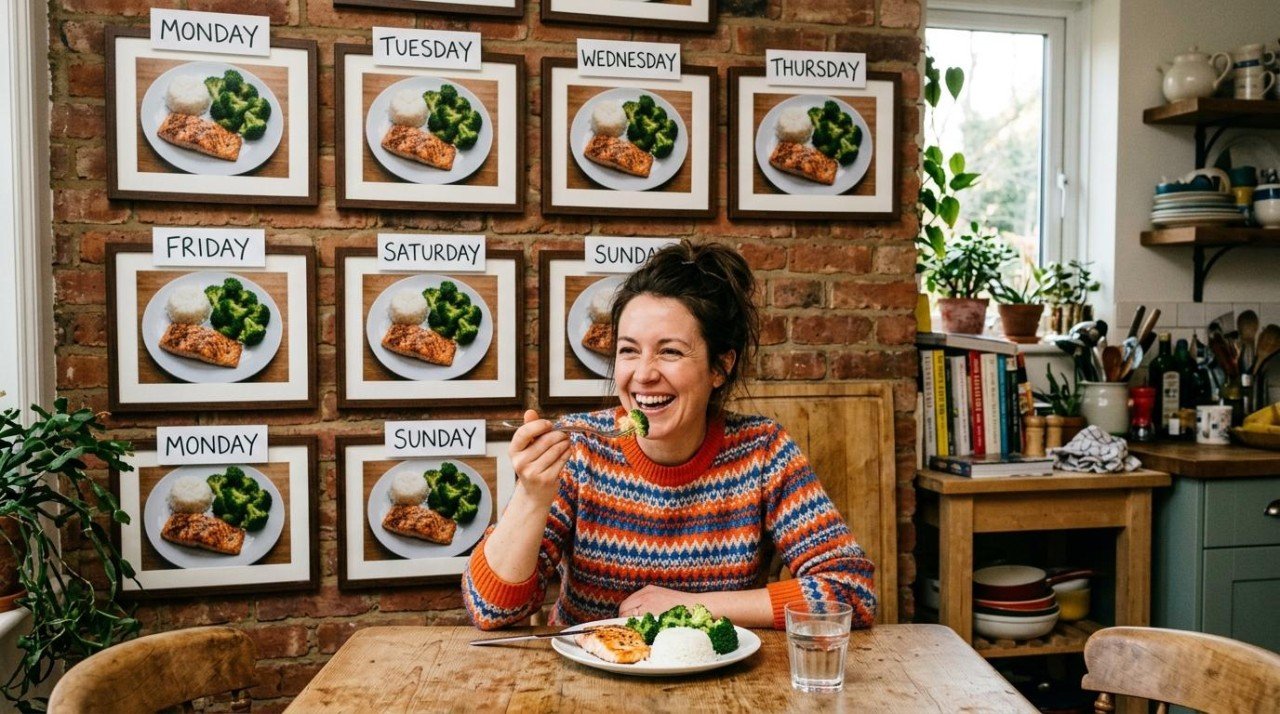
Put the pieces together and a genuinely comforting winter way of eating takes shape, one that happens to line up with the food patterns most consistently linked to better mood. Think hearty soups and stews loaded with vegetables, beans, and lentils; whole grains like barley, farro, and brown rice; roasted root vegetables; salmon and other oily fish; eggs; nuts and seeds; and plenty of color on the plate even when it is gray outside.
This is essentially a Mediterranean-style pattern, and it has been put to the test directly. In the landmark 2017 SMILES trial, published in BMC Medicine, 67 adults with moderate to severe depression were randomly assigned to either dietary support based on a modified Mediterranean diet or a social-support control group for 12 weeks. By the end, about a third of the diet group (32.3 percent) reached remission, compared with just 8 percent of the control group. That is a striking result for a food-based intervention, and it reinforces the idea that real, whole-food eating can be a meaningful support for mental health, not just physical health.
The honest obstacle is that this kind of cooking takes planning, and planning is exactly the thing that feels impossible when winter has flattened your energy and motivation. When you are already running low, the path of least resistance is takeout and whatever is fastest in the freezer aisle, which is usually the spike-and-crash food that makes the slump worse. The fix is to make the good choice the easy one by deciding in advance, on a day you feel okay, what the low-energy days will look like.
That is where a little structure pays off. Eat Well Planner is a free tool built for exactly this problem. You can save and organize your favorite warming recipes (import them straight from a website, an Instagram reel, or a YouTube video), then let the app generate a weekly meal plan built around steady-energy, nutrient-dense meals, complete with an automatic shopping list so a single grocery run sets up your whole week. When the dark afternoon hits and your motivation is gone, the decision is already made and the ingredients are already in the kitchen.
Take the Guesswork Out of Eating Well
Eat Well Planner helps you organize your favorite recipes, plan balanced meals, and automatically generate shopping lists — all in one place. Whether you're tracking macros, managing dietary restrictions, or just trying to stop asking "what's for dinner?", we've got you covered.
Our AI-powered tools can adapt any recipe to your dietary needs, help you discover new meals you'll love, and even log your nutrition effortlessly. It's meal planning made simple.
Start Organizing Your Meals — FreeIts nutrition tracking and food diary add another layer that is especially useful this time of year. By logging what you actually eat, you can spot the patterns that matter, whether you are getting any omega-3-rich fish, whether your vitamin D sources are showing up at all, whether your days are heavy on refined carbs. Those insights turn a vague "I should eat better in winter" into specific, fixable gaps, and they give you concrete numbers to bring to your doctor if you suspect you are running low on something like vitamin D.
Food Is One Piece, Not the Whole Answer
Here is the part that matters most. Seasonal affective disorder is a real form of clinical depression, and for some people it is severe. Diet is a supportive piece of the picture, alongside the things with the strongest evidence behind them. NIMH lists light therapy (typically sitting in front of a 10,000-lux light box for about 30 to 45 minutes a day), cognitive behavioral therapy adapted for SAD, and antidepressant medication among the established treatments, sometimes used in combination. Daily light exposure, getting outside even on cold mornings, and regular movement all help too.
So eat the warming, nourishing food, get your omega-3s and vitamin D, keep your blood sugar steady, and use those as genuine supports. But if your low mood is persistent, if it is interfering with work, relationships, or daily life, or if you ever have thoughts of harming yourself, please talk to a doctor or mental health professional. (In the US, you can call or text 988 to reach the Suicide and Crisis Lifeline anytime.) Treating seasonal depression well usually means combining several tools, and food is at its best when it is one of them, not the only one.
Winter will always be darker and slower than summer. But with a plan for warming, steady-energy meals, attention to the nutrients the season strips away, and the right support when you need it, you can move through the cold months feeling far more like yourself. Try organizing your winter meals with Eat Well Planner and make the nourishing choice the easy one.