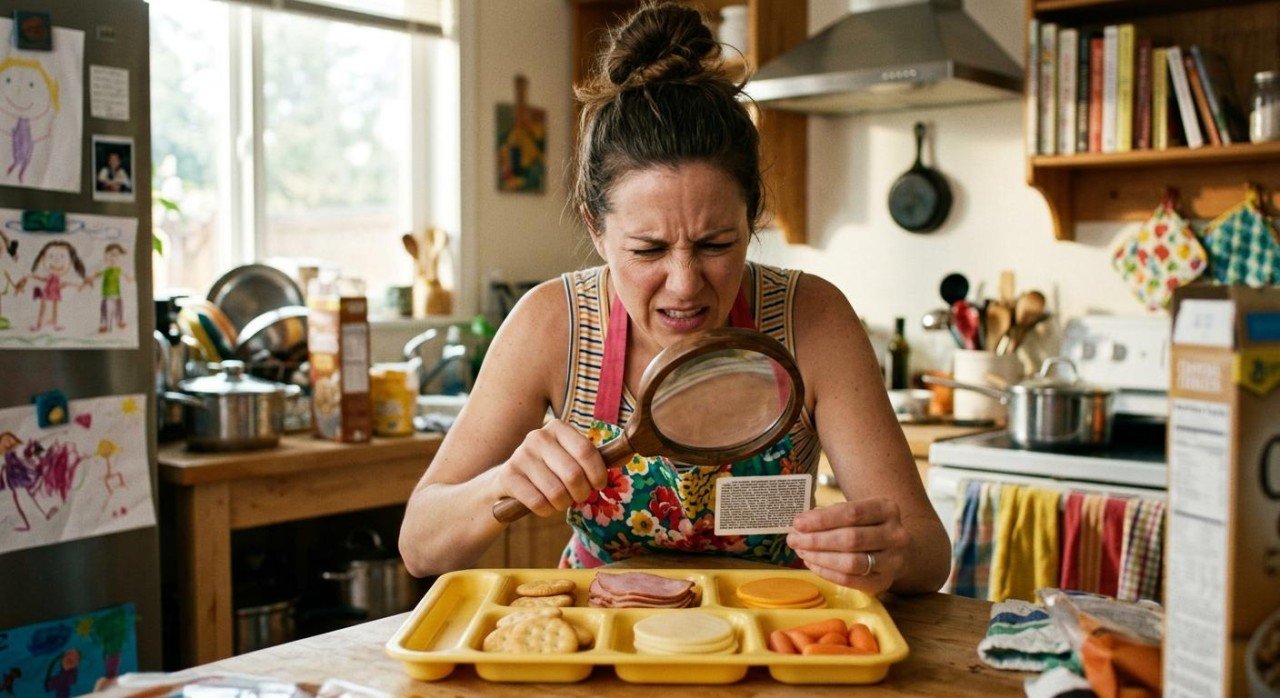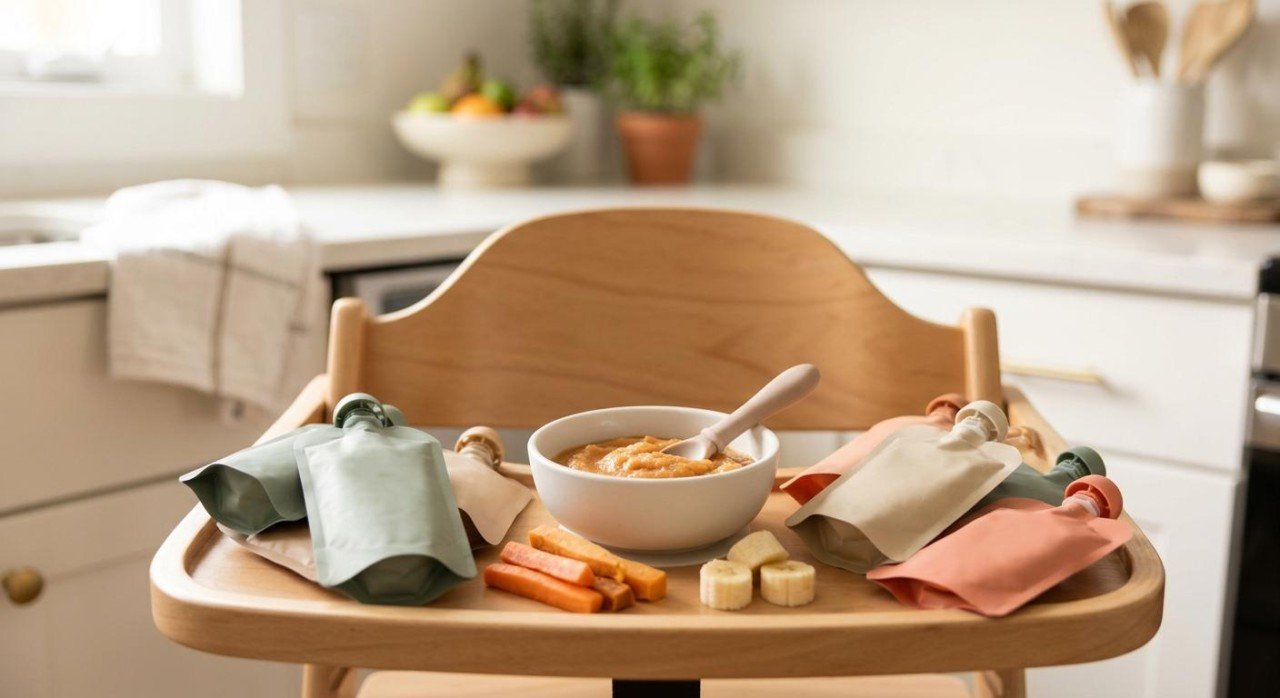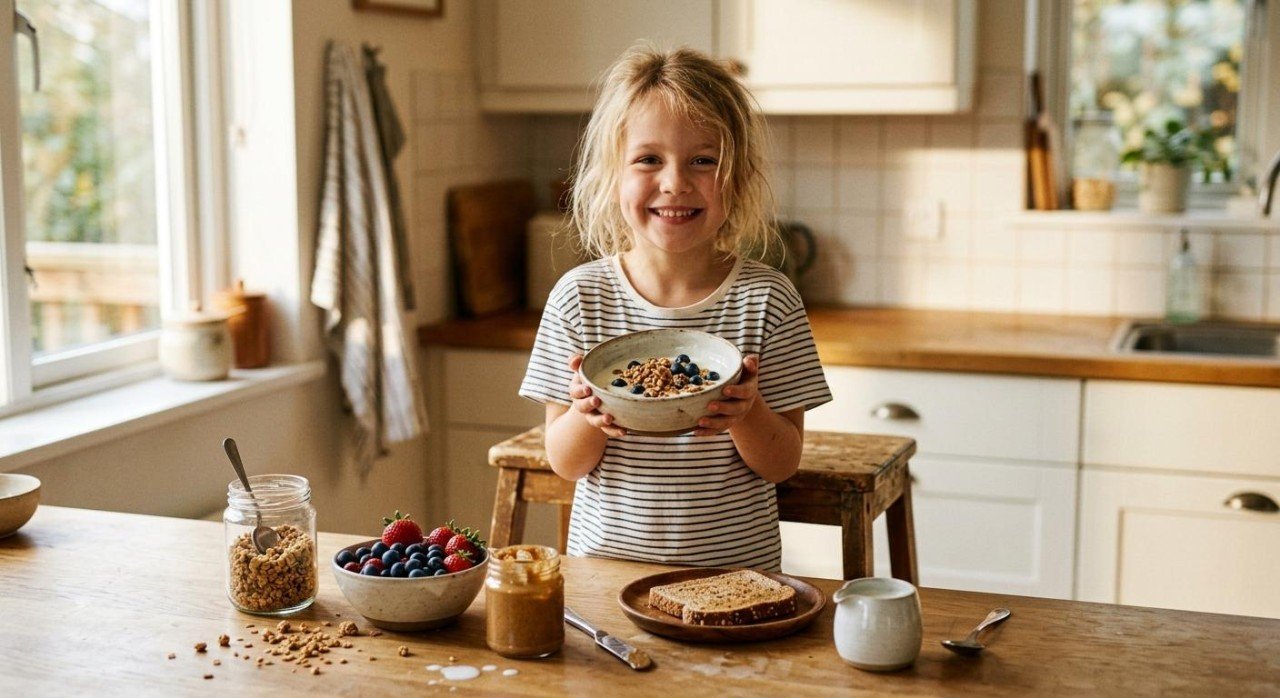
There is a specific kind of morning defeat that happens at 7:14 a.m. The bus comes at 7:40. One kid cannot find a shoe, the other has decided that the yogurt you bought is the wrong yogurt, and you are standing at the counter doing math on whether a toaster pastry counts as a meal if you hand them a banana with it.
The realistic fix is not waking up earlier or becoming a person who makes frittatas on a Tuesday. It is building a kid who can feed themselves something decent while you deal with the shoe.
That sounds like a bigger project than it is. Most of the work is not teaching cooking — it is setup. If the components are stocked, reachable, and pre-portioned, a six-year-old can assemble a genuinely good breakfast with zero adult input. The cooking part comes later, and matters less than you would think.
What a Morning Actually Needs
Start with what you are aiming for, because it is easy to overshoot.
Breakfast skipping is common — a review in Frontiers in Human Neuroscience examining breakfast, behavior, and academic performance in children and adolescents noted that between 20 and 30 percent of children and adolescents in the developed world skip it. That review found habitual breakfast consumption consistently positively associated with academic performance, with the clearest effects in mathematics and in children who were undernourished to begin with. It also found that breakfast quality mattered: breakfasts drawing on a greater variety of food groups and supplying adequate energy showed stronger associations than minimal ones.
That last point is the useful one for parents. The question is rarely "breakfast or no breakfast" — it is whether the thing your kid grabs holds them until lunch or leaves them fading by second period.
Protein is the lever people reach for, and the evidence supports it, with a caveat worth knowing. A 2021 systematic review and meta-analysis in Nutrients pooled 10 randomized controlled trials in children and adolescents aged 7 to 19 and found that a protein-rich breakfast led to about 111 fewer calories eaten at the next meal (95% CI: -145.4 to -76.9), higher reported fullness, and lower hunger. The authors were upfront that most of the included studies were low quality and the results varied a lot between trials.
The caveat comes from a dose-response study of 17 children aged 9 to 14 who ate four matched 450-calorie breakfasts containing 7, 15, 30, or 45 grams of protein on separate mornings. Every protein level suppressed subjective appetite compared with the control breakfast, but only the 45-gram breakfast significantly cut how much they ate at lunch (858 calories versus 1,084 after the control). Forty-five grams of protein is a lot for a nine-year-old at 7 a.m. — that is roughly seven eggs' worth.
So the honest translation is modest: adding protein to breakfast reliably makes kids feel less hungry through the morning, and you do not need to hit a heroic number for that. Two eggs, a cup of Greek yogurt, or a scoop of nut butter on toast changes the character of the meal. Chasing a protein target does not.
The Cereal Question, Handled Fairly
Cereal takes most of the blame for bad kid breakfasts, and it deserves some of it — but not the way it usually gets assigned.
When researchers analyzed NHANES data on what American children actually eat in the morning, they identified 12 distinct breakfast patterns and found that roughly 19 percent of children aged 2 to 18 ate no breakfast at all — the second most common pattern in the dataset. Several of the cereal-and-lower-fat-milk patterns came out with higher overall diet quality scores than the breakfast skippers did, largely because fortified cereal and milk carry calcium, vitamin D, potassium, iron, and B vitamins that skipping delivers none of.
A bowl of cereal is not the enemy. It beats nothing, and it beats a toaster pastry eaten in the car.
What has changed is the cereal itself. A 2025 cross-sectional study in JAMA Network Open looked at 1,200 children's ready-to-eat cereals newly launched in the US market between 2010 and 2023 and found the nutrition moving the wrong way on every axis: total fat per serving rose 33.6 percent (1.13 g to 1.51 g), sodium rose 32.1 percent (156.0 mg to 206.1 mg), and sugar rose 10.9 percent (10.28 g to 11.40 g). Meanwhile protein slipped to 1.69 g per serving in 2023, and fiber fell from 3.82 g in 2021 to 2.94 g in 2023. The authors noted that a single serving now exceeds 45 percent of the American Heart Association's entire daily added-sugar allowance for a child.
That allowance, for reference, is under 6 teaspoons (25 grams) of added sugar per day for kids aged 2 to 18, with sugary drinks capped at about one 8-ounce serving per week.
The practical move is not banning the box. It is putting protein next to it — milk, yogurt on the side, a hard-boiled egg, nut butter on toast — and picking cereals closer to the plain end of the shelf. (If you want the mechanics of why a fast-carb breakfast leaves anyone starving by mid-morning, we went deep on that in why you are starving an hour after a healthy breakfast. And for the wider sugar conversation without the drama, see kids and sugar: the calm middle ground.)
The Setup Is 80 Percent of It
Here is the part that actually determines whether this works. A kid can only serve themselves what they can find, reach, open, and portion. Every one of those is a design problem you solve once.
Build a breakfast shelf
Pick one shelf in the fridge — the lowest one, the one your smallest kid can see into without a stool — and make it the breakfast shelf. Nothing else lives there. Yogurt cups, pre-cut fruit in a lidded container, hard-boiled eggs, cheese sticks, milk in a pitcher small enough for small hands to pour without a two-handed heave.
Do the same in the pantry at kid height: cereal in a container they can actually open, oats, nut butter, whole-grain bread, a bowl of bananas and clementines.
Pre-portion the things that go wrong
The failure modes are predictable. Granola gets poured until the bowl overflows. The nut butter jar gets excavated. Fruit stays whole because nobody wants to deal with it.
So: granola into small jars or a scoop that is already the right size. Berries and melon washed and cut on Sunday. Overnight oats made in batches of five, in individual jars, because the kid who assembled them on Sunday night is much more likely to eat them on Wednesday.
Get tools that fit
Small hands cannot manage a full-sized chef's knife or a heavy ceramic bowl, and struggling with equipment is what makes kids give up and ask you to do it. A nylon or crinkle-cut kid's knife, a small cutting board, lightweight bowls, a spreader with a short handle, and a step stool at the counter remove most of the friction.
Treat the mess as tuition
There will be milk on the counter and granola on the floor and a spoon left in the sink with peanut butter fused to it. That is the price of the system, and it is cheaper than doing it yourself for the next decade. Put a small towel where they can reach it and let cleanup be part of the job from day one.
Stocked Is the Whole Game
Every one of these systems collapses the same way: the shelf is empty on Thursday because the yogurt ran out and nobody noticed. Kid breakfast independence is really a stocking problem wearing a parenting costume. The kid can only self-serve what the shopping list remembered to buy.
This is where planning breakfasts alongside dinners stops being an optional nicety. In Eat Well Planner, you can build breakfasts into the weekly meal plan the same way you plan evening meals, and the shopping list generates automatically from the whole week — so the eggs, yogurt, oats, fruit, and bread that keep the breakfast shelf alive land on the list every time instead of getting remembered on a good week and forgotten on a bad one. Save the five breakfasts your kids actually eat as recipes, and rebuilding the week takes about a minute.
The nutrition score on each recipe is useful here too, because "is this actually a decent breakfast?" is exactly the question you cannot answer at a glance from a cereal box. The "good source of" nutrient highlights make it concrete — you can see whether a breakfast is genuinely delivering fiber or protein rather than guessing.
Take the Guesswork Out of Eating Well
Eat Well Planner helps you organize your favorite recipes, plan balanced meals, and automatically generate shopping lists — all in one place. Whether you're tracking macros, managing dietary restrictions, or just trying to stop asking "what's for dinner?", we've got you covered.
Our AI-powered tools can adapt any recipe to your dietary needs, help you discover new meals you'll love, and even log your nutrition effortlessly. It's meal planning made simple.
Start Organizing Your Meals — FreeAge by Age: What They Can Actually Do
These bands follow the age-appropriate kitchen task guidance from Children's Health, adapted specifically for breakfast. Every kid is different, and maturity matters more than birthday — we cover the full progression of kitchen skills in when should a kid hold a knife.
Ages 4 to 6: assembly only
No heat, no sharp blades. Everything is opening, pouring, spreading, and stirring. Children's Health places cutting soft foods with a dull knife and cracking eggs in the 5-to-7 range, so a confident six-year-old can start there under supervision.
- Yogurt bar. Plain yogurt from a small tub, granola from a pre-portioned jar, cut fruit from the shelf, a drizzle of honey. Three components, no supervision needed.
- Banana and nut butter. Sliced with a kid's knife on a board, or spread whole on toast you made the night before.
- Overnight oats. Made together on Sunday, eaten solo all week. Oats, milk, yogurt, a spoon of chia, fruit stirred in — this is the highest-leverage thing on the list because it front-loads all the work.
- Cheese, fruit, and crackers. Unglamorous, entirely valid, and roughly a snack plate for breakfast.
Ages 7 to 9: toaster and microwave
Children's Health puts microwave use around age 7 to 8, with the specific lesson that food can be hot even when it does not look hot — stir it after heating, let it sit before eating. That single rule prevents most of what goes wrong.
- Loaded toast. Whole-grain toast plus nut butter and banana, or mashed avocado and a shake of everything seasoning, or cottage cheese and jam. Set up a "toast toppings" zone and it becomes a build-your-own station.
- Eggs in a mug. Two eggs cracked into a mug, splash of milk, whisk with a fork, microwave in 30-second bursts, stir between each. This is often the first hot food a kid makes entirely alone, and it is a real protein breakfast.
- Microwave oatmeal. Oats and milk or water, 90 seconds, then stir in fruit and nuts. Watch the bowl size — oatmeal boils over spectacularly in a small bowl.
- Toasted whole-grain waffle with yogurt and berries instead of syrup.
Ages 10 and up: the stovetop
Around 10 to 11, most kids are ready for the stove with supervision nearby. The safety habits are specific: use the back burners, turn pot handles inward so nothing gets bumped, use potholders while stirring, and let the surface cool before touching it. Ovens generally come a year or so later.
- Scrambled eggs. Low heat, a little butter, constant stirring, off the heat before they look done. A ten-year-old can own this within a week.
- Fried egg on toast. One pan, one egg, one skill.
- Pancakes from a batch mix. Make a big jar of dry mix (flour, oats, baking powder, a little sugar, salt) on the weekend and label it with the wet ingredients needed. The kid scoops, adds egg and milk, and cooks.
- Breakfast quesadilla or burrito. Scrambled eggs, cheese, beans, tortilla. This one scales up to feeding a sibling, which is its own milestone.
What the Research Really Says About Kids Who Cook
You will see the claim that kids who cook grow into adults who eat well. It is worth knowing where that evidence is strong and where it is thinner than the headline suggests, because it changes what you should expect.
The strongest and most immediate effect is on the meal in front of them. In a controlled experiment with 47 children aged 6 to 10, half prepared lunch with a parent and half had the parent cook alone. The kids who helped ate 76 percent more salad (an extra 41.7 g), 27 percent more chicken, and 24 percent more calories overall — and reported feeling more positive and more in control afterward. That is a big effect from one hour of participation.
Confidence tracks with diet quality too. A study of 101 fourth graders (mean age 9.1) using three 24-hour dietary recalls found that each 2-point increase in cooking self-efficacy was associated with a 1.33-point higher total Healthy Eating Index score, along with higher whole fruit and total vegetable scores.
But a 2024 systematic review in the Journal of Nutrition Education and Behavior covering 23 studies of children's cooking programs is the reality check. It found that knowledge of cooking skills, self-efficacy, and cooking involvement were the most frequent positive outcomes, while "improvements in dietary intake were rarely achieved". And a 10-year longitudinal analysis of 1,321 people in Project EAT found that food preparation during emerging adulthood predicted better dietary quality five years later — but food preparation during adolescence did not.
So the sales pitch needs adjusting. Teaching your seven-year-old to scramble eggs is not a deposit that matures into a vegetable-loving 25-year-old; the evidence for that specific promise is weak. What it does buy you is real and immediate: they eat more of what they make, they feel competent, and they own a skill that becomes load-bearing the moment they are on their own — which is precisely the window where the longitudinal data says cooking starts predicting diet quality.
That is a good enough reason. It also happens to solve your Tuesday.
How to Actually Hand It Over
Do not launch this on a school morning. The handover happens on a weekend, when nobody is watching the clock.
Pick one breakfast. Make it together twice, narrating what you are doing. The third time, sit at the table with coffee and talk them through it without touching anything. The fourth time, be in the next room. That is usually it.
Then let them choose. A kid who picked the yogurt flavor and stocked the shelf with you at the store has skin in the game; a kid handed a system has a chore. Let them add one thing to the shopping list each week that goes on the breakfast shelf.
Expect regression. There will be weeks where they want you to do it, and the right answer is usually to do it without commentary. Independence is not linear and making it a referendum guarantees a fight.
And keep the bar where it belongs. A bowl of cereal with milk and a clementine, made by a kid, at the right time, with no arguing, is a successful breakfast. It does not need to be a frittata. It does not need to be Instagram. It needs to have some protein in it and be eaten before the bus.
The Short Version
- Setup beats skill. A low, dedicated breakfast shelf with pre-portioned components lets a four-year-old assemble a real breakfast with no cooking at all.
- Add protein, do not chase it. Protein at breakfast reliably lowers hunger through the morning in kids; you do not need a heroic amount for that.
- Cereal is not the villain — but read the box. Newly launched kids' cereals have gotten sweeter, saltier, fattier, and lower in protein and fiber since 2010. Pair the bowl with something that has protein in it.
- Match the task to the age. Assembly at 4 to 6, microwave and toaster around 7 to 9, stovetop around 10 to 11 with supervision.
- The payoff is now, not in 2040. Kids eat more of what they help make and gain real confidence; the long-term diet effects are weaker than commonly claimed.
- Stock the shelf or none of it works. Plan breakfasts on the same list as dinners.
If your mornings are currently a negotiation, start with one shelf and one breakfast this weekend. Try planning your week with Eat Well Planner — build breakfasts into the plan alongside dinners so the shopping list keeps the shelf stocked, and let the kid take it from there.