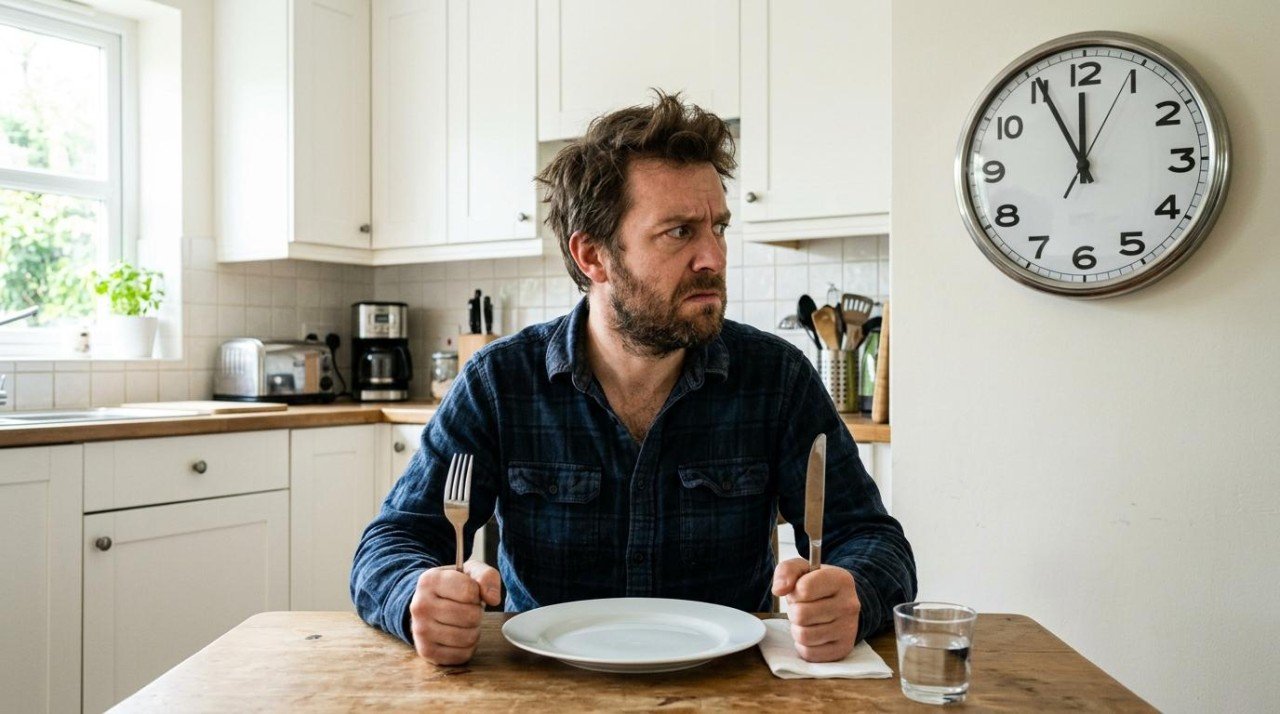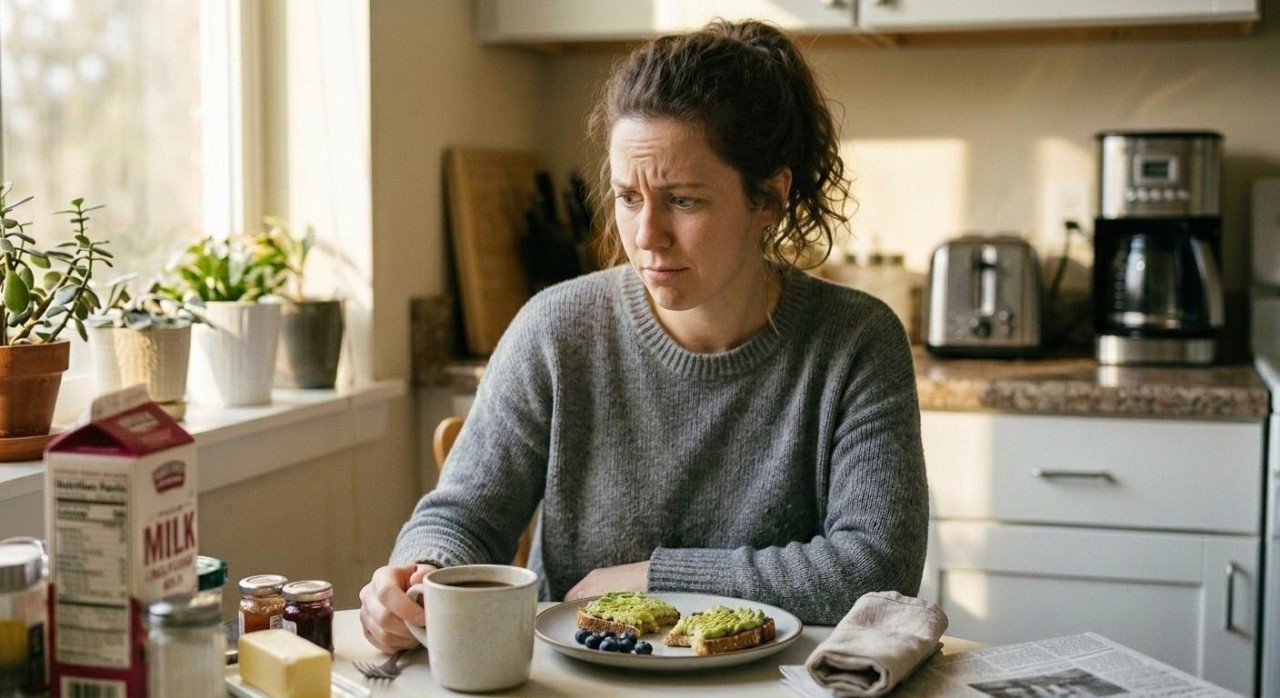
Here is a scene that plays out in millions of kitchens every morning: someone who isn't hungry, forcing down toast or a bowl of cereal because they've been told, their whole life, that skipping breakfast is one of the worst things they can do to their body. And on the other side, someone who skips it anyway and spends the rest of the morning feeling vaguely guilty about it, half-expecting their metabolism to grind to a halt.
If either of those people is you, here's the good news: the rule you're obeying isn't really a rule. The idea that breakfast is "the most important meal of the day" is one of the most successful pieces of marketing in food history, and the actual research on breakfast, weight, and metabolism is far more relaxed than the slogan suggests. For most healthy adults, when you eat is flexible. Let's walk through where the slogan came from, what the science actually shows, and the specific situations where breakfast genuinely does matter.
Where the Slogan Actually Came From
The phrase didn't come out of a laboratory. It came out of a cereal factory.
According to a history of breakfast compiled by Priceonomics, the modern American breakfast was largely invented by 19th-century health reformers selling a product. In 1863, a doctor named James Caleb Jackson created the first manufactured breakfast cereal, a brick-hard concoction he called "granula" that had to be soaked in milk before it was edible. A few decades later, John Harvey Kellogg developed corn flakes as part of the same wholesome-living movement, believing that bland, grain-based breakfasts would steer people away from richer foods.
But the slogan itself really took hold in the 1940s. As Priceonomics documents, in 1944 the cereal manufacturer General Foods launched a major advertising campaign called "Eat a Good Breakfast—Do a Better Job," complete with grocery-store pamphlets and radio spots announcing that "Nutrition experts say breakfast is the most important meal of the day." One advertising memo of the era put the strategy plainly: breakfast was "the grocer's most promising target," because lunch and dinner in the average American home were already well established. In other words, the meal was a sales opportunity, and the health framing helped sell more cereal.
None of this means breakfast is bad. It means the famous tagline was a marketing line first and a scientific conclusion never. So what does the actual evidence say?
What the Research Says About Breakfast and Weight
The most persistent breakfast belief is that eating it helps you control your weight, usually justified with the claim that skipping breakfast makes you so hungry you overeat later, or that breakfast "kick-starts" your metabolism. Both ideas sound intuitive. Neither holds up well when you test them directly.
In 2019, a systematic review and meta-analysis published in The BMJ pooled 13 randomized controlled trials from high-income countries to examine exactly this question. The results pointed the opposite way from the folklore. People assigned to eat breakfast actually consumed about 260 more calories per day overall than people assigned to skip it, and the breakfast eaters were, if anything, slightly heavier (the skippers came in about 0.44 kg lighter on average). The authors concluded that "the addition of breakfast might not be a good strategy for weight loss."
The supposed "overeating later" effect turns out to be smaller than the calories you add by eating an extra meal in the first place. Yes, breakfast skippers often eat a bit more at lunch, but usually not enough to make up for the meal they skipped. And the "breakfast revs your metabolism" idea doesn't survive scrutiny either; the modest bump in calorie burning you get from digesting food (the thermic effect) happens whenever you eat, not specifically because it's morning.
This doesn't mean skipping breakfast is a magic weight-loss trick, either. The honest takeaway is more freeing than that: for weight, breakfast is roughly neutral. It comes down to your total food and how the day fits your appetite, not the clock.
Why the Scary Headlines Mislead
If breakfast is neutral in controlled trials, why do you keep seeing headlines linking breakfast skipping to heart disease, diabetes, and early death? The answer is one of the most important ideas in all of nutrition science: the difference between observational studies and controlled studies.
Observational studies follow large groups of people and look for patterns. They reliably find that habitual breakfast skippers have worse health outcomes on average. But here's the catch: breakfast skippers tend to differ from breakfast eaters in a lot of other ways at the same time. As a review in Frontiers in Public Health noted, the evidence linking breakfast to body weight is inconsistent across countries and riddled with confounding factors, with researchers cautioning that the proposed effect "is only presumed true." People who routinely skip breakfast are more likely to smoke, drink more heavily, exercise less, sleep poorly, and have lower incomes and overall poorer diet quality. Those things damage health on their own.
This is called the "healthy user" effect, and it's nearly impossible to fully untangle with statistics, because you're comparing fundamentally different groups of people. When you strip those confounders away by randomly assigning people to eat or skip breakfast, as the controlled trials do, the dramatic health gap largely disappears. The breakfast itself was rarely the thing making people healthy; it was a marker for a generally health-conscious lifestyle.
So if you're a non-smoker who exercises, sleeps well, and eats mostly real food, skipping breakfast is not quietly stealing years from your life. You're not the person those scary averages are built on.
When Breakfast Genuinely Does Help
Now for the important balance. "Breakfast isn't mandatory for everyone" is not the same as "breakfast never matters." There are real, well-supported situations where eating in the morning makes a measurable difference, and it would be dishonest to skip over them.
Children and teenagers
For kids, the morning meal carries more weight, especially when it comes to learning. A systematic review of breakfast and cognition in children and adolescents found that eating breakfast has a short-term, same-morning benefit for cognitive performance, most consistently in the domains of attention and memory. The effects were clearest in children who were undernourished to begin with, and school breakfast programs showed suggestive benefits for academic performance, particularly in math. A child running on empty in a 10 a.m. classroom is a genuinely different case from an adult who isn't hungry until noon.
Athletes doing longer training
If you're heading out for a hard, long workout, breakfast earns its keep. A 2025 narrative review on breakfast and exercise performance concluded that eating breakfast can benefit prolonged endurance exercise lasting longer than 60 minutes. Interestingly, for shorter sessions and for resistance training, the review found little to no real performance advantage, and some of the apparent drop-off when training fasted seemed to be psychological rather than physiological. So a quick 30-minute jog or a weights session may not require a pre-workout meal, but a long run or ride probably does.
People with type 2 diabetes
This is where breakfast can matter most, and it's a medical case rather than a general-population one. In a randomized clinical trial published in Diabetes Care, 22 people with type 2 diabetes ate identical lunches and dinners on two different days; the only difference was whether they'd eaten breakfast. On the days they skipped it, their blood sugar ran dramatically higher later on: post-lunch glucose was about 37% higher and post-dinner glucose about 27% higher than on the days they ate breakfast. For someone managing blood sugar, that's a meaningful swing, and it's worth discussing meal timing with a doctor rather than improvising.
The pattern across all of this is consistency, not contradiction. Breakfast helps in specific contexts (growing kids, long endurance efforts, certain medical conditions), and it's optional in others (a healthy adult's weight and general health). The mistake was ever turning a context-dependent meal into a universal commandment.
So Should You Eat Breakfast?
Here's the genuinely liberating part. The right answer is: eat breakfast if you're hungry in the morning and it helps you feel and perform well. Skip it if you're not hungry and you feel fine without it. Both are legitimate.
What matters far more than the timing of your first meal is the overall quality of what you eat across the day. A morning where you skip breakfast and then graze on ultra-processed snacks isn't a win. Neither is a "healthy breakfast" that's really a dessert: a giant muffin, a sweetened coffee drink, and a granola bar can carry more added sugar than a slice of cake. If you do eat breakfast, the same principles apply as to any meal: lean toward protein, fiber, and whole foods that keep you full and steady, rather than refined carbs that leave you hungry again by mid-morning.
In other words, the useful question isn't "Did I eat breakfast?" It's "Does my eating pattern, on my real schedule, leave me well-nourished and feeling good?" That's a much more personal question, and it has a much better answer when you've actually planned for it instead of leaving each meal to willpower and whatever's nearby.
Build Eating Around Your Life, Not a Slogan
This is exactly where a little planning beats any one-size-fits-all rule. If you're someone who genuinely loves a hearty breakfast, you want a few go-to morning meals that are quick and actually nourishing. If you're a natural breakfast-skipper, you want your first real meal of the day, whenever it lands, to be solid enough that you're not reaching for vending-machine food at 11 a.m. running on fumes. Either way, the goal is the same: make the good option the easy one.
That's the whole idea behind Eat Well Planner. Instead of forcing your life around arbitrary meal rules, it lets you build a plan around your real schedule and hunger patterns. You can save quick, nutrient-dense breakfast recipes for the mornings you want them, plan a strong lunch as your first meal on the days you'd rather wait, and let the app generate a meal plan and an automatic shopping list so the healthy choice is already bought and ready. If you have a household with different rhythms (a kid who needs a real breakfast before school, an adult who'd rather have coffee and wait), you can set up separate profiles so each person's plan fits how they actually eat.
The point isn't to add another rule to your morning. It's to remove the guilt and the guesswork, so that whenever you do eat, it's something worth eating.
Take the Guesswork Out of Eating Well
Eat Well Planner helps you organize your favorite recipes, plan balanced meals, and automatically generate shopping lists — all in one place. Whether you're tracking macros, managing dietary restrictions, or just trying to stop asking "what's for dinner?", we've got you covered.
Our AI-powered tools can adapt any recipe to your dietary needs, help you discover new meals you'll love, and even log your nutrition effortlessly. It's meal planning made simple.
Start Organizing Your Meals — FreeThe Takeaway
Breakfast is a meal, not a moral test. The slogan that made it sacred was written to sell cereal, and the strongest controlled research shows that for a healthy adult's weight and metabolism, eating or skipping breakfast is largely a wash. The frightening headlines mostly reflect the fact that habitual breakfast skippers tend to live less healthy lives in general, not the absence of toast.
Where breakfast clearly earns its reputation is in specific situations: children who learn better when they've eaten, athletes fueling long efforts, and people with type 2 diabetes managing their blood sugar. Outside of those cases, you get to decide based on the most reliable nutrition expert you have, which is your own body.
So if you love breakfast, enjoy it. If you don't, you have full permission to let it go. Build your meals around your actual life, focus on eating well across the whole day, and let one of history's best advertising campaigns finally stop running your mornings.