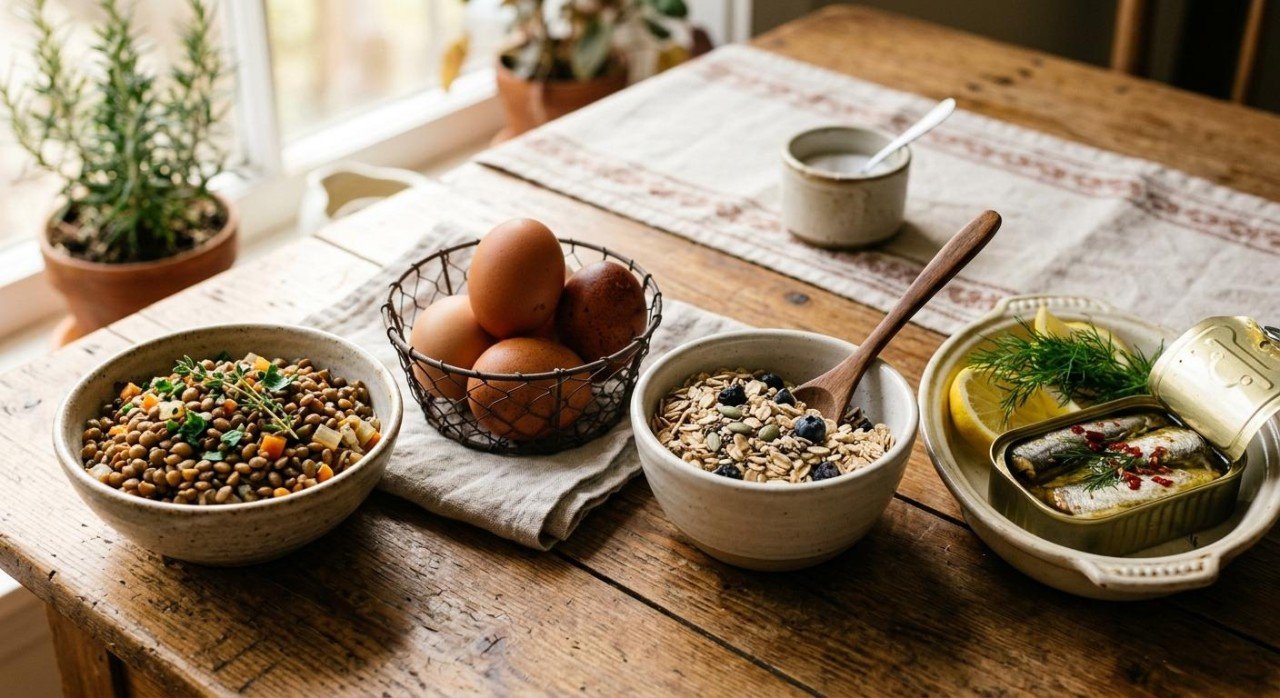
Walk through any grocery store and you'll find a wall of products promising to transform your health: powders, exotic berries, cold-pressed elixirs, and seeds flown in from the other side of the world. They're expensive, and they're marketed hard. But here's the quietly subversive truth nutrition researchers keep confirming: some of the most nutrient-dense foods on the planet are also among the cheapest. They've been sitting on the bottom shelf and in the canned-goods aisle the whole time, costing a fraction of the trendy stuff.
Eating well on a budget isn't about finding bargain versions of "superfoods." It's about recognizing that humble staples — beans, eggs, oats, a can of fish — already are the superfoods. They've fed healthy, long-lived populations for centuries. Below are seven inexpensive foods that punch far above their price, what makes each one nutritionally special, roughly what they cost, and easy ways to actually put them on your plate.
1. Lentils
Lentils might be the single best value in the entire grocery store. A cooked cup delivers about 18 grams of protein and nearly 16 grams of fiber for roughly 230 calories, along with a meaningful dose of folate, iron, and potassium. That fiber-and-protein combination is exactly what keeps you full for hours, which is part of why lentils make cheap meals genuinely satisfying rather than just calorie-cheap.
They're also rich in polyphenols — plant compounds with antioxidant and anti-inflammatory activity — and human studies have linked regular lentil intake to better blood sugar control and lower LDL ("bad") cholesterol. Because they're digested slowly, they don't spike your blood sugar the way refined carbs do.
At well under a dollar per cooked cup when bought dried, lentils are also the fastest-cooking legume: red lentils break down into a creamy soup or dal in about 15 to 20 minutes with no soaking required. Stir them into pasta sauce to stretch the meat (or replace it), bulk up a vegetable soup, or simmer green lentils and toss them cold with olive oil, lemon, and herbs for a salad that keeps for days.
2. Eggs
For around a quarter apiece, eggs deliver some of the highest-quality protein available — about 6 grams per large egg, containing all nine essential amino acids in nearly ideal proportions. But the protein isn't even the most underrated part. Eggs are one of the few good dietary sources of choline, a nutrient critical for brain function, memory, and liver health that most people simply don't get enough of.
A single large egg supplies roughly 147 mg of choline — about a quarter of what an adult needs in a day — and the yolk is where most of it lives, so this isn't the food to make egg-white-only. A 2025 modeling study in the journal Nutrients found that adding just one egg a day meaningfully improved both choline and vitamin D intake in sample menus, helping close a gap that a large share of Americans fall into. Eggs are also one of the rare foods that naturally contain vitamin D, along with the eye-protective antioxidants lutein and zeaxanthin.
Beyond the obvious scramble, hard-boil a batch at the start of the week for grab-and-go protein, drop one on top of a bowl of rice and vegetables, or fold them into fried rice and frittatas to use up whatever produce is lingering in your fridge.
3. Oats
Oats are the textbook example of a cheap food that does something a pricey supplement claims to do. A serving costs roughly 15 to 25 cents, and a cup of dry oats provides about 11 grams of protein and 8 grams of fiber, plus manganese, phosphorus, and magnesium. They're also a standout source of a specific soluble fiber called beta-glucan.
Beta-glucan is the rare nutrition claim that's backed by an official FDA health claim. Under federal labeling rules, foods supplying 3 grams or more of oat beta-glucan per day — as part of a diet low in saturated fat — can state that they may reduce the risk of heart disease, because the fiber binds cholesterol-rich bile acids in the gut and helps carry them out of the body. That's a documented cholesterol-lowering effect from a breakfast that costs pennies.
Old-fashioned rolled oats are the most versatile and a far better value than single-serve flavored packets (which are usually loaded with added sugar). Cook them on the stove with fruit and cinnamon, make overnight oats in a jar the night before a busy morning, or blend them into smoothies and stir them into pancake batter and homemade granola.
4. Frozen Vegetables
The persistent myth that fresh produce is always more nutritious than frozen costs budget-conscious shoppers real money — and it's mostly wrong. Vegetables destined for the freezer are typically picked at peak ripeness and frozen within hours, locking in their nutrients. Fresh produce, by contrast, can spend days in transit and more days in your fridge slowly losing vitamins.
The numbers are striking: green peas can lose up to half their vitamin C in the first 24 to 48 hours after harvest, while frozen vegetables hold their levels steady. A University of California, Davis study comparing eight fruits and vegetables found the vitamin content of the frozen versions was generally comparable to — and occasionally higher than — their fresh counterparts, with minerals, fiber, and beneficial plant compounds well conserved. (Worth noting: that study was supported by the frozen-food industry, but its findings line up with independent research showing frozen produce holds up nutritionally.)
Frozen vegetables also crush food waste, since you only thaw what you need and the rest keeps for months. Keep bags of peas, spinach, broccoli, and mixed stir-fry vegetables on hand to throw into soups, pasta, omelets, curries, and grain bowls — no chopping, no slimy forgotten produce at the back of the crisper drawer.
5. Canned Sardines (and Mackerel)
If there were a contest for most nutrition per dollar, canned sardines would be a finalist. For a dollar or two a can, you get one of the richest sources of omega-3 fatty acids available. A small can provides well over 900 mg of EPA and DHA — the marine omega-3s linked to heart and brain health — far more than most people get in a day, and the very thing those expensive fish-oil capsules are trying to bottle.
But sardines bring a whole matrix of nutrients a supplement can't: roughly 22 grams of protein per can, a huge dose of vitamin B12, plenty of selenium, and — because you eat the soft, edible bones — a serious amount of calcium and vitamin D for bone health. As small, short-lived fish, sardines also accumulate far less mercury than larger fish like tuna, making them a smart choice to eat regularly.
If you've only ever encountered them mashed plain on toast, give them another chance: pile them on whole-grain crackers with mustard and a squeeze of lemon, flake them into pasta with garlic and chili, fold them into a salad in place of pricier proteins, or mash them into a sandwich filling the way you would canned tuna. Canned mackerel works the same way and is just as inexpensive.
6. Cabbage
Cabbage is so cheap — often around 60 cents a pound — that it's easy to overlook as filler. That's a mistake. A cup of raw green cabbage has just 22 calories but delivers about 36% of your daily vitamin C and 56% of your daily vitamin K, plus fiber and a range of antioxidants.
As a cruciferous vegetable — the same family as broccoli and kale — cabbage is loaded with glucosinolates, sulfur compounds your body converts into substances that researchers have linked to anti-inflammatory and protective effects. About 40% of the fiber in cabbage is the soluble kind that helps lower LDL cholesterol, and red cabbage adds a hefty dose of anthocyanins, the same purple-red pigments associated with heart health in berries — at a tiny fraction of the cost.
Cabbage also keeps in the fridge for weeks, far longer than delicate salad greens, so it's forgiving for people who can't shop often. Shred it raw into slaws and tacos, roast it in thick wedges until the edges caramelize, stir-fry it with garlic and a splash of soy sauce, or simmer it into hearty soups and stews where it practically melts.
7. Dried Beans
Dried beans are the cornerstone of cheap, healthy eating around the world — and not by accident. A cooked cup of black beans serves up about 16 grams of protein and a remarkable 18 grams of fiber, along with roughly a third of your daily folate and meaningful iron and magnesium. Their soluble fiber slows digestion and blunts blood sugar spikes, which is why beans are a staple recommendation for managing diabetes and heart health.
The longevity evidence is genuinely remarkable. A landmark study published in the Asia Pacific Journal of Clinical Nutrition followed older adults across Japan, Sweden, Greece, and Australia and found that legume intake was the single most consistent dietary predictor of survival — every additional 20 grams a day (about a tablespoon and a half) was associated with a 7 to 8% reduction in the risk of dying. No other food group held up that reliably across cultures. It's no coincidence that beans show up in the daily diets of the world's longest-lived communities.
Bought dried, beans cost roughly 15 to 25 cents per cooked serving — about a third of the price of canned. Yes, they take longer (a soak plus a simmer, or a quick run in a pressure cooker), but you can cook a big pot once and freeze portions for later. Use them in chili, tacos, soups, and grain bowls, blend them into hummus and dips, or mash them into veggie burgers. Canned beans are a perfectly good, more convenient option too — just rinse them to wash away some of the added sodium.
The Real Barrier Isn't Cost — It's Planning
Here's the catch with all seven of these foods: they reward a little planning. A bag of dried beans and a sack of oats are spectacular value, but only if you actually build meals around them instead of defaulting to takeout when you're tired and the fridge looks empty. The reason people reach for expensive, ultra-processed convenience food usually isn't a lack of knowledge — it's decision fatigue at 6 p.m. on a Tuesday.
That's exactly the gap a meal plan closes. When you've decided in advance that Wednesday is lentil soup and Thursday is bean tacos, and the ingredients are already in your cart, eating cheaply and well becomes the path of least resistance. A shopping list built from a real plan also kills impulse buys and means less food rots in the back of your fridge — saving money twice.
Eat Well Planner is built for exactly this. You can search and save budget-friendly recipes built around these staple ingredients, let the AI assemble a balanced weekly meal plan from them, and get an organized shopping list generated automatically — so the cheap, nutritious option is also the easy one. The nutrition tracking lets you see how much protein, fiber, and key nutrients you're actually getting, which is reassuring proof that eating on a budget doesn't mean eating poorly.
Take the Guesswork Out of Eating Well
Eat Well Planner helps you organize your favorite recipes, plan balanced meals, and automatically generate shopping lists — all in one place. Whether you're tracking macros, managing dietary restrictions, or just trying to stop asking "what's for dinner?", we've got you covered.
Our AI-powered tools can adapt any recipe to your dietary needs, help you discover new meals you'll love, and even log your nutrition effortlessly. It's meal planning made simple.
Start Organizing Your Meals — FreeStop Paying a Premium for Health
The marketing around food works hard to convince you that nutrition is something you buy at a premium — that the path to eating well runs through specialty shops and three-dollar smoothies. The science says otherwise. Lentils, eggs, oats, frozen vegetables, sardines, cabbage, and dried beans form the backbone of some of the healthiest diets ever studied, and together they cost a fraction of a single trendy superfood.
You don't need a bigger grocery budget to eat better. You need a handful of these staples in your pantry, a few simple ways to use them, and a loose plan for the week. Start by picking just two or three from this list, building a couple of meals around them, and noticing how far they stretch — for your body and your wallet.
Try organizing your meals with Eat Well Planner and let these humble powerhouses do the heavy lifting.