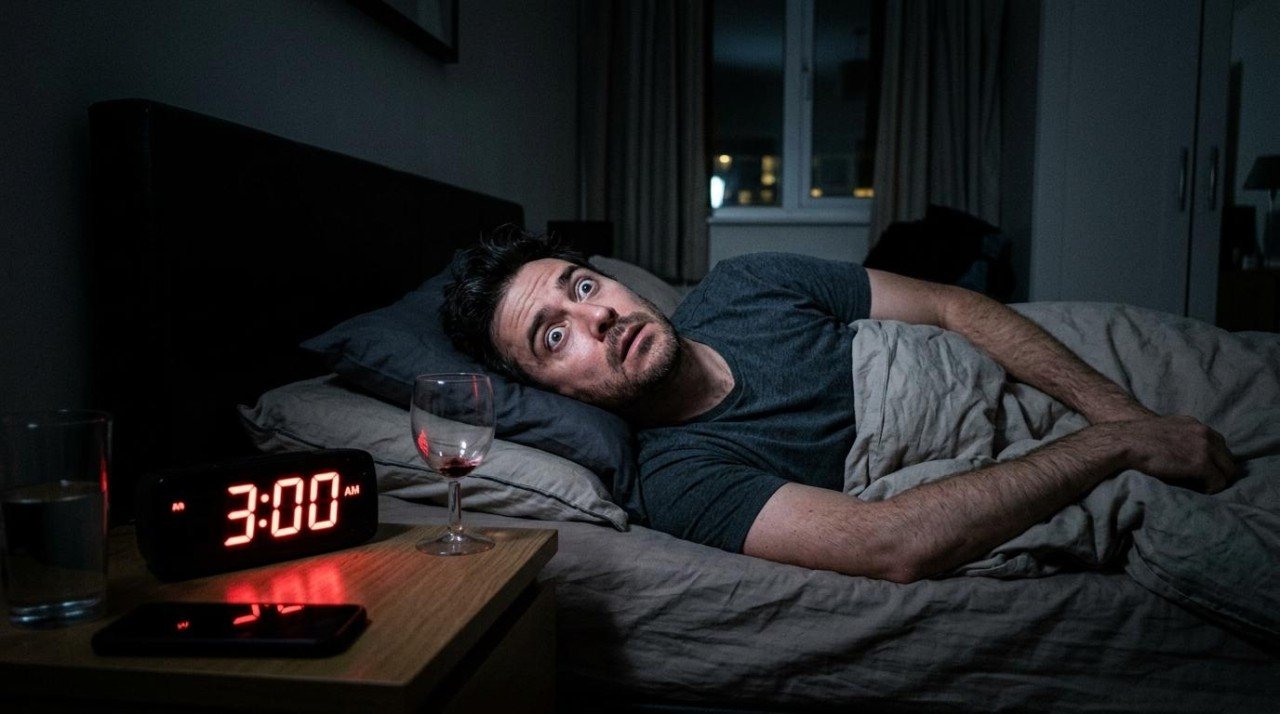
You went to bed feeling pleasantly relaxed. Maybe you even drifted off faster than usual. Then, somewhere around 3am, your eyes snap open. Your heart is going a little too fast, your mind is suddenly cataloging every awkward thing you said at dinner, and sleep is nowhere to be found. By morning you feel wrung out and inexplicably on edge — a low hum of dread that does not match anything actually happening in your day.
If that sounds familiar, you have met two of alcohol's least-discussed aftereffects: the early-morning wake-up and the next-day anxiety that has earned the nickname hangxiety. Neither is a character flaw or a sign you cannot handle your drinks. Both are predictable consequences of how alcohol moves through your brain and body overnight. Understanding the mechanisms makes the experience far less mysterious — and points to some genuinely useful ways to soften it.
Why a Nightcap Backfires at 3am
Alcohol is a sedative, and that is exactly the problem. Because it calms the nervous system, a drink or two before bed can genuinely help you fall asleep faster. The Sleep Foundation notes that drinking before bed can reduce the time it takes to nod off, at least initially. The trouble is that this is a loan, not a gift, and the repayment comes due in the second half of the night.
As your body metabolizes the alcohol, the sedative effect fades and your sleep does a U-turn. According to a review of the research published in the National Institute on Alcohol Abuse and Alcoholism's journal on alcohol and sleep, alcohol produces a dose-dependent suppression of REM sleep during the first half of the night, followed by a "rebound" in the second half — longer-than-normal REM periods mixed with more wakefulness and lighter sleep. The review describes how, at higher doses, "increased wake periods or light stage 1 sleep periods occurred during the second half of the sleep period," and explains this as a rebound effect that kicks in "once alcohol has been completely metabolized and eliminated from the body."
The timing is not random. Given typical metabolism rates, the alcohol clears your system roughly four to five hours after you fall asleep — which, if you went to bed around 11pm, lands you squarely at that 3am or 4am wake-up. The Sleep Foundation describes the same pattern: lighter, more fragmented sleep and frequent awakenings, "especially during the second half of the night when blood alcohol levels begin to drop." In their analysis of around 160,000 user profiles, nearly 90% of people who regularly drink in the evening reported at least one sleep-related problem.
The Rebound: Why Your Brain Wakes Up Anxious
The same chemistry that fragments your sleep also drives the anxiety. To understand hangxiety, you have to look at two of the brain's main signaling systems: GABA, which is calming and inhibitory, and glutamate, which is stimulating and excitatory. In a healthy brain these sit in balance, like a gas pedal and a brake working together.
Alcohol leans hard on both. A 2023 review in Frontiers in Neural Circuits explains that ethanol acts as a "positive allosteric modulator" of GABA-A receptors — essentially turning up the brain's brake — while simultaneously binding to and inhibiting glutamate receptors, easing off the gas. The net effect is sedation and that loose, relaxed feeling. This is also why a drink can briefly take the edge off social nerves.
But your brain prizes balance. Faced with all that artificial calm, it compensates by dialing down GABA and ramping up glutamate to push back. Then the alcohol leaves — and the counterweights are still in place. Now you have suppressed calming signals and amplified excitatory ones, with nothing to oppose them. The Frontiers review describes how, as alcohol clears, "glutamatergic activity increases above the newly-set baseline, while GABAergic activity decreases," producing "hyperexcitability, elevated adrenergic system responses along with anxiety, insomnia and dysphoria."
That is hangxiety in a nutshell: a brain that has overcorrected into a wired, over-caffeinated state at the exact moment you are trying to sleep or face the next day. And while the most extreme version of this rebound is what doctors treat in alcohol withdrawal, a gentler version of the same swing is available to anyone after a single evening of drinking.
Wired and Racing: The Stress-Chemistry Side
The neurotransmitter rebound does not happen in isolation — it comes with a physical stress response. As alcohol wears off, the body shifts toward sympathetic nervous system dominance: the "fight or flight" branch that raises heart rate, tightens blood vessels, and floods you with stress hormones like cortisol and adrenaline.
You can actually measure this. A 2025 study in Nutrients had 40 healthy adults wear smartwatches across alcohol-free and drinking nights. Even at modest intake, nocturnal resting heart rate rose from a baseline of 63.6 beats per minute to 66.6 beats per minute on drinking nights — a small but statistically significant bump that the researchers attributed to "increased sympathetic activity and/or reduced parasympathetic tone during sleep," along with raised levels of adrenaline and cortisol. Tellingly, the participants' objective sleep stages looked broadly normal, yet they reported feeling less rested. A heart that will not settle, the authors suggest, may quietly sabotage the restorative quality of sleep even when the architecture looks fine on paper.
So that 3am feeling of being simultaneously exhausted and buzzing is not in your head. Your nervous system really is running a little hot, and an anxious mind is the natural passenger of a racing body.
The Blood-Sugar Dip Nobody Warns You About
There is one more piece, and it is an easy one to miss because it feels like ordinary morning grogginess. When your liver is busy processing alcohol, it deprioritizes its other big job: keeping your blood sugar steady. As Medical News Today explains, when the liver has to choose between maintaining blood sugar and detoxifying alcohol, it metabolizes the alcohol first — and this can "impair blood sugar for several hours."
The result can be a blood-sugar dip, especially if you were drinking on an empty stomach or your reserves were already low. And low blood sugar produces symptoms that overlap almost perfectly with anxiety: shakiness, a racing heart, sweating, irritability, and a sense of unease. Your brain, sensing fuel running low, sounds an alarm that feels emotional but is really metabolic. Stack that on top of the neurotransmitter rebound and the stress-hormone surge, and you have three separate mechanisms all pushing in the same anxious direction at once.
The Gut Connection
Alcohol also reaches your mood through a less obvious route: your gut. A growing body of research on the gut-brain axis shows that alcohol disrupts the community of microbes living in your intestines and weakens the gut lining itself. A review in Frontiers in Microbiology describes how alcohol "disrupts intestinal epithelial tight junctions," increasing permeability — the so-called leaky gut — and shifts the microbial balance toward inflammatory, gram-negative bacteria.
That matters for how you feel because a leakier gut lets bacterial byproducts slip into the bloodstream, triggering low-grade inflammation that the review links to worsened mood and anxiety. The gut is also where much of your body's serotonin-related chemistry begins. The same review notes that alcohol-driven dysbiosis can divert tryptophan away from serotonin production and reduce the bacteria that help make calming neurotransmitters, tilting toward what the authors call a "hypo-GABAergic/hyperglutamatergic state" — the very imbalance behind that anxious rebound. A single night out will not remodel your microbiome, but it is a reminder that gut health and mood are far more entangled than most of us assume, and that what you eat around your drinking matters.
Why It Hits Some People Harder
If you have a friend who can have a few drinks and wake up cheerful while you wake up at 3am spiraling, you are not imagining the difference. Sensitivity to next-day anxiety varies a lot from person to person.
One intriguing study from the University of Exeter and UCL, published in Personality and Individual Differences, looked at this directly. As UCL reported, researchers studied almost 100 social drinkers and found that among highly shy people, drinking about six units of alcohol (roughly three to four standard US drinks) produced a small drop in anxiety in the moment — but the next day, that relief flipped into a significant rise in anxiety. Less shy drinkers did not show the same rebound. Lead author Beth Marsh noted that "many people drink to ease anxiety felt in social situations, but this research suggests that this might have rebound consequences the next day." The team also found that stronger hangxiety was linked to higher scores on a screening test for alcohol problems — a hint that using drinks to manage anxiety can quietly become a loop worth watching.
Other factors shift your sensitivity too: body size and biological sex affect how quickly you reach and clear a given blood-alcohol level, baseline sleep quality changes how much disruption you can absorb, and pre-existing anxiety gives the rebound a deeper well to draw from. The practical upshot is that there is no universal "safe" number of drinks — there is only your pattern, which is worth getting to know.
Spotting Your Own Pattern
Because the effects are so individual, the single most useful thing you can do is notice your own cause and effect. Most people never connect Tuesday's 3am wake-up and frazzled Wednesday to the two glasses of wine on Tuesday night, because the gap between cause and effect is long enough to hide the link. When you actually log what you drink alongside how you slept and how you felt the next day, the pattern often jumps out — and seeing it in black and white tends to be far more motivating than any general warning.
This is where keeping a simple food and drink diary earns its keep. Eat Well Planner lets you log what you eat and drink — including by voice, so it takes seconds — and because it tracks your intake over time, it makes those next-day connections visible instead of leaving them to memory. Pair that with the app's meal planning, which helps you build balanced meals that keep your blood sugar steadier, and you have two of the biggest hangxiety levers working in your favor: awareness of your own pattern, and a body that is better fueled to handle a night out.
Take the Guesswork Out of Eating Well
Eat Well Planner helps you organize your favorite recipes, plan balanced meals, and automatically generate shopping lists — all in one place. Whether you're tracking macros, managing dietary restrictions, or just trying to stop asking "what's for dinner?", we've got you covered.
Our AI-powered tools can adapt any recipe to your dietary needs, help you discover new meals you'll love, and even log your nutrition effortlessly. It's meal planning made simple.
Start Organizing Your Meals — FreePractical Ways to Soften the Hit
None of this is an argument that you must never drink. It is an argument for drinking in a way that respects how your body actually processes alcohol. A few evidence-aligned strategies can meaningfully reduce both the 3am wake-up and the next-day anxiety:
- Mind the timing. Because the disruptive rebound arrives as alcohol clears, finishing your last drink several hours before bed gives your body a head start on metabolism, so the 3am surge is less likely to land in the middle of your sleep.
- Keep the quantity lower. The rebound scales with the dose. Fewer drinks means a gentler swing in both sleep chemistry and stress chemistry. Spacing drinks out and alternating with water slows the rise too.
- Never drink on an empty stomach. Eating before and while you drink blunts the blood-sugar crash and slows alcohol absorption. A meal with protein, fiber, and some slow carbohydrates is far steadier company than drinks alone.
- Hydrate alongside. Alternating each alcoholic drink with a glass of water reduces total intake and helps with the dehydration that compounds a rough morning.
- Protect some alcohol-free nights. Regular dry days let your sleep architecture, your gut, and your nervous system fully reset rather than running a constant low-grade rebound.
- Feed your gut well around drinking. Plenty of plants, fiber, and fermented foods support the microbiome that alcohol pushes around — and they steady your blood sugar in the bargain.
The throughline of all of this is that hangxiety and the 3am wake-up are not mysteries or moral failings. They are the body doing exactly what the chemistry predicts: overcorrecting for a sedative, spiking stress hormones, dropping blood sugar, and stirring up the gut. Once you can see the mechanism, you can work with it — drinking a little less, a little earlier, with food and water alongside, and paying attention to how your own body responds.
Eating well does not have to mean swearing off everything you enjoy. It means stacking the odds in your favor so that the good nights cost you less, and the easy, nourishing choice is the one already waiting for you. Try organizing your meals and tracking your patterns with Eat Well Planner — your future 6am self will thank you.