You don't need to be good at cooking. You need five meals you can make without thinking, a handful of ingredients you recognize, and about 30 minutes. That's the whole pitch. No knife skills, no fancy equipment, no Instagram-worthy plating. Just food on the table, made by you, that's genuinely nutritious and ready fast.
This isn't aspirational. It's a system. Learn five basic cooking methods, understand the pattern behind each one, and you'll have 15 meals you can rotate through without ever opening a recipe app mid-panic at 6pm. Each method works the same way every time — you just swap the ingredients to keep things interesting.
The research backs this up. A 2017 study of over 11,000 adults published in the International Journal of Behavioral Nutrition and Physical Activity found that people who ate home-cooked meals more than five times a week were 28% less likely to have an overweight BMI and 24% less likely to have excess body fat compared to those cooking fewer than three times weekly. They also ate nearly 100 grams more vegetables per day. Meanwhile, Johns Hopkins research using data from over 9,000 adults found that people who cooked dinner six to seven times a week consumed 137 fewer calories and 16 fewer grams of sugar daily than those who cooked once a week or less.
You don't need 50 recipes to get those benefits. You need a small repertoire of reliable meals you can cook on autopilot. Here are five methods that will get you there.
Method 1: The Sheet Pan Dinner
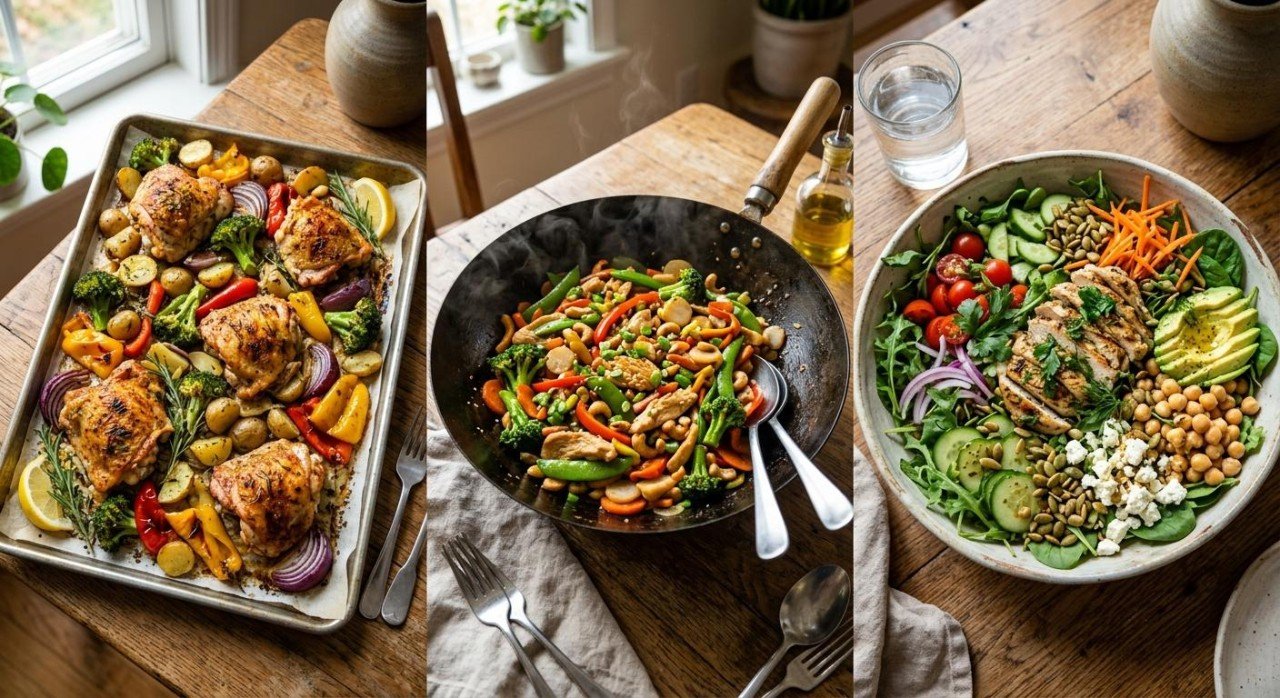
This is the most forgiving cooking method that exists. You put things on a tray, season them, and the oven does the rest. There's no stirring, no flipping, no watching the pan. You set a timer and walk away.
The technique: Preheat your oven to 425°F (220°C). Cut your protein and vegetables into roughly similar-sized pieces so they cook evenly. Toss everything with a little olive oil, salt, and whatever seasoning you like. Spread it on a sheet pan in a single layer — don't crowd it, or the food steams instead of roasting. Cook for 20-25 minutes, until the protein is cooked through and the vegetables have some color on them.
That's it. One pan, one oven, minimal cleanup. And because roasting uses dry heat rather than water, it retains nutrients better than boiling — fat-soluble vitamins like A, D, E, and K hold up well, and the small amount of oil actually helps your body absorb them. Roasting also increases the bioavailability of some compounds. The beta-carotene in carrots, for instance, becomes easier for your body to use when the vegetable is cooked and its cell walls are broken down.
Variation 1: Chicken and Mediterranean Vegetables
Chicken thighs (bone-in or boneless), bell peppers, zucchini, red onion, cherry tomatoes. Season with olive oil, garlic powder, dried oregano, salt, and pepper. Squeeze half a lemon over everything before it goes in the oven. Serve with crusty bread or over couscous.
Variation 2: Sausage and Root Vegetables
Italian sausages (cut into chunks), sweet potatoes (cubed), Brussels sprouts (halved), red onion wedges. Toss with olive oil, smoked paprika, salt, and pepper. The sweet potatoes caramelize beautifully and the sausage fat flavors everything around it. Eat it straight off the tray.
Variation 3: Salmon and Broccoli
Salmon fillets, broccoli florets, thinly sliced red onion. Drizzle with olive oil and season with salt, pepper, and a pinch of chili flakes. Add the salmon to the pan about 10 minutes after the broccoli, since fish cooks faster. Serve with rice or eat it as is. You'll get omega-3 fatty acids from the salmon and sulforaphane from the broccoli — two nutrients most people don't eat enough of.
Method 2: The 15-Minute Stir-Fry
Stir-frying is fast, versatile, and one of the healthiest cooking methods around. Because it uses high heat for a short time, vegetables keep more of their water-soluble vitamins — like vitamin C and B vitamins — than they would if you boiled or simmered them. Research published in Plant Foods for Human Nutrition found that stir-frying retains health-promoting glucosinolates in cruciferous vegetables better than boiling does. And using a small amount of oil helps your body absorb fat-soluble nutrients like beta-carotene.
The technique: The formula is protein + vegetables + sauce + grain. Get your pan or wok very hot with a tablespoon of oil before anything goes in. Cook the protein first (cut small so it cooks fast), remove it, then cook the vegetables — hardest ones first (carrots, broccoli), softer ones last (bell peppers, snap peas). Add the protein back in, pour your sauce over everything, toss for 30 seconds, and serve over rice or noodles.
The key is to have everything chopped before you start. Stir-frying moves fast — once the heat is on, you're done in about 5-7 minutes. The prep takes longer than the cooking.
Variation 1: Chicken Teriyaki Stir-Fry
Sliced chicken breast, broccoli, snap peas, shredded carrot. Sauce: 3 tablespoons soy sauce, 1 tablespoon honey, 1 teaspoon sesame oil, 1 clove minced garlic, pinch of ginger (fresh or ground). Serve over white or brown rice. Garnish with sesame seeds if you have them.
Variation 2: Beef and Bell Pepper Stir-Fry
Thinly sliced beef (flank steak or sirloin works well), mixed bell peppers, sliced onion, mushrooms. Sauce: 2 tablespoons soy sauce, 1 tablespoon oyster sauce (or more soy sauce), 1 teaspoon cornstarch mixed with 2 tablespoons water. Serve over noodles. The cornstarch slurry gives the sauce that glossy, restaurant-style coating.
Variation 3: Shrimp and Vegetable Stir-Fry
Shrimp (fresh or frozen and thawed), zucchini, red bell pepper, baby corn, snow peas. Sauce: 2 tablespoons soy sauce, juice of 1 lime, 1 teaspoon chili garlic sauce (or a pinch of red pepper flakes), 1 teaspoon honey. Serve over jasmine rice. Shrimp cooks in 2-3 minutes, so add it last.
Method 3: The Big Salad
When most people hear "salad," they picture a sad bowl of lettuce with a few tomato wedges. That's a side dish, not a meal. A proper big salad is substantial, satisfying, and packed with more nutritional variety than most cooked meals — because nothing gets heated away.
The technique: A meal-worthy salad has five components: greens, a grain or starchy base, protein, crunch (nuts, seeds, or something crispy), and a dressing. The greens are the vehicle, but the protein and grain are what make it filling. Research shows that protein stimulates satiety hormones more effectively than carbohydrates or fat alone — so building your salad around 20-30 grams of protein means you won't be hungry an hour later.
No cooking required for most of these if you use canned beans, pre-cooked grains, rotisserie chicken, or canned tuna. You can assemble a big salad in 10 minutes with zero heat.
Variation 1: The Chicken Caesar (But Better)
Romaine lettuce, shredded rotisserie chicken, canned chickpeas (drained and rinsed), cherry tomatoes, shaved Parmesan, croutons (or toasted bread torn into chunks). Dressing: 2 tablespoons olive oil, 1 tablespoon lemon juice, 1 teaspoon Dijon mustard, a small grated garlic clove, pinch of salt. The chickpeas add fiber and make this substantially more filling than the traditional version.
Variation 2: The Mexican-Inspired Bowl
Mixed greens, canned black beans (drained), cooked rice (leftover or microwaveable), corn (canned or frozen and thawed), diced avocado, cherry tomatoes, red onion. Dressing: 2 tablespoons olive oil, juice of 1 lime, pinch of cumin, salt. Top with a handful of crushed tortilla chips for crunch. This is a complete meal — protein from the beans, complex carbs from the rice, healthy fats from the avocado.
Variation 3: Tuna and White Bean Salad
Mixed greens or arugula, canned tuna (drained), canned white beans (drained), cucumber, red onion, olives, sun-dried tomatoes if you have them. Dressing: olive oil, red wine vinegar, dried oregano, salt, pepper. This is a classic Mediterranean combination — high in protein, omega-3s from the tuna, and fiber from the beans. No cooking whatsoever.
Take the Guesswork Out of Eating Well
Eat Well Planner helps you organize your favorite recipes, plan balanced meals, and automatically generate shopping lists — all in one place. Whether you're tracking macros, managing dietary restrictions, or just trying to stop asking "what's for dinner?", we've got you covered.
Our AI-powered tools can adapt any recipe to your dietary needs, help you discover new meals you'll love, and even log your nutrition effortlessly. It's meal planning made simple.
Start Organizing Your Meals — FreeMethod 4: The Quick Soup
Soup has an undeserved reputation for being slow. A from-scratch pot of soup takes hours. A quick soup — the kind you should actually be making on a weeknight — takes about 20 minutes and uses ingredients you probably already have.
The technique: The formula is simple: a base (canned tomatoes or stock), vegetables (whatever you have), aromatics (onion and garlic at minimum), and optionally some protein or beans for substance. Saute the onion and garlic in a little oil for 2-3 minutes. Add whatever vegetables you're using, cook for another 2 minutes. Pour in your canned tomatoes or stock, bring to a boil, simmer for 15 minutes until everything is tender. Season with salt and pepper. Blend it if you want it smooth, leave it chunky if you don't.
Soup is also one of the best ways to use up vegetables that are starting to look tired. That slightly wilted spinach, the half a zucchini in the back of the fridge, the carrots going soft — they all work perfectly in soup. Nothing goes to waste.
Variation 1: Tomato and Red Lentil Soup
Diced onion, 2 cloves garlic, 1 can (14 oz) diced tomatoes, 1/2 cup red lentils, 2 cups vegetable or chicken stock, 1 teaspoon cumin, pinch of chili flakes. Simmer for 15-20 minutes until the lentils dissolve into the soup. Blend until smooth. The lentils add protein and fiber without you needing to do anything special — they just melt into the soup. Serve with bread for dipping.
Variation 2: Broccoli and Potato Soup
Diced onion, 1 clove garlic, 1 large potato (peeled and cubed small), 1 head of broccoli (chopped roughly), 3 cups stock, salt, pepper. Simmer until the potato is tender (about 15 minutes), then blend. The potato gives it body and creaminess without any cream. Stir in a handful of grated cheddar if you want it richer.
Variation 3: Any-Vegetable Soup
This is the fridge-clearing soup. Diced onion, garlic, whatever vegetables you have — carrots, celery, zucchini, green beans, peas, corn, spinach, kale, whatever is looking a bit past its prime. Add 1 can of diced tomatoes and enough stock to cover everything. Add a can of drained beans (white beans, chickpeas, or kidney beans) for protein. Season with Italian seasoning, salt, and pepper. Simmer for 15 minutes. Serve with bread. This soup is never the same twice, which is the whole point.
Method 5: The Grain Bowl
The grain bowl is the most flexible meal format in existence. It's a composed bowl of pre-cooked grain, roasted or raw vegetables, a protein, and a dressing. The key word is "pre-cooked." Grain bowls are an assembly job. The grain is cooked ahead (or you use microwaveable pouches), the vegetables might be leftover roasted vegetables from a sheet pan dinner earlier in the week, the protein could be a hard-boiled egg or canned chickpeas. You're building, not cooking.
The technique: Cook a batch of grain at the start of the week — rice, quinoa, farro, or bulgur wheat. Store it in the fridge. When you want a grain bowl, scoop some grain into a bowl, top it with vegetables (roasted, raw, or both), add a protein, and drizzle with a dressing. That's it. Five minutes to assemble a nutritionally complete meal.
Every dietitian who's looked at the grain bowl format approves. The combination of whole grains, vegetables, protein, and healthy fat in a single bowl hits every component of a balanced meal. And the variety is built in — different grains, different toppings, different dressings mean you can eat grain bowls four nights a week without repeating yourself.
Variation 1: Mediterranean Grain Bowl
Cooked quinoa or farro, roasted red peppers, cucumber, cherry tomatoes, Kalamata olives, crumbled feta, a few chickpeas. Dressing: olive oil, lemon juice, dried oregano, salt. Quinoa is a complete protein on its own, meaning it contains all nine essential amino acids — unusual for a plant food.
Variation 2: Asian-Inspired Rice Bowl
Brown or white rice, shredded carrot, edamame, sliced cucumber, diced avocado, a sliced hard-boiled egg or baked tofu. Dressing: 1 tablespoon soy sauce, 1 teaspoon sesame oil, 1 teaspoon rice vinegar, pinch of ginger. Sprinkle with sesame seeds. The edamame alone gives you about 9 grams of protein per half cup.
Variation 3: Roasted Vegetable and Chicken Bowl
Cooked rice or bulgur wheat, leftover roasted vegetables from any sheet pan dinner, shredded rotisserie chicken or sliced grilled chicken, a handful of spinach or arugula, toasted pumpkin seeds. Dressing: 2 tablespoons olive oil, 1 tablespoon balsamic vinegar, 1 teaspoon Dijon mustard, salt, pepper. This is where the system starts working together — the leftover vegetables from Method 1 become the filling for Method 5.
The Pattern, Not the Recipe
If you look at all five methods, you'll notice they follow the same underlying structure: protein + vegetables + a carb or grain + seasoning. The only thing that changes is the cooking technique and the specific ingredients you plug in. That's the whole point.
Once you understand the pattern, you stop needing recipes. You open the fridge, see what you have, and match it to a method. Chicken and vegetables? Sheet pan or stir-fry. Leftover grain in the fridge? Grain bowl. Random vegetables going soft? Soup. Need something fast with no cooking? Big salad with canned beans and whatever else is around.
This is what cooking confidence actually looks like. Not mastering complicated techniques. Not plating food beautifully. Just knowing a handful of patterns well enough that you can make dinner without stress. A 2024 survey of 2,010 Americans found that 27% feel intimidated by cooking from scratch, and 54% identify time as their biggest obstacle. But these five methods are specifically designed to address both problems — they're simple enough that intimidation doesn't apply, and fast enough that time isn't really an excuse.
The 2025 Instacart cooking survey found that only 7% of Americans say lack of skill is their main barrier to cooking. The real obstacles are time and exhaustion — 20% say they don't have enough time, and 19% say they're too tired after work. Five methods that take 15-30 minutes each, with minimal cleanup, directly solve both of those problems.
Your Starter Shopping List
Here's a single shopping list that covers a week of these meals. This isn't meant to be rigid — swap anything you don't like for something you do. The point is to show you that feeding yourself well for a week doesn't require a cart full of exotic ingredients.
Proteins
- 1 pack chicken thighs (bone-in or boneless)
- 1 pack chicken breast (for stir-fry)
- 2 salmon fillets
- 1 rotisserie chicken (for salads and grain bowls)
- 2 cans tuna
- 1 dozen eggs
Canned and Dry Goods
- 2 cans diced tomatoes
- 1 can chickpeas
- 1 can black beans
- 1 can white beans
- 1 bag red lentils
- 1 bag rice (white or brown)
- 1 bag quinoa or farro
- 1 pack noodles (egg noodles or rice noodles)
- 1 carton chicken or vegetable stock
Vegetables
- 1 head broccoli
- 3 bell peppers (mixed colors)
- 1 bag snap peas or snow peas
- 1 zucchini
- 2 sweet potatoes
- 1 bag baby spinach or mixed greens
- 1 head romaine lettuce
- 1 cucumber
- 1 pint cherry tomatoes
- 3 carrots
- 3 onions
- 1 head garlic
- 2 avocados
- 1 lemon and 2 limes
Pantry Staples
- Olive oil
- Soy sauce
- Honey
- Sesame oil
- Dijon mustard
- Red wine vinegar or balsamic vinegar
- Salt and black pepper
- Garlic powder
- Dried oregano
- Cumin
- Smoked paprika
- Chili flakes
Most pantry staples last for months, so you're really only buying them once. After the first week, your shopping list shrinks to proteins, vegetables, and the occasional grain refill.
A Sample Week
Here's what a week could look like using just these five methods and the shopping list above. This isn't a rigid meal plan — it's a demonstration of how the system works.
- Monday: Chicken and Mediterranean Vegetable Sheet Pan (Method 1) — cook extra vegetables for Wednesday
- Tuesday: Chicken Teriyaki Stir-Fry (Method 2) — cook a big batch of rice while you're at it
- Wednesday: Roasted Vegetable and Chicken Grain Bowl (Method 5) — uses leftover vegetables from Monday and rice from Tuesday
- Thursday: Tuna and White Bean Salad (Method 3) — zero cooking, assembles in 10 minutes
- Friday: Tomato and Red Lentil Soup (Method 4) — with bread for a cozy end to the week
- Saturday: Salmon and Broccoli Sheet Pan (Method 1) — simple, fast, and nutrient-dense
- Sunday: Mexican-Inspired Bowl Salad (Method 3) — uses up leftover rice and whatever vegetables are left
Notice how the system creates its own efficiency. Monday's extra vegetables become Wednesday's grain bowl. Tuesday's rice reappears on Sunday. The rotisserie chicken bought on Monday does duty in salads and bowls through the week. You're not cooking from zero every night — you're building on what you've already made.
Once you get comfortable with these five methods, Eat Well Planner can take it further. Import any recipe you find online — from a website, an Instagram reel, or a YouTube video — and the app saves it to your personal recipe book with ingredients and nutrition already extracted. From there, you can build weekly meal plans around your growing collection, and the app generates your shopping list automatically. It's the infrastructure that turns a handful of go-to meals into a system that runs itself.
The Only Rule That Matters
A home-cooked meal doesn't need to be perfect. It doesn't need to look good on Instagram. It doesn't need to impress anyone. It just needs to be made with real ingredients and put on the table.
The Johns Hopkins research found something worth noting: people who cooked at home frequently also consumed fewer calories even on the occasions when they ate out. In other words, the habit of cooking changes your relationship with food beyond just the meals you make. You start noticing ingredients. You develop a sense for portions. You stop defaulting to takeout because you know you can make something decent in the time it takes to wait for delivery.
That shift doesn't require talent. It requires five methods, a few go-to variations, and the willingness to start. The first stir-fry might be mediocre. The sheet pan might be slightly under-seasoned. The soup might be a bit too thick. None of that matters. What matters is that you made it, you ate it, and tomorrow you'll do it again slightly better.
That's how every confident cook started. Not with talent. With Tuesday night dinner.