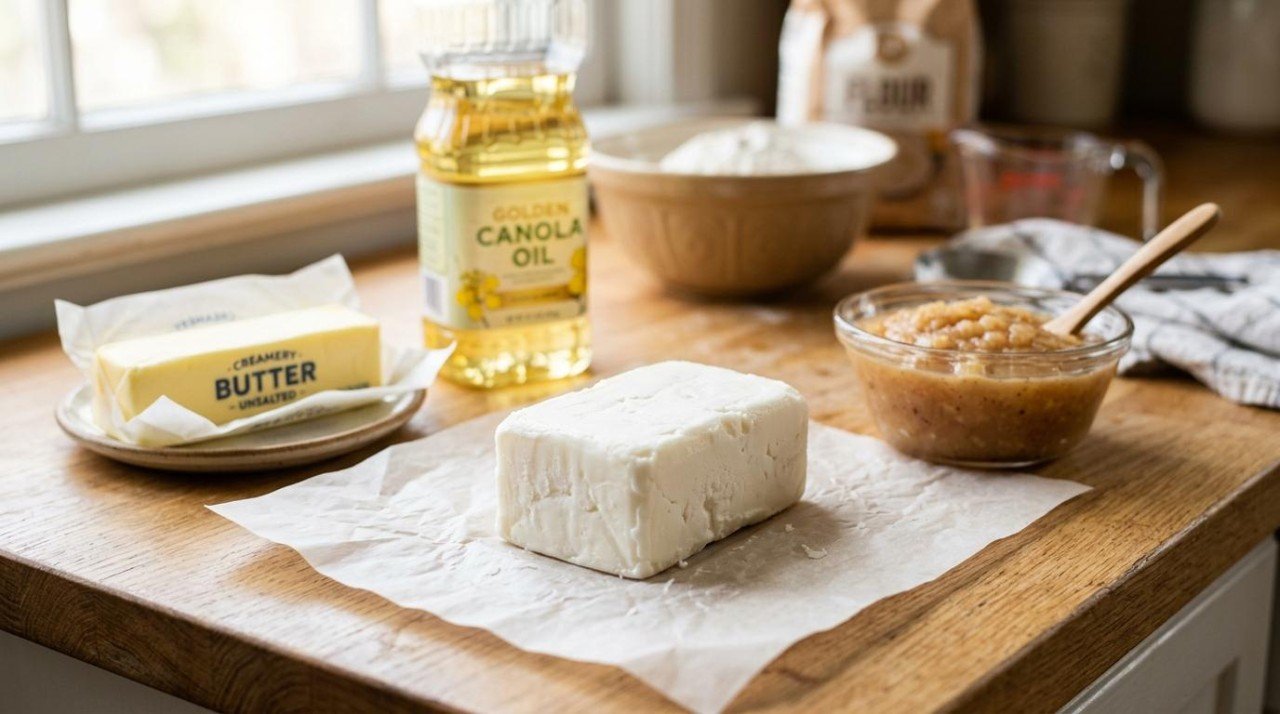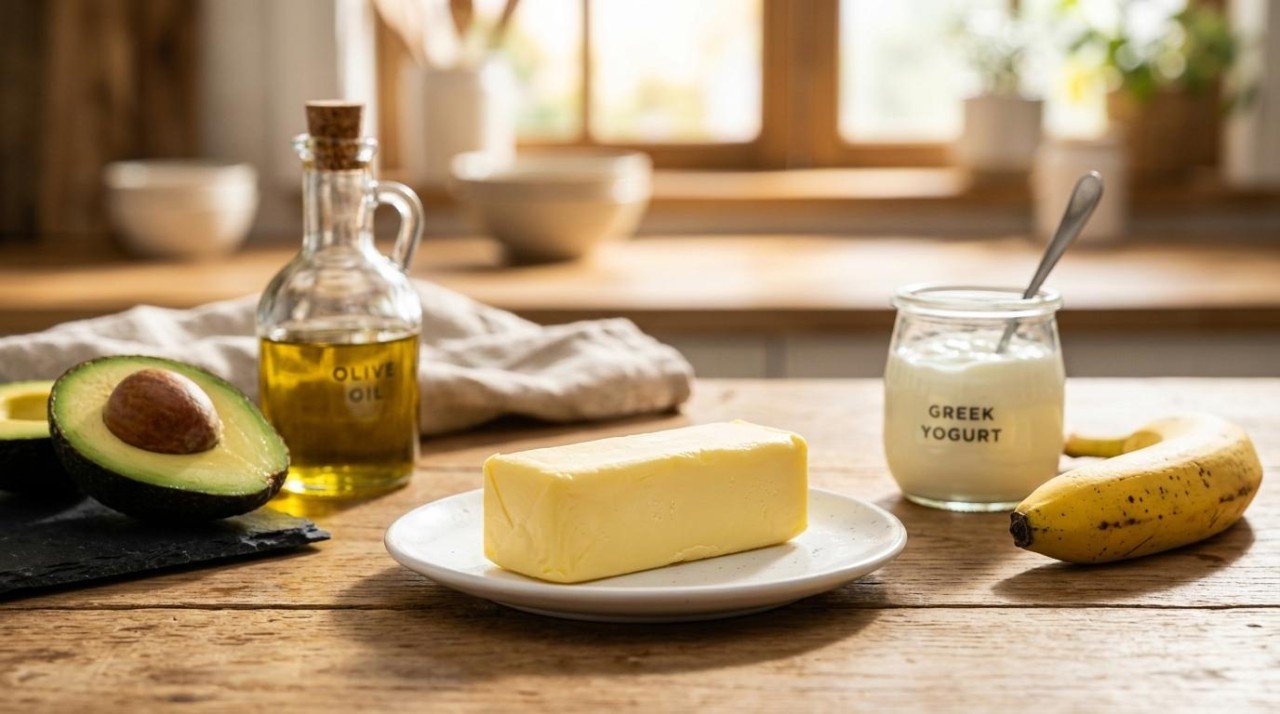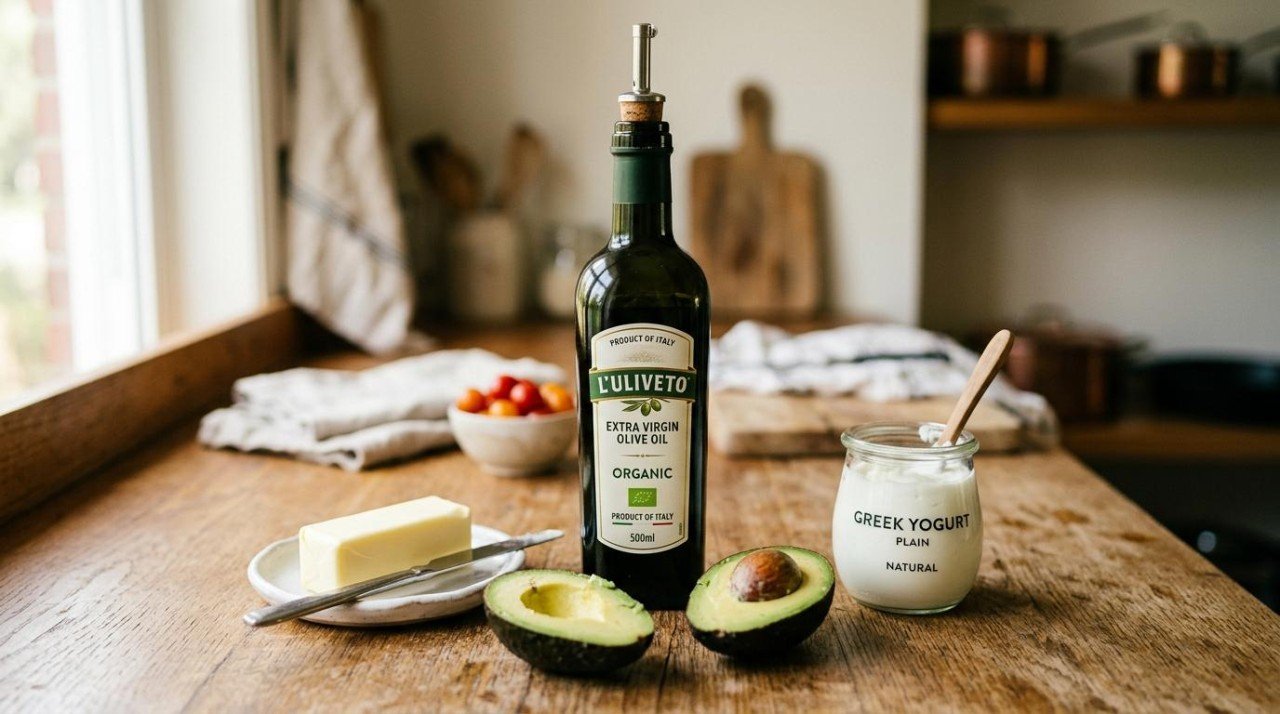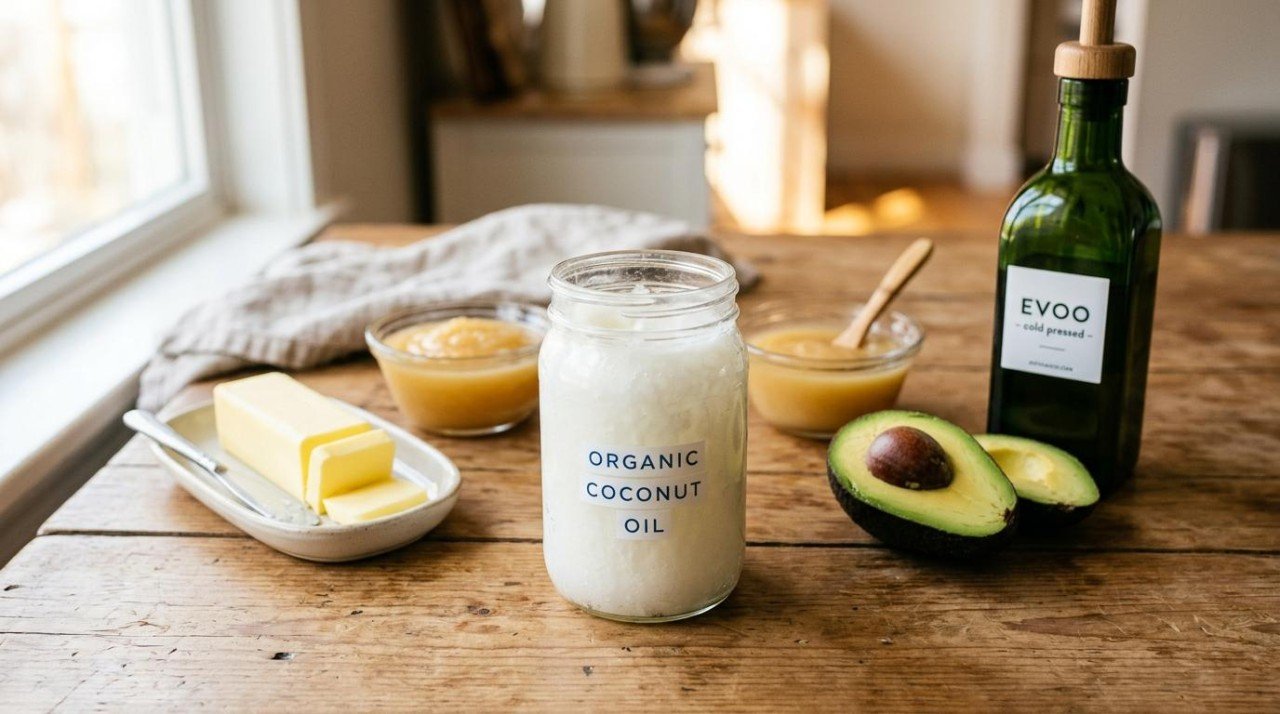
The recipe calls for coconut oil and the jar is empty, or maybe you never bought one. Possibly someone in the house can't stand the taste of coconut, or possibly you have read that coconut oil is not the health food it was sold as and would rather use something else. Whatever the reason, you need a swap that won't wreck the dish.
Coconut oil is easy to replace once you know which job it was doing. It is 100% fat and it is solid below about 75°F, but it melts the second it hits a warm pan. Depending on which jar you bought, it either tastes like nothing (refined) or clearly like coconut (virgin). In a vegan pie crust it is standing in for butter. In a muffin it has been melted and is just a liquid oil. In a stir-fry it is a cooking fat, and in a no-bake energy bar it is the thing that makes the bar set in the fridge.
So the best substitute depends on what you are making. The swaps below are grouped by use case, with exact ratios, which ones are vegan, and an honest note on which ones are actually healthier.
The Quick List
- Butter — the easiest swap for solid coconut oil in baking (not vegan)
- Vegan butter sticks — the dairy-free 1:1 swap for crusts, cookies, and biscuits
- Vegetable or palm shortening — the closest vegan structural match: solid, 100% fat, neutral
- Ghee — 100% fat like coconut oil, with a nutty butter flavor and a high smoke point
- Lard — flaky savory crusts and biscuits
- Cocoa butter — the vegan swap for no-bake bars, fudge, and homemade chocolate
- A neutral oil — wherever the recipe melts the coconut oil first: muffins, brownies, granola
- Olive oil — cakes, quick breads, roasting, and sauteing
- Avocado oil — the best swap for high-heat searing and stir-frying
- Peanut oil — stir-fries, curries, and frying
- Applesauce, mashed banana, or Greek yogurt — swap in for up to half the fat in muffins and quick breads
First: Which Coconut Oil Was the Recipe Using?
The difference between the two kinds of coconut oil matters, because it tells you what flavor you need to replace.
- Refined coconut oil has had the coconut scent and flavor taken out, and it tolerates more heat, smoking at about 400°F. If the recipe calls for this kind, or just says "coconut oil" in a recipe that isn't meant to taste of coconut, the coconut oil is doing a purely structural job and any neutral fat can take its place.
- Virgin (unrefined) coconut oil keeps a noticeable coconut flavor, and it smokes at roughly 350°F, so it suits medium-heat cooking. If the recipe chose it on purpose, as in a Thai curry, a Caribbean rice dish, or coconut macaroons, the flavor is part of the dish. Swap the fat, then add the coconut back some other way (see the end of this section).
Next, check how the recipe uses it. Coconut oil melts at about 75°F (24°C), so it is solid in a cool kitchen and liquid in a warm one. If the recipe tells you to cut it into flour, cream it with sugar, or chill it until set, you need another solid fat. If it says to melt it, any liquid oil works. If it is going into a hot pan, smoke point is what matters.
Getting the coconut flavor back: In curries, soups, and rice, swap the fat for a neutral oil and stir in 2 to 3 tablespoons of coconut milk near the end. In baking, a few drops to 1/4 teaspoon of coconut extract, or a handful of toasted shredded coconut, gives you the aroma without the oil. (Our coconut milk substitutes guide covers the other direction.)
For Baking With Solid Coconut Oil
Pie crusts, biscuits, scones, shortbread-style cookies, and anything that starts by creaming fat with sugar. These need a fat that stays solid while you work it, so liquid oils are out.
Butter
- Swap: 1 cup coconut oil → 1 cup butter, softened or cold to match how the recipe uses the coconut oil
- Best for: Pie crusts, biscuits, cookies, cakes, crumb toppings, scones
- Skip it for: Vegan or dairy-free recipes, and high-heat frying
Butter is what most coconut-oil baking recipes were adapted from in the first place, so swapping it back in nearly always works. The one difference is water. By US standard, butter is at least 80% milkfat, and most of the rest is water, while coconut oil is pure fat. A straight 1:1 swap gives you slightly less fat and a little extra moisture, which almost no recipe will notice. In a fat-heavy recipe where precision matters, such as a shortbread or a very short crust, use about 1 1/4 cups of butter per cup of coconut oil for the same fat. Either way, the butter version will taste richer.
Butter also stays firm up to a higher temperature than coconut oil, which helps on a warm day. A crust made with butter is easier to roll out in a summer kitchen than one made with coconut oil, which goes soft and greasy almost as soon as your hands touch it. Our butter substitutes guide covers the reverse swap in detail.
Vegan Butter Sticks
- Swap: 1:1 by volume, in stick form only
- Best for: Vegan cookies, cakes, crusts, and frosting where you want a buttery flavor
- Skip it for: High-heat cooking, and anything where you need the texture to be exactly the same
If the reason the recipe used coconut oil was to keep it vegan, a plant-based butter stick is the most practical swap. It behaves almost exactly like dairy butter, firm when cold and creamable when soft, and it tastes more like butter than coconut oil ever does. Brands vary in their fat-to-water balance, so expect small differences from one to another. Buy sticks, not tubs: spreadable tub products contain more water, which leaves baked goods soft and cakey where they should be crisp.
Vegetable or Palm Shortening
- Swap: 1:1 by volume or weight
- Best for: Vegan pie crusts, biscuits, frosting, and any recipe that uses refined coconut oil as a neutral solid fat
- Skip it for: Recipes where the fat is supposed to add flavor, because shortening adds none
Structurally, shortening is the closest match on this list. Like coconut oil, it is 100% fat, solid at room temperature, and tasteless, so it behaves the same way in a recipe without any water adjustment. It also stays solid at a much higher temperature than coconut oil does, so a crust made with shortening is easier to handle and a buttercream holds its shape in a warm room. Non-hydrogenated palm shortening is the version most often sold in natural food stores. Both kinds are vegan. Our shortening substitutes guide explains how it behaves in more depth.
Ghee
- Swap: 1:1 by volume
- Best for: Cookies, quick breads, roasted vegetables, curries, and dals
- Skip it for: Vegan or dairy-free recipes, and delicate desserts where a nutty, browned-butter flavor would stand out
Ghee is butter with the water and milk solids cooked off, so it is essentially pure fat, just like coconut oil, and you don't need to adjust the ratio at all. It is soft and scoopable at room temperature, firmer when chilled, and it has a toasty, nutty flavor. Because the milk solids are gone, it also handles heat much better than butter, with a smoke point of roughly 374 to 482°F depending on how it is made. That makes it one of the few swaps that works equally well in the oven and in a hot pan. In Indian and South Asian dishes it is the traditional fat anyway.
Lard
- Swap: 1:1 by volume
- Best for: Savory pie crusts, biscuits, tortillas, and frying
- Skip it for: Sweet recipes that need a clean flavor, unless it is leaf lard, and anything vegetarian
If coconut oil was simply the solid fat in a savory crust or biscuit, lard is a strong swap. It makes a flakier crust than either butter or coconut oil, and its smoke point of about 361 to 401°F makes it good for frying too. Ordinary lard tastes faintly porky, which works in savory baking and frying. Leaf lard is milder and is the type pastry bakers look for.
Cocoa Butter
- Swap: 1:1 by weight, melted
- Best for: No-bake bars, fudge, energy bites, homemade chocolate, and raw "cheesecakes" that need to set
- Skip it for: Everyday baking and cooking, where it is too expensive to justify
A whole category of recipes uses coconut oil for one reason: it turns firm in the fridge, which holds date bars, chocolate bark, and raw desserts together. Liquid oils can't do that, and butter changes the flavor. Cocoa butter is the vegan fat that sets even firmer than coconut oil, because it melts at about 93 to 100°F compared with coconut oil's 75°F. A cocoa-butter bar can sit on the counter without slumping and snaps cleanly instead of going soft. Regular cocoa butter tastes and smells of chocolate, which suits most of these recipes. If you want a neutral flavor, buy the deodorized kind. Melt it gently, because it hardens quickly when you stir it into cold ingredients.
For Baking With Melted Coconut Oil
If the recipe tells you to melt the coconut oil, as most muffin, brownie, quick bread, snack cake, and granola recipes do, its solid form doesn't matter. Any fat that is liquid at room temperature works, and this is also where the healthier swaps are easiest to make.
A Neutral Oil
- Swap: 1 cup melted coconut oil → 1 cup canola, sunflower, grapeseed, or light olive oil
- Best for: Muffins, quick breads, brownies, carrot cake, pancakes, granola
- Skip it for: Anything the recipe chills to set, or where you cut or cream the fat
This is the easiest swap on the list, and in most of these recipes nobody will be able to tell the difference. Batters made with oil often stay moist longer than batters made with coconut oil, because coconut oil firms up again as the cake cools and can leave a cold slice a bit dense. The one thing to watch is mixing: coconut oil seizes into hard lumps when it hits cold eggs or milk, and liquid oil doesn't. So if anything, the swap is easier to work with. Our vegetable oil substitutes guide goes deeper on neutral oils.
Olive Oil
- Swap: 1:1 by volume
- Best for: Olive oil cakes, citrus loaves, banana bread, zucchini bread, brownies, savory muffins
- Skip it for: Delicate vanilla cakes where a peppery, grassy flavor would clash, unless you use a light or mild olive oil
Extra virgin olive oil is a flavor ingredient in its own right, and it works especially well with lemon, orange, chocolate, and warm spices. In a pan of brownies it mostly disappears. For a neutral result, choose a "light" (meaning lighter in flavor, not in calories) or refined olive oil. Our olive oil substitutes guide explains the different grades.
Melted Butter
- Swap: 1:1 by volume, melted and slightly cooled
- Best for: Blondies, brownies, crumb toppings, granola, banana bread
- Skip it for: Vegan recipes
Melted butter gives you a richer flavor and a slightly chewier texture than oil, which is why it is the classic fat in blondies and many brownie recipes. Let it cool for a few minutes before it goes into a batter with eggs.
Applesauce, Mashed Banana, or Greek Yogurt
- Swap: Replace up to half the coconut oil with unsweetened applesauce, mashed ripe banana, or plain Greek yogurt, and use a neutral oil for the rest
- Best for: Muffins, quick breads, snack cakes, pancakes
- Skip it for: Cookies, crusts, and anything that should be crisp, as well as recipes that need fat to set
- Health notes: Cuts the fat in that half of the recipe almost entirely; Greek yogurt also adds protein
Fruit purees and yogurt keep a batter moist without adding much fat, and they work well up to about half the fat in the recipe. If you go further than that, the crumb turns gummy and rubbery. Applesauce has the most neutral flavor of the three. Banana tastes of banana, which is welcome in a spice muffin and strange in a lemon loaf. Greek yogurt adds a light tang and protein, and it is not vegan. Expect baked goods that are a little more tender and a little less browned. For more ways to use yogurt in baking, see our Greek yogurt guide.
For Cooking: Sauteing, Roasting, and Stir-Frying
In a skillet, smoke point is what matters. Virgin coconut oil sits at about 350°F, which is fine for a gentle saute but low for a hard sear, so most cooking swaps are actually an upgrade in heat tolerance.
Avocado Oil
- Swap: 1:1 by volume
- Best for: Searing, stir-frying, roasting at high oven temperatures, grilling
- Skip it for: Nothing really, though it is pricey for deep frying
Refined avocado oil has one of the highest smoke points of any cooking oil, about 520°F, and it tastes of almost nothing, so it does everything refined coconut oil does in a pan and handles more heat. It is also mostly monounsaturated fat, the same kind that olive oil is known for. If you are swapping coconut oil out of your everyday cooking, this is the most versatile replacement.
Peanut Oil
- Swap: 1:1 by volume
- Best for: Stir-fries, Thai and Southeast Asian curries, fried rice, deep frying
- Skip it for: Anyone with a peanut allergy (check before cooking for guests)
Many of the dishes where people reach for coconut oil, like curries, stir-fries, and noodle dishes, come from cuisines that traditionally use peanut oil just as much. Refined peanut oil smokes at about 448°F and has a mild, slightly nutty flavor. For a curry that should taste of coconut, pair it with a splash of coconut milk as described above.
Olive Oil, Ghee, or Butter
- Swap: 1:1 by volume
- Best for: Olive oil for roasting vegetables and medium-heat sauteing; ghee for curries, dal, and searing; butter for eggs, fish, and gentle pan sauces
- Skip it for: Butter at high heat, where it scorches
Extra virgin olive oil smokes at roughly 374°F, a bit higher than virgin coconut oil, so it handles the same everyday roasting and sauteing. Ghee goes well beyond that. Butter is the exception: its milk solids start to burn at around 302°F, so keep it for lower heat, or mix it half and half with oil if you want the flavor at a higher temperature. For popcorn, a drizzle of melted butter or ghee after popping in a neutral oil gives the flavor most people want from coconut oil.
A Vegan Cheat Sheet
Coconut oil is in so many recipes because it is one of the few plant fats that is solid at room temperature. If you need to stay vegan, here is the swap for each job:
- Cut into flour (crusts, biscuits, scones): Vegetable or palm shortening, or vegan butter sticks, kept cold
- Creamed with sugar (cookies, cakes): Vegan butter sticks, or shortening if you want a neutral flavor
- Melted into a batter: Any neutral oil or olive oil, with applesauce or banana for up to half
- Chilled to set (no-bake bars, fudge, chocolate): Cocoa butter
- Cooking: Avocado, peanut, or olive oil
The Healthier Angle, Honestly
Coconut oil had years of a health-food reputation, and the research has not been kind to it. It is about 90% saturated fat, roughly 82 g per 100 g, which is more than butter (about 51 g) and much more than olive oil, avocado oil, or canola oil (all under 15% saturated). A 2020 meta-analysis of 16 clinical trials in Circulation found that, compared with non-tropical vegetable oils, coconut oil raised LDL cholesterol by about 10.5 mg/dL. It also raised HDL a little, and showed no significant benefit for body weight, blood sugar, or inflammation. An accompanying editorial concluded that coconut oil "should not be used as a regular cooking oil" but can be used sparingly for flavor or texture.
That makes this one of the rare substitution guides where nearly every swap is a nutritional step up, or at worst neutral. Butter and ghee are a bit lower in saturated fat than coconut oil, though not by much. Palm shortening and cocoa butter are in the same range. The real upgrades are liquid oils. Using olive, avocado, or canola oil in place of coconut oil replaces most of its saturated fat with unsaturated fat, and extra virgin olive oil brings polyphenols with it (here is how to find the real thing). If you are worried about seed oils, our look at what the evidence actually says is worth a read before you rule out canola.
The easiest place to make this change is in everyday cooking, the morning eggs and the weeknight stir-fry, because that is where coconut oil gets used most often. A few tablespoons in a holiday pie crust are not what matters for your heart. The oil you use every day is.
Take the Guesswork Out of Eating Well
Eat Well Planner helps you organize your favorite recipes, plan balanced meals, and automatically generate shopping lists — all in one place. Whether you're tracking macros, managing dietary restrictions, or just trying to stop asking "what's for dinner?", we've got you covered.
Our AI-powered tools can adapt any recipe to your dietary needs, help you discover new meals you'll love, and even log your nutrition effortlessly. It's meal planning made simple.
Start Organizing Your Meals — FreeWhat Not to Use
- Coconut butter (sometimes called coconut manna). It looks similar and sits next to coconut oil on the shelf, but it is pureed coconut meat, not pure fat. It contains fiber and sugars that scorch in a hot pan, and it makes baked goods dense. It is great spread on toast, but it can't stand in for coconut oil.
- Coconut milk. It is mostly water, so it adds coconut flavor but can't do the job of a fat. Use it to bring back the coconut flavor, alongside a real fat, never instead of one.
- MCT oil. It is made from coconut, but it stays liquid in the fridge, so it won't set a no-bake bar, and supplement labels warn against frying with it because of its low smoke point, often listed as under 320°F. Keep it for coffee and smoothies.
- Tub spreads and "light" margarine. The extra water they contain is exactly what you don't want in a recipe built around a pure fat. Use sticks only.
- Liquid oil in a cut-in or chilled recipe. Oil coats flour evenly instead of staying in separate pieces, so a crust turns sandy instead of flaky, and a no-bake bar made with oil never sets. If the recipe needs the fat solid, use a solid fat.
Picking the Right One for Your Recipe
To sum up: check whether the recipe uses coconut oil solid, melted, or in a hot pan, and match the swap to that. Use a solid fat (butter, shortening, vegan butter, or cocoa butter for no-bake bars) when it needs to stay solid. Any liquid oil works when it gets melted, and that is also the best place to make the healthier swap. In a hot pan, choose avocado, peanut, or olive oil. And if the recipe was written around virgin coconut oil's flavor, add the coconut back with a splash of coconut milk or a bit of extract.
This guide can't see your recipe, though. Eat Well Planner can: import the recipe you are working from, and the AI recipe chat will read that exact ingredient list and tell you which swap fits. It will say whether the coconut oil in a particular recipe is there for structure or flavor, whether the ratio needs changing, and what will be different about the result. If you are converting a whole recipe, for example making a butter-based recipe vegan or taking coconut oil out of a dessert, Recipe Variations rewrites it from start to finish with the swaps already worked in.
If you want to see what the swap does to your recipe's nutrition, Make It Healthier suggests fat swaps like these and checks the nutritional gain before it recommends anything. The Recipe Playground lets you try avocado oil in place of coconut oil and watch the nutrition score change as you edit, so you can see the difference for yourself.