You are partway through a recipe, the mixing bowl is out, and the butter dish is empty — or you just want a swap that is a little lighter on saturated fat. Either way, butter is one of the most replaceable ingredients in the kitchen, because almost everyone has something on hand that will stand in for it.
The catch is that butter does three very different jobs, and no single substitute covers all of them. It adds fat and tenderness in baking, it browns and carries flavor in the saute pan, and it spreads cold on toast. A swap that is perfect for one of those jobs can be a disaster in another — mashed avocado is lovely in brownies but pointless for frying an egg, and neutral oil that fries beautifully makes a sad spread for toast.
So the right pick depends entirely on what you are making. Below, the substitutes are grouped by the three jobs butter does, with exact ratios and honest notes on where each one shines and where it falls apart.
The Quick List
- Olive oil — the best all-purpose healthier swap for both cooking and baking
- Neutral oil (canola or vegetable) — the cheapest, most reliable baking swap
- Coconut oil — a solid fat that behaves the most like butter in baking
- Ghee — buttery flavor in the pan that also handles high heat
- Greek yogurt — lightens baked goods and adds a little protein
- Unsweetened applesauce — cuts fat in muffins and quick breads
- Mashed avocado — a creamy 1:1 baking swap with better fats
- Mashed banana — a sweet swap for muffins and quick breads
- Nut butter — a rich, spreadable stand-in for toast (and some baking)
For Baking
In cakes, muffins, quick breads, and brownies, butter is doing two things: adding fat for richness and tenderness, and (in creamed recipes) trapping air for lift. Most everyday bakes lean far more on the fat than the aeration, which is why swaps work so well here. The one style to be careful with is anything that creams softened butter with sugar as its main leavening — a liquid oil cannot hold air the same way.
Olive or Neutral Oil
- Swap: 1 cup butter → 3/4 cup oil (use 1:1 if the recipe calls for melted butter)
- Best for: Cakes, muffins, quick breads, and brownies
- Skip it for: Flaky pastry, pie crust, and cutout cookies that need to hold their shape
- Health notes: Olive oil trades butter's saturated fat for mostly monounsaturated fat
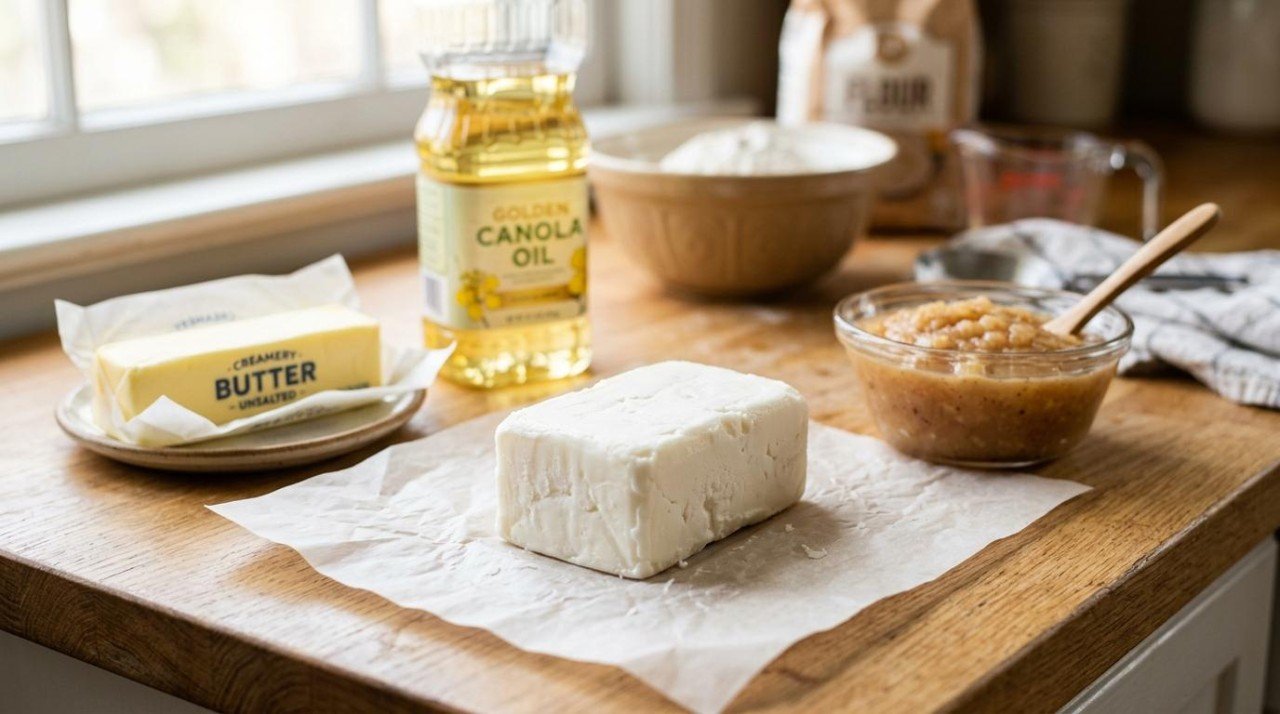
Oil is the most reliable butter swap in baking. Because butter is only about 80% fat (the rest is water and milk solids) and oil is pure fat, you use a little less: about three-quarters of a cup of oil for every cup of butter. If the recipe already called for melted butter, you can go 1:1, since you are replacing one liquid fat with another.
Oil coats the flour more thoroughly than solid butter, so it produces an especially moist, tender crumb — a plus for cakes and muffins, a minus for anything that is supposed to be flaky or crisp. For a genuinely better fat profile, reach for olive oil or a neutral vegetable oil; light or refined olive oil keeps the flavor from taking over. One note for cookies: oil makes dough spread more and skips the flaky texture butter gives, so results will be softer and cakier.
Coconut Oil
- Swap: 1:1 (melt it if the recipe wants melted butter; keep it soft-solid to cream with sugar)
- Best for: Cookies, brownies, and cakes where you want a butter-like structure
- Skip it for: Recipes where a faint coconut note would clash (use refined coconut oil to avoid it)
Coconut oil is the closest structural match to butter in baking, because it is one of the few fats that is solid at room temperature. That means it behaves like butter — you can even cream softened coconut oil with sugar for a bit of lift, and it swaps in at a straightforward 1:1. Unrefined virgin coconut oil adds a mild coconut aroma; refined coconut oil is neutral if you would rather not taste it.
Honesty check: coconut oil is not a lighter choice. It is even higher in saturated fat than butter, so treat this as a texture-and-dairy-free swap, not a health upgrade.
Greek Yogurt
- Swap: Replace 1 cup butter with 1/2 cup butter + 1/4 cup Greek yogurt
- Best for: Muffins, quick breads, and snack cakes you want to lighten
- Skip it for: Replacing all the butter, or flaky and crisp bakes
- Health notes: Cuts fat and calories while adding protein and a little calcium
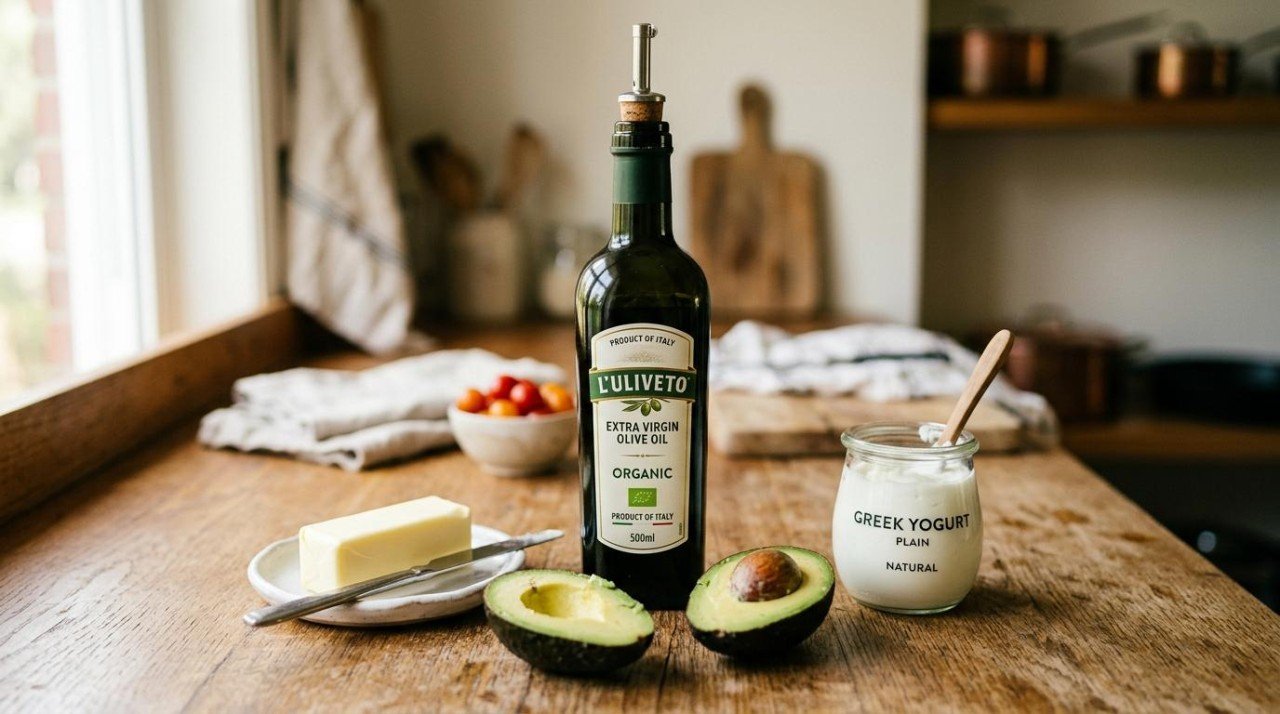
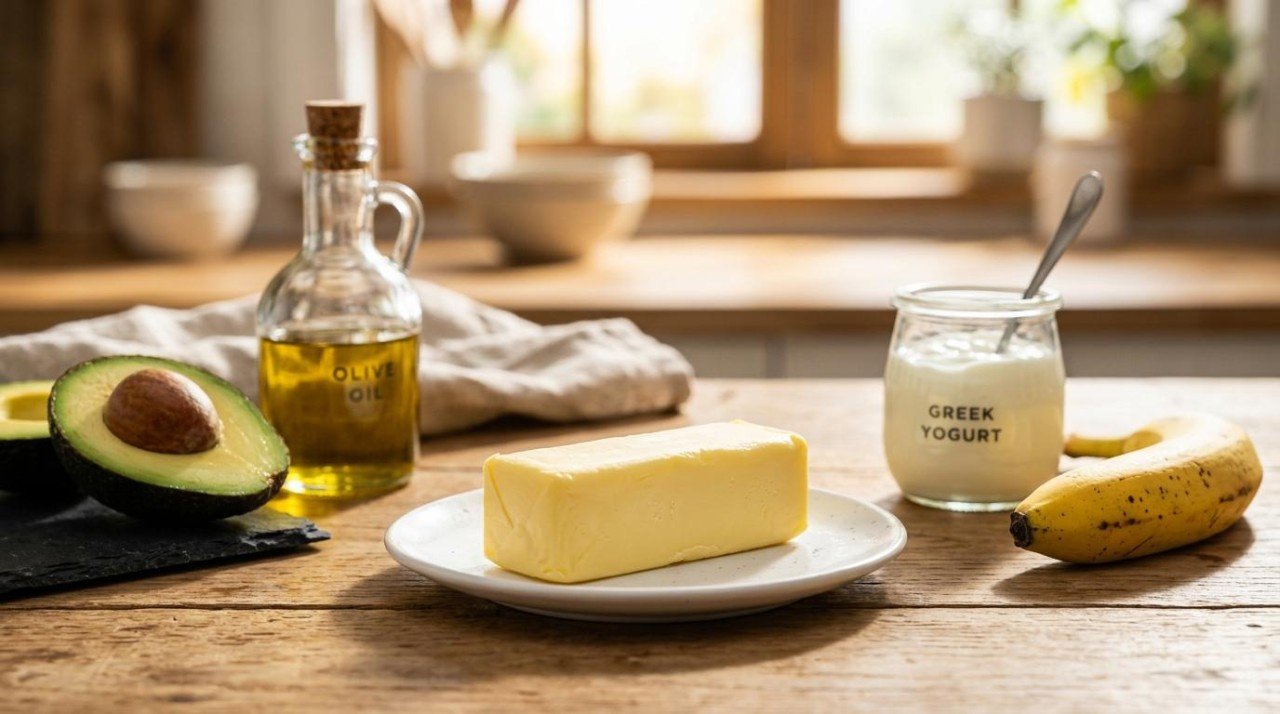
Greek yogurt is the move when you want to lighten a bake without losing moisture. Rather than swapping it in for all the butter, replace half the butter and add a smaller amount of yogurt — a common ratio is half a cup of butter plus a quarter cup of yogurt in place of a full cup. That keeps enough real fat for good texture while trimming calories and adding a bit of protein. Use plain, full-fat or low-fat yogurt; the extra moisture means you may want to hold back slightly on other liquids. (If you are deciding which tub to buy, here is how to pick a Greek yogurt.)
Unsweetened Applesauce
- Swap: Replace up to half the butter with an equal amount of unsweetened applesauce
- Best for: Muffins, quick breads, and snack cakes
- Skip it for: Replacing all the butter — the crumb turns gummy and dense
- Health notes: Cuts a large share of the fat and adds a little fiber and natural sweetness
Applesauce swaps in fat for moisture, so it is the classic way to lighten a muffin or quick bread. The key word is part: replace up to half the butter and keep the rest, or you lose too much fat and the texture goes rubbery. Because applesauce brings its own sweetness, you can often dial back the sugar a touch. Expect a softer, more tender, slightly less rich result — a fair trade in a banana bread, less so in a buttery shortbread.
Mashed Avocado
- Swap: 1:1, mashed or pureed until completely smooth
- Best for: Brownies, chocolate cakes, and dense, dark bakes
- Skip it for: Light-colored or delicate cakes (avocado can tint the crumb green)
- Health notes: Swaps saturated fat for monounsaturated fat, plus fiber and potassium
Ripe avocado is creamy and rich enough to replace butter cup-for-cup, and it adds fiber, potassium, and heart-friendly monounsaturated fats in place of butter's saturated fat. It works best in chocolate or dark-colored bakes, where its richness reads as fudgy and its faint green tint disappears. Puree it completely smooth so there are no lumps, drop the oven temperature by about 25°F to keep the exterior from browning too fast, and expect a denser, moister result.
Mashed Banana
- Swap: Replace up to half the butter with an equal amount of mashed ripe banana
- Best for: Muffins, quick breads, and oat-based bakes where banana flavor is welcome
- Skip it for: Anything where you do not want to taste banana; savory bakes
Like applesauce, mashed banana replaces fat with moisture and works best swapped in for up to half the butter. The obvious trade-off is flavor: banana is not subtle, so save this one for bakes where it belongs, and lean on very ripe, well-mashed bananas for the smoothest result.
Take the Guesswork Out of Eating Well
Eat Well Planner helps you organize your favorite recipes, plan balanced meals, and automatically generate shopping lists — all in one place. Whether you're tracking macros, managing dietary restrictions, or just trying to stop asking "what's for dinner?", we've got you covered.
Our AI-powered tools can adapt any recipe to your dietary needs, help you discover new meals you'll love, and even log your nutrition effortlessly. It's meal planning made simple.
Start Organizing Your Meals — FreeFor Cooking and Sauteing
When butter is in the pan, it is doing two jobs: providing fat to cook in and adding its own browned, nutty flavor. If you only need the cooking fat, almost any oil works. If you want that flavor too, your options narrow — and heat becomes the deciding factor, because butter itself scorches around 302°F.
Olive Oil
- Swap: 1:1 by volume for sauteing and roasting
- Best for: Sauteing vegetables, roasting, pan-frying, and finishing
- Skip it for: Dishes that specifically need butter's browned, creamy flavor (a beurre blanc, say)
- Health notes: Mostly monounsaturated fat and, with extra virgin, plant polyphenols
For everyday cooking, olive oil is the easiest and healthiest butter swap — pour it in where you would have melted butter, at a straight 1:1. It handles medium and medium-high heat comfortably, and it brings monounsaturated fats and (in extra virgin) antioxidant polyphenols in place of butter's saturated fat. What it will not do is taste like butter, so for a dish built around that specific browned-dairy flavor, olive oil is the wrong call. For everything else, it is the default.
Ghee
- Swap: 1:1
- Best for: High-heat sauteing and searing where you still want buttery flavor
- Skip it for: A dairy-free result (ghee is still made from butter)
Ghee is butter with the water and milk solids cooked off and strained out, which leaves nearly pure butterfat. It keeps the nutty, buttery flavor but pushes the smoke point up to around 482°F, so it sears and roasts at temperatures where plain butter would burn. Swap it 1:1. It is still mostly saturated fat, so think of it as the flavor-preserving swap rather than the lighter one.
Neutral or Avocado Oil
- Swap: 1:1
- Best for: High-heat cooking and frying where you want no added flavor
- Skip it for: Anywhere butter's flavor was the point
When you just need something to cook in and flavor does not matter, a neutral oil is the no-fuss answer at 1:1. Canola and generic vegetable oil are cheap and comfortable over heat; refined avocado oil costs more but has the highest smoke point of any common kitchen oil (around 520°F), so it is the one to reach for when the pan is screaming hot.
For Spreading
Cold, spreadable butter is the hardest job to fake, because you are replacing not just fat but the experience of a smooth, rich smear on warm toast. The good news is that some of the best-tasting options here are also the most nourishing.
Mashed Avocado
- Swap: Spread a few tablespoons of mashed ripe avocado in place of butter
- Best for: Toast, sandwiches, and bagels
- Skip it for: Sweet applications where richness alone is the goal
- Health notes: Fiber, potassium, and monounsaturated fat instead of saturated fat
Avocado on toast is a swap so good it became its own genre. Mashed with a pinch of salt, it delivers the creamy richness butter gives, plus fiber and good fats. It shines on savory toast and sandwiches; it is not the answer when you specifically wanted butter melting into a warm crumpet.
Nut Butter
- Swap: Spread in place of butter, to taste
- Best for: Toast, bagels, oatmeal, and anywhere a nutty-sweet note fits
- Skip it for: Savory dishes; anyone with a nut allergy
- Health notes: Adds protein, fiber, and unsaturated fats
Peanut, almond, or cashew butter turns toast into something closer to a small meal, adding protein and fiber alongside the fat. Choose a version with no added oils or sugar for the cleanest swap. It leans sweet-and-nutty, so it fits breakfast far better than a savory sandwich.
Olive Oil
- Swap: Drizzle or dip instead of spreading
- Best for: Crusty bread, focaccia, and rustic loaves
- Skip it for: Soft sandwich bread, where it soaks through
The restaurant move: a shallow pool of good olive oil, maybe with a little salt or herbs, for dipping crusty bread. It will not spread like butter, but on the right sturdy loaf it is arguably better — and it swaps butter's saturated fat for monounsaturated. Save it for breads that can stand up to it.
What Not to Use
A few common instincts backfire:
- Do not replace all the butter with applesauce or banana in a rich bake. Fruit puree is mostly water, so removing every bit of fat leaves the crumb gummy and dense. Swap out half at most.
- Do not expect oil to work in creamed-butter recipes that rely on air. Some cakes and cookies get their lift from beating softened butter with sugar; a liquid oil cannot trap that air, so the result can turn out flat.
- Do not reach for low-fat tub spreads in baking. They are padded with water and additives that throw off the fat-to-liquid balance, giving unpredictable, often soggy results. A real fat swap is far more reliable.
The through-line for butter is the same as for any ingredient with more than one job: match the task, not just the name. Decide whether the butter is baking, cooking, or spreading, then pick the swap that does that one job well — the right ratio for a tender crumb, the right smoke point for the pan, real richness for toast.
Not sure which of these fits the exact recipe in front of you? That is precisely what Eat Well Planner's AI recipe chat is for. Pull up your recipe, tell it you are out of butter, and it will recommend the substitute that suits that dish — with the ingredients and method already in view. And when your goal is a lighter version rather than just a fill-in, the Make It Healthier feature proposes swaps like olive oil or Greek yogurt and verifies the real nutritional gain with a calculator before you commit — so you can see exactly what trading butter for a better fat does to the dish. Match the job, make the swap, and get back to cooking.