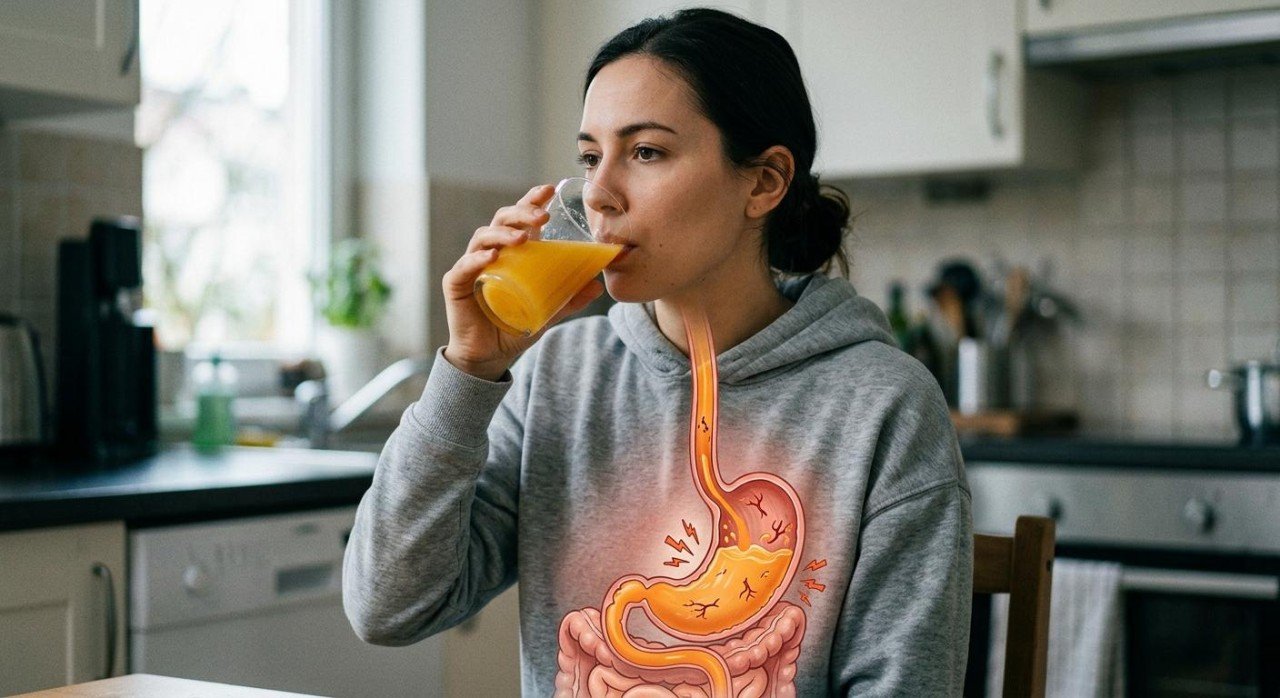
Every January, every pre-holiday week, every Monday morning after an indulgent weekend, millions of people reach for the same solution: a juice cleanse. Three days of cold-pressed greens, a brief period of virtuous suffering, and then — supposedly — a body purged of toxins and ready for a fresh start. It sounds logical. It feels proactive. And the marketing is convincing.
There's just one problem: your body already has a detox system. It's been running 24 hours a day since before you were born. And that juice cleanse you're counting on to help it? The evidence suggests it's actually making it worse.
You Already Have a Detox System (and It's Extraordinary)
The word "detox" has been so thoroughly hijacked by marketing that it's easy to forget it describes a real biological process — one your body performs continuously without any help from a bottle of green juice.
Your liver is the centerpiece. Every drop of blood leaving your digestive tract passes through it before reaching the rest of your body. The liver identifies harmful substances — alcohol, medications, metabolic waste products, environmental pollutants — and neutralizes them through a sophisticated two-phase process.
In Phase I, a family of enzymes called cytochrome P450 enzymes chemically transforms toxins, often converting fat-soluble compounds into intermediate forms that can be processed further. In Phase II, these intermediates are conjugated — attached to molecules like glutathione, glycine, or sulphate — making them water-soluble so your body can excrete them through bile or urine. This isn't a vague wellness concept. It's well-characterized biochemistry that has been studied for decades.
Your kidneys, meanwhile, filter roughly 180 litres of blood every day through millions of tiny structures called nephrons, removing waste and excess fluids and sending them out as urine. Your lungs expel carbon dioxide. Your skin sweats out small amounts of waste. Your colon eliminates what's left.
As Holly Gilligan, a nutrition expert at the University of Rochester Medical Center, puts it bluntly: if your body were actually holding onto toxins the way cleanse marketers suggest, you wouldn't need a juice — you'd need a hospital.
What a Juice Cleanse Actually Does to Your Body
If juice cleanses don't detoxify, what do they do? The research paints a surprisingly clear — and unflattering — picture.
It Disrupts Your Microbiome in Days
A 2025 study published in the journal Nutrients by researchers at Northwestern University put participants on one of three diets for just three days: juice only, juice plus whole foods, or whole plant-based foods. The juice-only group showed the most alarming changes. Their oral microbiome shifted rapidly — beneficial Firmicutes bacteria declined while inflammatory Proteobacteria increased. Several of the bacterial taxa that proliferated have been linked to gut permeability, inflammation, and even cognitive decline.
The culprit? A combination of concentrated sugar and almost no fiber. Fiber is what feeds the beneficial bacteria in your gut — the ones that produce anti-inflammatory short-chain fatty acids and help maintain the intestinal barrier. Juicing strips the fiber out and leaves the sugar behind. As the study's senior author, Dr Melinda Ring of Northwestern's Osher Center for Integrative Health, noted: "Consuming large amounts of juice with little fiber may lead to microbiome imbalances that could have negative consequences, such as inflammation and reduced gut health."
It Sends Your Blood Sugar on a Roller Coaster
When you eat a whole apple, the fiber slows digestion and creates a gradual release of sugar into your bloodstream. When you drink the juice of four apples with no fiber, that sugar hits fast. Your pancreas floods your system with insulin to cope. Blood sugar spikes, then crashes — bringing fatigue, irritability, brain fog, and intense cravings with it.
Natalie Stephens, a registered dietitian at Ohio State's Wexner Medical Center, warns that juices are "emptied out of your system within 15 minutes" — a far cry from the sustained energy whole foods provide. For people managing diabetes or prediabetes, these rapid glucose swings can be genuinely dangerous.
You Lose Muscle, Not Toxins
A typical juice cleanse provides 800 to 1,000 calories per day with virtually no protein. Your body still needs amino acids to function, so it starts breaking down muscle tissue to get them. The weight you lose during a cleanse is mostly water and muscle, not fat — and it returns within days of eating normally.
The metabolic consequences are even worse than the number on the scale suggests. Less muscle means a slower resting metabolism, which means your body burns fewer calories at rest going forward. Amanda Beaver, a wellness dietitian at Houston Methodist, notes that juice cleanses lack protein, healthy fats, and vitamin B12 — all nutrients your body needs to maintain muscle, produce energy, and support neurological function.
You're Starving Your Detox System of What It Needs
Here's the deepest irony: your liver's Phase II detoxification pathways — the ones that actually neutralize and remove harmful substances — require amino acids to function. Glycine, taurine, glutamine, cysteine — these are the molecules your liver uses to conjugate toxins and make them safe for excretion. They come from protein.
A juice cleanse provides almost none. So while you think you're "helping" your liver detoxify, you're actually depriving it of the raw materials it needs to do its job. You're not supporting your detox system. You're undermining it.
The Billion-Pound "Toxin" Question
If juice cleanses don't remove toxins, what exactly are the "toxins" they claim to target? This is where the marketing gets slippery.
Ask a cleanse company to name the specific toxins their product removes, and you'll get vague language about "impurities," "built-up waste," and "environmental pollutants." You won't get names. You won't get measurements. You won't get before-and-after blood tests showing reduced levels of anything specific.
The U.S. National Center for Complementary and Integrative Health (part of the National Institutes of Health) reviewed the evidence and concluded there is "no compelling research to support the use of 'detox' diets for weight management or eliminating toxins from the body." They also noted that the existing studies were "of low quality — with study design problems, few participants, or lack of peer review."
The FDA and Federal Trade Commission have taken enforcement action against companies selling detox products for containing hidden ingredients, making false claims about treating diseases, and marketing unapproved uses. Some products marketed as natural have been found to contain undisclosed pharmaceutical compounds.
Meanwhile, the global detox products market continues to grow — driven not by evidence but by clever marketing that taps into a very human desire: the wish for a quick reset. Social media influencers post glowing testimonials. Celebrity endorsements lend credibility. And the language of "cleansing" and "purification" triggers something almost spiritual — a sense that suffering through a few days of hunger will wash away past dietary sins.
It won't. But it will make a lot of companies very profitable.
What Actually Supports Your Body's Detox System
The good news is that supporting your liver and kidneys doesn't require buying anything special, suffering through hunger, or following a restrictive protocol. It requires eating well — consistently.
Eat More Cruciferous Vegetables
Broccoli, Brussels sprouts, cauliflower, cabbage, kale, and other cruciferous vegetables contain compounds called glucosinolates, which your body converts into isothiocyanates — including sulforaphane. These compounds activate Phase II detoxification enzymes in the liver, helping it process and eliminate potentially harmful substances more efficiently.
This isn't wellness speculation. Clinical feeding trials have shown that cruciferous vegetable consumption increases Phase II enzyme activity in a dose-dependent manner — with studies showing that around 250 grams per day of Brussels sprouts and broccoli induced Phase II glucuronidation enzymes. Regular intake has also been associated with reduced inflammatory markers and improved insulin sensitivity — which itself protects against fatty liver disease.
Get Enough Protein
Your liver's conjugation pathways need amino acids. Without adequate protein — from sources like eggs, fish, poultry, beans, lentils, nuts, and seeds — Phase II detoxification slows down. The amino acids glycine, taurine, cysteine, and glutamine are particularly important for these pathways.
This doesn't mean you need massive quantities. It means you need consistent, adequate intake spread across your meals — the opposite of a zero-protein juice fast.
Prioritise Fiber
Fiber does more than feed your gut bacteria. It also binds to bile acids and certain waste products in the digestive tract, helping your body eliminate them. A diet rich in vegetables, fruits, whole grains, and legumes supports the final stage of detoxification — getting processed waste out of your body — while also maintaining the gut barrier integrity that a juice cleanse actively damages.
Stay Hydrated
Your kidneys need water to filter waste and produce urine. Dehydration reduces their efficiency. You don't need a specific number of glasses — just drink water consistently throughout the day and pay attention to thirst. Plain water does the job. Expensive alkaline water and "detox teas" don't do it any better.
Sleep
This one is often overlooked, but during sleep your brain activates the glymphatic system — a waste-clearance pathway that removes metabolic byproducts, including amyloid-beta proteins associated with neurodegeneration. Your liver's detoxification activity also follows circadian rhythms. Chronic sleep deprivation impairs both. No amount of cold-pressed kale juice compensates for consistently poor sleep.
Take the Guesswork Out of Eating Well
Eat Well Planner helps you organize your favorite recipes, plan balanced meals, and automatically generate shopping lists — all in one place. Whether you're tracking macros, managing dietary restrictions, or just trying to stop asking "what's for dinner?", we've got you covered.
Our AI-powered tools can adapt any recipe to your dietary needs, help you discover new meals you'll love, and even log your nutrition effortlessly. It's meal planning made simple.
Start Organizing Your Meals — FreeThe Real Reset Doesn't Come in a Bottle
The appeal of a cleanse is understandable. After a week of takeaways and late nights, you want to feel like you're doing something. A three-day juice fast feels decisive. Dramatic. It has a start date and an end date. It looks like action.
But the evidence is clear: the action it takes is mostly against your own body. It disrupts your microbiome. It robs your liver of the amino acids it needs. It spikes and crashes your blood sugar. It breaks down your muscle. And when it's over, you're exactly where you started — except you've spent a small fortune and felt terrible for three days.
A genuine "reset" looks nothing like a cleanse. It looks like adding a serving of cruciferous vegetables to your dinner. It looks like swapping a sugary cereal for overnight oats with seeds and berries. It looks like planning your meals for the week so you're not reaching for ultra-processed convenience food when Tuesday evening exhaustion hits.
These changes aren't dramatic. They don't make for compelling Instagram content. But they're the things that actually support the extraordinary detoxification system your body already has — and they compound over weeks, months, and years into a fundamentally different way of eating.
Your liver doesn't need a reset. It needs you to stop starving it and start feeding it properly.