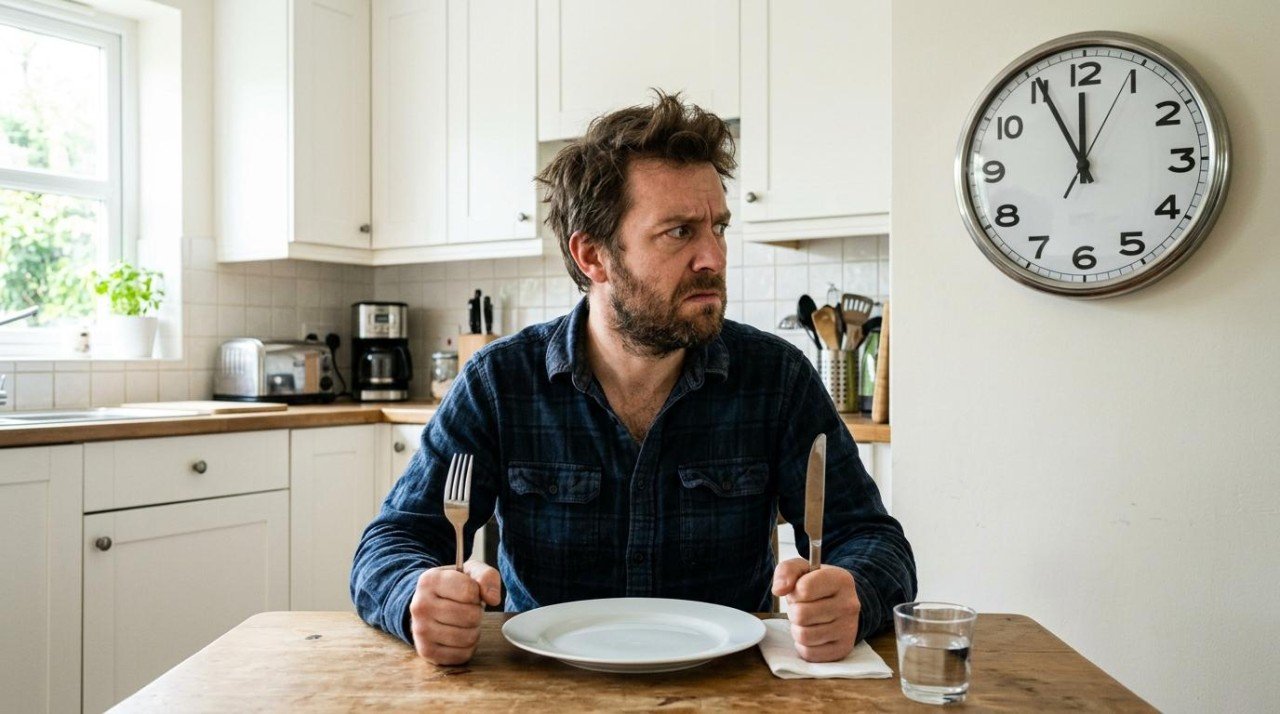
It's 4pm and you can barely keep your eyes open. You were fine this morning, productive even, but now you're irritable, foggy, and obsessing over the biscuit tin. You tell yourself it's just a long day. But this happens most days, and it has less to do with how busy you are than with what you ate, when you ate it, and how your body processed it.
The afternoon crash isn't a personality flaw or a sleep problem. For most people, it's a blood sugar problem, and it starts much earlier in the day than you think.
Blood Sugar in 60 Seconds
Every time you eat, your body breaks carbohydrates down into glucose, which enters your bloodstream and fuels your cells. Your brain alone, despite being only about 2% of your body weight, consumes roughly 20% of your body's glucose-derived energy. That makes it extraordinarily sensitive to fluctuations in blood sugar.
When everything works well, your blood sugar rises gently after a meal, insulin escorts the glucose into your cells, and levels return to a comfortable baseline. You feel steady, focused, and satisfied.
But when you eat something that dumps glucose into your bloodstream all at once, like a bowl of cereal, white toast, or a pastry, your blood sugar spikes hard. Your pancreas overreacts with a flood of insulin. Blood sugar crashes below where it started. And suddenly you're tired, irritable, craving sugar, and reaching for something sweet to bring yourself back up. Which starts the whole cycle again.
This is sometimes called reactive hypoglycemia, and according to the Cleveland Clinic, it can produce symptoms including shakiness, sweating, a rapid heartbeat, dizziness, anxiety, and extreme hunger.
The Crash Isn't Just About Energy
What most people don't realize is that a blood sugar crash triggers a genuine stress response in your body. When glucose drops too quickly, your brain perceives an energy emergency. It signals the release of adrenaline and cortisol, the same hormones that fire during a fight-or-flight response, to squeeze emergency glucose out of your liver.
That's why a blood sugar crash doesn't just make you tired. It makes you jittery, anxious, snappy, and unable to concentrate. The irritability you feel at 4pm isn't a character flaw. It's your adrenal glands reacting to a perceived threat. (That same crash also clouds focus and memory; if brain fog is your main complaint, we cover the cognitive side and the specific nutrients that sharpen it in a companion piece on the 3pm brain fog.)
A landmark 2021 study published in Nature Metabolism tracked 1,070 people wearing continuous glucose monitors as they consumed over 8,000 standardised meals. The researchers found that the size of the glucose dip 2-3 hours after eating was a stronger predictor of subsequent hunger and calorie intake than the initial spike itself. Participants with bigger dips reported more hunger, ate sooner, and consumed significantly more calories over the following 24 hours.
In other words, the crash drives the cravings. And the cravings drive the next spike. It's a self-reinforcing loop.
Your Breakfast Is Setting You Up to Fail
If your mornings start with cereal, toast, juice, or a pastry, you're putting yourself on the blood sugar roller coaster before you've even left the house.
Most breakfast cereals have a glycaemic index between 70 and 85. White toast sits around 75. Orange juice, stripped of its fiber, hits the bloodstream almost as fast as a soft drink. These are all rapidly digested carbohydrates with little protein, fat, or fiber to slow them down. Your blood sugar surges, insulin overshoots, and by mid-morning you're already crashing and looking for a snack.
Research from the Journal of Nutrition studied people with type 2 diabetes and found that a high-protein breakfast (35% protein) produced a 16% lower post-meal glucose response compared to a high-carbohydrate breakfast (15% protein). The protein-rich breakfast also didn't amplify the glucose response to lunch, suggesting the benefits carried through the day.
The pattern holds for people without diabetes too. Breakfast sets the metabolic tone for the rest of your day. Start with a blood sugar spike and you'll be chasing stable energy for hours. Start with a balanced meal and your body stays on a much steadier track.
The Problem With "Naked Carbs"
A useful way to think about blood sugar management is the concept of "naked carbs": carbohydrates eaten on their own, without protein, fat, or fiber to slow their absorption.
An apple on its own is fine because it comes with its own fiber. But a slice of white bread? A handful of pretzels? A rice cake? These are naked carbs. They're converted to glucose quickly and absorbed fast, spiking your blood sugar because there's nothing to put the brakes on.
A study in Nutrients tested the effects of combining macronutrients on blood sugar in healthy individuals. Eating carbohydrates alone (jam) produced a blood glucose level of 120.7 mg/dL at the 60-minute mark. Adding protein (an egg) brought that down to 109.0 mg/dL. The researchers concluded that combining protein with carbohydrates positively affects the glycaemic response even in healthy people.
The practical takeaway is simple: never eat carbohydrates alone. Add some protein, fat, or fiber to every meal and snack. Have your toast with eggs and avocado instead of just butter. Eat your apple with a handful of almonds. Pair your rice with salmon and vegetables. Every time you "dress" your carbs, you flatten the glucose curve.
Five Evidence-Based Strategies to Keep Blood Sugar Stable
You don't need to count grams of sugar or buy a glucose monitor. These five strategies, all backed by published research, can dramatically smooth out your blood sugar throughout the day.
1. Eat your vegetables and protein first
The order in which you eat matters more than most people realize. A study in the journal Diabetes Care found that when people with type 2 diabetes ate vegetables before carbohydrates, their post-meal glucose excursions were significantly lower than when they ate carbohydrates first. The effect persisted even over a 2.5-year follow-up.
The mechanism is straightforward: fiber and protein slow gastric emptying. If they arrive in your stomach first, the carbohydrates you eat afterwards are digested and absorbed more gradually. So at dinner, eat your salad and chicken before you touch the potatoes or bread.
2. Add protein and fat to every meal
As discussed above, carbohydrates consumed alongside protein, fat, and fiber produce a much flatter glucose curve. A practical rule: every meal should include a source of protein (eggs, fish, poultry, beans, Greek yogurt) and some healthy fat (olive oil, avocado, nuts, seeds). This slows digestion and gives your body time to process glucose steadily.
3. Walk after eating
You don't need a gym session. A randomised crossover trial in Diabetologia involving 41 adults with type 2 diabetes found that walking for just 10 minutes after each meal reduced post-meal blood sugar by 12% overall, and by 22% after dinner, compared to a single 30-minute walk taken at a random time. The researchers recommended that physical activity guidelines should specify post-meal timing, because when you move matters as much as how much you move.
Even a short stroll around the block or up and down the stairs after lunch can make a noticeable difference. Your muscles use glucose directly during activity, pulling it from the bloodstream before it has a chance to spike.
4. Rethink your breakfast completely
Swap the cereal and toast for something your blood sugar can handle. A protein-rich breakfast keeps glucose stable through the morning and, thanks to the second-meal effect, reduces the spike after lunch too.
Some examples that work well:
- Eggs (scrambled, poached, or omelette) with vegetables and wholegrain toast
- Greek yogurt with berries, nuts, and seeds
- Overnight oats made with oats, chia seeds, nut butter, and fruit
- Smoked salmon on rye bread with avocado
- A smoothie with spinach, protein powder or Greek yogurt, berries, and flaxseed
Each of these combines protein, fiber, and healthy fat with any carbohydrates, so the glucose enters your bloodstream gradually rather than all at once.
5. Choose low-glycaemic carbohydrates
Not all carbohydrates are created equal. The glycaemic index (GI) ranks carbohydrates by how quickly they raise blood sugar. Low-GI foods (55 or under) release glucose slowly; high-GI foods (70 and above) cause rapid spikes.
Some easy swaps:
- White rice (GI ~73) to basmati rice (GI ~58) or brown rice (GI ~50)
- White bread (GI ~75) to sourdough (GI ~54) or wholegrain rye (GI ~50)
- Instant oats (GI ~79) to rolled oats (GI ~55)
- White pasta (GI ~49) to al dente wholegrain pasta (GI ~37)
- Cornflakes (GI ~81) to natural muesli with no added sugar (GI ~40)
You don't need to memorise numbers. The general principle is: the less processed and more intact the grain, the slower it releases its sugar.
Take the Guesswork Out of Eating Well
Eat Well Planner helps you organize your favorite recipes, plan balanced meals, and automatically generate shopping lists — all in one place. Whether you're tracking macros, managing dietary restrictions, or just trying to stop asking "what's for dinner?", we've got you covered.
Our AI-powered tools can adapt any recipe to your dietary needs, help you discover new meals you'll love, and even log your nutrition effortlessly. It's meal planning made simple.
Start Organizing Your Meals — FreeWho Should Pay Extra Attention
Everyone benefits from stable blood sugar. But some people are more vulnerable to the spike-crash cycle than others, and for them, the strategies above aren't just helpful, they're essential.
People with PCOS
Polycystic ovary syndrome (PCOS) and blood sugar problems are deeply intertwined. Insulin resistance affects 50 to 95% of women with PCOS, depending on the study. Excess insulin signals the ovaries to produce more androgens, which drives many of the condition's symptoms. According to the CDC, more than half of women with PCOS develop type 2 diabetes by age 40.
For women with PCOS, keeping blood sugar stable isn't just about energy. It directly affects hormone balance, menstrual regularity, and long-term metabolic health. Every strategy in this article applies with extra urgency.
People with pre-diabetes or insulin resistance
Pre-diabetes means your blood sugar is higher than normal but not yet in the diabetic range. It affects a large and growing portion of the population, and many people don't know they have it. If you find yourself constantly tired after meals, craving sugar, gaining weight around the middle, or feeling shaky when you skip a meal, insulin resistance could be playing a role. The dietary strategies above, particularly eating protein-rich breakfasts, avoiding naked carbs, and walking after meals, are among the first interventions doctors recommend.
People with anxiety
The overlap between blood sugar crashes and anxiety symptoms is striking. When blood sugar drops, your body releases adrenaline and cortisol. The physical sensations of that stress response, the racing heart, the jitteriness, the sense of dread, are nearly identical to an anxiety attack. Some research, including a case study published in Case Reports in Psychiatry, has documented generalised anxiety disorder symptoms improving significantly with dietary modifications targeting blood sugar stability.
This doesn't mean all anxiety is a blood sugar problem. But if your anxiety tends to spike in the afternoon, comes with hunger or irritability, and improves after eating, it's worth considering whether your blood sugar is contributing.
A Day of Balanced Blood Sugar
Here's what a day of eating for stable energy actually looks like. No calorie counting, no complicated rules. Just well-composed meals that combine protein, fiber, healthy fat, and complex carbohydrates.
Breakfast
Two scrambled eggs with a handful of spinach and half an avocado on one slice of sourdough toast. A cup of berries on the side. This gives you protein and fat from the eggs and avocado, fiber from the spinach and berries, and slow-release carbohydrates from the sourdough.
Lunch
A big salad with mixed leaves, roasted chickpeas, cherry tomatoes, cucumber, red onion, feta, pumpkin seeds, and olive oil dressing. A piece of wholegrain bread on the side if you want it. Eat the salad first, then the bread. The fiber and protein arrive before the carbohydrates, flattening the glucose curve.
Afternoon snack
An apple with a tablespoon of almond butter. Or a small pot of Greek yogurt with walnuts. Both combine carbohydrates with protein and fat, keeping you satisfied until dinner without the spike-crash cycle that a biscuit or cereal bar would trigger.
Dinner
Salmon fillet with roasted sweet potato, steamed broccoli, and a drizzle of olive oil. The salmon provides protein and omega-3s, the sweet potato is a low-GI carbohydrate, and the broccoli adds fiber and micronutrients. After eating, a 10-minute walk to help clear glucose from the bloodstream.
The Bigger Picture
The tiredness, the irritability, the sugar cravings at 4pm are not a willpower problem. They're a signal. Your body is telling you that your blood sugar isn't stable, and the solution isn't another coffee or another biscuit. It's structural: the right foods, in the right combinations, at the right times.
The good news is that you don't need to overhaul your entire diet overnight. Start with breakfast. Swap the cereal for eggs. Add some protein to your lunch. Go for a walk after dinner. These small changes compound quickly, and within a few days, most people notice a genuine difference in their energy, mood, and cravings.
Blood sugar management isn't a niche concern for people with diabetes. It's one of the most fundamental things you can do for your daily wellbeing, and the research makes it clear: when your blood sugar is stable, so are you.