There is a particular kind of weeknight exhaustion that has nothing to do with hunger. You want a real, cooked dinner — something with a protein and some vegetables, not another bowl of cereal standing at the counter. But the thought of dirtying three pans, babysitting different burners, and then facing a sink full of dishes is enough to make takeout sound reasonable. That gap, between wanting to cook and not having the energy for the cleanup, is exactly where most good intentions quietly collapse.
The sheet-pan dinner exists to close that gap. The whole idea is to put a complete meal — protein, starchy vegetable, and a quick-cooking vegetable — onto a single rimmed baking sheet, slide it into a hot oven, and walk away. No juggling, no constant stirring, and when it is done, you have one pan to wash. Once you understand the small handful of rules that make it work, you stop needing a recipe at all. You can open the fridge, see what is there, and build a dinner on instinct.
The framework: protein, starch, and something green
Almost every great sheet-pan dinner follows the same simple template. Get this skeleton in your head and the specific ingredients become interchangeable:
- A protein — chicken thighs, salmon, sausage, tofu, shrimp, or a can of drained chickpeas.
- A starchy or dense vegetable — potatoes, sweet potatoes, carrots, winter squash, or beets. This is the part that takes the longest to cook.
- A quick-cooking vegetable — broccoli, asparagus, bell peppers, green beans, zucchini, or cherry tomatoes. This is the part that burns if you are not careful.
- Fat, salt, and seasoning — enough oil to coat everything in a thin sheen, a generous pinch of salt, and whatever dried herbs, spices, or aromatics you like.
That is genuinely the entire concept. A protein for staying power, a starch for substance, a quick vegetable for color and freshness, and fat plus salt to carry the flavor and help everything brown. Hold that template loosely and you have hundreds of dinners hiding inside it.
The number one rule: do not crowd the pan
If you take away one thing from this entire post, make it this. The single most common reason a sheet-pan dinner comes out pale, soft, and disappointing instead of crisp and caramelized is that everything was piled too close together. Crowding does not just make things look messy — it changes the physics of what happens in the oven.
Here is why. The deep, savory browning you are chasing comes from the Maillard reaction, the chemistry that browns and flavors everything from toast to seared steak. That reaction only accelerates above roughly 285°F (140°C), and crucially, it cannot get going while the surface of the food is still wet. As the food science write-up puts it, water keeps the surface at a lower temperature while it is still very wet, so strong browning has to wait until that surface dries out.
Vegetables and proteins are full of water, and they release it as steam the moment they hit the heat. When the food is spread out, that steam escapes into the oven and the surfaces dry and brown. When the pieces are jammed against each other, the steam gets trapped in the crowd, the surface temperature stays low, and you end up gently steaming your dinner instead of roasting it. The result is limp and gray rather than crisp and golden.
The fix is simply space. Aim for a single layer with a little breathing room around each piece. California Grown calls 425°F the sweet spot for roasting and is blunt about the rest: spread everything in a single layer with breathing room, because crowded vegetables steam instead of roast. Professional kitchens are even stricter — one roasting guide from a chef calls crowding the number one culprit for failed roasting and offers a useful rule of thumb: if the food covers more than about 75 percent of the pan, reach for a second pan. Running two half-full trays will always beat one overloaded one.
The timing trick: stagger by cook time
The second thing that separates a great sheet-pan dinner from a frustrating one is timing. A dense potato and a delicate spear of asparagus do not cook at the same speed, and if you put them in together and pull them out together, one of them will be wrong. The dense vegetable will be raw in the center, or the tender one will be a blackened wisp.
The solution is to stagger. Give the slow ingredients a head start, then add the fast ones partway through. That same chef's roasting guide gives a clear sense of the spread: dense root vegetables like potatoes, carrots, and sweet potatoes want something like 25 to 45 minutes at 425°F, while tender vegetables like zucchini, bell peppers, and broccoli are done in roughly 15 to 25 minutes. So a reliable rhythm for a mixed tray looks like this:
- Start the protein and the dense, starchy vegetable together. Toss the potatoes (or carrots, or squash) in oil and salt, add the chicken thighs or sausage, and roast for the first 15 to 20 minutes.
- Pull the pan out, push things aside to make room, and add the quick-cooking vegetable — the broccoli, asparagus, or peppers — tossed in their own oil and salt.
- Return everything to the oven for the final 15 to 20 minutes, until the protein is cooked through and the vegetables are browned at the edges.
Cutting your vegetables to uniform sizes helps enormously here too. A tray of evenly cut pieces cooks evenly; a mix of tiny cubes and huge chunks guarantees that some will burn before others are tender. When in doubt, cut the denser things a little smaller and the quick things a little larger to even out the playing field.
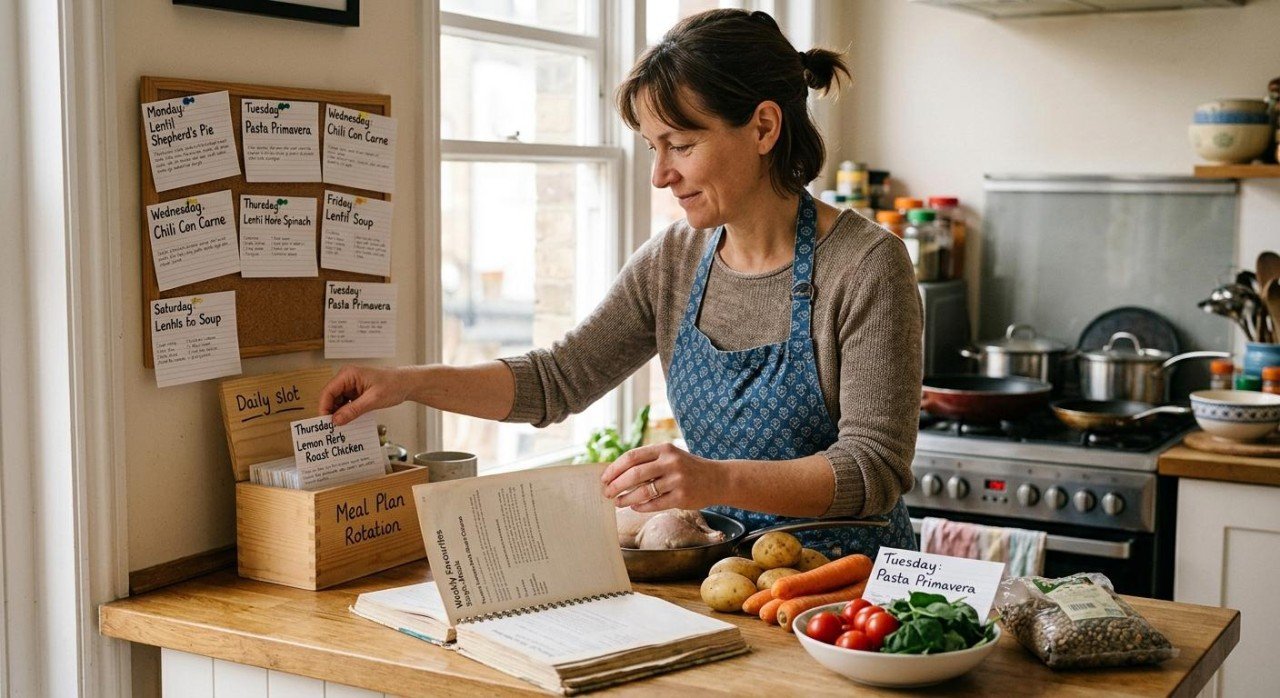
If remembering which ingredient goes in when feels like one more thing to track on a tired evening, this is exactly the sort of routine that gets easier when the plan already exists. Eat Well Planner lets you save one-pan recipes from any website, Instagram reel, or YouTube video into a single organized recipe book, drop them into a weekly meal plan, and have the few ingredients pulled automatically onto a shopping list — so the protein and the two vegetables are actually in the fridge when the oven beeps.
Take the Guesswork Out of Eating Well
Eat Well Planner helps you organize your favorite recipes, plan balanced meals, and automatically generate shopping lists — all in one place. Whether you're tracking macros, managing dietary restrictions, or just trying to stop asking "what's for dinner?", we've got you covered.
Our AI-powered tools can adapt any recipe to your dietary needs, help you discover new meals you'll love, and even log your nutrition effortlessly. It's meal planning made simple.
Start Organizing Your Meals — FreeMix-and-match combinations to get you started
Once the framework clicks, you will improvise endlessly, but it helps to have a few proven combinations in your back pocket. Each of these follows the protein-plus-starch-plus-quick-vegetable pattern, and each is forgiving:
- Chicken thighs + baby potatoes + broccoli. The workhorse. Halve the potatoes and start them with the thighs; add the broccoli for the last 18 to 20 minutes. Bone-in, skin-on thighs are the most forgiving cut you can roast — hard to dry out, and the skin crisps beautifully.
- Salmon + asparagus. Both cook fast, so this is the rare tray that does not need staggering. Salmon needs only about 12 to 15 minutes in a hot oven, and asparagus is right there with it. Add a few lemon slices to the pan and you are done.
- Sausage + bell peppers + chickpeas. Slice sausage into coins, toss with sliced peppers, onions, and a drained, patted-dry can of chickpeas. The chickpeas crisp up into little savory nuggets and the whole thing tastes like a sheet-pan version of sausage and peppers.
- Tofu + sweet potato + green beans. Press and cube firm tofu, toss with a little cornstarch and oil for crunch, start the sweet potato cubes first, then add tofu and green beans together for the back half.
- Shrimp + cherry tomatoes + zucchini. Everything here is quick, so roast the zucchini and tomatoes for about 10 minutes first, then add the shrimp for just 6 to 8 minutes until pink. Overcooked shrimp turns rubbery, so this one rewards watching the clock.
Get the protein right: a thermometer beats guessing
Vegetables are wonderfully forgiving — a slightly overdone Brussels sprout is still delicious. Protein is where you actually need to pay attention, both for safety and for quality. The cheapest, highest-impact tool you can own for sheet-pan cooking is an instant-read thermometer, because it removes all the guesswork about whether the chicken is done.
The safe minimum internal temperatures, drawn from USDA-aligned food-code guidance, are worth committing to memory:
- Poultry (chicken, turkey): 165°F.
- Fish and seafood: 145°F.
- Beef, pork, and lamb steaks and chops: 145°F, ideally with a few minutes of rest before cutting.
- Ground meats: cook to a higher temperature than whole cuts — check the package, but 155 to 160°F is the safe zone.
Stick the thermometer into the thickest part of the protein, away from any bone, and you never have to slice into a chicken thigh hoping for the best. It is the difference between confidence and anxiety on a weeknight.
The cleanup payoff: parchment paper
The whole promise of a sheet-pan dinner is minimal cleanup, and a sheet of parchment paper is what fully delivers on it. Line the pan before you start, and the caramelized, sticky bits that would normally weld themselves to the metal lift away with the paper instead. Most trays go from oven to clean with a quick wipe.
People sometimes worry that parchment cannot handle a hot roasting oven, but that concern is largely unfounded. According to America's Test Kitchen, most parchment is rated for use up to about 420 to 450°F, which comfortably covers the 425°F most sheet-pan dinners call for. And even if you nudge past that rating, their testing found that parchment does not release any noxious chemicals and will not burn — it may simply darken and turn brittle at the edges. A genuine roasting temperature is well within its comfort zone. (A quick note: parchment is not the same as wax paper, which is not made for oven heat. And for very long, very hot bakes, choose a parchment rated to at least 450°F.)
Finishing touches that make it taste like more than the sum of its parts
A roasted tray straight from the oven is already a good dinner. A few seconds of finishing turns it into something that tastes deliberate. None of these add a pan to the sink:
- A hit of acid. A squeeze of lemon or a drizzle of vinegar over hot roasted vegetables wakes everything up and balances the rich, browned flavors.
- Fresh herbs. A handful of torn parsley, cilantro, basil, or dill scattered over the top adds brightness and makes the whole pan look intentional.
- A quick sauce. A spoonful of pesto, a drizzle of tahini thinned with lemon and water, or a dollop of yogurt stirred with garlic gives you something to drag each bite through.
- Crunch and salt. Toasted nuts, seeds, or a shower of grated Parmesan in the last few minutes adds texture and a savory edge.
Why this style of cooking is genuinely good for you
Sheet-pan dinners are not just convenient — the method itself happens to be a smart way to cook vegetables. When you boil vegetables, water-soluble vitamins like vitamin C and the B group leach out into the cooking water, which usually goes down the drain. A study on cooking methods and vitamin retention found that boiling destroyed vitamin C in nearly all the vegetables tested, with retention dropping as low as zero, precisely because of that prolonged contact with hot water. Dry-heat roasting keeps that water in the vegetable instead of pouring it away, so more of those nutrients stay on your plate.
And the bigger picture is that most of us simply do not eat enough vegetables to begin with. Drawing on national survey data, the CDC reported that only about 9 percent of US adults eat the recommended amount of vegetables each day, and just 12 percent get enough fruit. The recommendation lands around 2 to 3 cups of vegetables daily for most adults. Anything that makes vegetables genuinely appealing and effortless to cook — crisp, browned, and built into the same pan as your protein — is quietly nudging you toward a target almost none of us hit. The sheet pan does that without asking you to think about nutrition at all; it just makes the vegetables taste good enough that you want them.
Make it a habit, not a one-off
The real magic of sheet-pan dinners shows up when they stop being a special effort and become your default. Three or four nights a week, dinner is just a question of which protein and which two vegetables — the technique is identical every time. That repeatability is what makes it sustainable, and a little planning is what makes the repetition effortless instead of another decision to agonize over.
This is where having your meals mapped out ahead of time changes everything. With Eat Well Planner, you can collect your favorite one-pan combinations, let the AI build them into a balanced week based on your preferences, and get an organized shopping list that pulls the handful of ingredients together automatically. If you want to adapt a recipe — swap the protein, make it dairy-free, scale it for a crowd — the AI recipe chat will walk you through it. When the plan already exists and the ingredients are already in the fridge, that hot oven and single tray become the path of least resistance, and the takeout menu loses its grip on your weeknights.
Try organizing your meals with Eat Well Planner and make the one-pan dinner your reliable, low-cleanup default.