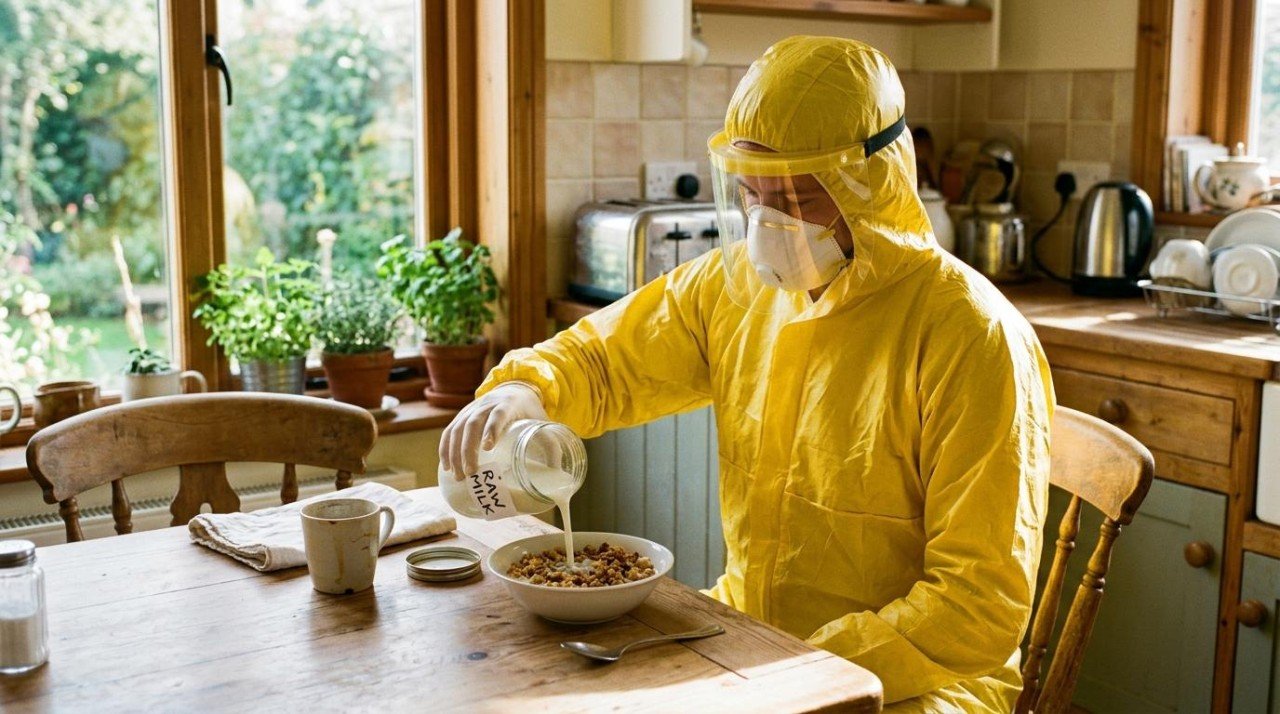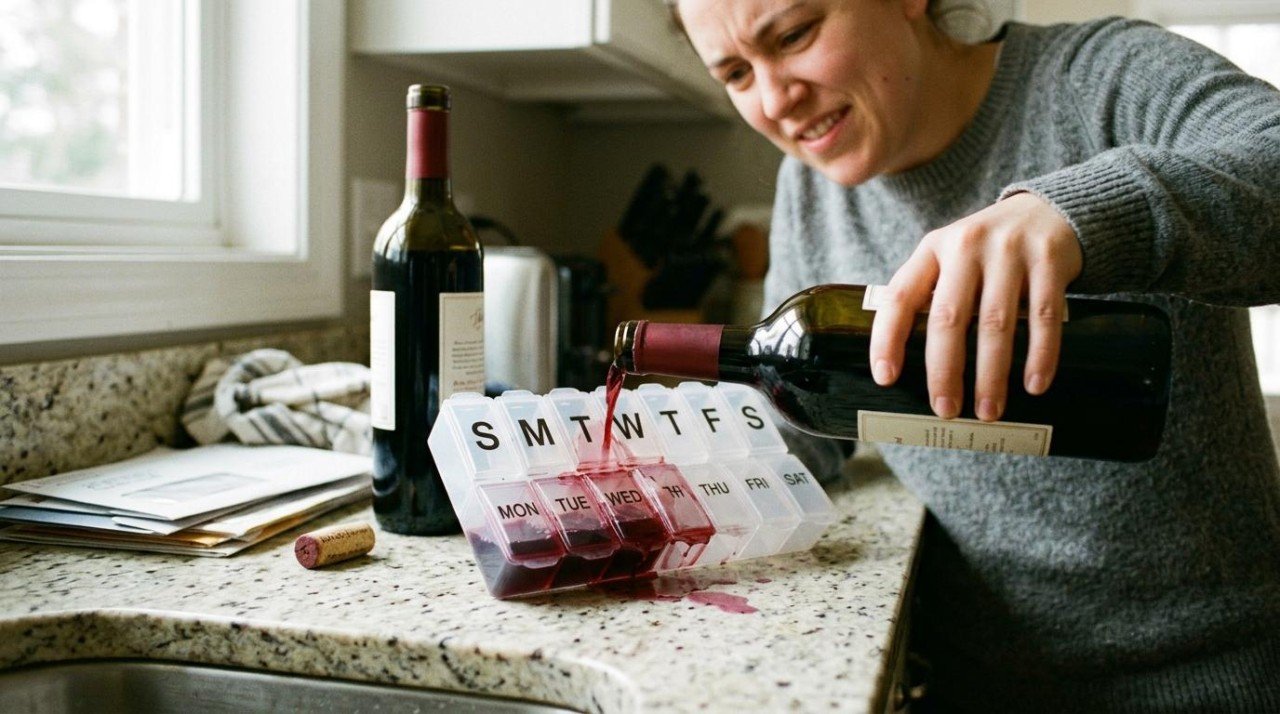
For a long time, the nightly glass of red wine got to feel like a health habit. Not a treat, not a way to unwind after a hard day, but something you were doing for your heart, like taking a supplement that happened to taste good. Your doctor may have even nodded along. The message was everywhere: a little red wine is good for you.
It is a lovely idea. It is also, according to the last decade of research, mostly wrong. The science that seemed to support the nightly glass has been picked apart, and what is left does not hold up. This is not a temperance lecture, and nobody is coming for your wine. But if the only reason you have been pouring that glass is that you believed it was doing your heart a favor, you deserve an honest update.
Where the Idea Came From
Two things gave the wine-is-healthy story its staying power: the French paradox and the J-shaped curve.
The French paradox was a phrase coined in the 1980s to describe a puzzle. French people ate plenty of saturated fat — butter, cheese, rich sauces — yet had relatively low rates of heart disease. Some researchers pointed to the one thing the French famously consumed more of than most: red wine. The story practically wrote itself, and the wine industry was happy to help it along.
But when nutrition scientists looked closer, the wine explanation fell apart. In an analysis for the American Society for Nutrition, researcher Stefano Vendrame pointed out that the French regions with the best heart health were also the ones eating dramatically more produce. Residents of Toulouse, for example, ate around 306 grams of vegetables a day compared to roughly 210 grams in other French cities, plus far more fruit and fiber. As Vendrame put it, the balance of the diet as a whole matters more than any single component. The wine was riding along with a lifestyle full of vegetables, fresh food, walking, and long unhurried meals — and getting credit that belonged to the whole picture.
The J-shaped curve was the second pillar. When researchers plotted alcohol intake against death rates, the graph often bent into a J: heavy drinkers had high mortality (no surprise), but light-to-moderate drinkers appeared to do better than people who did not drink at all. That dip in the middle of the J looked like proof that a little alcohol was protective. For years, it was treated as settled fact.
The Statistical Mirage Hiding in the Data
The problem with the J-shaped curve is who was sitting in the non-drinker group.
When you compare drinkers to non-drinkers, you assume the non-drinkers are a clean baseline. But the abstainer group is often full of people who used to drink and quit — frequently because they got sick, developed a health problem, or were told to stop by a doctor. Researchers call this abstainer bias, or the sick quitter effect. Lump former drinkers in with lifelong abstainers and your non-drinking group looks unusually unhealthy, which makes moderate drinkers look healthy by comparison. The apparent benefit of drinking is partly just an artifact of a contaminated control group.
In 2023, a landmark analysis in JAMA Network Open put this to the test. Researchers pooled 107 cohort studies covering more than 4.8 million people and over 425,000 deaths, then systematically adjusted for the study flaws — including sick quitter bias — that could create a false protective signal. When they did, the benefit evaporated. Low-volume drinkers showed no statistically significant reduction in death from any cause (a relative risk of 0.93 that did not reach significance). The J-shaped curve, it turned out, was largely a measurement error dressed up as a health finding. The same analysis found mortality risk climbing at higher intakes, and it climbed sooner for women, becoming significant at around 25 grams of alcohol a day (under two standard drinks) versus about 45 grams for men.
What Genetics Settled
You might reasonably ask: if observational studies are so easily fooled by confounding, how would we ever know the truth? This is where a clever method called Mendelian randomization comes in.
Some people carry gene variants that affect how they process alcohol — variants that make drinking unpleasant and therefore nudge people toward drinking less, entirely by luck of birth. Because these genes are handed out randomly at conception and have nothing to do with your income, diet, or exercise habits, comparing people by their alcohol-related genes strips away most of the confounding that plagues ordinary studies. It is about as close to a natural experiment as we can get without running a trial.
The verdict has been consistent. A 2024 systematic review of Mendelian randomization studies found no evidence that light or moderate drinking protects the heart. Instead, genetically predicted alcohol consumption was linked to higher risk of stroke, coronary artery disease, high blood pressure, atrial fibrillation, and heart attack. Where old observational data hinted at a protective U-shape, the genetic analyses erased it. The heart-protection story does not survive contact with the cleaner method.
The Resveratrol Letdown
But what about resveratrol — the antioxidant compound in red grape skins that launched a thousand headlines? For a while it was the molecular hero of the wine story, the thing that supposedly explained everything.
Here is the catch, and it is a big one. The doses of resveratrol that show effects in the lab are enormous compared to what is actually in a glass of wine. According to Cancer Research UK, a 5-milligram dose of resveratrol is roughly what you would get from a large glass of certain red wines — while studies exploring resveratrol's effects have tested doses as high as 1 gram, two hundred times more. To reach the amounts used in research, you would need to drink dozens to hundreds of glasses of wine in one sitting, at which point the alcohol would do far more harm than any antioxidant could undo. And that research was done on purified resveratrol, not wine. Even then, when scientists gave healthy volunteers very high-dose supplements, they struggled to get blood levels up to where the lab effects appeared. The resveratrol in your glass is a rounding error.
What Alcohol Actually Does to Your Body
Strip away the imaginary benefits and you are left with alcohol's real, well-documented effects. None of them are doing your heart any favors.
Blood pressure
Alcohol raises blood pressure, and it does so without a safe floor. A 2023 dose-response meta-analysis in the American Heart Association journal Hypertension found a straight-line relationship between alcohol intake and rising systolic blood pressure, with — in the authors' words — no threshold below which the association disappeared. Even about one drink a day (12 grams of alcohol) was associated with measurably higher systolic pressure. High blood pressure is one of the biggest drivers of heart attack and stroke, so this is not a minor side note.
Atrial fibrillation
Alcohol is also a well-known trigger for atrial fibrillation, an irregular heart rhythm that raises stroke risk. Doctors have long recognized "holiday heart" — bouts of afib that show up after heavy drinking around the holidays — but the concern extends to regular moderate drinking too. In one study highlighted by Harvard Health, people with afib who kept drinking had a 73% recurrence rate over six months, compared to 53% among those who cut alcohol out. The more you drink, the more likely afib becomes.
Sleep
A nightcap feels like it helps you sleep, and in the narrow sense that it makes you drowsy, it does. But it wrecks the quality of the sleep that follows. As the Sleep Foundation explains, alcohol suppresses REM sleep — the stage tied to memory and emotional processing — and fragments the second half of the night with lighter sleep and frequent awakenings, even at moderate doses. That is why a couple of glasses can leave you groggy and unfocused the next day despite a full night in bed. Poor sleep, in turn, feeds back into blood pressure, appetite, and mood.
Cancer
This is the part that gets left out of the "wine is healthy" conversation entirely. In January 2023, the World Health Organization stated plainly that there is no safe amount of alcohol when it comes to health, and that the risk starts from the first drop. Alcohol has been classified for decades as a Group 1 carcinogen — the highest-risk category, the same one that contains tobacco, asbestos, and radiation — and it is linked to at least seven types of cancer. Strikingly, the WHO noted that half of all alcohol-attributable cancers in the European Region come from light and moderate drinking, not just heavy use. The organization also pointed out that no study has shown the supposed heart benefits of light drinking to outweigh this cancer risk.
So What Actually Protects Your Heart?
Here is the genuinely encouraging part. The heart-healthy reputation of the Mediterranean way of eating is real — it just was never about the wine. It is about everything on the plate around it.
The parts of that pattern with solid evidence behind them are the ones you would expect: vegetables, fruit, legumes and beans, whole grains, olive oil, nuts, and fish. These deliver fiber, unsaturated fats, potassium, polyphenols, and the kind of plant diversity that supports a healthy gut and, through it, a healthy heart. That is where the protection lives. When people in those long-lived Mediterranean regions thrived, it was the daily reality of fresh produce, home cooking, and unprocessed food doing the work — with the glass of wine along for the ride, not steering.
The good news is that this is all plannable. You cannot bottle a lifestyle, but you can absolutely build a week of meals around vegetables, olive oil, beans, and fish instead of hoping a nightly glass of something will bail you out. And that is exactly the kind of thing a little structure makes easier.
This is where Eat Well Planner can quietly do the heavy lifting. You can build weekly meal plans around the foods that actually protect your heart — Mediterranean-style meals full of vegetables, legumes, and fish — and let the app turn them into an organized shopping list so the fresh ingredients are the ones already in your kitchen. Every recipe gets a nutrition score and plain-language "good source of" highlights, so you can see at a glance whether a meal is genuinely delivering fiber, healthy fats, and micronutrients rather than guessing. And if a favorite dish is coming up short, the Make It Healthier feature suggests specific, calculator-verified swaps to boost it. If you are drawn to the gut-and-heart connection, the Plant Points tracker turns the goal of eating 30 different plants a week into a simple, motivating number — real, food-based habits that do the work the wine never did.
Take the Guesswork Out of Eating Well
Eat Well Planner helps you organize your favorite recipes, plan balanced meals, and automatically generate shopping lists — all in one place. Whether you're tracking macros, managing dietary restrictions, or just trying to stop asking "what's for dinner?", we've got you covered.
Our AI-powered tools can adapt any recipe to your dietary needs, help you discover new meals you'll love, and even log your nutrition effortlessly. It's meal planning made simple.
Start Organizing Your Meals — FreeDoes This Mean You Can Never Drink Again?
No. This is the part where an honest article has to resist becoming a lecture.
Alcohol is woven into how a lot of us celebrate, relax, and connect. A glass of good wine with a meal you love, shared with people you love, is one of the ordinary pleasures of being alive, and the point here is not to strip that away with a spreadsheet of relative risks. Plenty of people will read all of this and decide the enjoyment is worth the small added risk — and that is a completely reasonable, informed choice to make.
The only thing worth retiring is the story. Drink the glass of red because you genuinely enjoy it, because it makes the meal better, because it is part of a moment you want to be in. Just do not drink it as medicine, and do not add an extra glass on the theory that your arteries will thank you. They will not. If anything, the smartest move is to keep the ritual you love while dropping the mental accounting that told you it was healthy — and to put your real health effort where it actually pays off, on the plate.
The Bottom Line
For decades, moderate drinking got a health halo it did not earn. The French paradox turned out to be about diet, not wine. The J-shaped curve was distorted by sick former drinkers hiding in the non-drinker group. Genetic studies found no heart protection at any dose. Resveratrol was never present in meaningful amounts. And alcohol's genuine effects — on blood pressure, heart rhythm, sleep, and cancer risk — run in the wrong direction, with no safe threshold.
The comforting news is that the heart-protective habits are the boring, wholesome ones, and they are entirely within your control: more vegetables, more legumes, more fish and olive oil, more variety, more real food. That is the part of the Mediterranean table worth copying. The wine was always optional.