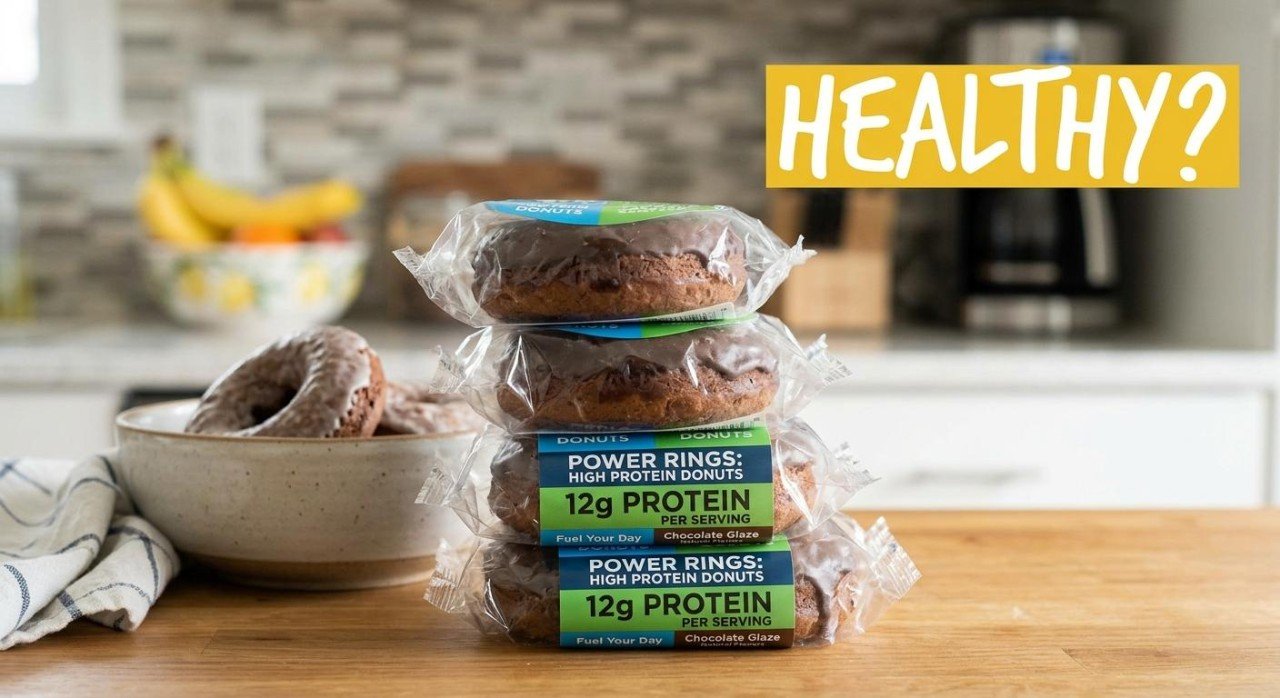
Walk down almost any aisle of the grocery store right now and you will see the same word again and again: protein. Protein cereal. Protein water. Protein pancakes. Protein candy bars, protein cookies, protein ice cream, protein coffee. Even foods that were already basically protein — like milk and yogurt — now come in "extra protein" versions with a bigger number on the front.
There is a reason for the sudden flood. Protein has become the halo nutrient of the decade, the one word manufacturers can stamp on almost anything to make it feel like the healthy choice. But a "protein" label on the front of a package doesn't undo the sugar, refined flour, and additives on the back of it. And once you start reading past the front label, a lot of these products turn out to be ordinary snack food wearing a health costume — often with less protein than a couple of eggs, at several times the price.
This isn't an argument that protein is bad or that you should ignore it. Protein genuinely matters. It's an argument for seeing the marketing clearly, so you can spend your money and your grocery cart on food that actually delivers.
How protein became the word that sells everything
The scale of the trend is hard to overstate. According to market-research firm Mintel, the number of food and beverage products launched with high-protein claims quadrupled between 2013 and 2024. On the demand side, Bain & Co. found that 44% of US consumers — and 51% of Gen Z and millennials — are actively trying to eat more protein. When that many people are hunting for a nutrient, every brand has an incentive to promise it.
What makes protein such an effective marketing word is something researchers call the "health halo" — the tendency for one positive attribute to color our judgment of a whole product. Unlike fat or carbohydrates, which have spent years getting mixed or negative press, protein has stayed almost entirely positive in the public mind: it's linked to strength, muscle, satiety, and "good" eating. So when we see it on a label, our brain quietly upgrades everything else about the food too.
That effect is measurable. In a 2017 study published in Health Communication, researchers gave 274 participants information about a snack bar. When the word "protein" appeared in the product's title (rather than as a plain nutrient claim), people didn't just think the bar had more protein — they rated it as healthier overall, and even assumed it contained more fiber and iron, nutrients that were never mentioned at all. Strikingly, adding a traffic-light warning label that raised people's estimate of the bar's sugar and calories still didn't erase the boost the word "protein" gave to their sense of how healthy it was.
How much protein do you actually need?
Here is the part the marketing skips: most Americans are already getting plenty of protein.
The Recommended Dietary Allowance (RDA) for protein is 0.8 grams per kilogram of body weight, which works out to about 0.36 grams per pound — roughly 55 grams a day for a 150-pound adult. Actual intake runs well above that. Data from the federal NHANES survey shows American men eat around 90 to 100 grams of protein a day and women 65 to 75 grams — men at roughly twice the RDA, women about 50% over it. As Harvard nutrition researcher Frank Hu put it in a 2026 FactCheck.org review, "There is no evidence of widespread protein deficiency in the U.S. population."
That said, the honest picture has some nuance, and it's worth being fair to it. A growing body of research suggests that certain groups do better at intakes above the old RDA — closer to 1.2 to 1.6 grams per kilogram. That includes older adults trying to preserve muscle as they age, people doing serious resistance training, and those intentionally losing weight, for whom extra protein helps protect lean mass and blunt hunger. If you're in one of those groups, aiming a bit higher is reasonable.
But notice what that does not require: it doesn't require protein cereal or protein soda. Even the higher target for a 150-pound person lands around 80 to 110 grams a day, an amount that's very reachable with ordinary food. And as Stanford's Christopher Gardner points out in the same reporting, the thing that actually preserves muscle as we age is largely strength training — protein supports it, but a candy bar with whey powder in it isn't the missing ingredient in most people's health.
What the "protein" label is quietly hiding
The problem with a front-of-pack protein claim is not that it lies about the protein. It's that it draws your eye away from everything else in the product.
A 2024 study published in the journal Appetite put this to the test with two nearly identical cereals: Special K Protein and Special K Original. Participants overwhelmingly saw the "protein" version as healthier. When asked whether it would help them build muscle, 54% said yes for the protein cereal versus just 4.7% for the original; 43% thought it would make them feel stronger, versus 5.6% for the original.
But when the researchers put both cereals on an equal footing — one cup each — the protein version came out worse on the things people say they want to avoid. Per cup, Special K Protein had 160 calories, 9.3 grams of sugar, and 253 mg of sodium, compared with 120 calories, 4 grams of sugar, and 224 mg of sodium in the original. It did have more protein (about 13 grams versus 5.6), but it also had more than twice the sugar. And here's the kicker: only 21% of participants correctly noticed that the two boxes listed different serving sizes, so most people never realized they were comparing a small scoop to a bigger one. The health halo did exactly what it's designed to do.
This is the pattern across the category. A "protein" claim tells you nothing about added sugar, refined flour, sodium, or the length of the ingredient list. Plenty of protein bars carry as much sugar as candy — a fun-size Snickers has about 10.5 grams — while dressing it up with the language of fitness. The word on the front is real; it just isn't the whole story.
Take the Guesswork Out of Eating Well
Eat Well Planner helps you organize your favorite recipes, plan balanced meals, and automatically generate shopping lists — all in one place. Whether you're tracking macros, managing dietary restrictions, or just trying to stop asking "what's for dinner?", we've got you covered.
Our AI-powered tools can adapt any recipe to your dietary needs, help you discover new meals you'll love, and even log your nutrition effortlessly. It's meal planning made simple.
Start Organizing Your Meals — FreeWhole food vs. the packaged version: who actually wins
The card that got me thinking about this post framed it as a series of head-to-head matchups, and they're worth spelling out, because whole food tends to win on nearly every axis except shelf life.
Protein bar vs. Greek yogurt and nuts. A typical grab-and-go protein bar gives you maybe 10 to 20 grams of protein, often alongside 8 to 15 grams of sugar, a paragraph of stabilizers and sugar alcohols, and a price of $2 to $4 per bar. A cup of plain Greek yogurt delivers around 15 to 20 grams of protein on its own, with no added sugar, plus calcium and gut-friendly live cultures. Add a small handful of nuts for crunch, healthy fats, fiber, and magnesium, and you have a snack that beats the bar on protein-per-dollar, on sugar, and on how full it keeps you — without an ingredient list that reads like a chemistry set.
Protein cereal vs. eggs and toast. As the Special K study showed, "protein" cereal is still cereal — a bowl of refined grain with sugar and, if you're lucky, a modest protein bump. Two eggs give you about 12 to 13 grams of high-quality, complete protein for a few cents each, plus choline, vitamin D, and B12. Put them on a slice of whole-grain toast and you've got fiber and staying power that a bowl of cereal — protein-branded or not — struggles to match. In fact, "less protein than a couple of eggs" describes a surprising number of protein-labeled snacks, from protein waters to single-serving protein cereals, once you actually read the panel.
The through-line is satiety and nutrient density. Whole foods bring protein plus fiber, water, healthy fat, vitamins, and minerals — the combination that actually keeps you full and nourished. A processed protein product usually isolates the one nutrient that sells and pads the rest with cheap calories. It wins on convenience and on sitting in your pantry for a year. On almost everything else, real food comes out ahead, and usually for less money.
How to read past the front of the box
You don't need to memorize nutrition science to shop smarter. A few habits do most of the work:
- Treat the front of the package as an ad, not information. "High protein," "20g protein," and "protein-packed" are marketing. The real story is always on the back.
- Flip straight to the ingredient list. If sugar (in any of its dozen names — cane syrup, brown rice syrup, dextrose) shows up near the top, or the list runs 30 items long, the protein claim is doing PR work.
- Check added sugar specifically. The Nutrition Facts panel now breaks out added sugars. A "protein" snack with 15 grams of added sugar is, functionally, a candy bar with a better agent.
- Do quick math on protein-per-dollar. A $3 bar with 12 grams of protein is a worse deal than a carton of eggs, a tub of yogurt, a can of beans, or a bag of lentils — foods that also bring fiber and micronutrients along for the ride.
- Ask what it's replacing. A protein bar instead of a candy bar is a step up. A protein bar instead of a real meal usually isn't.
None of this means packaged protein is never useful. A shake after a hard workout, a decent bar stuffed in a bag for a day with no lunch break, or a protein boost for an older adult who genuinely struggles to eat enough — these are real, reasonable uses. The point isn't to feel bad about ever buying them. It's to stop letting a single word on the front of a box decide what "healthy" means for you.
Let the numbers, not the label, tell you what's healthy
The whole premise of protein-washing is that you'll trust the claim instead of checking it. The fix is simply to check — to see the actual protein, sugar, and nutrient profile of a food before it goes in your cart, and to know that you can almost always hit your protein target with real food for less money.
That's exactly the kind of decision Eat Well Planner is built to make easy. Every recipe and food gets an at-a-glance nutrition score, so you can tell how healthy a dish really is without decoding a label — the score sees straight through a front-of-pack claim to what's actually inside. Plain-language nutrient highlights ("good source of protein," "good source of fiber") show a food's real strengths using FDA thresholds, so "high protein" has to earn the badge. And because the app tracks your intake as you log meals, you can watch yourself comfortably hit your protein goals with eggs, yogurt, beans, and fish — and see, in plain numbers, that you never needed the protein candy bar in the first place. If you're aiming a little higher because you're older or lifting weights, the Make It Healthier feature can suggest verified ways to add protein to meals you already like, no marketing required.
Protein is worth caring about. That's precisely why it's worth protecting from the marketing that's cashing in on it. Read past the front label, lean on real food, and let the actual nutrition — not a buzzword — guide the cart.
Try organizing your meals with Eat Well Planner and see how easy it is to hit your protein goals with food that earns the label.