Somewhere along the way, nutrition got turned into a team sport. You're either low-carb or low-fat. Pro-protein or plant-based. Fats are the enemy, or carbs are the enemy, or sugar is the enemy, depending on which decade you landed in.
The result? A lot of people who genuinely want to eat better end up cutting out entire food groups based on whichever macro is getting the worst press that week. And the science is pretty clear that this approach doesn't just miss the point — it actively makes things worse.
This post is for anyone who finds nutrition confusing and just wants a straight answer. What are macronutrients and micronutrients? What does each one actually do? And why is cutting any of them a genuinely terrible idea?
Macronutrients: The Big Three Your Body Runs On
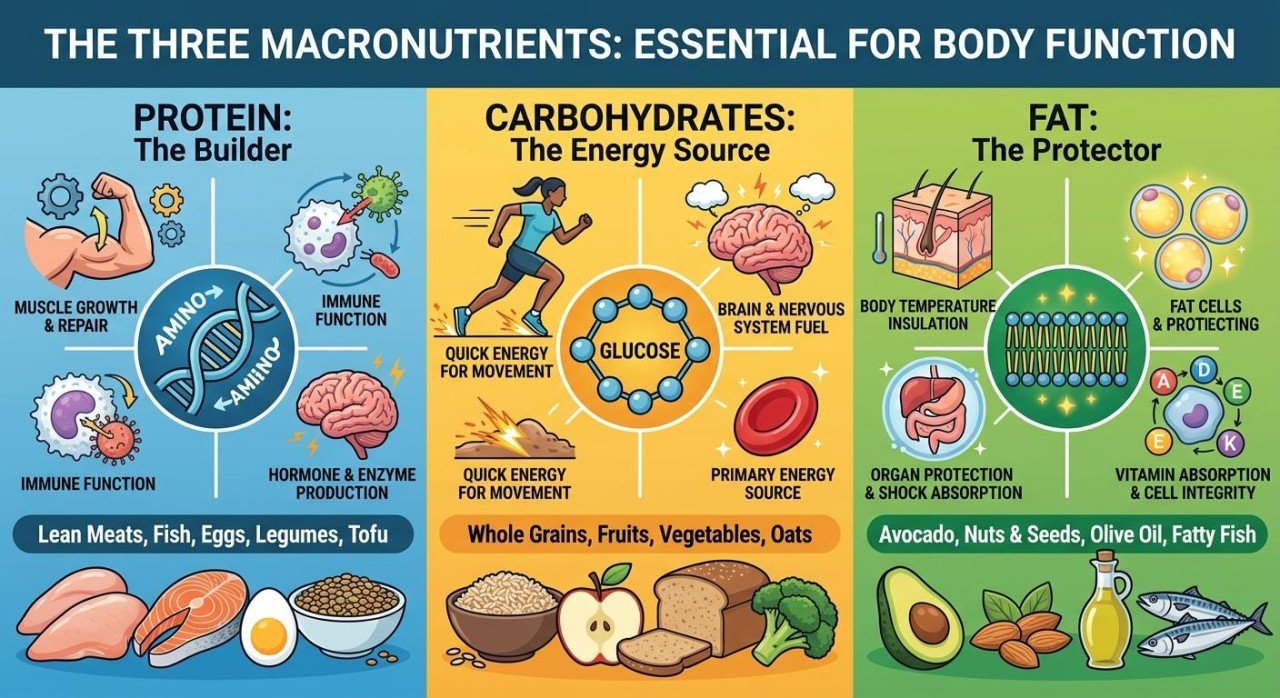
Macronutrients are the nutrients your body needs in large quantities — measured in grams rather than milligrams. There are three of them: protein, carbohydrates, and fat. Each one provides energy (calories), but they do far more than just fuel you. They play distinct structural and functional roles that the other two can't replace.
The Acceptable Macronutrient Distribution Ranges, set by the National Academies of Sciences, recommend that adults get 45-65% of their calories from carbohydrates, 20-35% from fat, and 10-35% from protein. Those are wide ranges on purpose — there's no single magic ratio. But notice that none of them go anywhere near zero. That's the first clue that your body needs all three.
Protein: The Builder
Protein gets the most attention these days, and for good reason. It's the raw material your body uses to build and repair muscle, skin, hair, nails, bones, tendons, and organs. It makes enzymes, hormones, and antibodies. It's the structural scaffolding of pretty much everything you're made of.
When you don't get enough protein, your body starts breaking down its own muscle tissue to harvest the amino acids it needs for more critical functions — like keeping your immune system running and your organs intact. Cleveland Clinic identifies the consequences: muscle wasting, weakened immunity, brittle hair, poor wound healing, and even bone fractures from reduced collagen production.
The general recommendation is around 0.8 grams of protein per kilogram of body weight per day — roughly 55 grams for a 70kg adult — though active people, older adults, and those recovering from illness typically need more. Most people in developed countries actually meet or exceed this target without trying. But for anyone on a very restrictive diet or eating mostly ultra-processed food, falling short is a real possibility.
Carbohydrates: The Fuel
Carbs have had a rough couple of decades. Between Atkins, keto, and a parade of influencers treating bread like a biohazard, you'd be forgiven for thinking carbohydrates are optional. They're not.
Carbohydrates are your body's primary and preferred energy source — especially for your brain. Research published in Trends in Neurosciences shows that while the brain makes up just 2% of your body weight, it consumes around 20% of all the glucose your body uses. Glucose — a product of carbohydrate metabolism — is the brain's default fuel. When glucose runs low, cognitive functions like memory, attention, and decision-making suffer, along with mood and energy levels.
But carbohydrates do far more than keep the lights on upstairs. They include dietary fiber — the stuff that feeds your gut bacteria, regulates blood sugar, lowers cholesterol, and is consistently linked to reduced risk of heart disease, type 2 diabetes, and colorectal cancer. When people "cut carbs," fiber is almost always the first casualty, because the richest fiber sources — beans, whole grains, fruits, and starchy vegetables — are also carbohydrate-rich.
Fat: The Essential Multitasker
Dietary fat spent the 1980s and 1990s as public enemy number one. The low-fat craze led to supermarket shelves full of "fat-free" products loaded with sugar to compensate for the missing flavor. Decades later, the science is unambiguous: fat is not the villain it was made out to be.
Fat is essential for absorbing the fat-soluble vitamins A, D, E, and K. Without adequate dietary fat, you can eat all the vitamin-rich food you want and still end up deficient because your body can't absorb what it needs. Fat is also the building block for key hormones — including oestrogen and testosterone — and forms the structural foundation of every cell membrane in your body.
Your brain, by the way, is roughly 60% fat by dry weight. The omega-3 fatty acid DHA makes up a significant proportion of the gray matter, and research published in Child and Adolescent Psychiatric Clinics of North America links omega-3 deficiency to increased risk of depression, cognitive difficulties, and impaired neurodevelopment in children.
What Happens When You Cut a Macro
The appeal of cutting a macronutrient is obvious. It's a simple rule. "Don't eat fat" or "don't eat carbs" is easier to follow than "eat a balanced variety of whole foods in sensible proportions." But simple rules can create complicated problems.
Cutting Carbs Too Low
A landmark study of over 15,000 adults, published in The Lancet Public Health, followed participants for a median of 25 years and found a clear U-shaped relationship between carbohydrate intake and mortality. The sweet spot was 50-55% of calories from carbohydrates. People who got less than 30% of their energy from carbs had a 37% higher risk of death over the study period, while those over 70% had a 16% higher risk.
A meta-analysis within the same study, covering over 432,000 people across multiple cohorts, confirmed the pattern: both very low and very high carbohydrate intake were associated with significantly increased mortality. Crucially, it mattered what replaced the carbs. Swapping carbohydrates for animal-based fats and proteins increased mortality risk by 18%, while swapping for plant-based alternatives reduced it by 18%.
Cutting Fat Too Low
Very-low-fat diets — typically defined as 10% or less of total calories from fat — come with their own set of problems. That same StatPearls review found that low-fat, high-carbohydrate diets consistently reduce HDL cholesterol (the protective kind) by 3-9%, particularly when refined carbohydrates replace the fat. Korean population data cited in the review showed a higher prevalence of metabolic syndrome among people consuming 15% or fewer calories from fat, despite eating fewer total calories.
Then there's the hormone issue. Sex hormones rely on dietary fat for their production. Diets that are too low in fat have been linked to disruptions in menstrual cycles, reduced fertility, low libido, and mood disturbances. And because vitamins A, D, E, and K all require fat for absorption, a very-low-fat diet can create deficiencies even when the vitamins themselves are present in the food.
Cutting Protein Too Low
True protein deficiency is relatively rare in developed countries, but inadequate intake — especially in older adults, people on highly restrictive diets, or those eating mostly ultra-processed food — is more common than you'd think. The consequences are serious: accelerated muscle loss, weakened bones, compromised immunity, slow healing, and fatigue.
A study published in the American Journal of Clinical Nutrition found that older women consuming just 56% of the recommended daily protein allowance for 10 weeks experienced a 14% decrease in skeletal muscle mass, an 8% drop in body cell mass, and measurable declines in muscle strength. That's not theoretical long-term risk — that's real, measurable damage in under three months.
The Bigger Picture: It's Quality, Not Ratios
A major study in JAMA Internal Medicine analyzed over 37,000 US adults and found that neither overall low-carbohydrate nor overall low-fat diets were associated with increased mortality on their own. What mattered was the quality of the food. Unhealthy versions of both diets — those heavy in refined carbs, processed meats, and saturated fats — were linked to higher death rates. Healthy versions — built on whole grains, vegetables, unsaturated fats, and plant proteins — were linked to lower mortality regardless of whether they leaned low-carb or low-fat.
The takeaway is hard to argue with: the specific ratio matters far less than whether you're eating real food.
Take the Guesswork Out of Eating Well
Eat Well Planner helps you organize your favorite recipes, plan balanced meals, and automatically generate shopping lists — all in one place. Whether you're tracking macros, managing dietary restrictions, or just trying to stop asking "what's for dinner?", we've got you covered.
Our AI-powered tools can adapt any recipe to your dietary needs, help you discover new meals you'll love, and even log your nutrition effortlessly. It's meal planning made simple.
Start Organizing Your Meals — FreeMicronutrients: Small Amounts, Massive Impact
If macronutrients are the fuel and building materials, micronutrients are the tools and catalysts that make everything work. Vitamins and minerals are needed in much smaller quantities — milligrams or even micrograms — but without them, the machinery grinds to a halt.
And the global picture is not great. A 2024 study published in The Lancet Global Health, which assessed 15 essential vitamins and minerals across 185 countries, found that more than half the world's population has inadequate intake of key micronutrients. The numbers are striking: 68% of the global population gets too little iodine, 67% too little vitamin E, 66% too little calcium, and 65% too little iron. More than half of people fall short on riboflavin, folate, vitamin C, and vitamin B6.
These aren't just numbers on a chart. Each of these deficiencies has real, tangible consequences.
The Micronutrients People Miss Most
Iron carries oxygen in your blood. Without enough of it, you get anaemia — fatigue, weakness, poor concentration, and shortness of breath. It's especially common in women of reproductive age and people who eat very little red meat or leafy greens.
Vitamin D supports bone health, immune function, and mood regulation. Your body makes it from sunlight, but if you live in a northern climate, work indoors, or have darker skin, there's a good chance you're not making enough. Food sources include oily fish, egg yolks, and fortified foods.
Calcium does more than build bones — it's essential for muscle contraction, nerve signaling, and blood clotting. Dairy is the most concentrated source, but leafy greens, tofu, sardines, and fortified plant milks can fill the gap.
Magnesium is involved in over 300 enzymatic reactions in your body, including energy production, muscle function, and sleep regulation. It's found in nuts, seeds, whole grains, and dark leafy vegetables — foods that tend to disappear when people cut carbs or go on overly restrictive diets.
Folate is critical for DNA synthesis and cell division. It's famously important during pregnancy for preventing neural tube defects, but everyone needs it. Good sources include lentils, chickpeas, spinach, and asparagus.
Iodine is essential for thyroid function, which governs your metabolism, energy levels, and body temperature regulation. It's found in seafood, dairy, and iodised salt.
Why Cutting Macros Hurts Your Micros
Here's where macronutrients and micronutrients connect in a way that most diet advice ignores entirely. When you eliminate a macronutrient category, you don't just lose that macro — you lose every micronutrient that comes packaged with it.
Cut carbs, and you lose the magnesium in whole grains, the folate in legumes, the potassium in bananas and sweet potatoes, and the vitamin C in fruits. Cut fat, and you impair your absorption of vitamins A, D, E, and K — even if you're still eating foods that contain them. Cut protein-rich foods like meat, fish, and dairy, and you risk falling short on B12, zinc, iron, and calcium.
This is why the "just cut [X]" approach to nutrition is so misguided. You're not removing one thing. You're removing an entire ecosystem of nutrients that happened to come in the same package.
Empty Calories vs. Nutrient-Dense Food
There's a useful distinction that gets to the heart of what actually matters in nutrition, and it has nothing to do with which macro you're avoiding. It's the difference between empty calories and nutrient-dense food.
Empty calories come from foods that provide energy but very little else — no meaningful vitamins, minerals, fiber, or beneficial compounds. Think sugary drinks, sweets, chips, and heavily processed snack foods. They fill up your calorie budget without giving your body much to work with.
Nutrient-dense foods pack a lot of nutritional value into relatively few calories. Vegetables, fruits, whole grains, legumes, nuts, seeds, eggs, fish, and lean meats all qualify. These foods deliver the macros and the micros your body needs.
The real problem with most modern diets isn't that people eat too much fat or too many carbs. It's that a huge proportion of what people eat is ultra-processed food that has been stripped of its original nutrients and loaded with sugar, refined starch, and industrial additives. Swapping those foods for nutrient-dense whole foods — regardless of their macronutrient profile — is the single most impactful change most people can make.
A bowl of porridge with berries and nuts has carbs, fat, and protein. It also has fiber, magnesium, manganese, B vitamins, antioxidants, and omega-3s. A packet of low-fat biscuits marketed as "healthy" might hit a better fat number on a tracker — but it delivers almost none of those things.
A Simple Framework for Building Balanced Meals
If nutrition science feels overwhelming, here's a framework that covers most of the bases without requiring a spreadsheet or a nutrition degree. Every meal, aim to include four components:
A protein source. Chicken, fish, eggs, tofu, lentils, beans, Greek yogurt — whatever you enjoy. This handles muscle repair, immune function, and satiety.
A complex carbohydrate. Brown rice, sweet potatoes, whole wheat bread, oats, quinoa, or starchy vegetables. These provide sustained energy and are usually rich in fiber and B vitamins.
A healthy fat. Olive oil for cooking, avocado on the side, a handful of nuts, or the natural fat in oily fish. This supports vitamin absorption, hormone production, and brain function.
Colourful vegetables. This is where the micronutrient magic happens. Different colors mean different phytonutrients — red tomatoes bring lycopene, dark greens bring folate and iron, orange carrots bring beta-carotene, purple cabbage brings anthocyanins. The more colors on your plate, the wider the range of vitamins, minerals, and beneficial plant compounds you're getting.
That's it. Protein + complex carb + healthy fat + colorful veg. You don't need to count grams, weigh portions, or track percentages. If most of your meals roughly follow this pattern, you're covering the vast majority of what your body needs — all three macros and a broad spectrum of micros — without overthinking it.
How to Put This into Practice
Understanding what your body needs is the first step. Actually eating that way consistently is the harder part — not because the food is complicated, but because life gets in the way. Decision fatigue, busy schedules, and the sheer convenience of processed food make it easy to default to meals that tick one box (quick, cheap, tasty) while missing the others (balanced, nutrient-dense, nourishing).
This is where having a system helps more than having knowledge. A few practical strategies:
- Build a roster of balanced meals you actually enjoy. You don't need fifty recipes. Seven to ten go-to meals that hit the protein + carb + fat + veg formula will cover most of your week. Save them somewhere you can easily access and rotate through them.
- Shop with a plan. When you know what you're eating for the week, you buy what you need and skip the impulse buys. A shopping list based on planned meals is one of the simplest ways to eat better — it makes fresh, whole food the default instead of the afterthought.
- Pay attention to what's on your plate, not what's trending online. If your meals regularly include all four components — protein, complex carbs, healthy fats, and colorful veg — you're doing better than most, regardless of what the latest podcast says about keto or carnivore.
- Use nutrition information to learn, not to obsess. Seeing the macro and micro breakdown of what you eat can be genuinely educational — it helps you spot patterns, identify gaps, and make informed adjustments. The goal is awareness, not anxiety.
Tools like Eat Well Planner can make this significantly easier. The app breaks down macro and micronutrient content for every recipe, so you can see at a glance whether a meal is balanced or skewing too far in one direction. The AI-powered meal planning builds weekly plans around your saved recipes that naturally cover all three macros and a broad range of micros — no manual balancing required. And the auto-generated shopping lists mean you're buying exactly what you need for those balanced meals, reducing the chance of falling back on convenience food when the fridge is bare.
The Bottom Line
Your body needs protein to build and repair. It needs carbohydrates to fuel your brain and feed your gut. It needs fat to absorb vitamins, produce hormones, and protect your cells. And it needs dozens of vitamins and minerals — in the right amounts, from a variety of sources — to keep everything running properly.
Cutting any one macronutrient doesn't just remove that macro from your diet. It removes every micronutrient that came packaged with it, disrupts the systems that depend on it, and forces your body to compensate in ways that create new problems. The research doesn't support low-fat extremes. It doesn't support low-carb extremes. It supports eating real, varied, nutrient-dense food in balanced proportions.
You don't need to be a nutritionist to eat well. You just need to stop demonising food groups and start building meals that give your body everything it needs. Protein, carbs, fat, and a plate full of color. That's genuinely it.