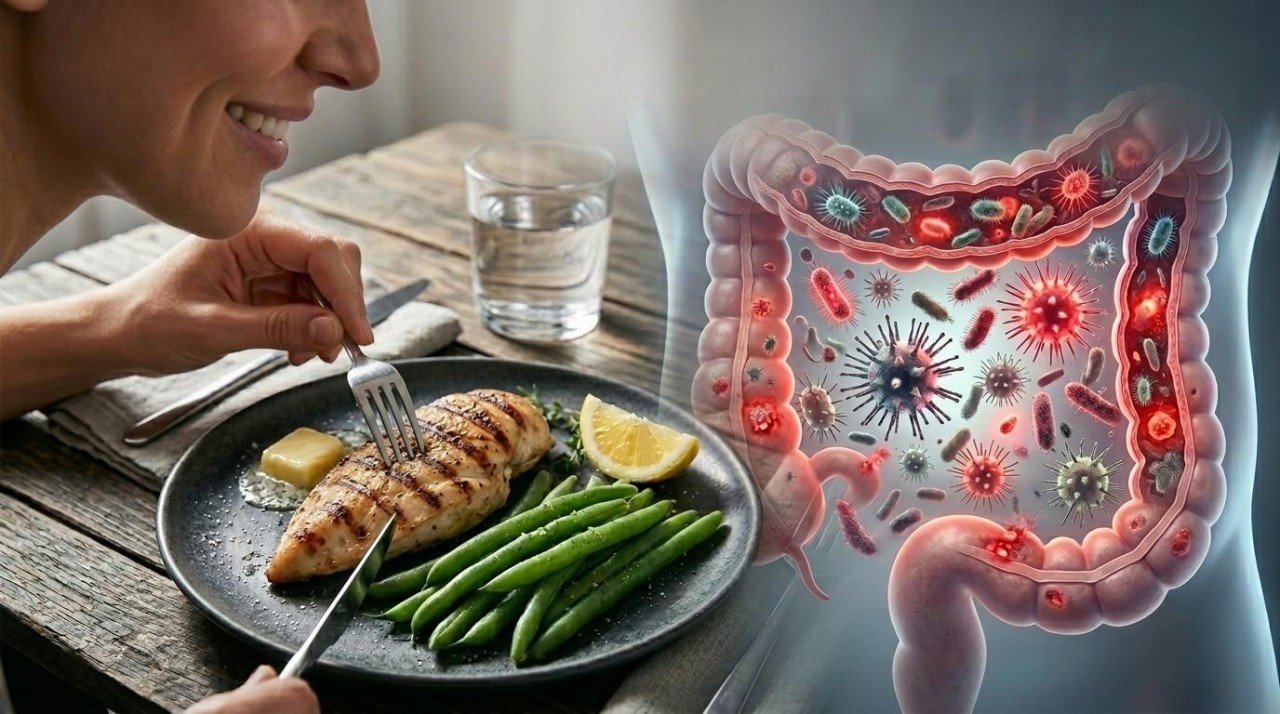
Wanting to lose weight, build muscle, and look better is a perfectly good goal. And if you've landed on a high-protein, low-carb approach, you've picked a strategy that genuinely works — in the short term, at least. Protein keeps you full. Cutting refined carbs reduces empty calories. The scale moves. It makes sense.
But here's what most fitness influencers won't tell you: the way this diet is typically followed — obsessing over protein grams, treating all carbs as the enemy, building every meal around meat and protein shakes — is quietly creating nutritional gaps that can wreck your gut, starve your body of essential nutrients, and increase your risk of serious disease down the line. Not because the idea is wrong, but because the execution is dangerously incomplete.
The good news? You don't have to abandon your goals. You just need to stop following advice that treats nutrition like it has only two numbers that matter.
The Chicken-or-Chickpeas Problem
Here's a choice that plays out thousands of times a day in kitchens and meal prep containers everywhere: chicken breast or chickpeas? If you're tracking macros, the answer feels obvious — chicken has more protein and almost no carbs. It wins every time.
Except it doesn't. Chickpeas bring fiber, folate, iron, magnesium, potassium, and a range of phytonutrients that chicken simply cannot provide. Neither food is bad. But if you always pick the option with the better protein-to-carb ratio, you're systematically removing an entire category of nutrient-dense food from your diet. Multiply that by every meal, every day, for months — and you've built a diet that looks great on a macro tracker while slowly undermining the body you're trying to improve.
This is the trap. Not protein. Not even low carb. It's making every food decision through a lens that only sees two numbers.
What's Actually Happening Inside Your Body
You might feel fine. You might even look great. But the research paints a concerning picture of what happens when carbohydrate-rich whole foods disappear from the diet over time.
You're Probably Not Getting Enough Fiber (and It Matters More Than You Think)
A cross-sectional study published in BMC Nutrition analyzed data from over 300 U.S. adults following low-carbohydrate diets, representing approximately 3.1 million Americans. The findings were stark: insufficient intake of fiber, magnesium, potassium, and vitamins A, D, and E in both sexes. Vitamin C deficiency in males. Folate deficiency in women over 31. Meanwhile, saturated fat and sodium were through the roof.
Fiber is the biggest casualty. The richest fiber sources — beans, whole grains, fruits, starchy vegetables — are also carbohydrate-rich, so they're the first foods to go. But fiber isn't some optional extra. It's linked to lower rates of heart disease, type 2 diabetes, and colorectal cancer. It feeds the bacteria that keep your gut functioning. It regulates blood sugar and keeps you full between meals — which, ironically, is exactly what most people on high-protein diets are trying to achieve.
Your Gut Is Paying the Price
Your gut microbiome — trillions of microorganisms that influence immune function, inflammation, nutrient absorption, and even body composition — runs on the fiber and resistant starch found in complex carbohydrates. Take those away, and things change fast.
A 2020 study published in Cell by researchers at UC San Francisco put participants on a ketogenic diet and found dramatic shifts in three major bacterial phyla, with the beneficial probiotic Bifidobacteria showing the greatest decline. A systematic review in Nutrition Research Reviews confirmed the pattern: low-carbohydrate diets reduce health-promoting bacteria and short-chain fatty acid levels — compounds critical for gut barrier integrity and controlling inflammation.
Why should you care? Because chronic low-grade inflammation impairs recovery. Because poor gut health affects how well you absorb the protein you're eating. Because a compromised microbiome has been linked to increased fat storage. The very things you're trying to improve are being quietly undermined by what you've cut from your plate.
The Long-Term Risks Are Serious
A 2019 study in the European Heart Journal pooled data from nine prospective cohort studies — 462,934 participants, 16.1 years of average follow-up. Participants with the lowest carbohydrate intake had a 32% higher risk of all-cause mortality, a 50% higher risk of cardiovascular death, and a 36% higher risk of cancer mortality compared to those eating moderate amounts of carbohydrates.
Those aren't small numbers. And while correlation isn't causation, the pattern is consistent across multiple large studies and populations.
But — and this is crucial — it's not the low carb itself that's the problem. A 2026 study from the American College of Cardiology, covering nearly 200,000 adults over 30 years, found that low-carb diets built around whole foods, plant-based proteins, and unsaturated fats actually reduced heart disease risk. It was only the versions heavy in processed animal products and refined foods that caused trouble.
As co-author Zhiyuan Wu put it: "It's not simply about cutting carbs or fat, but it's about the quality of foods people choose." The difference between a high-protein diet that helps you and one that harms you comes down to what else is on the plate.
Not All Carbs Are the Enemy — and Treating Them That Way Is the Mistake
The case against refined carbohydrates is solid. White bread, sugary cereals, pastries, and sweetened drinks spike blood sugar, offer little nutrition, and are linked to metabolic disease. The American Heart Association recommends limiting them, and that's well-supported by evidence.
But here's where the influencer narrative goes off the rails: it treats oats the same as doughnuts. Sweet potatoes the same as sweets. Lentils the same as white bread. That's not just wrong — it's the single biggest mistake people make on high-protein diets.
Complex carbohydrates — whole grains, legumes, vegetables, and fruits — are digested slowly, provide sustained energy, and are packed with the fiber, vitamins, and minerals your body needs. According to the Cleveland Clinic, they can help prevent serious disease, support weight management, and improve energy levels. These foods aren't the problem. They're part of the solution.
Cutting pastries and sugary drinks from your diet? That's a high-impact move. Cutting lentils and sweet potatoes to hit a carb number? You're solving the wrong problem.
The Longest-Lived, Leanest Populations on Earth Eat Plenty of Carbs
If carbohydrates were truly incompatible with being lean and healthy, the world's fittest populations would avoid them. They do the opposite.
The Blue Zones — Okinawa (Japan), Sardinia (Italy), Nicoya (Costa Rica), Ikaria (Greece), and Loma Linda (California) — are regions where people consistently live to 100 at remarkably high rates. According to the Blue Zones food guidelines, their diets are built around whole grains, beans, vegetables, and fruits. Beans are described as a cornerstone of every longevity diet — black beans in Nicoya, lentils and chickpeas in the Mediterranean, soybeans in Okinawa — with these populations eating at least four times as many beans as the average American.
These people aren't just living longer. They're staying lean, active, and independent into old age. Their diets are carbohydrate-rich, protein-moderate, and built almost entirely around whole, unprocessed foods. It's some of the strongest evidence we have that nutrient-dense carbohydrates and a lean, healthy body are not only compatible — they go hand in hand.
Take the Guesswork Out of Eating Well
Eat Well Planner helps you organize your favorite recipes, plan balanced meals, and automatically generate shopping lists — all in one place. Whether you're tracking macros, managing dietary restrictions, or just trying to stop asking "what's for dinner?", we've got you covered.
Our AI-powered tools can adapt any recipe to your dietary needs, help you discover new meals you'll love, and even log your nutrition effortlessly. It's meal planning made simple.
Start Organizing Your Meals — FreeHow to Do High-Protein Right (Without Wrecking Your Health)
None of this means you should ditch your protein goals or stop watching your carbs. It means you need to be smarter about which carbs you cut and what else makes it onto your plate. Here's how to keep the benefits of a high-protein approach while protecting your long-term health.
Think "protein and..." instead of "protein or..." — Stop treating it as a trade-off. A chicken and chickpea curry gives you high protein plus fiber, folate, and iron. Steak with sweet potato and greens hits your protein target and your micronutrient needs. You don't have to sacrifice one for the other.
Cut the refined carbs, keep the whole food carbs. Swap white bread for whole grain. Drop the sugary cereal, keep the oats. Ditch the fizzy drinks, not the fruit. This is where the actual evidence points — the type of carbs matters far more than the total amount.
Diversify your protein. Relying entirely on chicken breast, red meat, and whey protein means missing out on the nutrients that come packaged with other sources. Fish, eggs, legumes, tofu, nuts, and seeds all bring something different to the table — literally.
Watch your fiber like you watch your protein. Most adults need 25–30 grams of fiber per day. If you're keeping carbs lower, you need to be intentional about getting enough from beans, vegetables, nuts, seeds, and whole grains. Track it for a week — you might be surprised how low the number is.
Look beyond macros. Protein and carb counts are easy to track. Fiber, magnesium, potassium, and vitamins aren't — but they're just as important. This is where most people's diets quietly fall apart. Eat Well Planner tracks your full nutritional picture — macros and micronutrients — so you can see exactly where the gaps are. It takes seconds to log a meal, and the difference between guessing and knowing can be the difference between a diet that works short-term and one that serves you for life.
Make It Last
Here's one final piece of the puzzle that ties everything together: sustainability. A meta-analysis of 25 randomised controlled trials found that low-carb diets produced about 2.6 kg more weight loss than controls at 3–4 months. But by 18–30 months, the advantage had completely disappeared. The weight came back because the extreme version of the diet was too restrictive to maintain.
A review of 25 prospective studies found that measures of dieting significantly predicted future weight gain in 75% of comparisons — not because the diets didn't work, but because the restrict-then-rebound cycle is almost inevitable when you cut out entire food groups.
A high-protein diet that includes nutrient-dense carbohydrates is more satisfying, more nutritionally complete, and far easier to sustain than one that treats every gram of carbs as the enemy. And a sustainable approach is the only one that delivers lasting results.
If the hardest part is figuring out what to actually eat each week, Eat Well Planner can help. It generates personalized meal plans based on your goals — high protein, balanced nutrition, whatever you need — built from recipes you actually like. The AI can adjust any recipe's macros on the fly, suggest substitutions, and adapt meals for dietary preferences. And the auto-generated shopping list means you'll have the right ingredients in your kitchen, which is the single biggest factor in whether you eat well or default to whatever's convenient.
The Bottom Line
Pursuing weight loss and fitness through a high-protein diet is a worthy goal — and it can work. But if your approach boils down to maximising protein and minimising carbs while ignoring everything else, you're building your results on a foundation that won't hold. Fiber, micronutrients, gut health, and long-term disease risk don't show up on a macro tracker, but they determine whether your diet is actually making you healthier — or just making you thinner for now.
The fittest, longest-lived people on earth eat plenty of protein and plenty of nutrient-rich whole foods. You don't have to choose. Eat the chicken and the chickpeas.