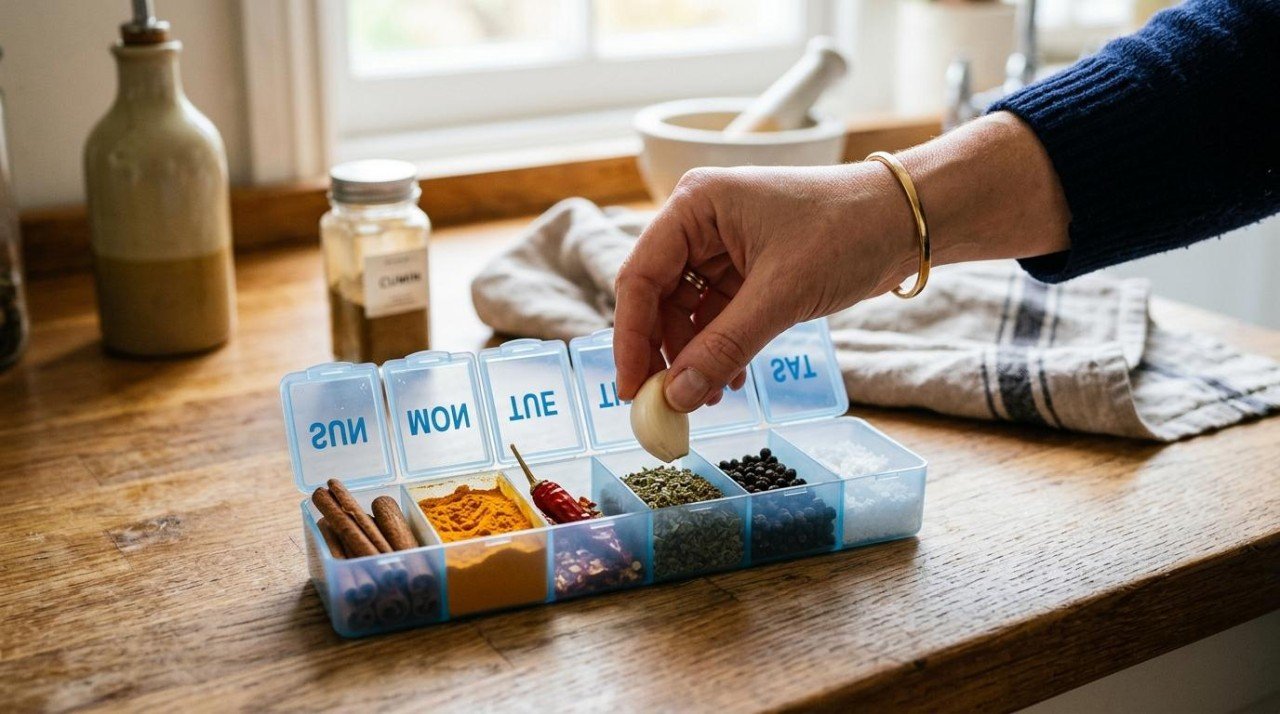
Somewhere along the way, the humble spice rack got a promotion. Turmeric became a wellness ritual poured into $7 lattes. Cinnamon got marketed as a blood-sugar hack. Garlic supplements line the pharmacy shelf next to the fish oil. The pitch is seductive: the same jars that make your food taste good are quietly working as medicine, one sprinkle at a time.
It is a lovely idea. It is also, if we are honest, only partly true — and the parts that are true are not always the parts being sold to you. So let us do the useful thing and separate the hype from the evidence, spice by spice. The good news, which we will get to, is that your spice rack really does matter for your health. Just not for the reason the marketing suggests.
The problem with "medicine cabinet"
Here is the catch that runs through almost every spice-health headline: the studies that find real effects usually use supplement doses — concentrated extracts in capsules, often several grams a day of a single active compound. What you shake onto your dinner is a small fraction of that. A study showing that 1,500 mg of concentrated curcumin lowers an inflammation marker tells you very little about the quarter teaspoon of turmeric in your curry.
That does not make spices useless. It just means we should hold two thoughts at once: the pharmacology is often real but overstated at dinner-table doses, and the everyday reasons to use spices generously are genuinely excellent. Let us look at the best-studied jars in your cupboard.
Turmeric: real signals, a stubborn catch
Turmeric is the poster child of the functional-spice movement, and its active compound, curcumin, is legitimately interesting. An umbrella meta-analysis pooling 10 systematic reviews and 5,870 participants found that curcumin supplementation significantly lowered three key markers of inflammation — C-reactive protein, interleukin-6, and TNF-alpha — with the evidence graded as moderate quality. That is a real, repeatable anti-inflammatory signal, not wishful thinking.
But there is a stubborn catch, and it is the whole ballgame: curcumin is terribly absorbed. The same review notes its "low absorption, rapid metabolism, limited tissue distribution, and short half-life." Swallow turmeric on its own and most of it never makes it into your bloodstream. This is why supplements pair it with black pepper. In a much-cited 1998 study in human volunteers, adding just 20 mg of piperine (the active compound in black pepper) to 2 grams of curcumin increased curcumin's bioavailability by 2,000%. Without it, serum levels were "either undetectable or very low."
Two honest takeaways follow. First, that 2,000% figure comes from a single small study and should be read as a headline, not a guarantee — but the underlying point, that curcumin needs help to be absorbed, is sound. Second, and more practically: the trials showing benefits use grams of concentrated curcumin, while a pinch of turmeric in a pan contains only a small percentage of curcumin to begin with. So the turmeric in your golden rice is not going to match a supplement trial. The classic move of cooking turmeric with black pepper and a little fat (as countless traditional cuisines have done for centuries) genuinely helps absorption — it is just working with a much smaller starting amount. Enjoy turmeric because it is delicious and colorful and counts toward your plant intake, not because your latte is anti-inflammatory therapy.
Ginger: the one that actually earns the "medicine" label
If any spice deserves the medicine-cabinet framing, it is ginger — and specifically for nausea. This is not a hopeful extrapolation from a petri dish; it is one of the best-supported uses of any culinary plant. A systematic review and meta-analysis of 12 randomized controlled trials involving 1,278 pregnant women found that ginger significantly reduced nausea symptoms compared to placebo (a meaningful, statistically clear effect), and did so without raising the risk of side effects or harm to the pregnancy.
The picture is not perfect — in that same analysis, ginger's effect on actual vomiting episodes fell just short of statistical significance, and the doses that worked best for nausea were on the lower side. But for the specific, common misery of feeling queasy, ginger is a rare case where the kitchen remedy and the clinical evidence point the same way. Fresh grated ginger in tea, a stir-fry, or a soup is a reasonable, well-tolerated thing to reach for.
Cinnamon: a modest nudge, and a real safety footnote
Cinnamon gets promoted relentlessly as a blood-sugar remedy, and there is a kernel of truth underneath the noise. Multiple meta-analyses find that cinnamon supplementation produces modest reductions in fasting blood glucose in people with type 2 diabetes or prediabetes. The key words are "modest" and "supplementation" — the trials use gram-level doses over weeks, the effects are inconsistent from study to study, and the results for longer-term markers like HbA1c are shakier still. Cinnamon is not a substitute for the things that actually manage blood sugar, and no reputable body recommends it as a treatment.
More importantly, cinnamon comes with a genuine safety footnote that almost never makes it into the wellness content — one where the "more is better" instinct can backfire. Most cinnamon sold in American grocery stores is cassia cinnamon, which is naturally high in a compound called coumarin. According to an umbrella review of cinnamon safety, coumarin has been flagged for potential liver toxicity, which is why European regulators set a tolerable daily intake of just 0.1 mg per kilogram of body weight. Cassia contains far more coumarin than Ceylon cinnamon (sometimes labeled "true" cinnamon), so someone loading multiple teaspoons of cassia into everything every day — or taking concentrated cinnamon capsules — can plausibly cross that threshold. The occasional sprinkle on oatmeal is nothing to worry about. But this is a good reminder that "it is just a spice" does not automatically mean "unlimited is fine." If you use a lot of cinnamon daily, Ceylon is the safer pick.
Garlic: small but real
Garlic sits in an honest middle ground: the effects are real, they are just small. A 2025 meta-analysis of randomized controlled trials found that garlic supplementation reduced systolic blood pressure by about 4.2 mmHg and diastolic pressure by about 3.1 mmHg, with a modest bump in "good" HDL cholesterol. Other reviews report similar small-but-significant improvements in total and LDL cholesterol when garlic is taken consistently for a couple of months.
A few mmHg is not nothing at a population level — but again, these are supplement trials, often using aged garlic extract or standardized garlic powder standardized for its active compounds, not a clove tossed into a pan where heat degrades some of that chemistry. The reasonable read: garlic is a worthwhile, heart-friendly habit as part of an overall pattern, not a replacement for blood-pressure medication. And it happens to make almost every savory vegetable dish taste better, which, as we are about to argue, may be the most valuable thing it does.
Chili: a population signal worth noting
Chili peppers and their active compound, capsaicin, produce one of the more intriguing findings in this whole area. A meta-analysis of prospective cohort studies covering more than 570,000 people found that regular chili-pepper eaters had roughly a 25% lower risk of all-cause mortality, and similarly lower risk of dying from cardiovascular disease and cancer, compared with those who rarely or never ate them.
Impressive as that sounds, it demands a big grain of salt. These are observational studies, which can show association but not cause — chili eaters may differ from non-chili eaters in dozens of ways (more home cooking, more vegetables, different overall diets). The authors themselves flag very high statistical heterogeneity and a lack of data on how much chili people actually ate. So: a promising signal, absolutely worth mentioning, but not proof that hot sauce extends your life. Enjoy the heat if you like it; do not force it down as a longevity supplement.
So why does your spice rack actually matter?
Here is the reframe, and it is where spices go from "overhyped" back to "genuinely valuable." Strip away the supplement-dose fantasies and three real, well-supported reasons remain — and they are more reliable than any single miracle compound.
1. Spices are among the most concentrated plant compounds you can eat. When researchers measured the total antioxidant content of more than 3,100 foods, herbs and spices came out on top — the category averaged about 29 mmol of antioxidants per 100 grams, compared with roughly 0.8 for vegetables. Clove, cinnamon, oregano, and mint were among the richest foods measured, period. You obviously eat spices in tiny amounts, so the total contribution to your day is smaller than the raw numbers suggest — but gram for gram, these are some of the most polyphenol-dense things in your kitchen, and the authors concluded they "may still be important contributors to our antioxidant intake."
2. They count toward plant diversity. One of the most robust ideas in modern nutrition is that the variety of plants you eat feeds a more diverse gut microbiome — the population target that gets thrown around is 30 different plant types a week. Herbs and spices count. Cumin, coriander, paprika, oregano, basil, ginger, garlic, chili — each one is a different plant contributing different fibers and polyphenols that your gut bacteria feed on. A well-stocked spice rack can add ten or more distinct plants to your week almost effortlessly, without you having to buy and cook ten new vegetables.
3. And the big one: they make healthy food taste good enough to eat again. This is the least glamorous benefit and by far the most important. The single biggest predictor of whether you will keep eating vegetables and legumes is whether you actually enjoy them — and spices are the cheapest, most effective tool for that. In a controlled taste test with military service members, adding spices and herbs made broccoli, carrots, and cauliflower significantly more appealing than the usual butter-and-salt treatment. In another trial using low-salt, legume-based dishes, herbs and spices let researchers cut the salt in half while keeping people's enjoyment just as high as the full-salt version.
Read those two studies together and the real power of the spice rack comes into focus. It is not that oregano is a drug. It is that oregano, cumin, and smoked paprika are what turn a sad bowl of plain lentils into something you look forward to — and a meal you look forward to is a meal you will cook again next week. That repeated, sustainable behavior is where the actual health payoff lives.
Take the Guesswork Out of Eating Well
Eat Well Planner helps you organize your favorite recipes, plan balanced meals, and automatically generate shopping lists — all in one place. Whether you're tracking macros, managing dietary restrictions, or just trying to stop asking "what's for dinner?", we've got you covered.
Our AI-powered tools can adapt any recipe to your dietary needs, help you discover new meals you'll love, and even log your nutrition effortlessly. It's meal planning made simple.
Start Organizing Your Meals — FreeHow to actually use the thing
If you want your spice rack to earn its keep, the goal is simple: use it more often, more boldly, and across more of your cooking. A few practical moves:
- Season the vegetables and legumes, not just the meat. This is where seasoning does the most work. Toss cauliflower with cumin and smoked paprika before roasting; simmer chickpeas with garlic, coriander, and a little chili. The research above is basically a permission slip to be generous here.
- Bloom whole and ground spices in a little oil. Warming spices in fat for 30 seconds before adding other ingredients wakes up their flavor (and, in turmeric's case, helps absorption). It is the difference between spices tasting dusty and tasting alive.
- Buy smaller amounts more often. Ground spices fade within a year or so. If your jars are older than you can remember, that stale flavor is a big reason "healthy cooking tastes bland." Replacing a few tired staples is an underrated upgrade.
- Lean on spices to cut the salt, not to replace flavor with nothing. As the low-salt legume study showed, a bold herb-and-spice blend lets you dial salt back without anyone at the table noticing.
- Pick Ceylon cinnamon if you use it heavily, and treat cinnamon and turmeric as flavor-and-variety wins rather than daily medicine.
Where a little help makes this stick
The honest conclusion is that spices matter most because they make the genuinely healthy stuff — vegetables, beans, whole grains — something you actually want to eat. The hard part is not believing that; it is remembering to do it on a Tuesday night when you are tired and staring at a bag of unfamiliar vegetables with no idea how to make them taste like anything.
That is exactly the gap Eat Well Planner is built to close. If you have a vegetable or a bag of lentils and no plan, the built-in AI recipe chat can suggest how to season them — which spices suit roasted fennel, how to build a quick spice blend for a lentil soup, or how to make plain broccoli genuinely good — so "eat more plants" turns into an actual dinner. And because herbs and spices count toward plant diversity, the app's Plant Points tracker turns that 30-plants-a-week goal into a simple running number, giving you credit for the cumin, garlic, ginger, and oregano you are already using. It reframes your spice rack as what it really is: one of the easiest ways to add variety to your week.
You can also import recipes from anywhere you find them, get AI-generated meal plans built from dishes you will actually enjoy, and see each recipe's nutrition at a glance — so the goal stops being "take a turmeric supplement" and becomes the far more powerful "cook plants you look forward to eating."
The bottom line
Is your spice rack a medicine cabinet? Not really — at least not in the way the supplement aisle implies. The clinical effects of turmeric, cinnamon, and garlic are real but modest, and they mostly show up at concentrated doses well beyond what lands on your plate. Ginger for nausea is the honorable exception where kitchen and clinic agree. But the everyday case for spices is stronger and more dependable than any single headline: they are concentrated sources of plant compounds, they widen your plant diversity, and above all they make the vegetables and legumes that genuinely improve your health taste good enough to keep eating.
That last part is not a consolation prize. It is the whole point. The best diet is the nutritious one you will actually repeat — and a bold, well-used spice rack is one of the simplest, cheapest tools for getting there.