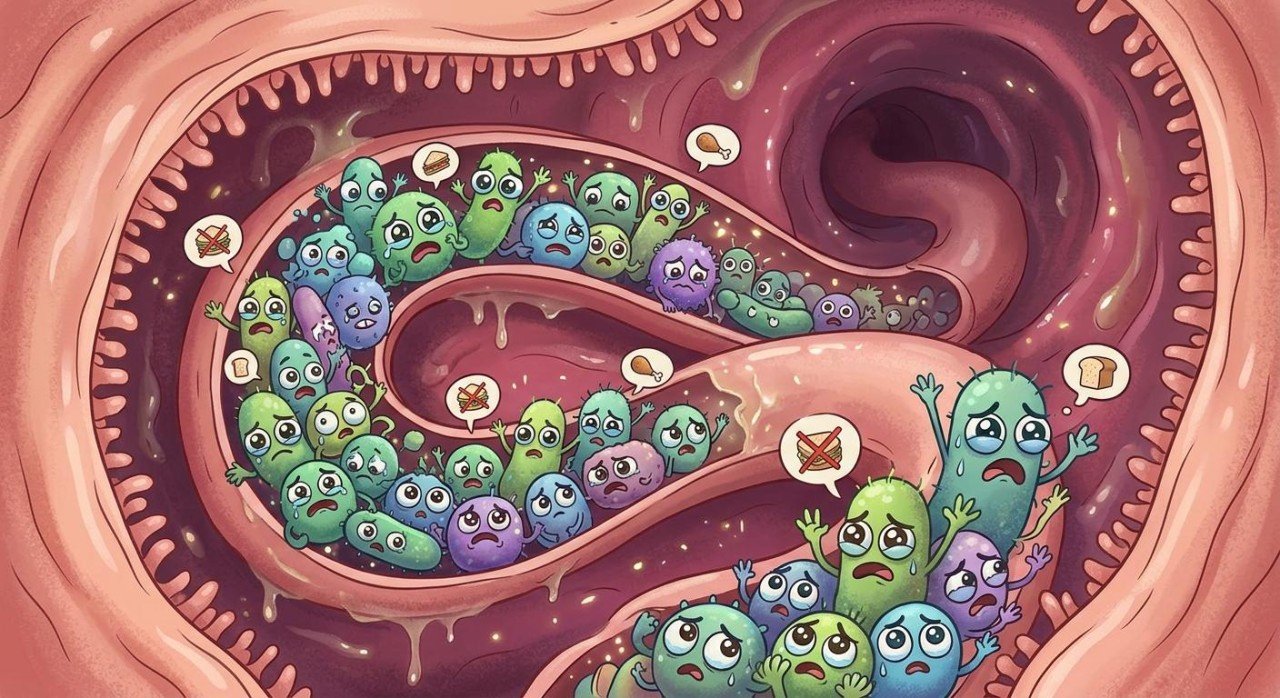
Right now, as you read this, roughly 38 trillion microorganisms are living inside your body. That's not a metaphor. According to a 2016 study published in PLOS Biology, the average adult carries about 38 trillion bacteria — slightly more than the estimated 30 trillion human cells that make up the rest of you. By sheer numbers, you are more microbe than human.
Most of these passengers live in your gut, and they are not freeloaders. They digest food you can't break down on your own, produce vitamins your body needs, train your immune system, influence your mood, and even help determine how much energy you extract from the food you eat. When this community thrives, you tend to thrive. When it suffers, so do you — in ways that go far beyond an upset stomach.
The problem is that modern life is quietly starving this community. Low-fiber diets, ultra-processed food, and overuse of antibiotics are reducing the diversity of our gut microbiomes at a scale researchers are only beginning to understand. And the consequences don't just show up in your digestion — they ripple out to your immune system, your brain, your weight, and your long-term risk of chronic disease.
What Is Your Gut Microbiome, Exactly?
Your gut microbiome is the collective term for all the microorganisms — bacteria, fungi, viruses, and other microbes — living in your gastrointestinal tract, primarily your large intestine. Think of it as a dense, complex ecosystem, like a rainforest packed into your lower digestive system.
This ecosystem is astonishingly diverse. A healthy human gut harbours hundreds of different bacterial species, and their combined genetic material dwarfs your own — the bacterial genes in your body outnumber human genes by roughly 100 to 1. Each person's microbiome is as unique as a fingerprint, shaped by how you were born, what you were fed as an infant, where you grew up, what you eat now, and what medications you've taken over your lifetime.
What makes this ecosystem so important is that it's not just sitting there. It's actively working — breaking down dietary fiber into beneficial compounds, synthesising vitamins like B12 and K, producing neurotransmitters, and maintaining the lining of your intestinal wall. When scientists talk about the microbiome, they're describing what amounts to an organ — one that weighs about 200 grams, rivals the liver in metabolic activity, and was essentially invisible to medicine until the last two decades.
Your Second Brain: The Gut-Brain Connection
One of the most surprising discoveries in modern biology is the two-way communication highway between your gut and your brain, known as the gut-brain axis. Your gut has its own nervous system — the enteric nervous system — containing hundreds of millions of neurons. This network communicates with your central nervous system through the vagus nerve, immune signaling, and molecules produced by your gut bacteria.
About 90% of the body's serotonin — the neurotransmitter heavily involved in mood regulation — is produced in the gut, not the brain. Research from Caltech published in the journal Cell showed that specific gut bacteria play a direct role in stimulating serotonin production. When researchers raised mice without any gut bacteria, those animals produced roughly 60% less serotonin. Reintroducing normal gut bacteria restored serotonin levels.
It's important to note that serotonin produced in the gut doesn't cross the blood-brain barrier, so it doesn't directly regulate your emotions the way brain serotonin does. But gut serotonin does influence digestion, nausea, bone density, and wound healing, and the gut-brain axis has well-established links to mood disorders including anxiety and depression through other pathways — particularly the vagus nerve and immune signaling molecules.
The upshot: a depleted, imbalanced gut microbiome doesn't just mean digestive discomfort. It may contribute to low mood, brain fog, and anxiety through mechanisms researchers are still mapping out.
Your Gut Is Your Immune System's Training Ground
Here's a statistic that surprises most people: an estimated 70 to 80 percent of your immune cells reside in your gut. Your gastrointestinal tract is the body's largest interface with the outside world — everything you swallow, from food to bacteria to potential pathogens, passes through it. The immune system concentrates its forces there for good reason.
Your gut bacteria are essential partners in this defense. From infancy, they help train immune cells to tell the difference between harmless substances (food proteins, friendly bacteria) and genuine threats (pathogens). They also produce short-chain fatty acids — particularly butyrate, propionate, and acetate — which strengthen the intestinal barrier, reduce inflammation, and support the production of antimicrobial peptides.
When the microbiome is disrupted — a state scientists call dysbiosis — this immune education goes wrong. The gut lining can become more permeable (often called "leaky gut"), allowing bacterial fragments to enter the bloodstream and trigger chronic low-grade inflammation. This kind of inflammation doesn't feel like an infection. It's subtler — more like a slow burn that, over years, contributes to conditions including inflammatory bowel disease, autoimmune disorders, and metabolic disease.
What's Starving Your Microbiome
If the microbiome is so important, why is it under threat? Three factors stand out.
1. Not Enough Fiber (and Not Enough Variety)
Dietary fiber is the primary fuel source for beneficial gut bacteria. When bacteria ferment fiber, they produce short-chain fatty acids that nourish the cells lining your colon, regulate inflammation, and support immune function. Without enough fiber, these bacteria decline and less beneficial species can take their place.
But it's not just about eating more fiber — it's about eating different kinds. The American Gut Project, one of the largest studies of the human microbiome, analyzed samples from over 11,000 participants and found that people who ate more than 30 different types of plants per week had significantly more diverse gut microbiomes than those eating 10 or fewer. The 30+ group also showed higher levels of bacteria that produce beneficial short-chain fatty acids, including Faecalibacterium prausnitzii and Oscillospira.
Different plant fibers feed different bacterial species. Eating the same few vegetables every week supports the same narrow set of microbes while others starve. Variety — across fruits, vegetables, legumes, whole grains, nuts, seeds, herbs, and spices — is what drives true microbial diversity. The tricky part is knowing where you actually stand. Most people overestimate how many different plants they eat in a week. Eat Well Planner tracks the plant points in your meals automatically, so you can see your real number and find the gaps.
Take the Guesswork Out of Eating Well
Eat Well Planner helps you organize your favorite recipes, plan balanced meals, and automatically generate shopping lists — all in one place. Whether you're tracking macros, managing dietary restrictions, or just trying to stop asking "what's for dinner?", we've got you covered.
Our AI-powered tools can adapt any recipe to your dietary needs, help you discover new meals you'll love, and even log your nutrition effortlessly. It's meal planning made simple.
Start Organizing Your Meals — Free2. Ultra-Processed Food
Ultra-processed foods (UPFs) — the industrial formulations made from extracted substances and additives that dominate modern supermarkets — are a double hit to the microbiome. They tend to be very low in fiber, which starves beneficial bacteria, while simultaneously containing additives that actively harm them.
A 2025 review in Nutrients examined how UPFs damage both the gut microbiome and the gut barrier. Common emulsifiers like carboxymethylcellulose and polysorbate-80, used in everything from ice cream to salad dressing, were found to reduce beneficial bacteria such as Akkermansia muciniphila and Faecalibacterium prausnitzii, while increasing pro-inflammatory species. These additives also damaged the protective mucus layer that lines the intestine, increasing gut permeability.
The result is a microbiome that's less diverse, more inflamed, and less capable of doing its job. And because UPFs are engineered to be convenient and hyper-palatable, they tend to displace the whole foods that would actually feed beneficial bacteria. It's not that the occasional processed meal will wreck your microbiome — it's that when these foods become the default, the cumulative effect is significant. The real question is why people reach for UPFs so often — and the answer is usually convenience. When there's no plan for dinner, a ready meal wins by default. That's one of the reasons Eat Well Planner exists — to make fresh, home-cooked meals the convenient option, with AI-generated meal plans and automatic shopping lists that take the decision fatigue out of the equation.
3. Antibiotics
Antibiotics save lives. They're also one of the most powerful disruptors of the gut microbiome. A course of antibiotics doesn't just target the bacteria causing your infection — it can wipe out large swaths of your gut community indiscriminately.
Research published in Nature Microbiology found that while the gut microbiota of healthy adults largely recovered within about six weeks after antibiotic treatment, recovery wasn't complete — nine common bacterial species remained undetectable in most participants even after 180 days. Some people experienced persistent reductions in microbiome diversity that lasted months.
This doesn't mean you should refuse antibiotics when you genuinely need them. It means unnecessary antibiotic use — taking them for viral infections they can't treat, or not finishing a course — is a real cost that extends beyond antibiotic resistance to your personal microbial ecosystem.
Artificial Sweeteners: An Emerging Concern
The research on artificial sweeteners and the gut microbiome is still evolving, but early findings are worth paying attention to. A 2023 study found that consuming certain non-nutritive sweeteners altered the structure and function of microbial communities in the small intestine, with reduced microbial diversity compared to controls.
The evidence isn't conclusive enough to declare all artificial sweeteners harmful — results vary between different sweeteners and between individuals. But it's another reason to be thoughtful about relying heavily on processed products, many of which contain these additives, as a replacement for whole foods.
What Actually Helps: Practical Steps
The good news is that the microbiome is remarkably responsive to dietary changes. You can start shifting your gut community in a matter of days. Here's what the research supports.
Eat More Plants — and More Kinds of Plants
This is the single most impactful thing you can do. The American Gut Project's findings suggest aiming for 30 different plant types per week. That sounds like a lot, but "plants" includes fruits, vegetables, legumes, whole grains, nuts, seeds, herbs, and spices. A stir-fry with five vegetables, garlic, ginger, and sesame seeds already covers eight. A morning porridge with oats, chia seeds, banana, and blueberries is four more.
Each different plant brings different types of fiber that feed different bacterial species. The greater the variety, the more diverse and resilient your microbiome becomes. If you use Eat Well Planner to build your weekly meal plan, you can see exactly how many different plants each plan includes — making it easy to spot when you're stuck in a rut and swap in something new.
Add Fermented Foods
A 2021 Stanford study published in Cell tracked 36 healthy adults over 10 weeks and found that a diet high in fermented foods — including yogurt, kefir, kimchi, sauerkraut, and kombucha — steadily increased gut microbiome diversity and decreased levels of 19 inflammatory proteins, including interleukin-6, which is linked to chronic inflammation.
The effect was consistent across participants and got stronger with larger servings. Notably, a high-fiber diet in the same study did not produce the same reduction in inflammatory markers, though it did increase the microbiome's capacity to break down fiber. The researchers concluded that fermented foods and fiber likely work best together. If you're not sure where to start, try searching for kimchi, kefir, or sauerkraut recipes on Eat Well Planner — or import one from a cooking video you've seen on Instagram or YouTube and add it to your weekly rotation.
Reduce Ultra-Processed Food
You don't need to eliminate every processed item from your diet overnight. The goal is to shift the balance — more meals built from whole ingredients, fewer meals built from packets. When fresh, fiber-rich meals become the default rather than the exception, your microbiome has what it needs to recover and flourish.
The biggest obstacle to cooking from scratch isn't motivation — it's planning. Knowing what you're going to cook, having the ingredients ready, and not standing in front of the fridge at 7pm wondering what to make — that's where most people default to a takeaway or a processed ready meal. This is exactly the kind of friction that Eat Well Planner is designed to remove — it generates a week of meals from your saved recipes, builds the shopping list for you, and means the ingredients for a fresh dinner are already in your kitchen when you need them.
Be Thoughtful About Antibiotics
Take antibiotics when your doctor prescribes them for a bacterial infection — they're essential medicines. But don't pressure your GP for antibiotics when you have a cold or flu (which are caused by viruses and won't respond to antibiotics anyway). And when you do take a course, focus on feeding your microbiome well during and after treatment with plenty of fiber-rich foods and fermented foods to support recovery.
Cut Back on Artificial Sweeteners
While the evidence is still developing, reducing your intake of artificial sweeteners is a reasonable precaution. Choose water, herbal tea, or naturally flavored drinks over artificially sweetened alternatives when you can.
Why Diversity Is the Key Word
If there's one theme running through all of this research, it's diversity. A diverse microbiome is a resilient microbiome — better equipped to fight off pathogens, produce the full range of beneficial metabolites, recover from disruption, and support your immune system and brain.
And the primary driver of microbial diversity is dietary diversity. Not supplements. Not one superfood. Not a single probiotic strain. It's the cumulative effect of eating a wide variety of plant-based foods, regularly including fermented foods, and minimising the things that damage microbial communities — ultra-processed food, unnecessary antibiotics, and monotonous diets.
The challenge, of course, is that variety requires planning. It's easy to default to the same meals, the same grocery list, the same narrow rotation of ingredients — especially when life is busy. That's where having a system helps. Tools like Eat Well Planner make it practical to build variety into your weekly meals — you can save diverse recipes as you find them, generate meal plans that naturally rotate ingredients, create shopping lists that ensure you actually buy the range of plants your microbiome needs, and even track your nutrition to see where you might have gaps.
Your Microbiome Is Listening
The 38 trillion microbes inside you aren't passive passengers. They're active participants in your health — shaping your immunity, influencing your mood, protecting your gut lining, and determining how well you extract nutrients from food. And they respond quickly to what you feed them.
You don't need a complete dietary overhaul. You don't need expensive supplements or extreme protocols. What your microbiome needs is consistent access to a wide variety of plant fibers and fermented foods, and less of the ultra-processed stuff that disrupts it. Every meal is a chance to either feed these communities or starve them.
Start small. Add a new vegetable to tonight's dinner. Throw some mixed seeds on your morning porridge. Try a fermented food you haven't had before. Your 38 trillion passengers will notice.