The pan is hot, the sauce is mixed, and the tofu you were sure was in the fridge is not in the fridge. Or you are cooking for someone who does not eat soy. Or you tried tofu once, hated it, and want to make the recipe anyway.
Tofu is easy to replace, but only if you replace the right tofu. It is sold in firmnesses that behave like completely different ingredients: silken tofu blends into a sauce and would dissolve in a wok, while extra-firm tofu holds a cube on the grill and would turn a smoothie gritty. Nearly every failed tofu swap comes from ignoring that split.
So the substitutes below are grouped by what the tofu was doing — holding its shape in a hot pan, disappearing into something creamy, or getting scrambled — with exact amounts for each.
The Quick List
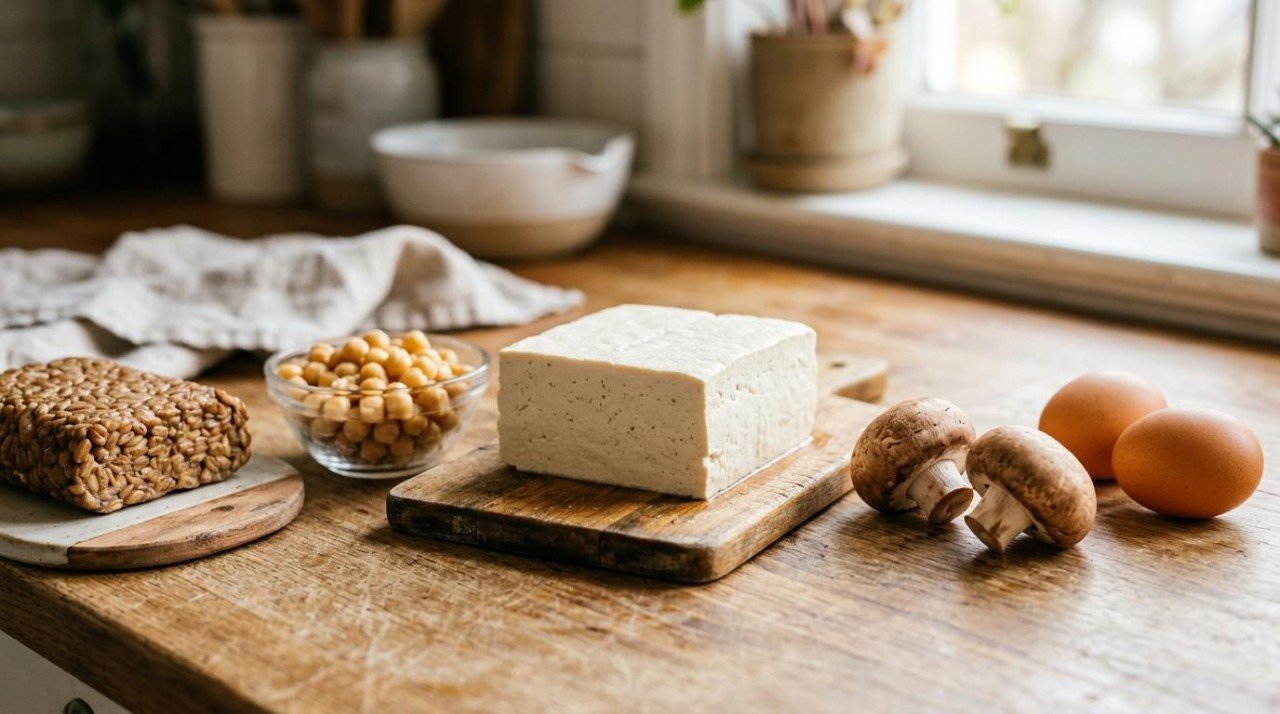
- Tempeh — the closest all-purpose swap for firm and extra-firm tofu, with twice the protein
- Seitan — chewiest and most meat-like, for stir-fries and sandwiches (not gluten-free)
- Chickpeas — the pantry answer, and the one that adds real fiber
- Paneer — a near-perfect one-for-one in curries; it holds cubes just like tofu does
- Halloumi — for grilling and pan-searing, when you want browning and salt
- King oyster or portobello mushrooms — texture and savoriness, but almost no protein
- Soy curls or TVP — dry pantry soy that rehydrates into shreds for tacos and chili
- Blended cottage cheese — best stand-in for silken tofu in creamy sauces and dips
- Greek yogurt — silken tofu's substitute in cold and off-heat dishes
- Cashew cream — the dairy-free version of the same swap
- Full-fat coconut milk — for silken tofu in desserts and curries, if coconut flavor is welcome
- Eggs — the obvious swap for a tofu scramble
- Chickpea flour — a scramble with no soy and no eggs at all
First, Match the Firmness
Check what the recipe is asking the tofu to do. Silken tofu is custardy and unpressed, and it belongs in smoothies, dressings, creamy soups, and desserts. Firm tofu holds together in a gentle braise or a soup like miso. Extra-firm is the one that gets cubed, pressed, and seared, baked, or grilled.
If you have tofu but the wrong kind, you can move in one direction only. Pressing firm tofu for 30 minutes under something heavy gets it close to extra-firm, and freezing a drained block overnight then thawing and squeezing it makes it chewier and far more absorbent, because the ice crystals leave a sponge of tiny holes behind. Nothing makes silken tofu firm, though, and nothing makes extra-firm tofu smooth.
Substitutes for Firm and Extra-Firm Tofu
These are the swaps for stir-fries, sheet-pan dinners, curries, grain bowls, and anything that goes on the grill. Amounts assume a standard 14-ounce block.
1. Tempeh
- Swap: 14 ounces extra-firm tofu → 12 ounces tempeh, steamed 10 to 15 minutes first
- Best for: Stir-fries, sheet-pan dinners, sandwiches, crumbled into tacos or bolognese
- Skip it for: Anything that needs to be smooth or mild — tempeh is assertive and never disappears
- Health notes: About 20 g of protein per 100 g against roughly 10 g in extra-firm tofu, plus the fiber of the whole soybean, which tofu leaves behind
Tempeh is whole soybeans fermented into a firm cake, so it is denser, nuttier, and much chewier than tofu, and it browns beautifully. It also carries a slight bitterness from fermentation. Steaming it for 10 to 15 minutes before cooking takes that edge off and opens the cake up so it soaks in marinade — skip the step and you will taste why people say they do not like tempeh. After that it needs no pressing: slice, cube, or crumble it and treat it exactly as the recipe treats the tofu.
2. Seitan
- Swap: 14 ounces extra-firm tofu → 12 ounces seitan
- Best for: Stir-fries, fajitas, sandwiches, anywhere you want a meaty chew
- Skip it for: Anyone gluten-free or with celiac disease — seitan is essentially pure wheat gluten
- Health notes: The highest-protein option here. Vital wheat gluten is about 75 percent protein by weight before it is hydrated, which is why prepared seitan lands well above tofu
Seitan has a dense, springy chew that tofu never has, and most store-bought versions arrive already seasoned, so taste before you salt the dish. Add it late: it is fully cooked when you buy it and toughens with long cooking, so sear it and stir it into the sauce at the end rather than simmering it the way you might simmer tofu.
3. Chickpeas
- Swap: 14 ounces extra-firm tofu → one 15-ounce can, drained and rinsed (about 1 1/2 cups)
- Best for: Curries, grain bowls, sheet-pan roasts, salads
- Skip it for: Anything sliced or skewered — chickpeas cannot hold a cube shape
- Health notes: Similar protein by weight to tofu, but 7.6 g of fiber per 100 g where tofu has about 1 g
This is the swap you can make right now without going to a store, and in a curry or a bowl it is genuinely as good. For roasted-tofu recipes, dry the chickpeas thoroughly on a towel, toss with oil and spices, and roast at 425F for 20 to 25 minutes until they crackle — skipping the drying step is the difference between crisp and steamed.
4. Paneer
- Swap: 14 ounces extra-firm tofu → 14 ounces paneer, cubed (1:1)
- Best for: Curries, especially anything tomato- or spinach-based, and skewers
- Skip it for: Vegan cooking, and long simmers, which turn it rubbery
- Health notes: More protein than tofu but considerably more saturated fat, since it is a whole-milk cheese
Paneer is the closest structural match to extra-firm tofu in the store: a fresh, unaged cheese that holds sharp cubes, does not melt, and soaks up whatever sauce it sits in. Palak paneer and palak tofu are nearly the same recipe for a reason. Brown the cubes in a little oil or ghee and add them in the last five minutes — go in early and they tighten up and squeak.
5. Halloumi
- Swap: 14 ounces extra-firm tofu → 8 to 10 ounces halloumi, and cut the salt in the recipe
- Best for: Grilling, pan-searing, skewers, salads and grain bowls
- Skip it for: Saucy dishes where the tofu is a neutral background, and low-sodium diets
Like paneer, halloumi holds its shape under direct heat instead of melting, and it browns harder and faster than tofu ever does — a slice takes a deep crust in about two minutes a side. It is also very salty, which is why the amount above is smaller than a straight one-for-one and why you should hold back on seasoning elsewhere.
6. King Oyster or Portobello Mushrooms
- Swap: 14 ounces extra-firm tofu → about 1 1/2 pounds mushrooms (they lose roughly half their weight in the pan)
- Best for: Texture and savory depth in stir-fries, tacos, and grain bowls
- Skip it for: Any meal where the tofu was the protein — mushrooms have very little
Sliced king oyster stems have a scallop-like chew that stands in for cubed tofu better than most vegetables, and portobellos brown into something meaty and savory. Give them room in a hot pan and do not stir constantly, or they steam in their own liquid instead of browning. Treat this as a texture swap, not a protein swap — if the tofu was carrying the meal, add beans, lentils, or eggs alongside.
7. Soy Curls or TVP
- Swap: 14 ounces extra-firm tofu → about 4 ounces (2 cups) dry soy curls, or 1 cup dry TVP plus just under 1 cup hot broth, soaked 10 minutes
- Best for: Tacos, stir-fries, chili, anywhere you want shreds or crumbles rather than cubes
- Skip it for: Cubed and skewered dishes, and soy-free cooking — this is still soy
Soy curls come in strips that pull apart like chicken; TVP comes in granules that behave like ground meat. Rehydrate either in seasoned broth rather than water, since they take on flavor from the soaking liquid far more readily than tofu takes on flavor from a marinade, then squeeze them out well so they can actually brown.
Substitutes for Silken Tofu
Here the tofu was never meant to hold a shape — it was there to make something creamy without cream. These are measured in cups, the way silken tofu is usually called for.
8. Blended Cottage Cheese
- Swap: 1 cup silken tofu → 1 cup cottage cheese, blended completely smooth
- Best for: Creamy pasta sauces, dips, dressings, cheesecake fillings, high-protein smoothies
- Skip it for: Vegan and dairy-free recipes
- Health notes: Roughly 10 to 11 g of protein per 100 g in 2 percent cottage cheese, comfortably above silken tofu, though it brings sodium that tofu does not
Cottage cheese does exactly what silken tofu does — it blends into a thick, neutral, high-protein base — and it is easier to find. Blend it a full 30 to 60 seconds before it goes anywhere near the recipe or the curds stay grainy. It is tangier than tofu, an asset in a dip and a distraction in a sweet recipe, where a spoonful of maple syrup balances it. Our cottage cheese substitutes guide covers the swap in the other direction.
9. Greek Yogurt
- Swap: 1 cup silken tofu → 1 cup plain whole-milk Greek yogurt, thinned with a tablespoon of water if the recipe was pourable
- Best for: Cold dressings, dips, chilled desserts, stirring into a finished sauce off the heat
- Skip it for: Anything that boils — Greek yogurt splits at a hard simmer where silken tofu does not
The texture match is very good and the protein is higher, but the tang is much stronger, so this works best where a little acidity belongs. For a hot sauce, pull the pan off the heat, temper the yogurt with a few spoonfuls of the hot liquid, then stir it back in. The Greek yogurt substitutes guide takes it one step further down the chain.
10. Cashew Cream
- Swap: 1 cup silken tofu → 3/4 cup raw cashews soaked in hot water 30 minutes, drained, blended with 1/2 cup fresh water
- Best for: Vegan cream sauces, soups, cheesecakes, anything that must stay dairy-free
- Skip it for: Nut allergies, and lighter versions of a recipe — this is much richer than tofu
Cashew cream is the standard dairy-free stand-in for silken tofu, and most people prefer it in a pasta sauce. The trade is fat and calories: cashews are mostly fat where silken tofu is mostly water. It also thickens on standing and when heated, so blend it slightly looser than you think you need.
11. Full-Fat Coconut Milk
- Swap: 1 cup silken tofu → 1 cup full-fat canned coconut milk, or the solid cream from a chilled can when you need it thicker
- Best for: Curries, creamy soups, puddings, mousses, ice cream bases
- Skip it for: Savory dishes where coconut would be out of place, and any recipe relying on tofu for protein
The easiest swap to find and the least neutral one here — the coconut comes through, and it contributes almost no protein. Use it where coconut belongs anyway, and chill the can beforehand if you need real body. Our coconut milk substitutes guide helps if that can is missing too.
Substitutes for Tofu in a Scramble
12. Eggs
- Swap: A 14-ounce block of crumbled tofu serves about 3, so use 6 large eggs
- Best for: Breakfast scrambles, breakfast burritos, fried rice
- Skip it for: Vegan cooking, and any dish where the tofu is simmered for a while
A tofu scramble is an imitation of scrambled eggs, so going back to the original is the easy swap. Cook them lower and slower than you would cook tofu, which tolerates high heat and a long time in the pan; eggs go rubbery about a minute past done. Keep the same turmeric, black salt, and vegetables the recipe called for.
13. Chickpea Flour
- Swap: 1 cup chickpea flour whisked with 1 cup water and a pinch of salt makes about 2 servings of scramble, or one large omelet-style pancake
- Best for: Soy-free and egg-free breakfasts, chickpea omelets, savory pancakes
- Skip it for: Recipes that need distinct curds — this sets more like a thick pancake batter
Chickpea flour, sold as besan or gram flour, sets into something eggy as it cooks, which is why chickpea omelets exist. Let the batter rest 10 minutes so the flour hydrates, and add a pinch of kala namak (black salt) for the sulfurous, unmistakably eggy note.
Which Swap Is Actually the Most Nutritious?
Tofu is a genuinely good food, so most of these are lateral moves rather than upgrades. Two are real improvements. Tempeh wins on density: about twice the protein of extra-firm tofu, plus the fiber and minerals of the whole soybean that the tofu-making process strains out, and it is fermented, a small point in its favor for anyone thinking about gut health. Chickpeas win on fiber — swapping tofu for chickpeas in a curry adds roughly seven times as much and puts another distinct plant on your plate, worth noting if you are chasing the 30-plants-a-week target microbiome research keeps pointing at.
Everything else is a trade. Paneer and halloumi add protein along with saturated fat and, in halloumi's case, a lot of sodium. Cashew cream and coconut milk are richer than the silken tofu they replace. Mushrooms and jackfruit look like tofu on the plate and leave a protein-shaped hole in the meal.
If you are not sure how a swap actually lands, Eat Well Planner's Recipe Playground lets you change an ingredient and watch the recipe's nutrition score move in real time, with a per-edit delta for the change you just made. And the AI recipe chat answers the version of this question a blog post cannot: not what replaces tofu in general, but what replaces the tofu in the specific recipe you are about to cook.
Take the Guesswork Out of Eating Well
Eat Well Planner helps you organize your favorite recipes, plan balanced meals, and automatically generate shopping lists — all in one place. Whether you're tracking macros, managing dietary restrictions, or just trying to stop asking "what's for dinner?", we've got you covered.
Our AI-powered tools can adapt any recipe to your dietary needs, help you discover new meals you'll love, and even log your nutrition effortlessly. It's meal planning made simple.
Start Organizing Your Meals — FreeWhat Not to Use
- Silken tofu in a stir-fry, or extra-firm tofu in a smoothie. The most common tofu mistake, and not really a substitution at all. Silken collapses into the sauce; extra-firm stays gritty no matter how long you blend.
- Jackfruit as a protein swap. It shreds convincingly and it is great in a taco, but it is a fruit with almost no protein. Use it for texture and add beans or lentils for the protein.
- Unblended cottage cheese or ricotta in a hot pan. Both are fine blended into a creamy sauce, and both fall apart into grainy curds when you try to sear them like tofu cubes.
- Mozzarella in place of paneer. Paneer and halloumi hold their shape because they do not melt. Mozzarella does, so a curry made with it turns stringy.
- Seitan for anyone avoiding gluten. Obvious once stated, but seitan gets recommended constantly in vegan swap lists without the caveat. It is wheat gluten, full stop.
The Short Version
Ask what the tofu was doing. Holding cubes in a hot pan: tempeh, seitan, chickpeas, or paneer. Making something creamy: blended cottage cheese, Greek yogurt, or cashews. Scrambled: eggs or chickpea flour. Get the firmness right and almost any of these works; get it wrong and none of them do.
If you are adapting a whole recipe rather than a single line — going soy-free, dairy-free, or vegetarian across the board — Eat Well Planner can import the recipe from any URL and rewrite it as a full variation with the substitutions already worked in, so you are not making these calls ingredient by ingredient at the stove.