The recipe says ribeye. The price tag says $20 a pound. Or maybe it is the other way around - you have the recipe, you have the grill going, and the steak you thought was in the freezer is not there.
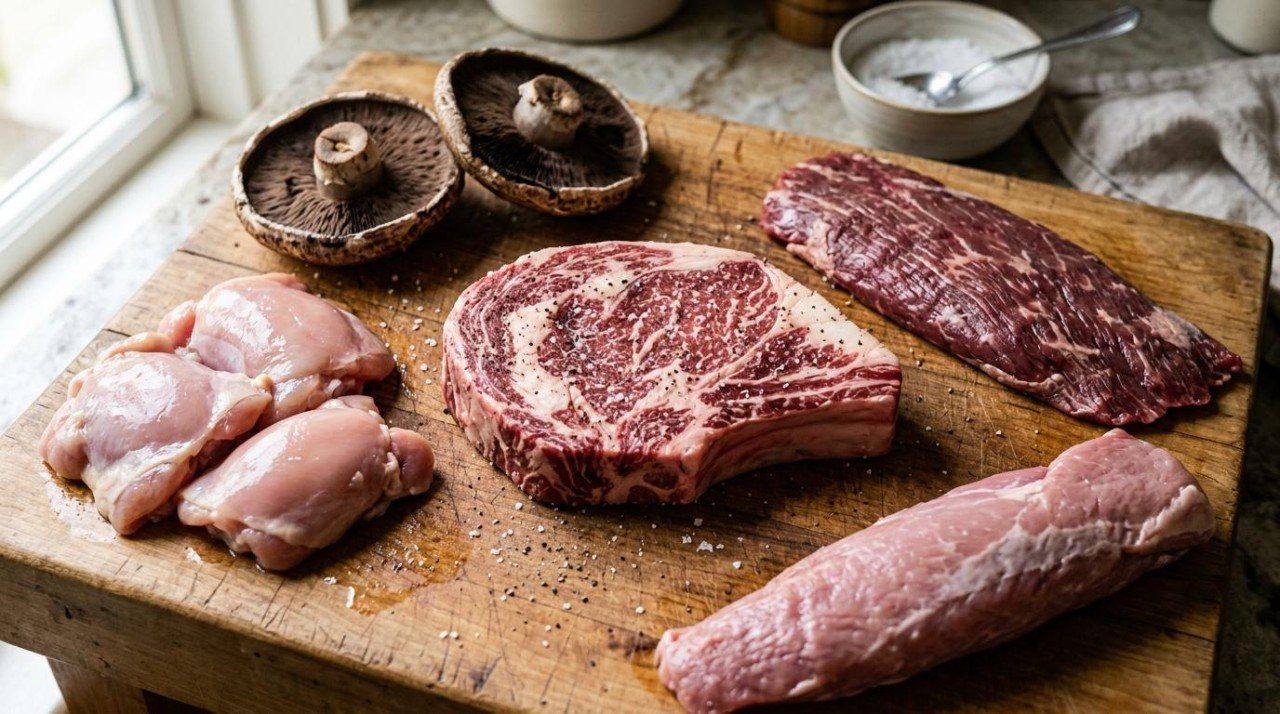
Either way, here is the useful thing to know: "steak" is not one ingredient. It is a handful of tender, quick-cooking muscles that can go straight onto high heat - and the butcher case is full of cheaper cuts that do the same job once you know how to treat them. Boneless USDA Choice sirloin, the steak most people think of as the "affordable" one, averaged $14.11 a pound in September 2026, according to the Bureau of Labor Statistics. Boneless round steak averaged $9.84 the same month - about 30% less - and it can make an excellent steak dinner if you slice it right.
The trick is matching the substitute to the dish. A cut that is perfect for fajitas is wrong for a whole grilled steak, and the thing that rescues a cheap stir-fry cut is useless on a slab you want to serve pink. So every swap below comes with what it is good for, what it is not, and the one technique that makes it work.
The Quick List
- Top sirloin — the everyday all-purpose steak; lean, beefy, and the safest straight swap
- Chuck eye steak — the "poor man's ribeye," cut right next to the ribeye and nearly as rich
- Flat iron steak — tender, marbled shoulder steak that behaves like a premium cut
- Tri-tip — a sirloin cut sold as a small roast or steaks; perfect for grilling and slicing
- Flank steak — the classic for stir-fry, carne asada, and London broil
- Skirt or hanger steak — the most flavor per bite; made for fajitas and fast, hot grills
- Top round or eye of round — the budget champion; lean and tender only when sliced thin
- Chuck roast or cube steak — for braised and pounded steak dishes, the cheapest "steak" in the case
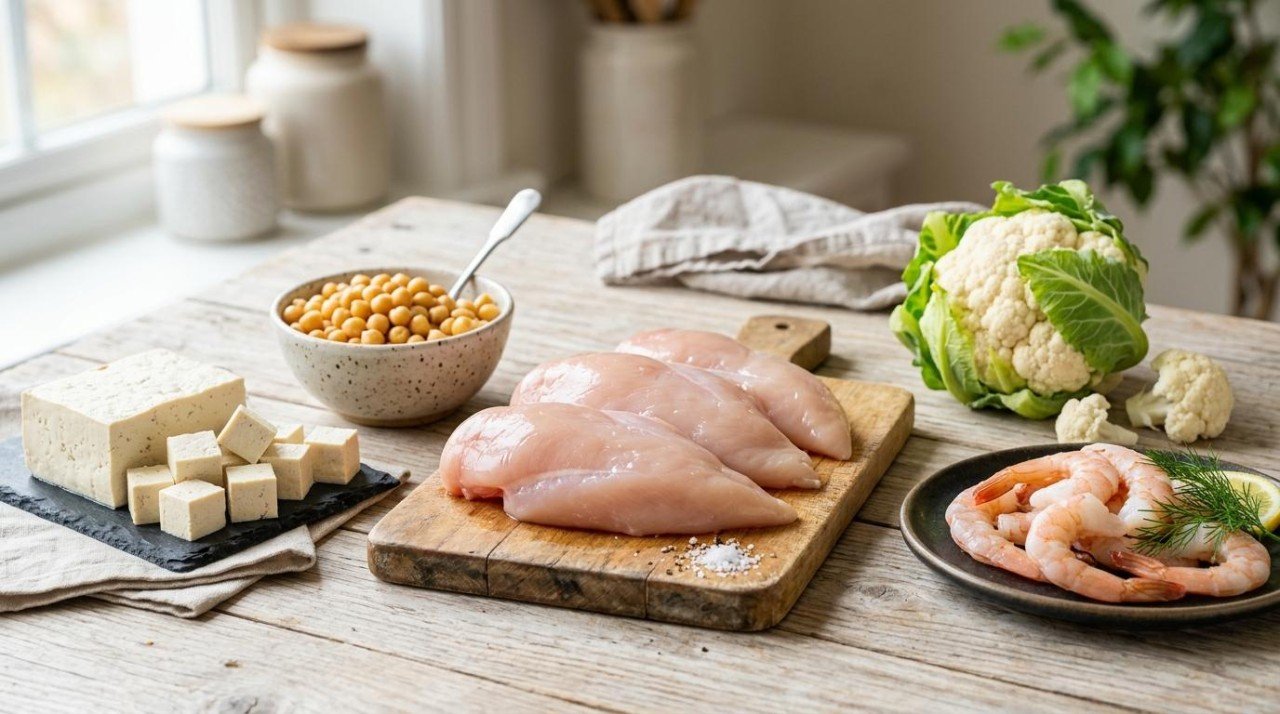
- Boneless chicken thighs — the poultry swap that holds up to steak marinades and high heat
- Pork tenderloin — lean, mild, and cooked to the same 145°F as beef
- Portobello mushrooms — the meaty plant swap for grilled and "steak" sandwiches
- Seitan or tempeh — the chewiest plant proteins, best sliced into stir-fries and fajitas
Top Sirloin
- Swap: 1 lb ribeye or strip steak → 1 lb top sirloin, cut about 1 to 1½ inches thick
- Best for: Grilled or pan-seared steak, steak salads, kebabs, steak bites, anything you would serve sliced
- Skip it for: Recipes that rely on a fatty cut's richness, like a reverse-seared ribeye served with no sauce
- Cook & tenderness: Sear hard and pull it a few degrees early - lean cuts go from juicy to dry quickly
- Health notes: Per 4 oz raw, about 153 calories, 5 g fat and 1.9 g saturated fat with 25 g protein, against 273 calories, 21 g fat and 9.2 g saturated fat for a choice ribeye
Top sirloin is the most straightforward steak substitute there is. It has a real beefy flavor, it is tender enough to grill and serve whole, and it is sold almost everywhere. What it lacks is the ribeye's marbling, which is both its nutritional advantage and its one weakness in the pan: there is less fat to protect it if you overshoot.
Two things close most of the gap. Salt it ahead - America's Test Kitchen recommends 1½ teaspoons of kosher salt per pound, at least 45 minutes and up to 24 hours before cooking, uncovered in the fridge, which seasons it deeply and helps it stay juicy. Then cook it hot and fast and rest it before slicing. A pat of herb butter or a spoonful of chimichurri on top replaces the richness a fattier cut would have brought.
Chuck Eye Steak
- Swap: 1 ribeye → 1 to 2 chuck eye steaks (they are usually smaller, about 8 to 10 oz each)
- Best for: Recipes written for ribeye - grilled, cast-iron seared, steak and eggs
- Skip it for: Stir-fries and thin-sliced dishes, where its seams of fat and connective tissue get in the way
- Cook & tenderness: Treat it exactly like ribeye - hot sear, medium-rare to medium
- Health notes: Nutritionally close to ribeye: about 257 calories, 19 g fat and 8.1 g saturated fat per 4 oz raw, with notably more zinc (about 8 mg vs. 5.5 mg)
The chuck eye is cut from the end of the chuck roll right where it meets the rib section, so it is a continuation of the same muscle that makes a ribeye. That is why it has the same marbling and rich, buttery flavor, and why it earned its nickname. It is usually priced well below ribeye, though the secret is out at some stores.
The catch is consistency. Only the steaks cut closest to the rib are truly ribeye-like; ones cut farther into the shoulder get chewier and more seamed. Look for a steak with a round "eye" of meat surrounded by marbling, and if your store does not stock them, ask the butcher - they are often cut on request.
Flat Iron Steak
- Swap: 1 lb strip, ribeye, or tenderloin → 1 lb flat iron
- Best for: Grilling, pan-searing, steak sandwiches, sliced steak over salads or grain bowls
- Skip it for: Long braises (it is a fast-cooking cut) or recipes that need a thick steak for a long reverse sear
- Cook & tenderness: Medium-rare to medium, rested, then sliced against the grain
- Health notes: In the middle of the pack: about 206 calories, 13 g fat and 4.8 g saturated fat per 4 oz raw, roughly half the saturated fat of ribeye
The flat iron comes from the top blade muscle of the shoulder, which turned out to be remarkably tender once butchers learned to cut it away from the tough sinew running through its middle. It is often ranked second only to the tenderloin for tenderness, with more flavor and marbling than most "lean" steaks, and it is still usually cheaper than the premium cuts it competes with.
Because it is thin and evenly shaped, it cooks quickly and evenly - four to five minutes a side on a hot grill is typical. If you see "top blade steak" instead, it is the same muscle with the sinew left in. It tastes great, but cut around the gristle when you slice it.
Tri-Tip
- Swap: 2 lb of individual steaks → one 2 lb tri-tip roast, grilled whole and sliced (or buy tri-tip steaks and use 1:1)
- Best for: Grilling and smoking for a crowd, steak sandwiches, sliced steak dinners, meal-prep steak
- Skip it for: Serving whole individual steaks on the plate (unless you buy it pre-cut into steaks)
- Cook & tenderness: Sear, then finish over indirect heat; slice thin against the grain, which changes direction partway through the roast
- Health notes: Lean: about 175 calories, 8 g fat and 2.4 g saturated fat per 4 oz raw, with 24 g protein
Tri-tip is a triangular cut from the bottom sirloin, a Santa Maria barbecue staple that has spread far beyond California. It is beefy, reasonably tender, and forgiving to cook as one piece - which makes it ideal when a recipe calls for several steaks and you are cooking for a group.
The single most important tip: the grain runs in two directions. Cut the roast in half where the fibers change direction, then slice each half across its own grain. Slice it the wrong way and even a perfectly cooked tri-tip will chew like a tough cut.
Flank Steak
- Swap: 1 lb sirloin or strip for stir-fry or slicing → 1 lb flank steak
- Best for: Stir-fries, carne asada, London broil, steak salads, beef and broccoli, fajitas
- Skip it for: Serving whole as an individual steak - it needs slicing to be tender
- Cook & tenderness: Marinate, sear hot, keep it medium-rare to medium, and slice thin across the grain
- Health notes: About 187 calories, 9 g fat and 3.9 g saturated fat per 4 oz raw, with 24 g protein
Flank is a wide, flat, lean cut from the belly with long, obvious muscle fibers. Cooked whole and cut into thick pieces, it is chewy. Sliced thin against those fibers, every bite is tender, which is why it shows up in so many marinated and sliced dishes. It also takes on marinades better than almost any other cut.
Flank is not the bargain it once was - its popularity has pushed the price up - so compare it per pound with top round and sirloin before deciding. For stir-fries, there is a trick that makes even cheaper beef behave like flank (see "How to Make a Cheap Cut Eat Like an Expensive One" below).
Skirt or Hanger Steak
- Swap: 1 lb flank or sirloin for fajitas or tacos → 1 lb skirt or hanger steak
- Best for: Fajitas, tacos, steak frites, quick-grilled steak with a punchy sauce
- Skip it for: Slow cooking, or anything cooked past medium - it tightens up and gets tough
- Cook & tenderness: As hot and fast as you can - a few minutes a side - then slice across the grain
- Health notes: Richer than flank: about 194 calories, 11 g fat and 4 g saturated fat per 4 oz raw, with about 7 mg zinc
Skirt steak is the long, thin diaphragm muscle, and it is arguably the most flavorful steak on the animal. Its loose, open grain soaks up marinade in under an hour and its thinness means it chars outside before it overcooks inside - exactly what you want for fajitas. Hanger steak, which hangs nearby, is similar: deeply beefy, tender, and best at medium-rare. There is only one hanger per animal, so it can be hard to find.
Skirt has become a restaurant favorite and its price has climbed accordingly. If it costs more than sirloin where you shop, flank or thinly sliced top round will do the same job in a fajita for less.
Top Round or Eye of Round
- Swap: 1 lb sirloin or flank for slicing → 1 lb top round (often sold as "London broil") or eye of round
- Best for: London broil, stir-fries, Philly cheesesteaks, steak sandwiches, jerky, thin-sliced steak salads
- Skip it for: Serving as a thick whole steak cooked past medium - it is the leanest cut here and the least forgiving
- Cook & tenderness: Marinate or salt ahead, cook no further than medium-rare to medium, and slice as thin as you can
- Health notes: The leanest beef on this list: about 141 calories, 3.7 g fat and 1.4 g saturated fat with 27 g protein per 4 oz raw
Round cuts come from the hard-working back leg, so they are lean and have little marbling. That makes them the best value for protein in the beef case and the easiest to ruin. The fix is entirely in the knife: partially freeze the meat for 15 to 20 minutes so it firms up, then slice it paper-thin across the grain. Cut that way, top round makes a cheesesteak - our healthier Philly cheesesteak uses it - or a stir-fry that nobody will identify as a "cheap cut."
For a whole London broil, marinate it for a few hours, broil or grill it hard to medium-rare, rest it for 10 minutes, and slice thin on a sharp angle. Eye of round is even more uniform and a bit milder - excellent for roast beef or homemade deli-style beef, less so for the grill.
Chuck Roast or Cube Steak
- Swap: 1½ lb steak for a braised or smothered dish → 1½ lb chuck roast, cut into steaks or chunks. For chicken-fried or country-fried steak → cube steak, 1:1
- Best for: Swiss steak, smothered steak, steak and ale pie, steak in a slow cooker, chicken-fried steak (cube steak)
- Skip it for: Quick grilling or searing as a whole steak - chuck needs time, and cube steak is too thin to serve pink
- Cook & tenderness: Chuck: brown, then braise covered at a low simmer for 1½ to 2½ hours until fork-tender. Cube steak: bread and pan-fry 2 to 3 minutes a side
- Health notes: Fattier than round, with collagen that melts into the sauce; trim visible fat before braising
Plenty of "steak" recipes are not really about steak at all. Swiss steak, smothered steak, and steak pie all cook the meat in liquid for a long time, and an expensive tender cut gains nothing from that - it just dries out. Chuck, full of collagen that turns into gelatin over a long braise, is the right cut, and it is among the cheapest in the case. The collagen is what makes the sauce silky and the meat spoonably tender.
Cube steak is top or bottom round that has been run through a tenderizer, leaving those characteristic little dimples. It is the standard cut for chicken-fried steak - our healthier chicken-fried steak shows how to make it a little lighter - and it is also great simmered in a mushroom or tomato gravy.
Boneless, Skinless Chicken Thighs
- Swap: 1 lb steak → 1 to 1¼ lb boneless, skinless chicken thighs
- Best for: Fajitas, stir-fries, kebabs, steak-marinade recipes, grain bowls, tacos
- Skip it for: Any recipe where the beef is the star and served pink - the flavor is milder and it must be cooked through
- Cook & tenderness: Poultry must reach 165°F, compared with 145°F for whole beef. Thighs stay juicy even when cooked well past that, which makes them far more forgiving than chicken breast
- Health notes: About 137 calories, 4.7 g fat and 1.2 g saturated fat with 22 g protein per 4 oz raw - but much less iron and zinc than beef
When the steak's job is to carry a marinade - fajitas, carne asada-style tacos, a soy-ginger stir-fry - chicken thighs are the swap that loses the least. They have enough fat to stay moist over high heat, they char nicely, and they are typically a fraction of the price of any steak. Use the same marinade and spices; just cook them through.
For more on getting the most out of thighs, see our substitutes for chicken thighs guide, which covers the same cut from the other direction.
Pork Tenderloin
- Swap: 1 lb steak → 1 lb pork tenderloin, cut into 1½-inch medallions or sliced for stir-fry
- Best for: Medallions with a pan sauce, grilled with a rub, stir-fries, kebabs
- Skip it for: Recipes that need a deep beef flavor, like steak au poivre or a beef-forward stew
- Cook & tenderness: Same safe temperature as beef steaks: 145°F with a 3-minute rest, so it can stay faintly pink
- Health notes: Very lean: about 124 calories, 2.5 g fat and 0.8 g saturated fat with 24 g protein per 4 oz raw
Pork tenderloin is tender, mild, quick-cooking, and often among the cheapest whole cuts per pound. Because whole pork shares beef's 145°F safe minimum, you can cook it on a steak's timeline and serve it juicy. Peel off the silvery membrane first, and lean on bold sauces - mustard, peppercorn, chimichurri - to make up for the milder flavor. Our substitutes for pork chops guide has more on cooking it.
Portobello Mushrooms
- Swap: 1 steak (6 to 8 oz) → 2 large portobello caps, gills scraped, marinated at least 15 minutes
- Best for: Grilled "steaks," steak sandwiches and cheesesteaks, fajitas (cut into strips), burgers
- Skip it for: Recipes where steak is the main source of protein - pair them with beans, lentils, or a grain
- Cook & tenderness: Grill or sear over medium-high heat 4 to 5 minutes a side, pressing to release moisture, until browned and tender
- Health notes: About 22 calories and 2 g protein per 100 g - very low in calories, but nowhere near steak's protein
Portobellos are the classic meaty plant swap because they hit what people actually notice about steak: a savory, deeply browned surface and a dense, juicy chew. A soy-balsamic-garlic marinade turns them into a real main course on the grill, and sliced thin they are a great stand-in in a cheesesteak or fajitas.
Even if you do not go fully meatless, mushrooms can stretch steak. In a small crossover trial at Johns Hopkins (funded by the Mushroom Council), replacing beef with mushrooms in lunches cut calories, and participants rated the mushroom meals as just as palatable and satisfying. Slicing half a pound of mushrooms into a pound of steak for fajitas or a stir-fry is an easy way to make one steak feed more people. Our post on cutting your meat budget without going vegetarian has more ideas like this.
Seitan or Tempeh
- Swap: 1 lb steak → 1 lb seitan or tempeh, sliced into strips
- Best for: Stir-fries, fajitas, Korean-style bulgogi, steak sandwiches, sliced in grain bowls
- Skip it for: A whole grilled steak, and anyone with celiac disease or a gluten sensitivity (seitan is pure wheat gluten - use tempeh instead)
- Cook & tenderness: Already cooked or ready to cook - marinate and sear until browned. Steam tempeh for 10 minutes first to soften any bitterness
- Health notes: Tempeh has about 23 g protein per 4 oz, on par with steak. Seitan is made from vital wheat gluten, about 75% protein by weight before it is mixed with liquid; store-bought versions vary, so check the label
Seitan has the chewiest, most meat-like texture of any plant protein, which makes it the most convincing beef swap in a stir-fry or sliced into a sandwich. Tempeh is firmer and nuttier, a fermented whole-soybean cake that holds its shape in a hot pan and brings fiber along with its protein. Both soak up a bold marinade and both need a hard sear to taste their best.
Extra-firm tofu works too, especially in stir-fries; our tofu substitutes guide compares it with tempeh and seitan, and how to cook tofu and tempeh so it tastes good covers the technique.
How to Make a Cheap Cut Eat Like an Expensive One
Most of the difference between a $20 steak and a $10 one is tenderness, and most of that can be fixed with technique:
- Slice against the grain, thinly. This is the single biggest factor for flank, skirt, round, and tri-tip. Find the direction of the muscle fibers and cut across them, so each bite has short fibers instead of long chewy strands
- Salt ahead. 1½ teaspoons of kosher salt per pound, at least 45 minutes and up to 24 hours before cooking, uncovered in the fridge
- Use baking soda for stir-fries. America's Test Kitchen tosses 1 pound of sliced flank steak with ¼ teaspoon baking soda dissolved in 1 tablespoon of water and lets it sit 5 minutes before marinating. It keeps thin-sliced beef tender in a hot wok - and works on top round too
- Do not overcook lean cuts. Round, sirloin, and flank have little fat to protect them. The USDA's safe minimum for whole beef steaks is 145°F with a 3-minute rest; going much past that is where lean cuts turn tough and dry
- Braise anything with lots of connective tissue. Chuck and other shoulder cuts get tough cooked fast and tender cooked slow - give them liquid and at least 1½ hours
- Marinate for flavor, not miracles. An acidic marinade seasons the surface and helps with browning, but it barely penetrates. Slicing does far more for tenderness
Which Swap for Which Dish
- Grilled or pan-seared whole steak: Top sirloin, chuck eye, flat iron, or tri-tip steaks. Portobello caps for a meatless plate
- Stir-fry and beef and broccoli: Flank, thinly sliced top round (with the baking soda trick), seitan, or tempeh
- Fajitas and tacos: Skirt, flank, chicken thighs, or portobello strips
- Cheesesteaks and steak sandwiches: Partially frozen top round sliced paper-thin, flat iron, or portobellos
- Braised, smothered, or slow-cooker "steak": Chuck roast cut into steaks or chunks
- Chicken-fried or country-fried steak: Cube steak
- Steak for a crowd or meal prep: Tri-tip or a top round London broil, cooked whole and sliced
The Healthier Angle
If you are swapping for budget reasons, you will often be swapping toward a leaner cut too. Per 4 ounces raw, USDA data puts a choice ribeye at about 9.2 g saturated fat - around 46% of the Daily Value. Chuck eye is close behind at 8.1 g. Flat iron drops to about 4.8 g, flank 3.9 g, top sirloin 1.9 g, and top round just 1.4 g, all while delivering slightly more protein per ounce because there is less fat in the way.
That does not make ribeye a bad food - beef is an outstanding source of iron, zinc, and vitamin B12 whichever cut you choose, and the leaner cuts keep almost all of that. (If you are wondering how red meat fits into a healthy diet at all, we dug into the research in Is Red Meat Really Killing You?) But if you eat steak regularly, sirloin and round are where the protein comes cheapest in both dollars and saturated fat.
The other big upgrade is making the steak one part of the plate rather than the whole thing. Six ounces of sliced flank fanned over a grain bowl with roasted vegetables feeds two people, where a 12-ounce ribeye might feed one. Adding mushrooms, peppers, onions, or beans also bumps up fiber and plant variety - something steak, on its own, contributes none of.
If you are not sure which swap fits the recipe you are making, the AI recipe chat in Eat Well Planner can tell you. Ask it "I am making this with ribeye but I have flank steak - what should I change?" and it answers with the full recipe in context, including how to adjust the cooking time and how to slice it. And if you want to see the nutritional effect first, Make It Healthier suggests swaps like sirloin for ribeye or adding mushrooms, then verifies the real change in the recipe's nutrition score with a calculator before suggesting it.
Take the Guesswork Out of Eating Well
Eat Well Planner helps you organize your favorite recipes, plan balanced meals, and automatically generate shopping lists — all in one place. Whether you're tracking macros, managing dietary restrictions, or just trying to stop asking "what's for dinner?", we've got you covered.
Our AI-powered tools can adapt any recipe to your dietary needs, help you discover new meals you'll love, and even log your nutrition effortlessly. It's meal planning made simple.
Start Organizing Your Meals — FreeWhat Not to Use
- Stew meat for a grilled or seared steak recipe. "Stew beef" is usually chuck or round scraps in random sizes. It needs a long braise and will be tough and uneven cooked fast
- Chuck roast cooked like a steak. Seared and served medium-rare, it is chewy and gristly. Braise it or choose chuck eye or flat iron instead
- Flank or skirt served whole or sliced with the grain. The fibers that make these cuts flavorful also make them tough when you cut them the wrong way
- Cooking top round or eye of round past medium. These cuts are so lean that every degree shows. Pull them early and slice thin
- Chicken breast in a steak marinade on a hot grill. It works in a pinch, but it dries out far faster than thighs. If you use it, pound it to an even thickness and watch it closely
- Ground beef as a steak substitute. Fine for a Salisbury steak, but it needs to reach 160°F and will not hold together as a seared steak. See our ground beef substitutes for recipes built around ground meat
The Bottom Line
For a grilled or seared steak, start with top sirloin, then chuck eye or flat iron when you want ribeye-style richness for less. For anything sliced - stir-fries, fajitas, cheesesteaks - flank, skirt, and thinly sliced top round do the job, often better than an expensive cut would. For slow-cooked steak dishes, chuck is not the compromise; it is the right choice. And when you want to step away from beef, chicken thighs and pork tenderloin are the easiest swaps, while portobellos, seitan, and tempeh cover the meatless side.
Whichever you pick, the rule is the same: match the cut to the cooking method, salt it ahead, do not overcook the lean ones, and slice against the grain. Get those four right and the price per pound matters a lot less than you would think. And if you are ever standing at the meat counter wondering whether a cut will work in the recipe at home, the AI recipe chat in Eat Well Planner can answer that, with your recipe in hand.