The melon is sliced, the asparagus is trimmed, or the pasta water is boiling, and there is no prosciutto in the fridge. Or maybe it is in the fridge and the price tag made you put it back. Either way, the good news is that prosciutto is easier to replace than its reputation suggests, as long as you match the substitute to how you are using it.
That is the key distinction with prosciutto: it gets used two completely different ways. Raw and draped, on a charcuterie board, over melon, on a pizza after it comes out of the oven, the job is delicate, silky, sweet-salty meat that melts on the tongue. Cooked, wrapped around chicken or asparagus, crisped into shards, or rendered into a pasta sauce, the job is salt, savory depth, and crunch. A swap that is perfect for one is often wrong for the other, so each substitute below says which side it is on.
Here are the swaps that actually work, most versatile first, with exact amounts and an honest note on what each is not good for.
The quick list
- Serrano ham — the closest like-for-like for anything raw or cooked; a touch firmer and saltier
- Speck — prosciutto with a whisper of smoke; great raw and even better crisped
- Pancetta — the best stand-in for prosciutto in cooked pasta and sauces
- Coppa (capicola) — richer, more marbled slices for boards, sandwiches, and pizza
- Bresaola — lean air-dried beef; the lighter pick for boards, salads, and wraps
- Thin-sliced deli ham — the budget swap for sandwiches, panini, and stuffed chicken
- Bacon — for wrapping and crisping only, with smoke and more fat
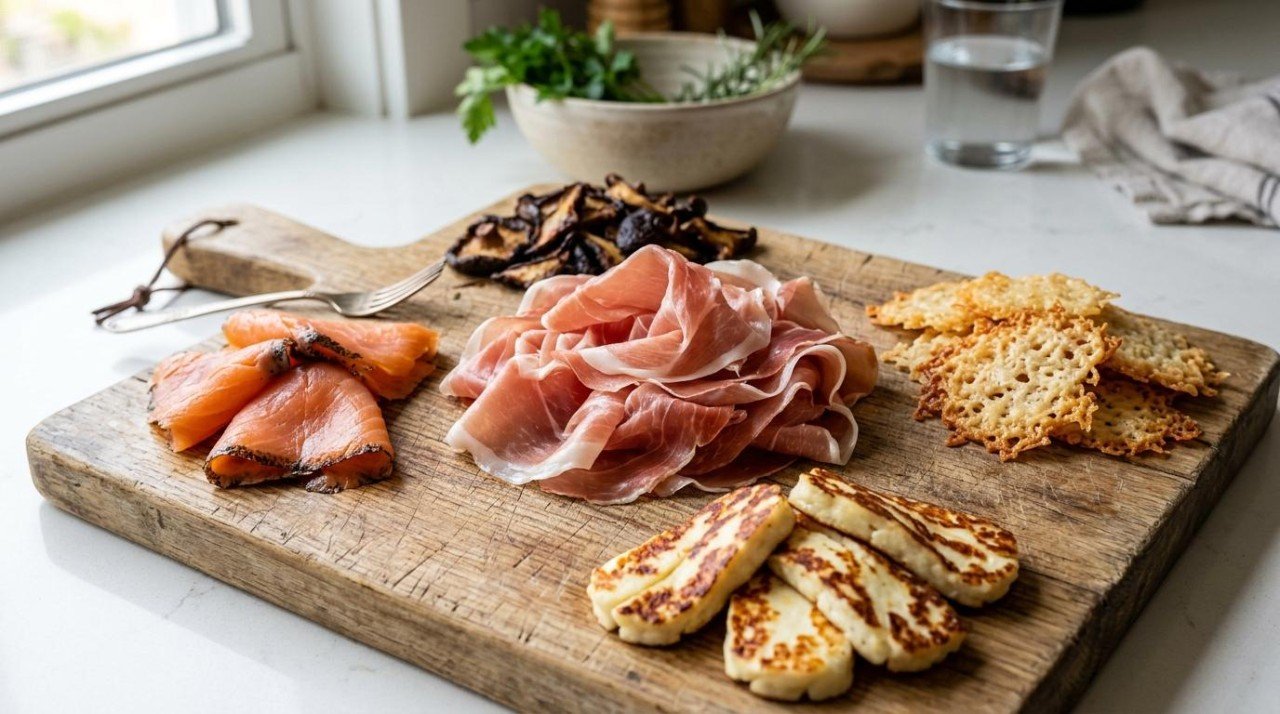
- Smoked salmon — silky, salty, and pork-free for melon, asparagus, and canapes
- Crispy shiitake — the meat-free swap for crispy prosciutto on pasta, salads, and soups
- Parmesan crisps — salty crunch with no meat, for salads and soups
- Fried capers — tiny salty, crunchy bursts for pasta, fish, and eggs
- Grilled halloumi — salty, warm, and meaty-textured with melon, figs, and peaches
Serrano ham
- Swap: 1:1, slice for slice or ounce for ounce
- Best for: Charcuterie, melon, figs, sandwiches, wrapping, crisping, finishing pizza
- Skip it for: Nothing really; just expect a slightly chewier, saltier slice
Spain's jamon serrano is prosciutto's closest relative: a whole pork leg, salted and air-dried for months, sold sliced thin. It does every job prosciutto does, raw or cooked, which is why it tops the list. The differences are small. Serrano tends to be a little drier, firmer, and more assertively salty than a buttery Prosciutto di Parma, with a deeper, nuttier flavor.
Because it is a bit firmer, it shines most draped over something juicy (melon, ripe pears, tomatoes) or crisped in the oven. If you can find jamon iberico, it is an even closer match for richness, but it costs considerably more than prosciutto, so it is a treat rather than a workaround.
Speck
- Swap: 1:1 by slice or weight
- Best for: Boards, sandwiches, pizza, wrapping chicken or pork, crisping, pasta
- Skip it for: Delicate dishes where you do not want any smoke, like a classic melon plate
Speck is a cured ham from the Alto Adige region in northern Italy, close to Austria, and it is essentially prosciutto with a twist: it is boned before curing, seasoned with spices like juniper and pepper, and lightly smoked. The texture is very similar, so it slices thin and drapes beautifully, but the flavor leans darker and woodier.
That subtle smoke is a bonus in cooked dishes. Speck crisps beautifully, adds depth to a cream sauce or a pan of Brussels sprouts, and wraps chicken breasts or pork tenderloin with more flavor than prosciutto itself. On a sweet fruit plate it can feel a little heavy, so use serrano or bresaola there instead.
Pancetta
- Swap: 1:1 by weight, diced or thinly sliced; cut back slightly on added salt
- Best for: Pasta, risotto, soups, sauteed greens, peas, beans, any recipe where the prosciutto gets cooked into the dish
- Skip it for: Raw draping, melon, and boards, where its fat-streaked texture is too chewy
Pancetta is cured pork belly rather than leg, which means it is fattier and built to be cooked. For any recipe where prosciutto is diced and sizzled into the base of a dish, like pasta with peas, a white bean soup, or sauteed spinach, pancetta is arguably the better ingredient: its fat renders into the pan and carries flavor through the whole dish. It is cured but usually not smoked, so it keeps prosciutto's clean, porky flavor.
Raw, it is a different story. Pancetta is cured, and in Italy it is sometimes sliced paper-thin and eaten as is, but it is chewier and much fattier than prosciutto, so it will not give you that melt-on-your-tongue drape on a board or over fruit. Most pancetta sold in US grocery stores is meant for cooking, so check the package and treat it as a cooking ingredient.
Coppa (capicola)
- Swap: 1:1 by slice or weight
- Best for: Charcuterie, sandwiches, panini, pizza (before or after baking)
- Skip it for: Wrapping, where the round slices are hard to roll; and lighter fruit plates if you want delicacy
Coppa is cured pork from the neck and shoulder, which gives it more marbling than lean prosciutto and often a peppery or spicy seasoning. Sliced thin, it is silky, rich, and full-flavored, which makes it a natural on a charcuterie board or layered into a sandwich where prosciutto would normally go.
It is bolder than prosciutto, so a little goes a long way. Hot capicola, rubbed with chili, is great on pizza but can overwhelm melon. Look for sweet or mild coppa when you want something closer to prosciutto's gentle flavor.
Bresaola
- Swap: 1:1 by slice or weight
- Best for: Boards, salads (especially arugula, lemon, and shaved Parmesan), wrapping breadsticks or cheese, melon
- Skip it for: Crisping and rendering, since it has almost no fat to melt
- Health notes: Very lean and high in protein; still salty, so not a low-sodium pick
Bresaola is air-dried, salted beef, traditionally made from the round in the Valtellina valley of northern Italy. It is deep red, silky when sliced paper-thin, and much leaner than any cured pork: labeled brands typically list only around 2 to 6 grams of fat per 100 grams. That makes it the natural pick when you want prosciutto's feel on a board or salad with less fat, or when someone at the table does not eat pork.
The flavor is beefier and slightly mineral, with less sweetness than prosciutto. The classic way to serve it, rolled over arugula with lemon, olive oil, and Parmesan, works for any recipe that calls for prosciutto with greens. Just do not try to crisp it; with so little fat it dries out and turns leathery rather than shatter-crisp.
Thin-sliced deli ham
- Swap: 1:1 by weight; ask the deli to slice it as thin as possible
- Best for: Sandwiches, panini, stuffed chicken, wraps, sliders, baked pastry pinwheels
- Skip it for: Boards and fruit plates, and crisping, where it stays chewy instead of shattering
Ordinary cooked ham is wetter, milder, and sweeter than prosciutto, so it is not going to impress on a charcuterie board. But inside a hot sandwich, a stuffed chicken breast, or a puff pastry pinwheel, the prosciutto mostly contributes salt and savory pork flavor, and thin-sliced ham handles that job for a fraction of the price. Black Forest ham, which is smoked, has a little more character and is the best of the deli options here.
If you are trying to eat less processed meat in general, our guide to deli ham substitutes has fresher options for sandwiches, like home-roasted chicken or pork.
Bacon
- Swap: Use thin-cut bacon 1:1 by slice for wrapping; 1:1 by weight, diced, in cooked dishes
- Best for: Wrapping dates, asparagus, chicken, and scallops; crumbled over salads, soups, and pasta
- Skip it for: Anything served raw, and dishes where smoke would clash
Bacon is the swap most people have on hand, and for cooked prosciutto jobs it works well, as long as you know it changes the dish. It is smokier, fattier, and needs longer to cook. Prosciutto-wrapped asparagus crisps in about 10 minutes; bacon-wrapped needs closer to 20 minutes at 400 degrees F, so use thin-cut bacon and thinner ingredients, or partially cook the bacon first so the wrapped food does not overcook.
Never use bacon raw in place of prosciutto. Unlike dry-cured ham, bacon is sold uncooked and must be cooked through. If you are out of both, our bacon substitutes guide covers smoky, crispy alternatives that also work here.
Smoked salmon
- Swap: 1:1 by slice for raw uses
- Best for: Wrapping blanched asparagus, cucumber or melon bites, canapes, white pizza after baking, pasta added at the end
- Skip it for: Wrapping and roasting, and sweet fruit like figs where the fishiness clashes
- Health notes: Brings omega-3 fats; still salty, so go easy on other salty toppings
For raw, draped uses, smoked salmon has more in common with prosciutto than you might expect: thin, silky, salty, and luxurious. It is the go-to swap when you want the same elegant look without pork. Wrap it around blanched asparagus, curl it onto cucumber rounds with a little cream cheese and dill, or drape it on a white pizza straight out of the oven.
Do not cook it the way you would cook prosciutto. Smoked salmon turns dry and fishy-tasting in a hot oven, so in pasta, stir it in off the heat right before serving. And it pairs better with bright, savory flavors (lemon, capers, dill, cucumber) than with the sweet fruit that prosciutto loves.
Crispy shiitake
- Swap: 4 ounces thinly sliced shiitake caps tossed with 1 tablespoon olive oil, 2 teaspoons soy sauce, and 1/4 teaspoon smoked paprika; roast at 375 degrees F for 15 to 20 minutes, stirring once, until crisp. Replaces about 2 ounces crisped prosciutto.
- Best for: Pasta, risotto, salads, soups, grain bowls, avocado toast, anywhere crispy prosciutto is a topping
- Skip it for: Draping, wrapping, and boards
- Health notes: Adds fiber and plant variety, and has a fraction of the sodium
Crisped prosciutto, broken into shards over pasta or a salad, is all about salty, savory crunch, and thinly sliced shiitake mushrooms roasted with a little soy sauce get remarkably close. Shiitakes are naturally rich in the savory compounds that make cured meat taste so satisfying, and the oven turns them into chewy-crisp, deeply flavored chips.
Slice them thin and spread them out on the pan so they roast rather than steam. Watch the last few minutes closely, because they go from crisp to burnt quickly. They will not fool anyone into thinking it is ham, but on a bowl of pasta with peas or a spinach salad, nobody misses the meat.
Parmesan crisps
- Swap: Bake 1 tablespoon mounds of finely grated Parmesan on parchment at 400 degrees F for 5 to 7 minutes, until golden and lacy. About 1/2 cup grated Parmesan replaces 2 ounces crisped prosciutto.
- Best for: Salads, soups, roasted vegetables, pasta, risotto
- Skip it for: Vegetarians who avoid animal rennet (traditional Parmesan uses it), and anything that needs to be wrapped
If the prosciutto was going to be crumbled over a dish for salty crunch, Parmesan crisps (Italians call them frico) do the same job with no meat at all. They take minutes, use one ingredient, and add the same nutty, savory, aged flavor that makes prosciutto taste so good on top of a salad or a bowl of soup.
Let them cool for a minute on the pan before moving them; they firm up as they cool. For a vegetarian version, look for a Parmesan-style cheese made with microbial rennet. See our Parmesan substitutes guide if you are out of that too.
Fried capers
- Swap: 2 tablespoons drained, patted-dry capers fried in 2 tablespoons olive oil over medium-high heat for 1 to 2 minutes until they open and crisp. Replaces about 1 to 2 ounces of crisped prosciutto as a topping.
- Best for: Pasta, fish, chicken, roasted cauliflower or potatoes, eggs, salads
- Skip it for: Anywhere you need bulk or a meaty bite; and sweet fruit plates
Capers fried in olive oil blossom into tiny, crunchy, salty bursts that deliver the same pop as crumbled crispy prosciutto, plus a little brightness. Dry them thoroughly first, as wet capers spatter. And do not throw out the oil: it is now caper-flavored and makes an excellent base for a pasta sauce or a dressing.
They are very salty, so taste before seasoning the rest of the dish. If you are out of capers as well, our capers substitutes guide has options.
Grilled halloumi
- Swap: 1 ounce halloumi, sliced 1/4 inch thick and seared 2 to 3 minutes per side, for every 1 ounce of prosciutto
- Best for: Melon, watermelon, figs, peaches, salads, sandwiches
- Skip it for: Wrapping, crisping into shards, and low-sodium cooking
Sweet fruit paired with salty prosciutto is one of the great combinations, and halloumi recreates it without meat. The cheese has such a high melting point that it browns in a hot pan instead of oozing, giving you a warm, salty, slightly squeaky bite that is fantastic with cold melon, ripe figs, or grilled peaches and a drizzle of honey.
Serve it right away, because halloumi turns rubbery as it cools. It is salty and fairly rich, so treat it as the accent of the plate, just as you would the prosciutto.
Take the Guesswork Out of Eating Well
Eat Well Planner helps you organize your favorite recipes, plan balanced meals, and automatically generate shopping lists — all in one place. Whether you're tracking macros, managing dietary restrictions, or just trying to stop asking "what's for dinner?", we've got you covered.
Our AI-powered tools can adapt any recipe to your dietary needs, help you discover new meals you'll love, and even log your nutrition effortlessly. It's meal planning made simple.
Start Organizing Your Meals — FreeWhich substitute for which dish
Because prosciutto does such different jobs, here is the quick answer by dish:
- Melon, figs, or other fruit: serrano ham, bresaola, or (meat-free) grilled halloumi
- Charcuterie board: serrano, speck, coppa, or bresaola
- Pizza after baking: serrano, speck, coppa, or smoked salmon on a white pizza
- Wrapped chicken, pork, asparagus, or dates: speck or serrano; thin-cut bacon if you accept a longer cook and smokier result
- Pasta, risotto, and soups (cooked in): pancetta, or crispy shiitake for meat-free
- Crispy topping for salads and pasta: crisped speck or serrano, or meat-free crispy shiitake, Parmesan crisps, or fried capers
- Sandwiches and panini: coppa, speck, or thin-sliced deli ham
The healthier angle: what prosciutto really brings
Prosciutto deserves some credit: by cured-meat standards it is fairly lean. USDA data puts it at about 195 calories, 28 grams of protein, and 8 grams of fat per 100 grams. Authentic Prosciutto di Parma is made from nothing but pork and sea salt, and the consortium that governs it recently raised its minimum aging time from 12 to 14 months.
The real catch is salt. That same USDA entry lists roughly 2,700 milligrams of sodium per 100 grams, which works out to about 760 milligrams in a single ounce, or about a third of the 2,300-milligram daily limit in a few thin slices. And because it is salted and cured, it falls under the World Health Organization's definition of processed meat, which its cancer research agency classifies as carcinogenic to humans (Group 1), based on evidence linking it to colorectal cancer. That does not mean a few slices over melon are dangerous; it does mean cured meat works best as an occasional flavor accent rather than an everyday staple.
So if you are looking for swaps that also nudge your diet in a better direction, the ranking looks like this:
- Lowest sodium and most nutrition: crispy shiitake. You control the salt, and you gain fiber and a new plant for the week.
- Not processed meat, with omega-3s: smoked salmon, though it is also salty, so serve it with fresh, unsalted sides.
- Leaner cured meat: bresaola, with much less fat than any pork cure, but similar salt and still processed meat.
- Like-for-like, not lighter: serrano, speck, coppa, pancetta, ham, and bacon. Great for flavor, but not a health upgrade.
One practical trick that works with any cured meat: let it be the garnish, not the base. Two crisped slices crumbled over a big bowl of greens, beans, or roasted vegetables deliver nearly all of the flavor with a fraction of the salt of a plate built around the ham.
A food safety note: the CDC advises people at higher risk of listeria, including anyone pregnant, adults 65 and older, and people with weakened immune systems, to heat deli meats and cold cuts to 165 degrees F or until steaming hot. Crisping prosciutto, speck, or serrano in the oven does the job, and the meat-free swaps here sidestep the issue entirely.
What not to use
- Uncooked bacon or pancetta as a draped topping: bacon must be cooked through, and pancetta is far too fatty and chewy to drape over fruit or a finished pizza.
- Salami or pepperoni: fine on a board, but the fermented tang and spice overwhelm melon, and they cannot be wrapped around anything.
- Pre-cooked bacon bits: they add salt and smoke but none of prosciutto's delicate texture, and they are a heavily processed shortcut.
- Thick-cut deli meats for wrapping: anything thicker than paper-thin will not cling or crisp. Ask the deli for the thinnest setting.
Let the app match the swap to your recipe
The best prosciutto substitute depends entirely on what is in your pan, and a general guide can only get you so far. In Eat Well Planner, you can open any recipe and ask the AI recipe chat something like "I am making this and I am out of prosciutto, what should I use?" It will suggest a swap that fits that specific dish, with quantities adjusted for your servings.
If you are leaning toward meat-free options, the app's Recipe Variations feature can rewrite the whole recipe as a vegetarian version, with the prosciutto swap and any other adjustments worked in. And if you want to see how much sodium a swap really saves, the Recipe Playground shows the nutrition score change live as you edit ingredients, so you can find out whether crispy shiitake or a crumble of Parmesan is the better trade for tonight's dinner before you start cooking.