The tortillas are warming, the eggs are cracked, or the paella pan is on the stove, and there is no chorizo. Or there is chorizo, but it is the wrong kind. That second problem is more common than you would think, because "chorizo" in an American grocery store can mean two completely different sausages that share a name and almost nothing else.
So before you pick a substitute, figure out which chorizo your recipe means:
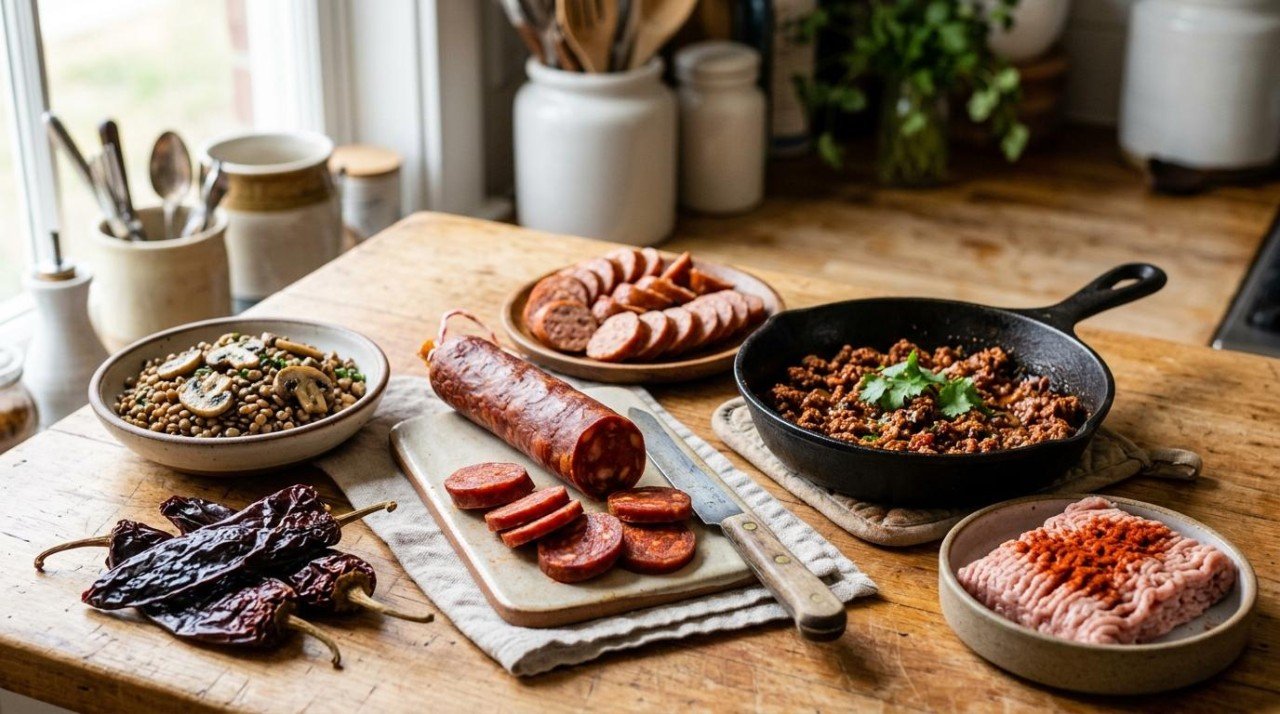
- Mexican chorizo is fresh and raw: loose, brick-red ground pork seasoned with dried chiles, vinegar, garlic, and spices. It is usually squeezed out of its casing and fried into a saucy crumble for tacos, eggs, queso fundido, and potatoes. It must be cooked through.
- Spanish chorizo is cured and firm: a dry, sliceable sausage seasoned mainly with smoked paprika (pimenton) and garlic. Fully cured versions are safe to eat as is, so it goes on boards and tapas plates, and it is also sliced or diced into paella, bean stews, and soups, where it stains everything a smoky orange.
Rule of thumb: if the recipe says to remove the casing, crumble, or brown the chorizo, it means Mexican. If it says to slice or dice it, or the dish is Spanish, it means Spanish. The substitutes below are split the same way, with exact amounts, plus a few meat-free options and an honest look at which swaps are actually lighter.
The quick list
For Mexican (raw) chorizo:
- DIY chorizo-spiced ground pork — the closest match, ready in 5 minutes from pantry spices
- Spiced ground turkey or chicken — same blend, far less fat and sodium
- Hot Italian sausage plus spices — the fastest store-bought swap for tacos and eggs
- Soy chorizo — ready-made and meat-free, with fiber, but just as salty
- Lentil-mushroom chorizo — the homemade plant-based crumble with the most nutrition
For Spanish (cured) chorizo:
- Linguica — the closest cousin: smoky, garlicky, paprika-seasoned Portuguese sausage
- Andouille — smoky and spicy; great in stews, beans, paella, and jambalaya
- Smoked kielbasa plus smoked paprika — the budget swap most fridges already have
- DIY Spanish-spiced ground pork — for cooked dishes when you have no sausage at all
- 'Nduja — spicy, spreadable, and melts into sauces; use half as much
- Pepperoni — for pizza, boards, and quick tapas
- Smoked paprika oil — the meat-free flavor stand-in for paella, beans, and soups
Substitutes for Mexican chorizo (raw, crumbled)
Mexican chorizo's job is simple: a rich, tangy, chile-red crumble whose fat seasons everything else in the pan. Any of these can do that job. The secret to all of them is the spice blend below, so it comes first.
DIY chorizo-spiced ground pork
- Swap: 1 pound ground pork + 1 tablespoon ancho chili powder, 1 teaspoon smoked paprika, 1 teaspoon ground cumin, 1 teaspoon dried oregano (Mexican if you have it), 3 minced garlic cloves, 3/4 teaspoon fine salt, 1/4 teaspoon ground cinnamon, 1/8 teaspoon ground cloves, a pinch of cayenne to taste, and 2 tablespoons apple cider vinegar. Replaces 1 pound Mexican chorizo.
- Best for: Tacos, breakfast burritos, scrambled eggs, chorizo and potatoes, queso fundido, stuffed peppers
- Skip it for: Slicing, boards, or anywhere you need a firm Spanish-style sausage
This is the real answer for most people, because Mexican chorizo is essentially seasoned ground pork. Mix the spices with the vinegar into a paste first, then work it evenly into the meat with your hands. It is good to cook right away, but if you can let it sit in the fridge for 1 hour (or overnight), the flavor goes deeper. Brown it in a skillet over medium-high heat for about 8 to 10 minutes, breaking it up as it cooks, until no pink remains (160 degrees F).
The vinegar matters more than people expect: that tang is what makes chorizo taste like chorizo rather than taco meat. Use the 84% lean pork most stores sell; the fat carries the chile color into your eggs or potatoes. No ancho? Regular chili powder works, but since American chili powder already contains cumin and oregano, cut those to 1/2 teaspoon each. If you are out of ground pork too, our ground pork substitutes guide has more options to season.
Spiced ground turkey or chicken
- Swap: 1 pound 93% lean ground turkey or chicken + the full DIY spice blend above + 1 tablespoon olive oil. Replaces 1 pound Mexican chorizo.
- Best for: Tacos, burrito bowls, egg scrambles, stuffed sweet potatoes, chili, weeknight anything
- Skip it for: Queso fundido and other dishes that rely on chorizo's rendered fat
- Health notes: About half the calories and a quarter of the saturated fat of pork chorizo, with far less sodium (you set the salt)
This is the healthiest meat swap on the list, and with the spice blend doing the heavy lifting, it tastes far more like chorizo than you would guess. Lean poultry has almost no fat to carry the flavor, so heat the oil in the pan first and stir the spice paste in well. A splash of water toward the end of cooking keeps the crumble saucy instead of dry.
Ground poultry must reach 165 degrees F, so cook it until no pink remains anywhere. Turkey thigh meat (93% lean) stays juicier than 99% lean breast, which turns sandy. For more ideas, see our ground turkey guide.
Hot Italian sausage plus spices
- Swap: 1 pound bulk hot Italian sausage (or links with the casing removed) + 1 teaspoon smoked paprika, 1/2 teaspoon ground cumin, and 1 tablespoon apple cider vinegar. Replaces 1 pound Mexican chorizo.
- Best for: Breakfast tacos, eggs, potato hash, stuffed mushrooms, pasta
- Skip it for: Dishes where fennel would clash, and anyone cutting sodium
Hot Italian sausage is already raw, fatty, salty, and spicy, so it behaves exactly like Mexican chorizo in the pan. The paprika and cumin push it toward chorizo's earthy, smoky side, and the vinegar adds the tang. Do not add extra salt: the sausage is already seasoned.
The giveaway is fennel seed, which most Italian sausage contains. It reads as a faint licorice note, which is lovely with eggs and potatoes but can feel slightly off in tacos. If that bothers you, the DIY ground pork above is worth the extra two minutes.
Soy chorizo
- Swap: 1:1 by weight; one 12-ounce package replaces 12 ounces Mexican chorizo
- Best for: Tacos, burritos, scrambled eggs or tofu scrambles, nachos, rice and beans
- Skip it for: Low-sodium cooking, and recipes where you want chunky, meaty texture
- Health notes: About 5.7 g fiber and 2 g saturated fat per 100 g, but roughly 1,040 mg sodium
Soy chorizo (often sold as "soyrizo") is the most convenient meat-free swap, and it nails the flavor: the same chile, vinegar, and spice profile in a soft, crumbly texture. Squeeze it out of the casing into a skillet with a little oil and cook for 5 to 8 minutes, stirring occasionally, so it browns and firms up. If you stir it constantly, it stays mushy.
It is a genuine upgrade in some ways. One widely sold brand lists 200 calories, 2.1 g saturated fat, and 5.7 g fiber per 100 g, against 296 calories, 8.6 g saturated fat, and no fiber for raw pork chorizo. But the same label lists about 1,040 mg sodium per 100 g, which is more than pork chorizo. Treat it as a meat-free swap, not a low-salt one.
Lentil-mushroom chorizo
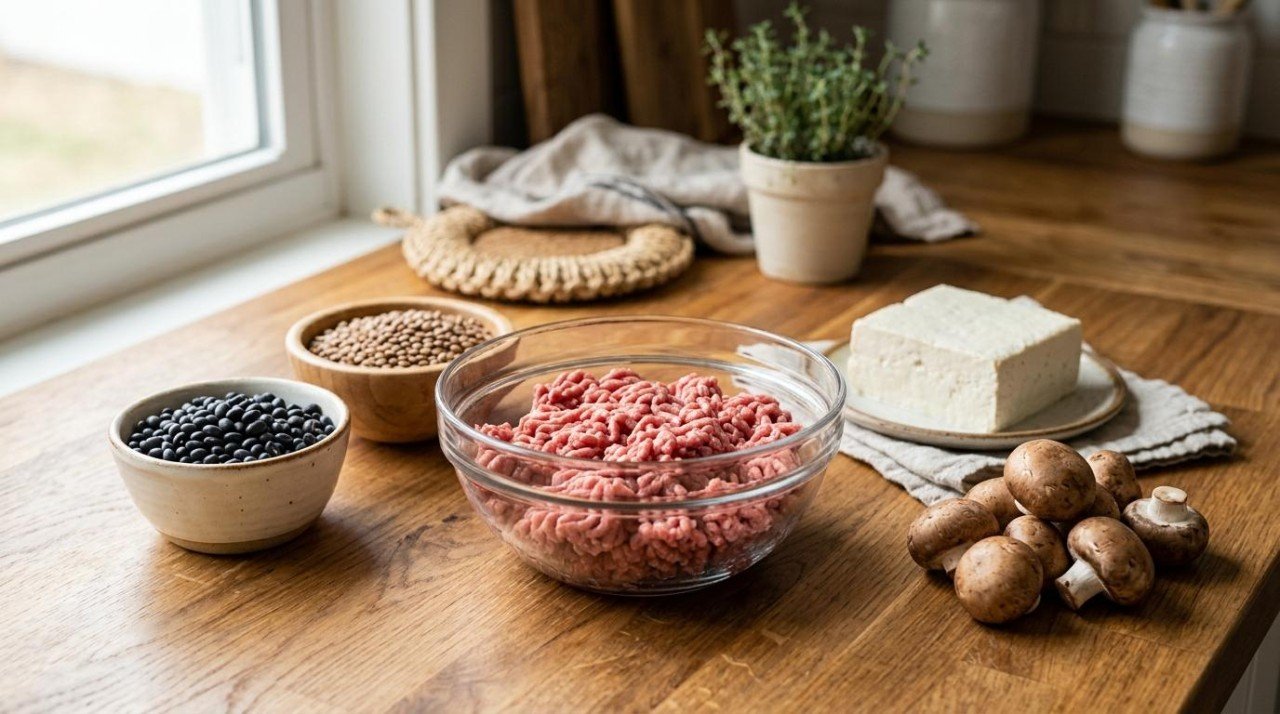
- Swap: 8 ounces finely chopped cremini mushrooms + 1 1/2 cups cooked brown or green lentils (one 15-ounce can, drained) + the full DIY spice blend + 2 tablespoons olive oil. Replaces about 12 ounces to 1 pound Mexican chorizo.
- Best for: Tacos, burrito bowls, sweet potato hash, nachos, stuffed peppers, quesadillas
- Skip it for: Recipes where you want rendered fat, like queso fundido
- Health notes: Fiber from the lentils, two new plants, and only the salt you add
For a homemade plant-based chorizo, this is the one to make. Cook the mushrooms in the oil over medium-high heat for 8 to 10 minutes, until their liquid evaporates and they brown. Stir in the spice paste and cook for 1 minute until fragrant, then add the lentils and cook 3 to 5 minutes more, mashing about a third of them with the back of a spoon. The mashed lentils bind the crumble and give it the soft, saucy texture of real chorizo.
The mushrooms bring savory depth, and the lentils bring heft: cooked lentils have about 9 g protein and 7.9 g fiber per 100 g. It freezes well, so a double batch covers two taco nights. Pressed, crumbled firm tofu also works in place of the lentils if that is what you have; our tofu guide covers how to get it browned and crumbly.
Substitutes for Spanish chorizo (cured, sliced)
Spanish chorizo brings three things to a dish: smoke, paprika-red fat, and a firm, chewy bite. In a cooked dish (paella, lentil or bean stew, caldo verde, potatoes), smoke and paprika matter most. On a board, texture matters most. Pick accordingly.
Linguica
- Swap: 1:1 by weight, sliced or diced
- Best for: Paella, bean and lentil stews, kale soup, rice dishes, grilled sausage sandwiches, eggs
- Skip it for: A traditional tapas board, where it is softer and milder than cured chorizo
Portuguese linguica is seasoned with garlic and paprika and usually smoked, which makes it the nearest thing to Spanish chorizo you can buy in many American supermarkets. It is softer and juicier rather than dry-cured and firm, and a bit milder, but in a stew or a pan of rice it behaves almost identically, releasing that same orange, paprika-tinted fat.
Most linguica sold in the US is smoked and fully cooked, but check the label: if it says to cook thoroughly, do so before eating it on its own. Portuguese chourico, if you can find it, is spicier and even closer.
Andouille
- Swap: 1:1 by weight, sliced or diced; add 1/2 teaspoon smoked paprika per 8 ounces for more chorizo character
- Best for: Paella, red beans, white bean stews, jambalaya, gumbo, sheet-pan dinners
- Skip it for: Boards and tapas, and anyone sensitive to heat
Cajun andouille is a coarse, heavily smoked pork sausage seasoned with garlic, black pepper, and cayenne. It brings even more smoke than Spanish chorizo and a peppery heat, but less of the sweet paprika flavor, which the pinch of smoked paprika restores. It holds its shape through long simmering, so it is excellent in stews and paella.
Brown the slices in the pan first and use the rendered fat to cook your onions and garlic. That is how Spanish chorizo is used in most stews, and andouille rewards the same treatment.
Smoked kielbasa plus smoked paprika
- Swap: 1:1 by weight + 1 teaspoon smoked paprika and a pinch of cayenne per 8 ounces
- Best for: Bean soups, lentil stews, potato dishes, rice skillets, sheet-pan dinners
- Skip it for: Boards and anywhere chorizo is the star
Smoked kielbasa is the sausage most likely to already be in your fridge, and while it is much milder than chorizo, the smoke is already there. Slice it, brown it, and then stir the smoked paprika and cayenne into the hot fat for 30 seconds before adding the rest of your ingredients. Blooming the paprika in fat is what turns the whole dish chorizo-red and carries the flavor.
Keep the heat low when the paprika goes in; it scorches in seconds and turns bitter.
DIY Spanish-spiced ground pork
- Swap: 8 ounces ground pork + 2 teaspoons smoked paprika (sweet, or half sweet and half hot), 1 minced garlic clove, 1/2 teaspoon fine salt, 1/4 teaspoon dried oregano, and a pinch of cayenne. Replaces about 6 to 8 ounces Spanish chorizo in a cooked dish.
- Best for: Paella, stews, beans, lentils, soups, pasta sauces, potatoes
- Skip it for: Boards and tapas; it is a cooking ingredient, not a cured sausage
If you have no sausage at all, this gets you most of the way in any recipe where the chorizo gets cooked into the dish. Mix the seasonings into the pork, then brown it in large clumps rather than fine crumbles, so you get meaty bites similar to diced chorizo. A tablespoon of dry red wine or sherry vinegar mixed in adds a bit of the fermented tang of cured chorizo.
Use Spanish pimenton de la Vera if you can. It is smoked over oak and much deeper than generic smoked paprika. The same blend also works with ground turkey (add 1 tablespoon olive oil) for a leaner stew.
'Nduja
- Swap: Use about half as much: 2 ounces 'nduja for every 4 ounces Spanish chorizo
- Best for: Pasta sauces, bean stews, scrambled eggs, toast, pizza, roasted vegetables
- Skip it for: Paella and anywhere you want distinct pieces of sausage
'Nduja is a soft, spreadable, fiery pork salumi from Calabria in southern Italy, packed with Calabrian chiles. It does not slice; it melts. Stir a spoonful into hot olive oil and it dissolves into a brick-red, spicy, porky sauce base, which is exactly the effect chorizo has on a pot of beans or a tomato sauce.
It is much hotter and fattier than chorizo, which is why you use half. It also works surprisingly well in place of Mexican chorizo in scrambled eggs, since it melts into a saucy, chile-red mix.
Pepperoni
- Swap: 1:1 by weight, sliced or diced; add a pinch of smoked paprika in cooked dishes
- Best for: Pizza, flatbreads, charcuterie boards, quick tapas, baked pasta
- Skip it for: Long-simmered stews, where it turns soft and greasy
Pepperoni is cured, firm, paprika-red, and spicy, so on a pizza or a board it covers for Spanish chorizo better than any fresh sausage can. It is finer-textured, less smoky, and greasier, and it lacks chorizo's garlicky depth, but for a sliced, ready-to-eat sausage, it is the easiest substitute to find.
If you have a choice at the deli, Spanish-style or "chorizo" salami, or Calabrian soppressata, are even closer.
Smoked paprika oil
- Swap: For every 4 ounces Spanish chorizo: 2 tablespoons olive oil + 2 teaspoons smoked paprika + 1 minced garlic clove, bloomed over low heat for 30 seconds
- Best for: Paella, white bean or chickpea stews, lentil soup, roasted potatoes, braised greens
- Skip it for: Anything that needs a meaty bite or a sliced sausage
- Health notes: Swaps processed meat for olive oil, and no added sodium
In many Spanish dishes, chorizo's real contribution is smoky, paprika-red fat, and this recreates that directly. Warm the oil over low heat, add the garlic for a few seconds, then the paprika, stir for 30 seconds, and immediately add your onions, tomatoes, or liquid. The color and flavor spread through the whole dish exactly as rendered chorizo fat would.
For bulk, add an extra can of chickpeas or white beans, or some sauteed mushrooms. The dish will taste less meaty, but in a pot of beans, most of the chorizo flavor is right there.
Take the Guesswork Out of Eating Well
Eat Well Planner helps you organize your favorite recipes, plan balanced meals, and automatically generate shopping lists — all in one place. Whether you're tracking macros, managing dietary restrictions, or just trying to stop asking "what's for dinner?", we've got you covered.
Our AI-powered tools can adapt any recipe to your dietary needs, help you discover new meals you'll love, and even log your nutrition effortlessly. It's meal planning made simple.
Start Organizing Your Meals — FreeWhich substitute for which dish
- Tacos and burritos: DIY chorizo-spiced pork or turkey; meat-free, soy chorizo or lentil-mushroom chorizo
- Chorizo and eggs or breakfast burritos: DIY spiced pork, hot Italian sausage plus spices, soy chorizo, or 'nduja
- Queso fundido: DIY spiced ground pork (you want the rendered fat)
- Chorizo and potatoes: DIY spiced pork or turkey, or lentil-mushroom chorizo
- Paella: linguica, andouille, or DIY Spanish-spiced pork; meat-free, smoked paprika oil
- Bean, lentil, and chickpea stews: linguica, andouille, kielbasa plus paprika, 'nduja, or smoked paprika oil
- Tapas or a charcuterie board: pepperoni, Spanish-style salami, or soppressata
- Pizza: pepperoni, 'nduja, or crumbled DIY spiced pork (cooked first)
The healthier angle: what chorizo really brings
Chorizo is all about flavor, and that flavor comes with plenty of fat and salt. According to USDA data, raw Mexican-style pork chorizo has about 296 calories, 25.1 g fat (8.6 g saturated), 13.6 g protein, and 788 mg sodium per 100 g. Cooked, as water and some fat are lost, USDA's survey data puts it at 983 mg sodium per 100 g. Spanish cured chorizo is drier, so it is even more concentrated per ounce.
It is also a processed meat. The World Health Organization's cancer agency classifies processed meat, a category that explicitly includes sausages, as carcinogenic to humans (Group 1), based mainly on evidence linking it to colorectal cancer, with risk rising with the amount eaten. That does not make one plate of chorizo and eggs dangerous. It does make chorizo a better occasional accent than an everyday staple, and it is a good reason to know the swaps below.
Here is how the substitutes stack up if you want the flavor with a better nutrition trade:
- Biggest upgrade: lentil-mushroom chorizo. Fiber, two extra plants, almost no saturated fat, and you control the salt.
- Leanest meat swap: spiced ground turkey or chicken. USDA lists raw 93% lean ground turkey at 150 calories, 2.2 g saturated fat, 18.7 g protein, and 69 mg sodium per 100 g, so even with the 3/4 teaspoon of salt in the spice blend, you land around 450 mg sodium per 100 g versus 788 mg for store-bought chorizo.
- No meat, no sodium: smoked paprika oil in stews and paella.
- Meat-free but not lighter on salt: soy chorizo. Real gains in fiber and saturated fat, but sodium is similar or higher.
- Like-for-like, not lighter: DIY spiced pork (except that you set the salt), Italian sausage, linguica, andouille, kielbasa, 'nduja, and pepperoni.
Two habits help whichever chorizo or swap you use. First, drain off some of the rendered fat after browning Mexican chorizo, leaving just enough to cook the next ingredient in. Second, let chorizo be the seasoning, not the base: 4 ounces browned into a big pot of beans, lentils, potatoes, or greens flavors the whole meal for four.
What not to use
- Spanish chorizo in place of Mexican (or vice versa) without adjusting: diced cured chorizo will not melt into a saucy taco crumble, and raw Mexican chorizo can never be sliced onto a board. If it is all you have, dice Spanish chorizo finely and fry it with a splash of vinegar and water for tacos.
- Plain ground beef with taco seasoning: without vinegar, smoked paprika, and enough fat, it just tastes like taco night. Use the full DIY blend instead.
- Breakfast sausage: sage, and often maple, clash with chile and cumin.
- Liquid smoke as a shortcut: easy to overdo and harsh; smoked paprika gives you smoke and the right color.
- Unseasoned crumbled bacon: plenty of smoke and salt, but none of the chile, garlic, or paprika. It works as a supporting player in beans, not as chorizo. Our bacon substitutes guide has smoky options going the other way.
Let the app match the swap to your recipe
Which chorizo substitute works best really depends on the dish in front of you. In Eat Well Planner, you can open any recipe and ask the AI recipe chat something like "I am making this and only have ground turkey instead of chorizo, how do I make it work?" It knows the actual recipe, so it can tell you how much of each spice to add and whether to adjust the salt or the cooking time for your servings.
If you want to take a chorizo dish meat-free, Recipe Variations can rewrite the whole recipe with lentil-mushroom chorizo or soy chorizo worked in. And the Recipe Playground shows exactly what each swap does to the nutrition score as you edit, so you can see how much sodium and saturated fat the turkey version saves before you start cooking. Going the lentil route also scores you extra Plant Points toward the 30 different plants a week that gut health research points to.