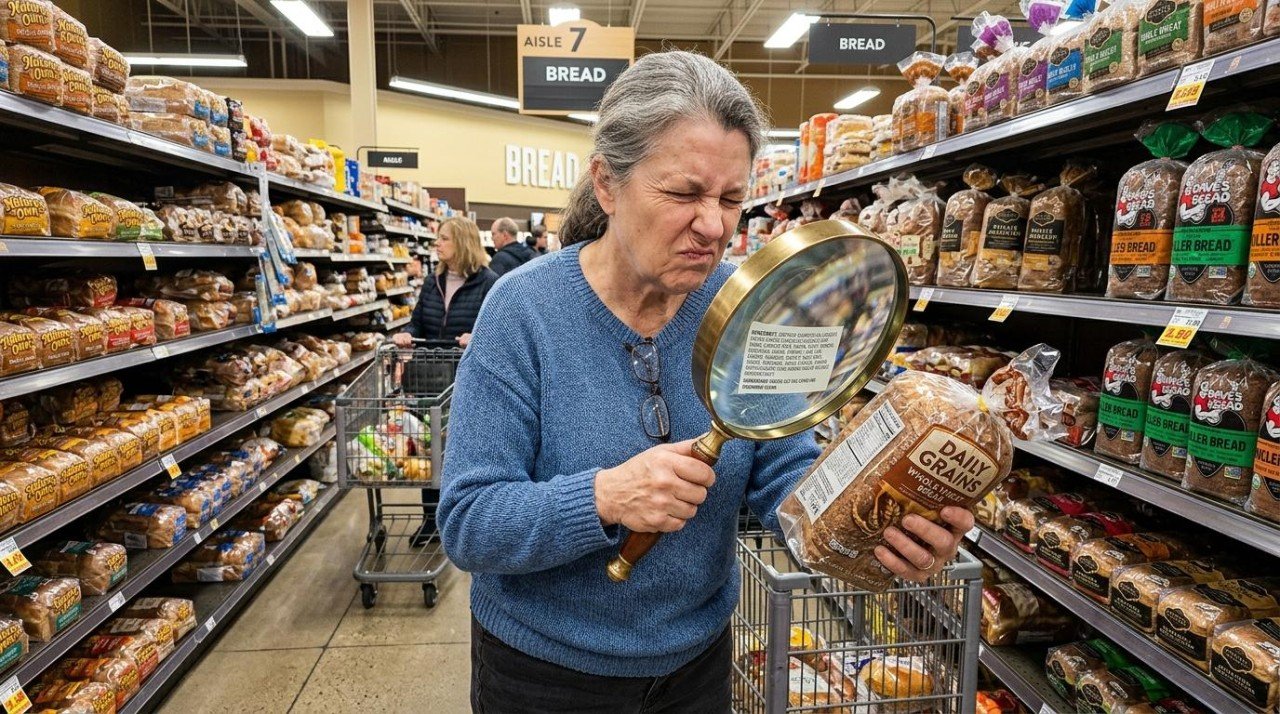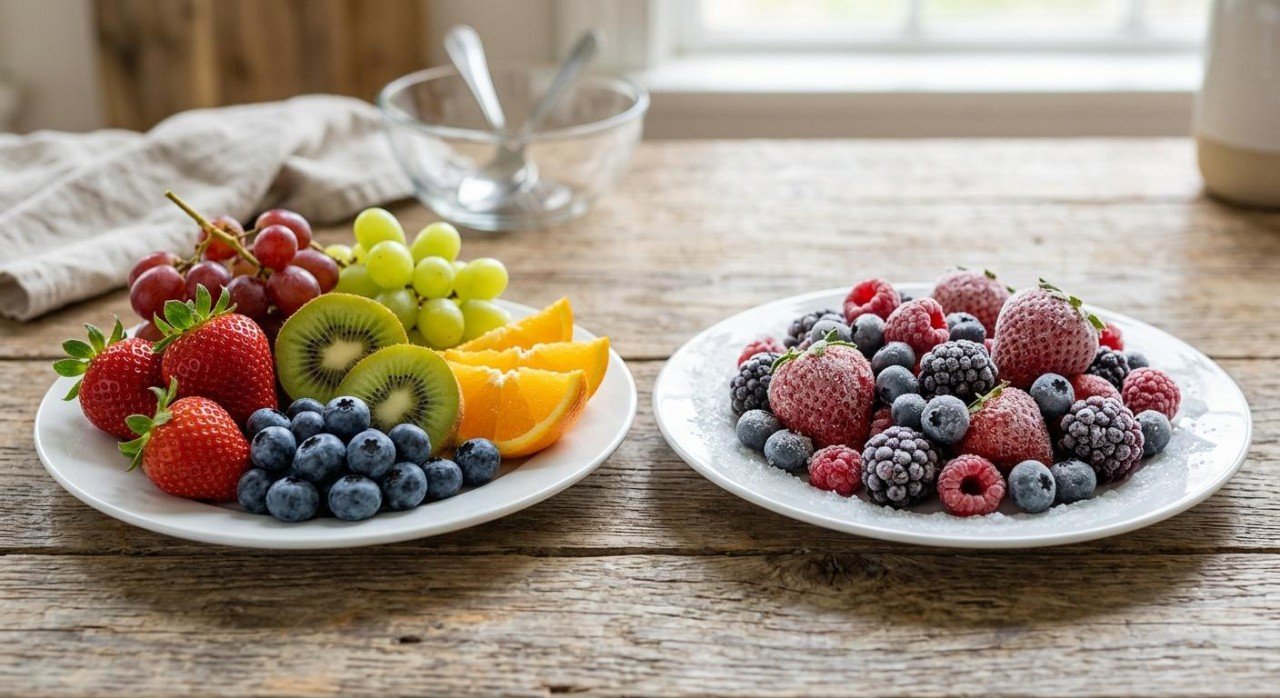
There is a quiet hierarchy in most people's heads when it comes to produce. Fresh sits at the top, glistening in the market display. Frozen is the compromise you reach for when you are tired or broke. Canned is the bottom of the barrel, something to feel a little sheepish about wheeling through the checkout. It is a tidy story, and it shapes how millions of us shop. It is also mostly wrong.
The truth is far more useful: for a huge share of the fruits and vegetables you eat, the frozen bag is just as nutritious as the fresh bunch, often cheaper, and dramatically less likely to end up in the trash. Sometimes frozen is the genuinely better choice on nutrition alone. Once you understand why, the guilt evaporates and your grocery budget breathes a sigh of relief.
The "Fresh Is Best" Assumption Falls Apart Fast
The word "fresh" does a lot of emotional heavy lifting, but in a grocery context it rarely means "just picked." Most fresh produce is harvested before it is fully ripe so it can survive days of shipping, sorting, and shelf time without turning to mush. It then continues to ripen in trucks and warehouses rather than on the plant, which is not the same as developing its full nutrient profile in the field.
Frozen produce takes the opposite route. As Healthline's review of the research explains, fruits and vegetables destined for the freezer are generally picked at peak ripeness and processed within hours, washed, briefly blanched, and frozen on site. That timing matters enormously, because the clock on a vegetable's nutrients starts ticking the moment it leaves the plant.
And that clock moves quickly. Many nutrients, especially water-soluble vitamins like vitamin C and the B vitamins, degrade steadily after harvest. Healthline notes that green peas can lose up to half of their vitamin C in the first 24 to 48 hours after picking. Research from the Norwegian food institute Nofima found fresh beans lost about 25 percent of their vitamin C within just 24 hours at room temperature, because seeds like peas and beans have high enzyme activity that keeps burning through nutrients after harvest.
Freezing essentially hits pause on that process. Nofima reports that vegetables lose somewhere between 10 and 30 percent of their vitamin C between harvest and freezing, but then stay stable in the freezer. The fresh equivalent, meanwhile, keeps quietly losing nutrients during its days in transit, on the shelf, and in your refrigerator drawer. By the time you actually eat it, the "fresh" option can easily be the less nutritious one.
What the Research Actually Shows
This is not just clever theorizing. When researchers at the University of California, Davis directly measured it, the results were striking. In a 2015 study published in the Journal of Agricultural and Food Chemistry, Bouzari, Holstege, and Barrett analyzed eight commonly eaten fruits and vegetables, including corn, carrots, broccoli, spinach, peas, green beans, strawberries, and blueberries, comparing frozen samples against fresh ones stored in the refrigerator the way a normal household would.
Their conclusion was that the vitamin content of the frozen produce was comparable to, and occasionally higher than, that of the fresh counterparts. For vitamin C specifically, five of the eight items showed no meaningful difference, and the other three were actually higher in the frozen samples. Vitamin E (alpha-tocopherol) was higher in the frozen versions of three items and tied in the rest. The one consistent exception was beta-carotene, which declined more in some frozen vegetables, a reminder that no single rule covers every nutrient.
That nuance is the honest takeaway. Frozen is not magically superior across the board, and fresh is not uniformly better. They are, for most everyday produce, roughly equivalent, with the edge swinging toward whichever option spent less time degrading before it reached your fork. A cost analysis of vegetables published in PLOS One reached the same practical bottom line, noting that fresh, frozen, and canned vegetables had similar nutrient profiles and provided comparable nutritional value.
Where Frozen Quietly Wins: Waste and Money
Nutrition might be a tie, but two other factors are not close at all.
Start with waste, because the numbers are sobering. The USDA Economic Research Service estimates that 31 percent of the U.S. food supply goes uneaten at the retail and consumer levels, amounting to roughly 133 billion pounds of food worth about $162 billion in a single year, or around 1.2 pounds per person every day. Fresh fruits and vegetables are among the biggest contributors, precisely because they are so perishable. Loss rates for fresh fruits in that data run from about 4 percent for hardy bananas all the way up to 43 percent for delicate papayas.
Think about what that looks like in your own kitchen: the half-bag of spinach that goes slimy, the berries that grow fuzzy two days after you buy them, the celery that turns to rubber. Every one of those is money you spent on nutrition you never got. Frozen produce sidesteps almost all of it. You use the handful you need and zip the bag shut; the rest waits patiently for weeks. It is no surprise that the authors of a 2025 analysis of U.S. household produce purchasing point out that frozen fruits and vegetables are less likely to generate food waste than their fresh equivalents.
Then there is cost. Frozen produce is typically cheaper per serving than fresh, especially out of season, and it never forces you to buy more than you will use. That same household study found that, after controlling for other factors, SNAP participants had 24 percent higher odds of buying frozen vegetables, exactly the kind of practical, budget-stretching choice you would expect from shoppers watching every dollar. Stocking your freezer is one of the simplest ways to eat more vegetables for less money, with almost nothing thrown away.
The catch, and the reason a freezer full of good intentions often goes untouched, is that frozen and pantry staples only pay off if you actually build meals around them. That takes a little planning, which is exactly the friction most of us run into.
Take the Guesswork Out of Eating Well
Eat Well Planner helps you organize your favorite recipes, plan balanced meals, and automatically generate shopping lists — all in one place. Whether you're tracking macros, managing dietary restrictions, or just trying to stop asking "what's for dinner?", we've got you covered.
Our AI-powered tools can adapt any recipe to your dietary needs, help you discover new meals you'll love, and even log your nutrition effortlessly. It's meal planning made simple.
Start Organizing Your Meals — FreeThe Canned Aisle Deserves More Respect, Too
If frozen has an image problem, canned produce has a full-blown reputation crisis. Yet tinned staples are some of the most nutritious, affordable, and shelf-stable foods you can keep on hand, and in a few cases they genuinely outperform fresh.
Canned tomatoes are the standout example. Tomatoes are rich in lycopene, an antioxidant linked to heart and cellular health, but your body absorbs it far better from cooked and processed tomatoes than from raw ones. In a frequently cited 1997 study in the American Journal of Clinical Nutrition, Gartner and colleagues found that lycopene from tomato paste was about 2.5 times more bioavailable than lycopene from an equivalent amount of fresh tomatoes, because heat breaks down the cell walls and frees the lycopene for absorption (a little fat in the dish helps, too). A can of crushed tomatoes is not a sad substitute for the real thing; for this particular nutrient, it is the better delivery system.
Beans and lentils tell a similar story on value. The PLOS One cost analysis found that beans and starchy vegetables like potatoes delivered more nutrients per penny than almost anything else in the produce world, ranking as the cheapest sources of fiber and potassium among commonly eaten vegetables. A few cans of beans turn into chili, soups, salads, and dips for the price of a single fancy coffee, and they keep for years. Canned fish such as salmon and sardines rounds out the pantry with affordable protein and omega-3 fats, no refrigeration required.
The smart move with canned goods is simply to read the label: choose no-salt-added or low-sodium versions where you can, give beans and vegetables a quick rinse to wash off excess sodium, and look for fruit packed in water or its own juice rather than heavy syrup. Do that, and the canned aisle becomes one of the most efficient corners of the grocery store.
When Fresh Genuinely Wins
None of this means you should clear out the produce drawer and live entirely from the freezer. Fresh still earns its place, and being honest about when is what separates a useful rule from a fad.
Fresh is the clear choice when you are going to eat something soon and raw, where texture is the whole point. Salad greens, cucumbers, tomatoes for slicing, crisp apples, and fresh herbs for finishing a dish do not survive freezing gracefully; thaw a frozen cucumber and you get a sad puddle. If you will realistically eat that bunch of kale or those berries within a couple of days, fresh is wonderful, and there is nothing wrong with buying it.
Fresh also tends to win for seasonal, local produce eaten close to harvest, the farmers' market peach in August, the summer corn picked that morning. The nutrient clock that works against trucked-in winter produce barely gets started when the food traveled a few miles. And of course, some things you simply prefer fresh for flavor or how you like to cook, which is a perfectly good reason on its own.
The practical framework is this: buy fresh for what you will eat in the next day or two and for the raw, texture-dependent foods that freezing ruins. Lean on frozen and canned for everything you cook, everything you buy in bulk, and everything you want available on a night when you did not get to the store. You are not choosing a team. You are matching the form to the job.
How to Actually Build Meals Around Your Freezer and Pantry
Here is where good intentions usually break down. People buy the frozen broccoli and the canned beans, then default to takeout because they cannot picture a meal coming together from them at 6 p.m. The fix is not willpower; it is having a plan and recipes that expect those ingredients in the first place.
A few habits make a stocked freezer genuinely effortless to cook from:
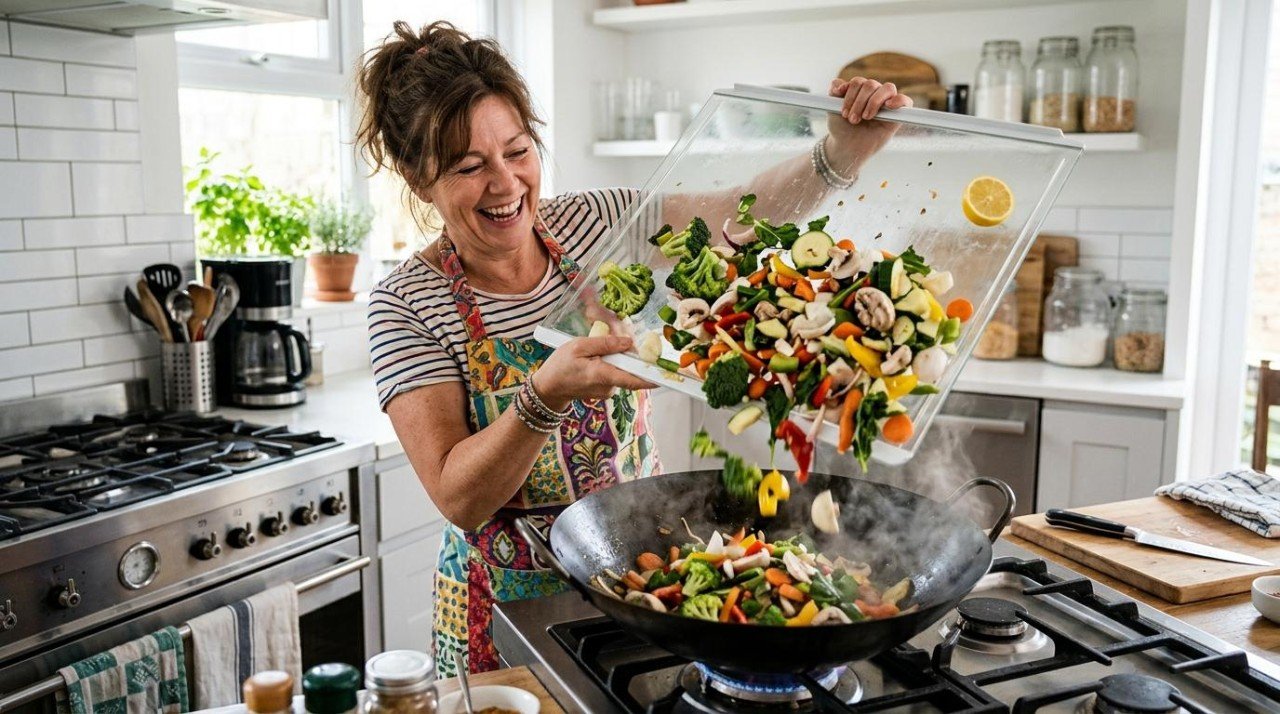
- Keep a rotating base of frozen vegetables. A bag each of peas, spinach, broccoli, mixed stir-fry vegetables, and a fruit blend for smoothies covers an enormous range of meals.
- Treat the pantry as a meal engine. Canned tomatoes, beans, lentils, and a can or two of fish are the backbone of fast soups, pasta sauces, curries, and grain bowls.
- Cook from the freezer first. When you plan the week, start by asking what you already have, then buy fresh only for the things that truly need to be fresh.
- Add frozen at the right moment. Most frozen vegetables cook in minutes straight from the bag; no thawing required, and they slot into the end of a stir-fry, soup, or pasta beautifully.
This is exactly the kind of planning that Eat Well Planner is built to take off your plate. When you find a recipe you like, anywhere from a website to an Instagram reel to a YouTube video, you can import it in seconds and let the app pull out the ingredients and nutrition automatically, building a personal recipe book you can actually search. Its AI meal planning then assembles a balanced week from the recipes you have saved, so you are cooking from a plan instead of staring into the fridge.
The freezer-and-pantry approach gets even easier with two features in particular. The auto-generated shopping list turns your week's meal plan into an organized list, which makes it simple to keep a steady stock of frozen and canned staples rather than over-buying fresh produce that wilts before you reach it. And if a recipe calls for fresh spinach when you only have frozen, or fresh tomatoes when you have a can in the cupboard, the AI recipe chat will happily suggest the swap and adjust the method, so a missing ingredient never derails dinner. Logging what you eat in the food diary then shows you that a meal built from frozen and canned staples stacks up nutritionally against one made from pricier fresh ingredients, which is the most reassuring proof of all.
The Bottom Line
The idea that fresh produce is always the superior choice is one of the most expensive food myths going. It pushes people to spend more, waste more, and feel worse about perfectly nutritious food. The evidence points somewhere far more freeing: frozen fruits and vegetables are nutritionally on par with fresh and sometimes better, canned tomatoes and beans are genuine nutritional workhorses, and a freezer full of produce is one of the best defenses against both food waste and the 6 p.m. takeout reflex.
Eat the fresh strawberries while they are perfect. Then let the freezer and pantry do the heavy lifting for the rest of the week. Your nutrition will not suffer, and your grocery bill will quietly thank you.
Ready to make the most of every bag and can in your kitchen? Try organizing your meals with Eat Well Planner and build a week of meals around the affordable, waste-proof staples you already have.